Introduction
If your business is scaling up from a single café or small-batch operation, you've probably hit the roasting bottleneck. I've worked with dozens of roasteries and foodservice operations over the years, and one pattern is clear: the moment you outgrow your 5-kilo sample roaster, the whole supply chain starts to creak. Industrial coffee roasters aren't just bigger machines — they represent a fundamental shift in production speed, consistency, and cost structure. De acordo com relatórios recentes do setor de the Specialty Coffee Association's 2025 Coffee Market Report, small-batch roasters account for only 12% of total global production volume, while industrial roasters (capacities of 30 kg and above) handle over 70% (SCA, 2025). This guide walks you through everything you need to know about industrial coffee roasters, from types and costs to procurement and common pitfalls. For a complete overview of the topic, see our Ultimate Guide to Industrial Coffee Roasters for Business.
What Are Industrial Coffee Roasters?
📚
Definition
Industrial coffee roasters are high-capacity machines designed to roast large batches of green coffee beans — typically 15 kg to 500 kg per batch — with precise temperature control, airflow management, and automation for consistent quality at scale.
In my experience, the line between "commercial" and "industrial" isn't just about batch size. It's about the machine's thermal mass, control system, and ability to run multiple batches per hour without quality drift. Industrial roasters often integrate with conveyor systems, destoners, and packaging lines. They require dedicated ventilation, often with afterburners for emissions compliance. For a detailed breakdown of types, see our guide on Types of Industrial Coffee Roasters Explained.
Key Components of Industrial Roasters
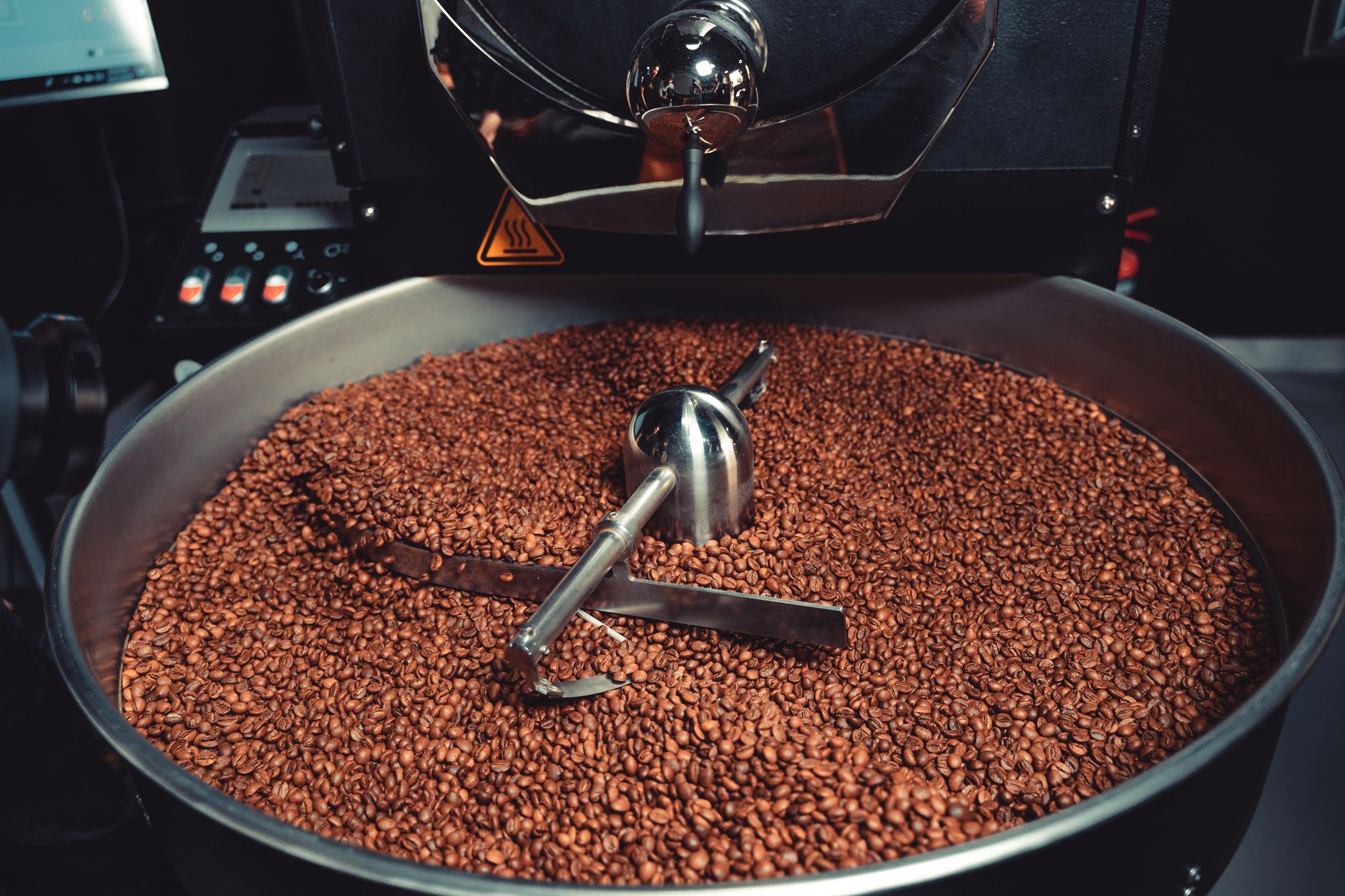
Industrial roasters share core components with smaller machines, but each is engineered for endurance:
- Drum or fluid bed chamber: Determines heat transfer method. Drum roasters use conduction and convection; fluid beds rely solely on hot air.
- Burner system: Gas, propane, or electric. Gas is most common for cost and heat control.
- Control panel: PLC-based with PID loops. Modern units include profiling software for repeatability.
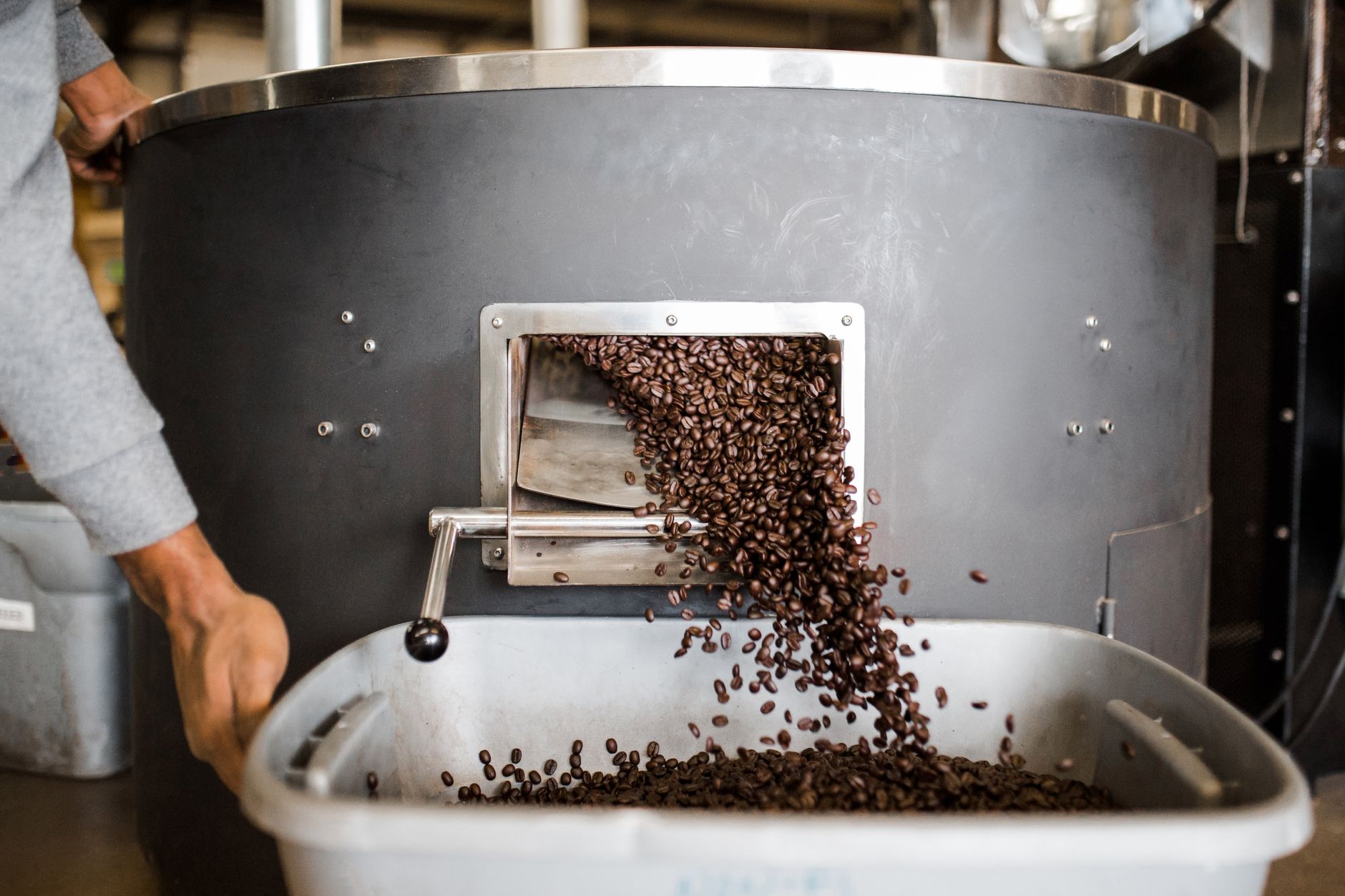
- Cooling tray: Must bring beans from roast temperature to room temperature in under 4 minutes to stop internal cooking.
- Afterburner/oxidation system: Required in many regions to reduce smoke and VOCs. Adds 20-40% to the investment.
Why Industrial Coffee Roasters Matter for Your Business
Scaling coffee production without quality loss is the single biggest challenge in the industry. Here's why investing in an industrial roaster matters:
Consistency at Scale
Manual or semi-automatic small roasters rely heavily on the operator's skill. As you scale, batch-to-batch variability increases. Industrial machines with programmable profiles and real-time data logging reduce variability to under 1% on Agtron color values. According to a 2024 study in the Journal of Food Engineering, drum roasters with active airflow control achieve a coefficient of variation of less than 0.5% across consecutive batches (JFE, 2024).
Lower Per-Pound Cost
A 120-kg drum roaster consumes roughly the same energy per hour as a 30-kg machine — but produces four times the output. Energy efficiency improves by 35-50% when moving from a 15-kg to a 60-kg roaster, depending on insulation and burner design (Roast Magazine, 2023).
Regulatory Compliance
Many municipalities now require emissions control for any roaster over 10 kg capacity. Industrial roasters often come with integrated afterburners that meet EPA and local air quality standards. Buying a machine without emissions compliance can result in fines or forced shutdown.
How to Choose an Industrial Coffee Roaster
Choosing the right industrial roaster requires balancing capacity, energy source, automation, and budget. Here's a step-by-step approach based on what I've seen work for growing businesses.
Step 1: Determine Your Capacity Needs
Calculate your weekly green bean requirement. Multiply your weekly finished coffee sales by 1.2 (to account for moisture loss and waste). Then decide how many days per week you want to roast. For example, if you need 3,000 lbs of roasted coffee per week and plan to roast 5 days a week, you need 600 lbs/day. A 60-kg drum roaster (132 lbs) running 5 batches per day will deliver 660 lbs — a match.
Step 2: Choose Between Drum and Fluid Bed
Fluid bed roasters (e.g., Loring, Sivetz) use less energy and don't require a cooling cycle as fast, but they produce a slightly brighter, less developed profile. Drum roasters (e.g., Probat, Diedrich) are the industry standard for dark roasts and body-forward styles. For a deeper comparison, see Commercial Coffee Roasting Equipment Options.
| Aspect | Drum Roaster | Fluid Bed Roaster |
|---|---|---|
| Heat Transfer | Conduction + Convection | Convection only |
| Roast Profile | Dark, even, classic | Bright, clean, lighter |
| Energy Efficiency | Good (with insulation) | Excellent |
| Maintenance | More moving parts | Simpler, fewer parts |
| Capital Cost | Medium–High | Medium |
Step 3: Evaluate Automation Level
- Manual: Requires a skilled roaster. Lower cost, but consistency suffers.
- Semi-automatic: Programmable profiles with manual charge/discharge. Good for small industrial setups.
- Fully automatic: PLC-controlled with recipe management, data logging, and remote monitoring. Ideal for multi-site operations.
I've seen many companies overpay for automation they don't need. If you have a dedicated roaster with 5+ years of experience, a semi-automatic machine is often more cost-effective. If you're hiring junior roasters, invest in automation to reduce variance.
Step 4: Check Emissions and Ventilation
A 60-kg roaster requires at least 1,500 CFM of exhaust airflow — often more with an afterburner. You'll need a certified HVAC contractor to design the ductwork. Many roasteries fail to budget for this, leading to installations that cost $20,000–$40,000 beyond the machine price.
Step 5: Consider Total Cost of Ownership
Beyond the purchase price, factor in:
- Installation and commissioning (5-10% of machine cost)
- Training (2-3 weeks for a new operator)
- Maintenance (annual inspection, drum alignment, burner tuning)
- Afterburner operation (increases gas consumption by 25-40%)
For a detailed look at costs, read Industrial Coffee Roaster Prices and Costs.
Common Mistakes When Buying an Industrial Coffee Roaster
After helping dozens of businesses upgrade, these are the top mistakes I see repeated:
1. Buying Too Much Capacity
A common fallacy is "buy for growth." If you're doing 500 lbs/week now, buying a 120-kg roaster (capable of 2,400 lbs/week) means you'll run it well below capacity for years. Small batches in a huge drum don't roast evenly because there isn't enough thermal mass. Beat the drum with baffles designed for a full load and underperformance results.
2. Ignoring Ventilation Until Construction
I've visited roasteries where installation was delayed by months because the building engineer didn't account for the afterburner heat load. Plan ventilation and structural modifications at least 12 weeks before machine arrival.
3. Skipping Operator Training
Industrial roasters are not just larger versions of sample roasters. The thermodynamics are different. A poorly trained operator can ruin thousands of dollars of green coffee in a single shift. Budget for hands-on training from the manufacturer or a certified consultant.
4. Neglecting Green Coffee Storage
An industrial roaster requires a steady supply of green coffee. If you don't have climate-controlled storage, the beans can degrade. Invest in a dedicated space with 50-70°F temperature and 45-55% humidity.
5. Choosing the Wrong Energy Source
Natural gas is typically cheapest, but propane is more portable. Electric industrial roasters are rare due to high power demands. Check utility rates for your location before buying.
Frequently Asked Questions
How much does an industrial coffee roaster cost?
Entry-level industrial roasters (15-30 kg) range from $30,000 to $80,000. Mid-range (30-60 kg) cost $80,000–$200,000. Large systems (120-500 kg) can exceed $500,000, often with custom fabrication. Prices vary by brand, automation level, and optional equipment like afterburners.
What is the best industrial coffee roaster brand?
There's no single "best" brand — it depends on your roast style and budget. Probat is the gold standard for drum roasters, known for longevity and even roasts. Diedrich offers excellent mid-range machines with good US support. Loring dominates the fluid bed market with energy-efficient models. For restaurants, compact industrial models from Mill City or Buckeye are popular.
How long does it take to install an industrial coffee roaster?
Installation typically takes 2-4 weeks. The machine arrival to first roast involves: overhead hoist setup (if needed), electrical and gas connections, ventilation ducting, afterburner installation, calibration, and safety testing. Expect at least 1 week for commissioning and 1 week for operator training.
What maintenance does an industrial coffee roaster require?
Daily: clean cooling tray, vacuum bean chute, check sampler. Weekly: inspect drum seals, clean burners, grease motors. Monthly: check belt tension, calibrate thermocouples. Annually: full service including drum alignment, bearing replacement, and afterburner cleaning. Neglecting regular maintenance leads to roaster fires and product recalls.
Can I roast different bean varieties in the same batch?
Technically yes, but it's not recommended for industrial scale. Different beans (e.g., Ethiopian vs. Brazilian) have different densities and moisture contents, leading to uneven roast development. It's better to roast each origin separately and blend after cooling. Some large roasters use continuous mixing in the cooling tray, but this is an advanced technique.
What capacity industrial roaster do I need for a restaurant chain?
For a single restaurant serving 200 cups per day, a 15-30 kg roaster running 1-2 batches per week is sufficient. For a chain of 5-10 locations, you'll need a 60-120 kg machine. Estimate 0.12 lbs of green coffee per cup sold. For 2,000 cups/day across locations, that's 240 lbs/day — a 120-kg roaster (264 lbs) with one batch per day.
How efficient are industrial coffee roasters?
Modern industrial roasters achieve 80-85% thermal efficiency, meaning 80-85% of the fuel energy goes into roasting. Older machines may be 60-70%. The afterburner, while necessary for emissions, reduces overall efficiency because it burns additional gas to destroy VOCs. Expect a system efficiency (roaster + afterburner) of 55-70%.
What training is needed to operate an industrial roaster?
Operators should complete a manufacturer's training course (typically 1 week) covering machine controls, profile programming, safety procedures, and cleaning. Many also benefit from SCA Roasting Level 1 or 2 certification. I recommend at least 20 supervised batches before running unsupervised.
Conclusion
Industrial coffee roasters are a significant investment, but when chosen correctly, they transform your business from artisanal to production-scale without sacrificing quality. Focus on matching capacity to actual demand, investing in proper ventilation and training, and selecting a machine that fits your roast profile. For a comprehensive guide that covers every aspect, return to our Ultimate Guide to Industrial Coffee Roasters for Business.
At Busy Bean Coffee, we help businesses design and implement coffee programs that scale. Whether you need equipment consulting, managed coffee services, or premium beans, we're here to help. Get in touch to start your roasting journey.
Recommended Readings
To deepen your understanding of these topics, we recommend reading the following articles:
About the Author
Travis Estes is the CEO & Founder at Busy Bean Coffee. With over a decade in specialty coffee equipment and foodservice operations, he has helped hundreds of businesses optimize their coffee programs for quality and profitability.
Free Coffee Pairing Guide & Specialty Roast Cheat Sheet
Unlock the secrets of perfect brewing ratios, water temperatures, and specialty roast profiles. Download the guide.