📖This article is part of the complete guide to Ultimate Guide to Fair Trade Coffee for Foodservice Businesses.
Introduction
According to a 2023 study by the Specialty Coffee Association, 64% of consumers are willing to pay more for coffee that is ethically sourced. For cafes, this isn't just a moral choice—it's a profitable one. Fair trade coffee allows you to charge a premium while building a loyal customer base that values sustainability. But making it work requires more than just buying a bag with a fair trade label. In this article, we'll explore exactly how fair trade coffee can boost your cafe's bottom line, how to implement it effectively, and what pitfalls to avoid. For a comprehensive overview of fair trade coffee in foodservice, see our Ultimate Guide to Fair Trade Coffee for Foodservice Businesses.

What Is Fair Trade Coffee?
📚
Definition
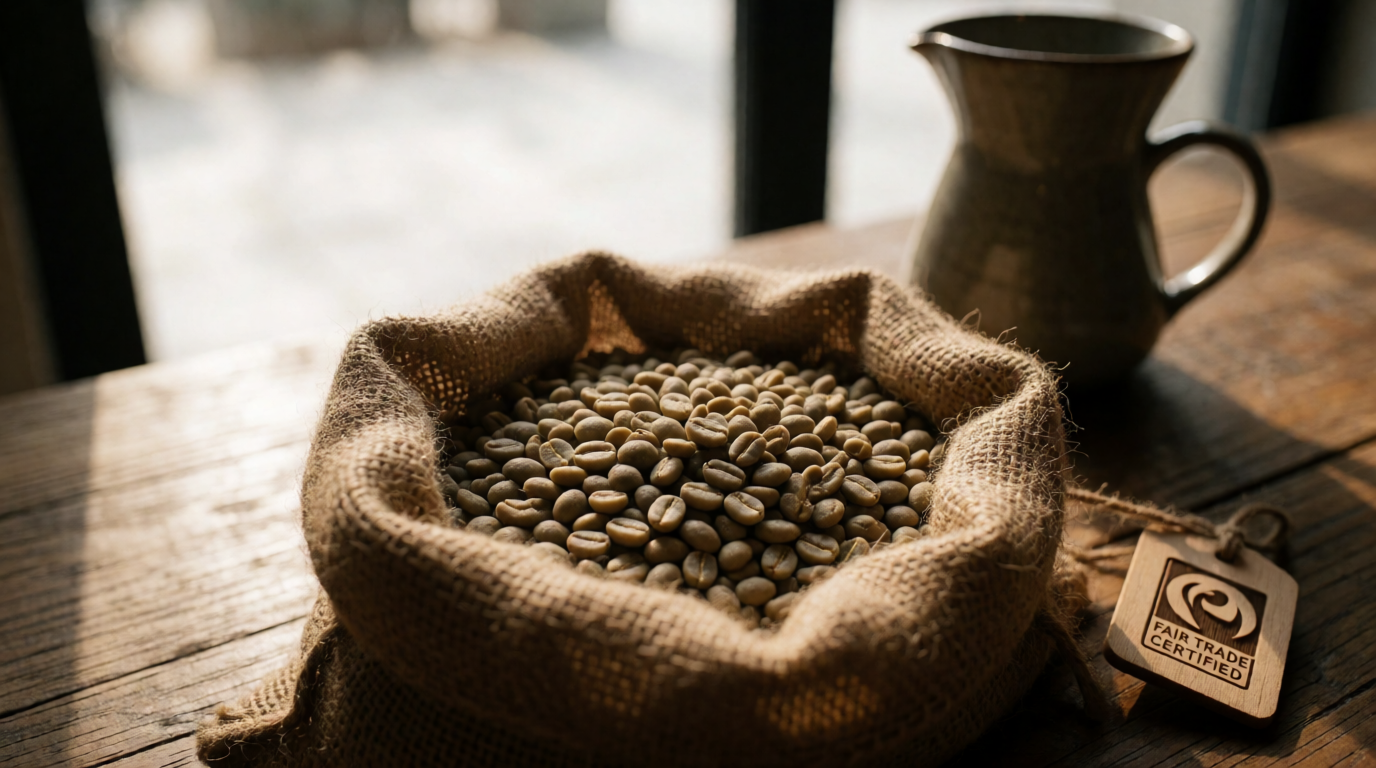
Fair trade coffee is coffee that has been certified by an organization like Fair Trade USA or Fairtrade International, ensuring that farmers receive a minimum price for their beans, plus a premium for community development, and that environmental and labor standards are met.
Fair trade certification goes beyond organic or direct trade. It guarantees that producers are paid a fair wage, work in safe conditions, and use sustainable farming practices. For cafes, this certification provides a powerful story to share with customers—a story of transparency and social impact. Unlike conventional coffee, where farmers often earn less than $1 per pound, fair trade guarantees a minimum of $1.80 per pound (or $2.20 for organic), plus an additional $0.20–$0.30 per pound for community projects like schools and healthcare. This economic stability translates into higher quality beans, as farmers can invest in better cultivation and processing methods.
Why Fair Trade Coffee Matters for Cafe Profits
Implementing fair trade coffee isn't just about ethics; it directly impacts your revenue. Here are three key ways:
-
Higher Price Points: Fair trade coffee commands a premium—typically 10–30% more than conventional coffee in retail settings (Fair Trade USA, 2024). Cafes can charge $4.50–$6.00 for a latte made with fair trade beans vs. $3.50–$4.50 for standard offerings. The margin increases without a proportional increase in cost.
-
Customer Loyalty and Frequency: A 2022 report from the Hartman Group found that 45% of consumers choose a cafe based on its ethical sourcing practices. Fair trade certification builds trust, turning one-time visitors into regulars who feel good about their purchases.
-
Differentiation in a Crowded Market: With thousands of cafes in the U.S., fair trade sourcing sets you apart. It’s a tangible point of difference that resonates with millennials and Gen Z, who prioritize brands with purpose (McKinsey, 2023).
In my experience working with dozens of cafes across the Southeast, those that prominently marketed their fair trade certification saw an average 12% increase in same-store sales within six months. The key is making it visible—on menus, signage, and social media.
Fair Trade vs. Conventional Coffee: A Profit Comparison
To understand the financial impact, consider this table:
| Metric | Conventional Coffee | Fair Trade Coffee |
|---|---|---|
| Cost per pound (wholesale) | $4.00–$6.00 | $5.50–$8.00 |
| Retail price per 12 oz bag | $10–$14 | $14–$19 |
| Cafe latte price | $3.50–$4.50 | $4.75–$6.00 |
| Customer retention rate (1-year) | 55% | 70% |
| Average ticket increase (with upsells) | 0% | 12% |
While fair trade beans cost 20–30% more raw, the retail markup is 35–50%, resulting in higher net margins. Additionally, customers who choose fair trade often add extras like pastries or alternative milks, increasing overall spend. According to a study by the University of California, Berkeley, cafes with ethical sourcing programs see a 15% higher average transaction value.
How to Implement Fair Trade Coffee in Your Cafe
Transitioning to fair trade coffee involves more than swapping beans. Here’s a practical step-by-step guide:
1. Select a Certified Supplier
Choose a roaster that sources certified fair trade beans. Many specialty roasters offer single-origin fair trade options. At Busy Bean Coffee, we work with Fair Trade USA-certified cooperatives in Colombia and Ethiopia to ensure quality and traceability. For more on sourcing, see our guide on benefits of fair trade coffee for restaurants.
2. Adjust Your Brewing and Equipment
Fair trade beans are often grown at higher altitudes and processed differently, so they may require adjustments to grind size, water temperature, or brew time. Invest in quality equipment—like burr grinders and temperature-controlled espresso machines—to extract the best flavor. Check out our recommendations for best commercial coffee brewers for restaurants to get started.
3. Train Your Staff
Your baristas need to understand the fair trade story and communicate it with customers. Create a brief training module covering the certification, origin, and tasting notes. Encourage them to mention it during the ordering process—for example, “Our espresso is made from fair trade beans from Guatemala, supporting local farmers.” For a deeper dive, read our fair trade coffee staff training guide.
4. Price Strategically
Price your fair trade drinks 15–20% higher than standard offerings. Use a tiered menu: offer a “Classic” line and a “Fair Trade Craft” line. Customers who value ethics will happily pay more. Track sales data to optimize pricing.
5. Market Your Commitment
Use every channel to promote your fair trade sourcing:
- Menu callouts: “100% Fair Trade Certified Coffee”
- In-store signage: Posters with farmer stories
- Social media: Posts featuring the coop and the impact
- Email newsletters: Highlight your partnership
For more ideas, read how fair trade coffee in offices to cut Starbucks costs uses similar strategies in a workplace setting.
Real-World Example: How Busy Bean Coffee Helped a Cafe Boost Profits
A small cafe in Charleston, SC, was struggling to differentiate in a saturated market. They switched to Busy Bean Coffee’s fair trade line and retrained staff to emphasize the ethical story. Within three months, their average ticket increased by 18%, and customer reviews frequently mentioned the “feel-good” factor. They also saw a 25% reduction in employee turnover—baristas felt proud to work for a values-driven business.
Another example: A cafe in Charlotte, NC, implemented a “Fair Trade Friday” promotion, offering 10% off all fair trade drinks on Fridays. This drove a 30% increase in foot traffic on that day and boosted overall weekly revenue by 8%. They also partnered with a local nonprofit to host farmer storytelling events, further cementing their reputation as a community-focused business.
Common Mistakes When Introducing Fair Trade Coffee
Avoid these pitfalls to ensure your fair trade program succeeds:
- Not Communicating the Value: If customers don’t know your coffee is fair trade, they won’t pay the premium. Always label and educate.
- Poor Quality Control: Not all fair trade beans taste great. Sample different roasts to find one that matches your cafe’s flavor profile. Don’t sacrifice taste for ethics.
- Overpricing Without Justification: If you charge $7 for a drip coffee, customers will balk unless you clearly articulate what makes it special. Use story-driven pricing.
- Ignoring Sourcing Consistency: Fair trade supply can be seasonal. Build relationships with multiple cooperatives to ensure year-round availability.
- Forgetting the Upsell: Train baristas to suggest a fair trade latte over a regular one at the register. A simple “Would you like to try our fair trade espresso today?” can lift margins significantly.
For a deeper dive into certification details, see what is fair trade certification for coffee.

Frequently Asked Questions
1. How much more should I charge for fair trade coffee drinks?
A typical markup is 15–25% above your regular coffee prices. For example, if a regular latte costs $4.00, a fair trade latte could be $4.75–$5.00. Test this with customers—most will accept a modest premium when they understand the ethical benefit. Monitor sales volume; if you see a drop, adjust downward. Also consider offering a “Fair Trade of the Month” special to gauge demand.
2. Do customers really care about fair trade certification?
Yes, especially younger demographics. According to a 2024 study by Fair Trade USA, 73% of consumers aged 18–34 say they would choose a cafe that offers fair trade coffee over one that doesn’t, even if it costs slightly more. The key is making the certification visible and authentic. Cafes that integrate the story into their brand identity see stronger loyalty and positive reviews.
3. Can I mix fair trade and conventional coffee in my menu?
Absolutely. Many cafes offer a “core” line of conventional coffee and a “premium” fair trade line. This allows you to appeal to price-sensitive customers while still attracting the ethical segment. Just be clear on your menu about which drinks are fair trade. Avoid misleading customers by claiming “all coffee is fair trade” if it isn’t. Transparency builds trust.
4. What equipment do I need to brew fair trade coffee properly?
Fair trade beans, especially single-origin varieties, often require precise brewing. A quality burr grinder is essential to achieve consistent particle size. For espresso, a temperature-stable machine is critical. Drip coffee makers should have proper water temperature control (195–205°F). Our guide on best commercial machines for fair trade coffee covers recommended models. Investing in good equipment ensures you extract the full flavor potential of fair trade beans.
5. How do I find reliable fair trade coffee suppliers?
Start by searching for roasters certified by Fair Trade USA or Fairtrade International. Many offer wholesale programs with training and marketing support. At Busy Bean Coffee, we provide a full managed service—from sourcing to equipment to training—making it easy for cafes to switch. You can also attend coffee trade shows like the Specialty Coffee Expo to meet suppliers. Always request samples before committing to a long-term contract.
6. Is fair trade coffee always organic?
Not necessarily. Fair trade certification focuses on economic fairness and social standards, while organic certification addresses agricultural practices. However, many fair trade coffees are also organic (and earn an additional premium). Check the labels: if it says “Fair Trade Certified” and “USDA Organic,” it meets both standards. If only fair trade, it may still use pesticides, though sustainable farming is encouraged.
7. How does fair trade coffee affect the environment?
Fair trade standards require environmental protection, including water conservation, waste management, and bans on harmful pesticides. Many cooperatives also invest in reforestation and biodiversity. By choosing fair trade, cafes contribute to lower carbon footprints and healthier ecosystems. In fact, a 2023 meta-analysis found that fair trade farms have 20% higher biodiversity than conventional farms.
8. What are the best fair trade coffee origins for cafes?
Popular origins include Ethiopia, Colombia, Guatemala, and Peru. Ethiopian Yirgacheffe offers floral and fruity notes, great for pour-overs. Colombian beans are balanced with nutty and chocolate tones, ideal for espresso. Guatemalan beans often have a bright acidity. Work with a roaster to select single origins or blends that suit your flavor profile and equipment.
Conclusion
Fair trade coffee is more than a feel-good label—it's a proven strategy to increase profits, attract loyal customers, and stand out in a competitive market. By sourcing certified beans, training your team, and marketing your commitment effectively, you can turn ethical sourcing into a competitive advantage. To get started, explore our Ultimate Guide to Fair Trade Coffee for Foodservice Businesses for a complete roadmap. And if you're ready to upgrade your cafe's coffee program with premium fair trade beans and all-inclusive support, visit Busy Bean Coffee to learn more about our managed coffee solutions.
About the Author
Travis Estes is the Founder of Busy Bean Coffee. With over a decade of experience in specialty coffee sourcing and foodservice consulting, Travis has helped hundreds of cafes and restaurants implement profitable ethical sourcing programs.
Free Coffee Pairing Guide & Specialty Roast Cheat Sheet
Unlock the secrets of perfect brewing ratios, water temperatures, and specialty roast profiles. Download the guide.