What is Specialty Coffee Equipment for Business?
📚Definition
A specialty coffee equipment business is a commercial operation that provides high-grade, precision coffee brewing and serving technology—such as espresso machines, grinders, brewers, and related accessories—to other businesses. This model goes beyond simple appliance sales to encompass managed services, including installation, maintenance, training, and supply, all designed to deliver a consistently exceptional coffee experience that drives customer satisfaction and revenue.
In my experience working with hundreds of foodservice businesses, the transition from "having coffee" to "operating a specialty coffee equipment business" within your establishment is the single most impactful upgrade you can make. It’s not about swapping a drip pot for a fancier machine. It’s about fundamentally rethinking coffee as a strategic profit center and brand differentiator. While a standard office coffee service might provide a basic brewer, a true specialty coffee equipment business model, like the one we’ve built at
Busy Bean Coffee, integrates technology, service, and expertise into one predictable operational cost.
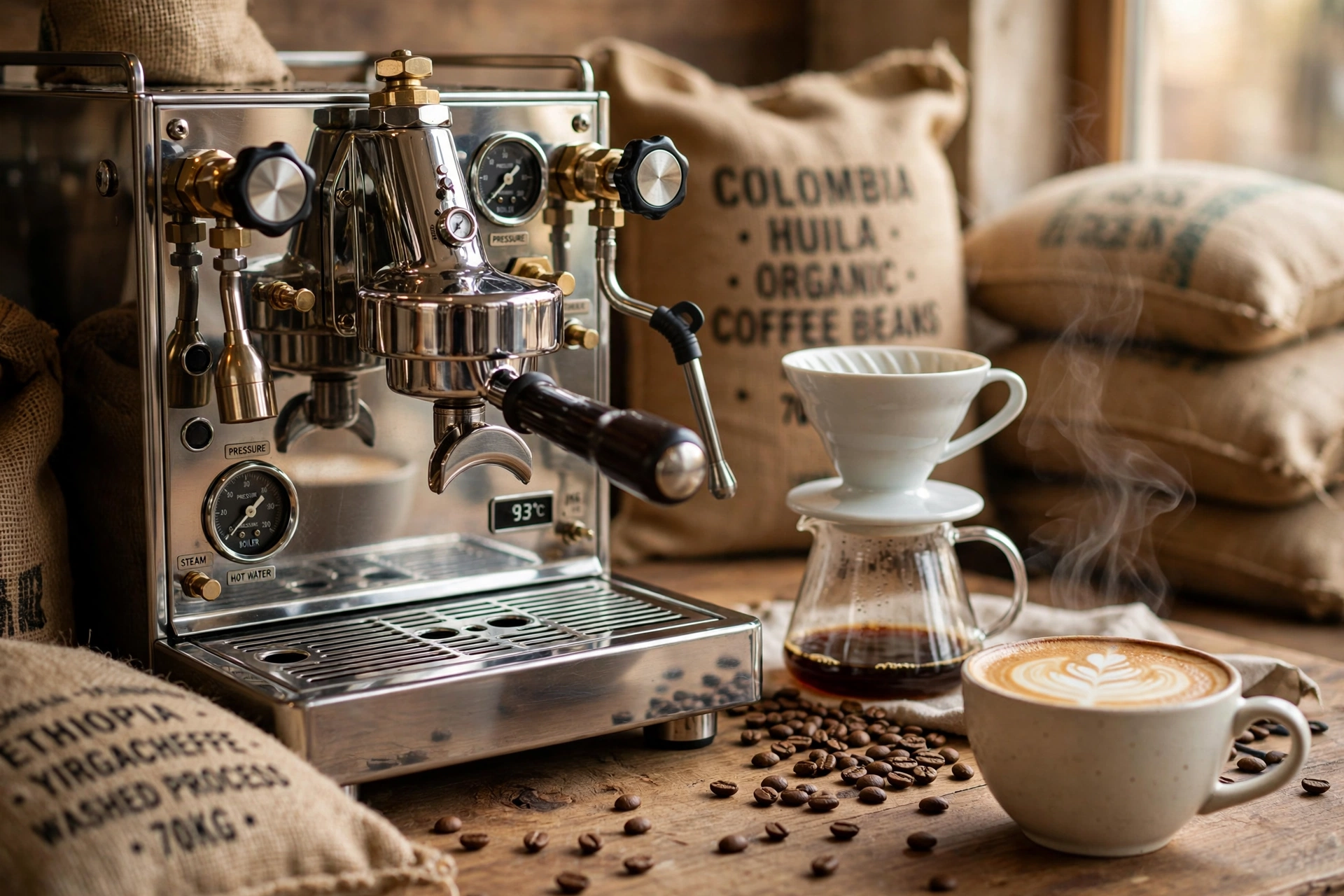
The core of this model is the equipment itself: commercial-grade machines engineered for precision, durability, and high volume. Think volumetric espresso machines with dual boilers, grinders with flat burrs for consistent particle size, and batch brewers with precise temperature control. But the business aspect is the managed ecosystem around it. According to the Specialty Coffee Association, specialty coffee is graded 80 points or above on a 100-point scale by certified Q Graders. The right equipment is the non-negotiable foundation for achieving and maintaining that quality at scale.
💡Key Takeaway
A specialty coffee equipment business is a holistic service model, not a product sale. It combines precision machinery with white-glove support to guarantee quality and reliability, transforming coffee from a cost line into a revenue driver.
For a comprehensive look at the foundational gear, explore our guide on
commercial espresso machines, or understand the full-service approach through our pillar on
managed coffee services.
Why Investing in a Specialty Coffee Equipment Business Matters in 2026
The business case for specialty coffee has moved from a "nice-to-have" to a "must-have" strategic investment. The data and market shifts in 2026 make this clearer than ever.
1. Consumer Demand is Specialty-First. The pandemic permanently altered consumer expectations. People became amateur baristas at home and now demand that same quality when they are out. A 2025 National Coffee Association report found that consumption of specialty coffee beverages (espresso-based, cold brew, pour-over) outside the home has grown by over 40% since 2020. If your business serves generic, low-quality coffee, you are actively signaling that you don’t care about quality in other areas.
2. Direct Impact on Profitability and Average Ticket Size. Coffee has one of the highest profit margins in the foodservice industry. A study by Restaurant Business magazine in late 2024 showed that adding a dedicated specialty coffee program increased average customer ticket size by 18% in fast-casual restaurants and drove incremental afternoon sales. It’s not just about selling a $4 latte; it’s about creating a destination for a premium experience that customers are willing to pay for, whether they are hotel guests, office employees, or clinic patients. This is the core principle behind successful restaurant coffee solutions.
3. Employee Recruitment and Retention. In the ongoing battle for talent, workplace amenities matter. A 2026 SHRM (Society for Human Resource Management) survey revealed that 68% of employees consider high-quality coffee and tea offerings a valuable workplace perk, ranking above snack subscriptions and game rooms. A reliable, great-tasting coffee program powered by a dedicated
specialty coffee equipment business boosts morale, fosters collaboration, and can be a decisive factor in attracting top talent. It’s a tangible investment in employee well-being.
4. Brand Differentiation and Competitive Edge. In saturated markets, your coffee program can be your unique selling proposition. A boutique hotel can compete with chains by offering an artisanal in-lobby coffee experience. A medical clinic can reduce patient anxiety and elevate its service perception. When we outfit a business, we’re not just installing machines; we’re integrating a brand asset. This is especially powerful for hotel coffee programs, where the guest experience is paramount.
5. Operational Reliability and Reduced Stress. The biggest hidden cost of a cheap coffee setup is downtime and maintenance. A broken machine during breakfast service at a retirement community or a busy cafe means lost revenue and frustrated customers. Partnering with a professional specialty coffee equipment business that includes full maintenance means you have a single point of contact and guaranteed uptime. You run your business; they handle the coffee.
How a Specialty Coffee Equipment Business Works: The Operational Model
Understanding the mechanics is crucial. The old model was transactional: you buy a machine, you’re on your own. The modern specialty coffee equipment business model is relational and service-based. Here’s how a full-service provider like Busy Bean Coffee operates:
1. Consultation & Needs Assessment. It starts with a deep dive into your business. What’s your daily volume? Who is your end consumer (guests, employees, patients, customers)? What’s your operational space and workflow? What are your brand goals? This phase determines the ideal equipment mix, whether it’s a super-automatic for ease-of-use in an office or a semi-automatic for a craft-focused cafe.
2. Customized Equipment Curation. Based on the assessment, the provider selects the right tools from their portfolio. This isn’t a one-size-fits-all catalog. It involves matching specific machines—like high-volume batch brewers for a corporate cafeteria or compact espresso machines for a boutique salon—to your precise needs. Quality of grind is paramount, so pairing the right commercial grinder with the brewer is a technical step we never skip.
3. Professional Installation & Integration. A white-glove technician handles everything: delivery, uncrating, installation, plumbing, electrical hookup (if needed), and testing. They ensure the equipment is perfectly integrated into your space and operational workflow. This step is what separates professionals from distributors; it’s about making it work seamlessly on day one.
4. Comprehensive Training. Equipment is only as good as the people using it. Training is provided for all staff, from front-line baristas to office managers. This covers machine operation, basic maintenance (like backflushing), drink recipes, and troubleshooting. Empowering your team is key to program success.
5. Ongoing Managed Service & Support. This is the heart of the model. It typically includes:
* Preventive Maintenance: Scheduled cleanings, descaling, and parts inspection to prevent failures.
* Priority Repair Service: A dedicated hotline and rapid on-site support if issues arise.
* Consumables & Supply Management: Regular delivery of coffee beans, syrups, milks, and other essentials, often at preferred pricing.
* Performance Monitoring: For networked machines, remote diagnostics can predict issues before they happen.
6. Continuous Optimization. A good partner reviews the program’s performance, gathers feedback, and suggests adjustments—whether it’s trying a new single-origin bean, adjusting grind settings, or adding a cold brew tower to meet seasonal demand.
This managed, all-inclusive approach is the evolution of the specialty coffee equipment business. It transforms a complex capital expense and operational headache into a simple, predictable monthly operating cost. To see how this applies in different settings, explore our guides for office coffee subscriptions or high-volume environments like retirement communities.
Types of Specialty Coffee Equipment for Business Models
Not all businesses need the same setup. The "right" model depends entirely on your use case, volume, and desired level of involvement. Here’s a breakdown of the primary equipment categories and the business models they serve.
| Equipment Type | Best For Business Model | Key Features | Skill Level Required |
|---|
| Super-Automatic Espresso Machines | Offices, Medical Clinics, Hotel Guest Floors, Convenience Stores | One-touch operation, built-in grinder, automatic milk frothing, programmable drinks, easy cleaning. | Minimal. Anyone can operate. |
| Semi-Automatic & Automatic Espresso Machines | Cafes, Specialty Restaurants, High-End Hotel Restaurants | Greater control over shot timing, pressure, and milk texture; separate high-quality grinder needed; higher output. | Skilled Barista. Requires training. |
| Pour-Over & Single-Serve Stations | Third-Wave Coffee Shops, High-End Retail, Boutique Hotels | Highlights coffee origin and craft; theatrical customer experience; lower volume but high perceived value. | Trained Barista. Technique-sensitive. |
| Batch Brewers (Thermal Carafe) | Corporate Cafeterias, Event Spaces, Diners, Retirement Communities | Brews 1.5-3 liters at once; holds temperature for hours without burning; consistent quality for high volume. | Minimal. Simple setup and serving. |
| Cold Brew & Nitro Coffee Systems | Trend-Focused Cafes, Offices in Warm Climates, Smoothie Bars | Produces smooth, low-acidity cold brew concentrate; nitro adds creamy texture and visual appeal; high-profit margin. | Low to Moderate. Focus on recipe and keg management. |
The Managed Subscription Model (The Busy Bean Coffee Approach): This is increasingly the dominant model for businesses that want excellence without operational burden. Instead of purchasing equipment outright, you enter a membership. For one monthly fee, you get:
- Equipment: State-of-the-art machines like our SENSA line, installed and maintained.
- Service: Full maintenance, repairs, and parts covered.
- Support: Dedicated account management and training.
- Supplies: Access to premium, exclusive specialty coffee beans and other products.
This model is particularly effective for multi-location businesses, as it provides consistency, centralized billing, and hassle-free scaling. It’s the ultimate expression of the modern specialty coffee equipment business, turning a capital expenditure (CapEx) into an operating expense (OpEx). Learn more about the financial benefits in our guide to commercial coffee machine subscriptions.
The Traditional Purchase & Service Contract Model: Here, you buy the equipment (a significant CapEx) and then separately contract a technician for periodic service. This offers more long-term ownership but requires larger upfront capital and you manage multiple vendor relationships (equipment dealer, service company, bean supplier).
The Hybrid/Equipment Rental Model: Some providers offer straight equipment rental. You pay a monthly fee for the hardware but are responsible for service, beans, and repairs. This can be a middle ground but often lacks the integrated support of a full managed service.
💡Key Takeaway
The choice isn't just about the machine on your counter. It's about choosing an entire operational and financial model. The managed subscription model de-risks the investment and guarantees performance, making it the preferred choice for growth-focused businesses in 2026.
Implementation Guide: Launching Your Specialty Coffee Equipment Program
Rolling out a professional coffee program is a project. Based on hundreds of implementations with Busy Bean Coffee, here is a proven, step-by-step framework to ensure success.
Phase 1: Strategic Planning (Weeks 1-2)
- Define Your Objectives: Is it revenue generation, employee perk, brand elevation, or guest satisfaction? Set measurable KPIs (e.g., "Increase F&B revenue by 15%," "Achieve 90% employee satisfaction with coffee").
- Assemble Your Team: Identify an internal champion (e.g., GM, Office Manager, F&B Director). Form a small cross-functional team from operations, finance, and facilities.
- Conduct a Site Audit: Document available space, power (220V may be needed), water access (filtered water is critical), and drainage. Measure counter space and traffic flow.
- Budget & Model Selection: Decide on your financial model (Managed Subscription vs. Purchase). Get detailed proposals that include all costs: equipment, installation, monthly service, and cost-per-cup for coffee.
Phase 2: Partner Selection & Design (Weeks 3-4)
- Vet Potential Partners: Look for a specialty coffee equipment business with a strong service reputation, not just a sales catalog. Ask for client references in similar industries. Check their response time guarantees and technician certifications.
- Deep-Dive Consultation: A good partner will spend hours understanding your needs. They should offer a customized equipment plan, not a standard package.
- Finalize the Design & Agreement: Review the equipment placement plan, training schedule, and service level agreement (SLA). Ensure the contract clearly outlines what is and isn’t covered. At Busy Bean Coffee, our all-inclusive membership makes this transparent from day one.
Phase 3: Installation & Launch (Week 5)
- Pre-Installation Prep: Your team ensures the site is ready (cleared space, utilities confirmed). The provider’s white-glove technicians handle the rest.
- Professional Installation: This is a full-day process. Technicians will install, calibrate, and test every machine to manufacturer specs. They’ll also set up initial bean supplies and tools.
- Comprehensive Training: Schedule mandatory training sessions for all relevant staff. Hands-on practice is key. Good training covers drink building, daily cleaning routines, and basic troubleshooting.
- Soft Launch: Run the program internally for a few days. Let your staff practice, work out kinks in the workflow, and become advocates.
Phase 4: Ongoing Management & Optimization (Ongoing)
- Assign a Point Person: Designate someone to be the primary contact with your provider, manage inventory, and be the first line of minor troubleshooting.
- Monitor Performance & Feedback: Use your initial KPIs. Track sales data, solicit guest/employee feedback via simple surveys, and monitor product usage.
- Leverage Your Partner’s Expertise: Your provider should schedule regular check-ins. Discuss menu additions (like seasonal specials), equipment upgrades, or additional training. This is where a partner like us shines—we proactively help you grow your program.
- Market Your Program: Don’t hide your new asset! Promote it on social media, in hotel room literature, on restaurant menus, and in office newsletters. Highlight the quality and the story behind the beans.
For specific venue guidance, our detailed guides for
restaurants and
offices offer venue-specific tips.
Pricing, ROI, and Financial Analysis for 2026
Let’s demystify the costs and demonstrate the undeniable return. The financial argument for a specialty coffee equipment business partnership is stronger than ever.
Understanding the Cost Structure:
-
Managed Membership/Subscription Model (Recommended):
- Typical Monthly Fee: $300 - $1,500+, depending on equipment complexity and volume.
- What’s Included: Equipment lease/use, all preventive & repair maintenance, parts, labor, remote support, and often training refreshers.
- Coffee & Supplies: Additional cost, but usually at a preferred wholesale rate ($10-$18/lb for specialty beans). Cost per beverage can range from $0.50 (black coffee) to $1.25 (specialty milk drink).
-
Outright Purchase Model:
- Equipment Capital Cost: $5,000 - $25,000+ for a quality setup.
- Annual Service Contract: $1,000 - $3,000+ for 2-4 preventive visits.
- Repair Costs: Extra, often $150+ service call + parts. A major repair (like a boiler) can cost $1,000+.
- Coffee & Supplies: You source independently.
The ROI Calculation: A Practical Example
Scenario: A 150-person corporate office eliminates a $600/month Starbucks corporate card spend and a $100/month pod service.
- New Cost: Managed subscription with super-automatic machine + premium beans = $750/month.
- Direct Savings: $700 (Starbucks) + $100 (pods) - $750 (new program) = $50/month SAVED immediately.
- Qualitative ROI Gained:
- Productivity: MIT Sloan research indicates access to quality workplace amenities can reduce afternoon productivity slumps. Even a 1% productivity gain in a 150-person office has a massive financial value.
- Retention: The cost of replacing one employee can exceed $10,000. A valued perk like this aids retention.
- Recruitment: Enhances your employer brand, potentially reducing recruiting costs.
- Impress Clients: A professional coffee service during meetings elevates your brand perception.
For Revenue-Generating Businesses (Cafe, Hotel, Restaurant):
- Average Sale: A specialty latte sells for $5.50.
- Cost: $1.25 (bean/milk) + $0.30 (cup/lid) + $0.20 (labor/syrup) = $1.75 COGS.
- Gross Profit per Drink: $5.50 - $1.75 = $3.75 (68% margin).
- Break-Even: If your managed program costs $1,000/month, you need to sell 267 lattes per month (about 9 per day) to cover the entire program cost. Every sale beyond that is nearly pure profit.
💡Key Takeaway
The ROI extends far beyond simple cost-per-cup math. It includes hard savings, revenue generation, and significant "soft" returns in employee morale, client perception, and brand equity. The managed model provides predictable budgeting and protects you from catastrophic repair bills, making the financial case clear and manageable.
Real-World Examples: Success Stories in Specialty Coffee
Theory is one thing; tangible results are another. Here are anonymized examples from the Busy Bean Coffee portfolio that show the impact of a professional specialty coffee equipment business partnership.
1. The Multi-Location Medical Practice (Southeast USA)
- Challenge: Three separate clinics were using inconsistent, low-quality pod machines. Staff morale was low regarding breakroom amenities, and patients often commented on the poor coffee.
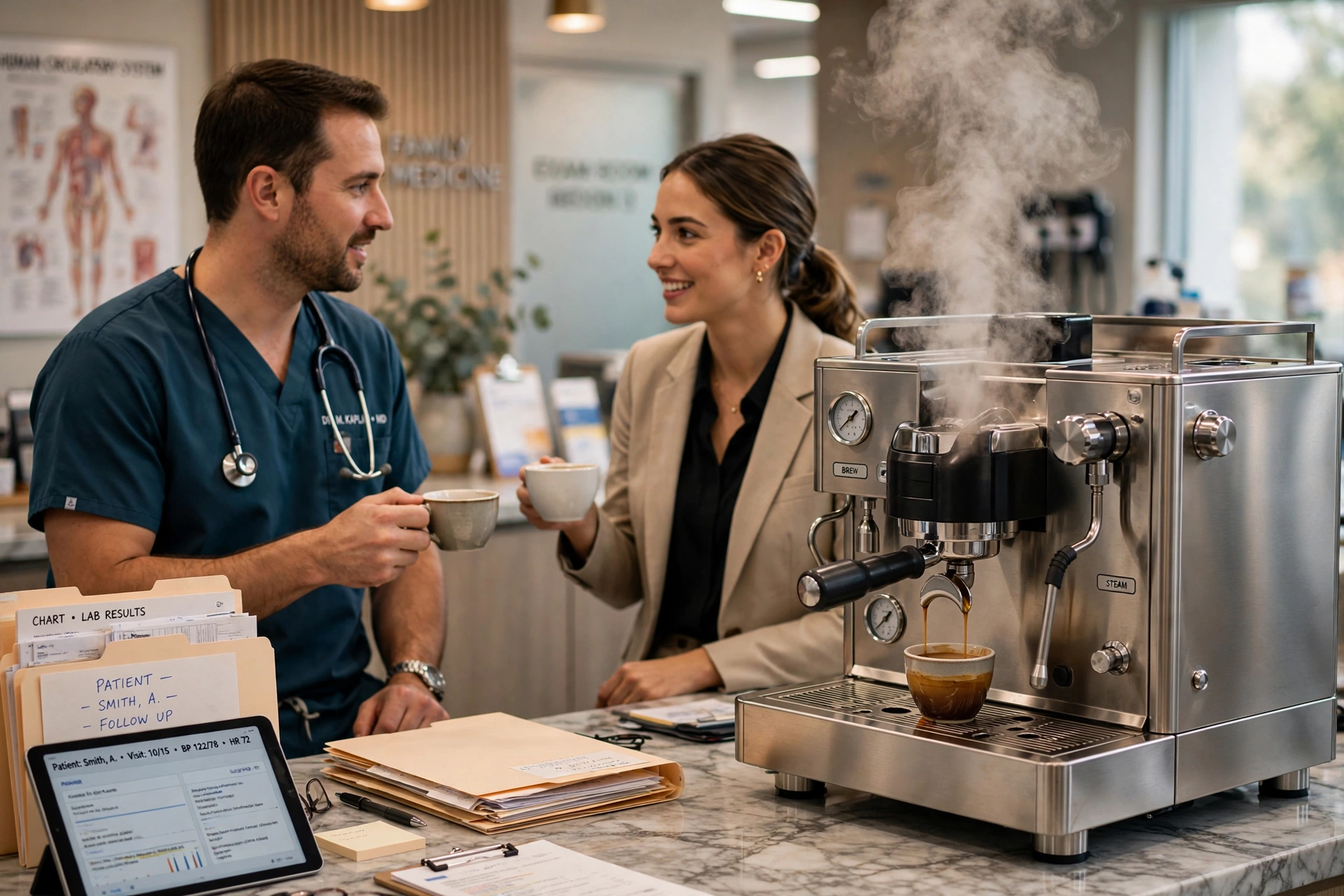
- Solution: We implemented an identical managed subscription across all three locations. Each received a compact super-automatic espresso machine (SENSA Duo) capable of making lattes, cappuccinos, and premium drip coffee with one touch. We provided unified training for office managers.
- Results:
- Staff Satisfaction: Survey scores for breakroom amenities jumped from 45% to 92% positive within 3 months.
- Patient Feedback: Spontaneous positive comments about the coffee became common, noted as a differentiating, calming factor in patient surveys.
- Operational Simplicity: One monthly invoice, one service provider for all locations, and automated bean delivery eliminated managerial hassle.
- Quote from the Practice Administrator: "It made us feel like a premium practice. The install was seamless, and our staff now looks forward to their coffee break. It’s a small thing that made a big cultural difference."
2. The Boutique Hotel in a Competitive Urban Market
- Challenge: The hotel’s restaurant had a great espresso machine, but the complimentary lobby coffee was a basic, bitter batch brew from a dated machine. It undermined the property's curated, high-end aesthetic.
- Solution: We replaced the old brewer with a sleek, commercial-grade thermal batch brewer and introduced a curated single-origin coffee program. We added a small signage tent card telling the story of the coffee's origin.
- Results:
- Guest Experience: Lobby dwell time increased, with guests often taking coffee to enjoy in seating areas. The coffee became a talking point mentioned in positive online reviews.
- Upsell Opportunity: The visible quality of the complimentary coffee drove more guests to order paid specialty drinks at the restaurant bar.
- Brand Alignment: The coffee experience finally matched the hotel's design and service ethos. This is a prime example of a successful hotel coffee program.
3. The Mid-Size Corporate Office Transitioning Back to Work
- Challenge: Leadership wanted a compelling reason for employees to value in-office days over working from home. The old pod machine and stale beans were a point of complaint, not attraction.
- Solution: We installed a high-output super-automatic machine with a built-in grinder and fresh bean hopper, capable of making a wide variety of drinks. We launched it with a "Coffee Re-Launch" week, featuring training and samples.
- Results:
- Culture & Collaboration: The coffee station became a new hub for spontaneous conversation. Internal surveys showed a 15% increase in employees reporting "I enjoy the in-office environment."
- Cost Savings: They eliminated external coffee catering for meetings, saving hundreds per month.
- Talent Perception: Recruitees touring the office consistently mentioned the coffee setup as a notable positive.
These cases prove that whether the goal is culture, revenue, or brand, the right partnership delivers measurable outcomes. For more on outfitting specific business types, see our guides for
cafes or
corporate settings.
Common Mistakes to Avoid in Your Coffee Equipment Strategy
After a decade in this industry, I’ve seen the same pitfalls derail well-intentioned programs. Avoid these to ensure your
specialty coffee equipment business investment pays off.
1. Prioritizing Price Over Total Cost of Ownership (TCO). Buying the cheapest machine leads to the highest long-term cost. Inexpensive equipment breaks down frequently, requires costly repairs, produces inconsistent quality that wastes beans, and often needs replacement within 2-3 years. Calculate TCO over 5 years, including purchase price, expected repairs, and downtime.
2. Underestimating the Importance of Training. A $20,000 espresso machine in the hands of an untrained employee will produce $2 coffee. Skipping or cheaping out on training is the fastest way to ruin your investment. Make it mandatory and ongoing.
3. Neglecting Water Filtration. Scale from hard water is the #1 killer of coffee equipment. It clogs boilers, valves, and steam wands, leading to expensive repairs and terrible-tasting coffee. A $300 filtration system can save you thousands in repairs and preserve flavor integrity. This is non-negotiable.
4. Choosing the Wrong Model for Your Workflow. Putting a complex semi-automatic machine in a busy doctor's office where no one has time to steam milk is a recipe for failure. Conversely, putting a basic pod machine in a craft cafe will disappoint customers. Align the equipment type with your operational reality and skill level.
5. Failing to Plan for Maintenance. All machines require care. Not budgeting for or scheduling regular preventive maintenance (cleaning, descaling) guarantees premature failure. This is the core advantage of a managed service—it’s built into the model.
6. Treating Coffee as a Commodity, Not an Experience. This is a strategic mindset error. If you view coffee as just a caffeine delivery system, you’ll make decisions that lead to the mistakes above. View it as a key sensory touchpoint in your customer or employee journey, and the investment in quality equipment and service follows logically.
7. Going It Alone Without a Specialist Partner. Trying to source machines, beans, and service from different vendors creates accountability chaos. When something goes wrong, each vendor blames the other. A single-source, specialized partner like Busy Bean Coffee owns the entire outcome, simplifying your life and guaranteeing performance.
Frequently Asked Questions
What exactly qualifies as "specialty" coffee equipment?
Specialty coffee equipment is machinery built to the precise technical standards required to properly extract coffee graded 80+ points (specialty grade). This includes precise temperature control (typically within ±1°F), consistent water pressure (9 bars for espresso), and grinders that produce uniform particle sizes. It's commercial-grade, durable, and designed for flavor clarity, not just volume. It's the tool that allows the quality of the bean to shine through consistently.
How much does a full specialty coffee setup cost for a small business?
For a small cafe or high-end office, a full setup (espresso machine, grinder, water filter, basic tools) under a managed subscription model typically starts between $400 and $900 per month, inclusive of machine, service, and support. Coffee beans are additional but at wholesale rates. Outright purchase can range from $8,000 to $20,000 for the equipment alone, plus ongoing service costs. The subscription model is far more accessible and de-risked for most small businesses.
Can I use my own coffee beans with a managed equipment service?
This varies by provider. Some strictly require you use their beans to ensure machine performance and warranty compliance. Others, like Busy Bean Coffee, offer flexibility. While we provide exclusive, premium beans optimized for our equipment as part of our membership (often at a better value), we can often configure machines to work well with high-quality third-party beans you may prefer. The key is ensuring the beans are fresh, specialty grade, and appropriately roasted for the equipment.
What happens if the machine breaks down? What is the typical response time?
This is the critical question. A professional specialty coffee equipment business will have a clear Service Level Agreement (SLA). At Busy Bean Coffee, our standard includes remote troubleshooting within 2 hours and, if needed, an on-site technician dispatch within 24-48 hours for priority issues. We also provide loaner equipment in critical failure scenarios to ensure you have zero downtime. Always ask potential providers for their guaranteed response and resolution times.
Is a specialty coffee program worth it for a business that doesn't sell coffee (like an office or clinic)?
Absolutely, and often the ROI is even clearer. In a non-revenue setting, the ROI is measured in employee retention, recruitment, productivity, and professional impression. The cost of a premium coffee program is often less than what companies spend on random coffee runs, stale pods, and external catering. It’s an investment in your team's daily experience and well-being, which pays dividends in culture and reduced turnover costs.
How much space and what utilities do I need?
Space needs are modest: typically a 24" deep counter space that's 36-48" wide. The critical utility is access to a cold water line (with a drain nearby for some machines) and a standard 110V or dedicated 220V electrical outlet, depending on the machine's power. A professional provider will conduct a site survey to confirm all requirements before installation. Good ventilation is also helpful.
How do I train my staff who aren't baristas?
Comprehensive training is a core part of any reputable service. Training is tailored to the user's level. For a super-automatic in an office, it's a 30-minute session on operating the touchscreen, filling bean/water tanks, and emptying waste containers. For a more advanced machine, it's more involved. The goal is to make staff feel confident, not intimidated. We provide quick-reference guides and are always a phone call away for support.
What's the difference between your service and a company like Aramark or Compass?
Large broadline distributors (Aramark, Sodexo) are fantastic for massive-scale, commodity foodservice. A specialized specialty coffee equipment business like ours focuses exclusively on premium coffee. This means deeper expertise, higher-quality equipment choices (not just the brands they have contracts with), more personalized white-glove service, and a partnership model built for mid-size businesses that want excellence, not just a bulk commodity. We are specialists, not generalists.
Final Thoughts on Building Your Specialty Coffee Equipment Business
The landscape for business coffee in 2026 is defined by heightened expectations. Whether from guests, employees, or customers, the demand for a premium, consistent, and convenient coffee experience is a permanent shift. Building or upgrading your specialty coffee equipment business capability is no longer a fringe luxury; it's a core operational strategy for enhancing revenue, culture, and brand reputation.
The path to success lies in choosing the right model. The complexity of sourcing, maintaining, and optimizing high-performance coffee equipment makes the traditional purchase-and-hope approach fraught with risk and hidden cost. The modern, winning strategy is partnership. By aligning with a dedicated specialty coffee equipment business that offers a managed, all-inclusive service, you transform a potential operational headache into a seamless, predictable, and powerful asset.
You gain access to expert guidance, state-of-the-art technology, and—most importantly—the peace of mind that comes with guaranteed performance and support. This allows you to focus on what you do best: running your business, serving your customers, and leading your team.
If you're ready to explore how a tailored, managed specialty coffee program can drive measurable value for your hotel, restaurant, office, or facility, the conversation starts with a consultation. At
Busy Bean Coffee, we’ve built our entire company around this partnership model. Let's discuss your goals and craft a coffee program that not only meets but exceeds the expectations of 2026.
Recommended Readings
To deepen your understanding of these topics, we recommend reading the following articles:
Free Coffee Pairing Guide & Specialty Roast Cheat Sheet
Unlock the secrets of perfect brewing ratios, water temperatures, and specialty roast profiles. Download the guide.