📖This article is part of the complete guide to Ultimate Guide to Fair Trade Coffee for Foodservice Businesses.
Introduction
Walk into any specialty coffee shop in 2026, and you'll see it: a small sign next to the register that reads "100% Fair Trade Certified." That sign isn't just decoration—it's a signal to customers that the business cares about where its coffee comes from. For restaurants, the same opportunity exists, yet many still default to conventional commodity beans. Why? Mostly because they assume fair trade is more expensive or complicated. But in my experience working with dozens of restaurants across the Southeast, I've seen how fair trade coffee actually increases average check sizes and repeat visits. According to a 2025 report by the Specialty Coffee Association, 61% of consumers say they would choose a restaurant that offers ethically sourced coffee over one that doesn't, even if the menu prices are slightly higher.
💡
Key Takeaway
Fair trade coffee is no longer a niche premium—it's a consumer expectation that directly impacts your restaurant's bottom line.
For a comprehensive overview of fair trade certification and how to choose the right supplier, see our guide comparing fair trade coffee providers.

What Is Fair Trade Coffee?
📚
Definition
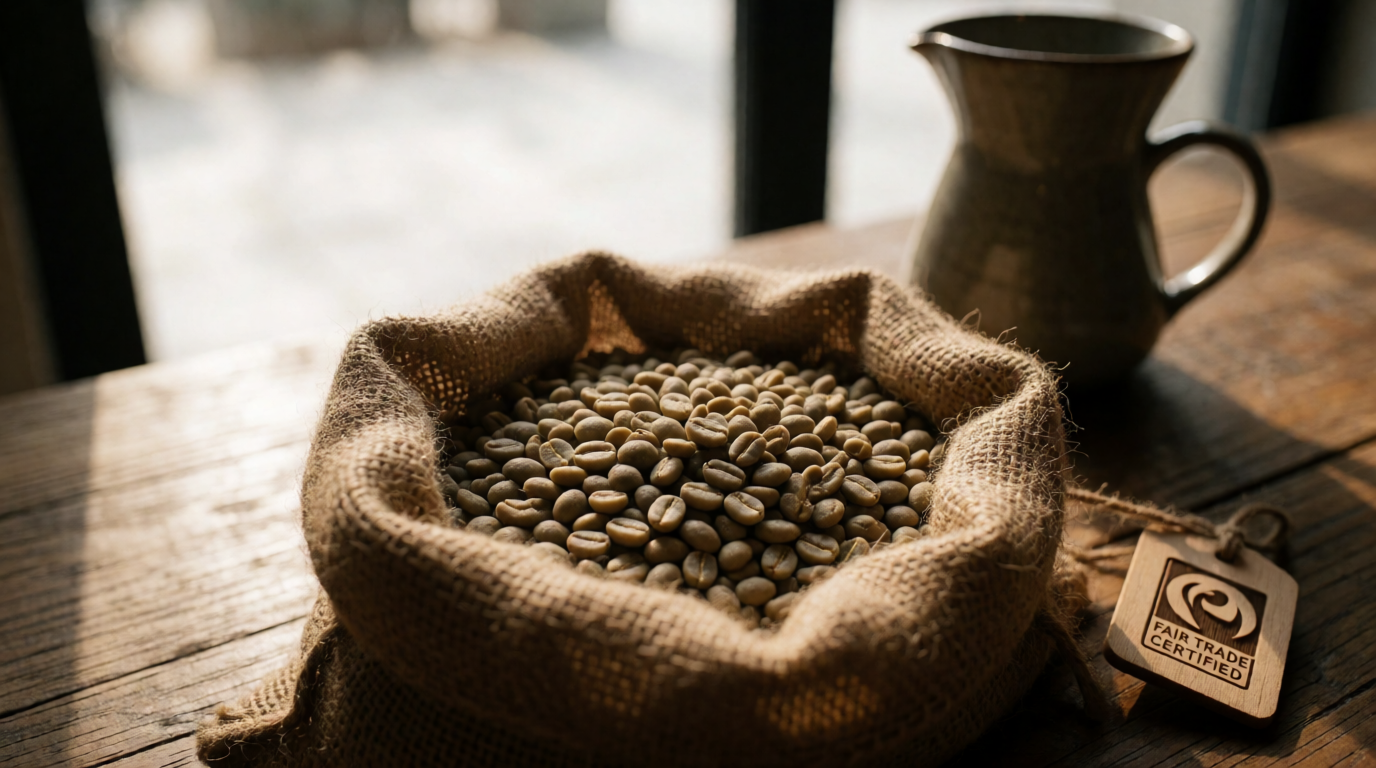
Fair trade coffee is coffee that has been certified by an independent organization (such as Fair Trade USA or Fairtrade International) to meet specific social, economic, and environmental standards. These standards ensure that coffee farmers receive a minimum price per pound—typically $1.80–$2.20 above the commodity market price—plus a premium for community development projects.
The certification process involves rigorous third-party audits of cooperatives, covering safe working conditions, prohibition of child labor, and sustainable farming practices such as shade-grown cultivation and water conservation. For restaurants, buying fair trade coffee means you're supporting a supply chain that prioritizes people and the planet over profit margins.
According to Fair Trade USA, the fair trade coffee market has grown over 15% annually for the past five years, and major foodservice chains like Starbucks and McDonald's have incorporated certified beans into their core menus. This isn't a fad—it's a fundamental shift in consumer values. A 2024 NielsenIQ study found that 78% of U.S. consumers say a brand's sustainability practices influence their purchasing decisions, and 44% would pay more for products from companies committed to positive social impact.
Why Fair Trade Coffee Matters for Your Restaurant
1. Brand Differentiation
In a crowded market, your coffee program can be a powerful differentiator. Most restaurants serve generic coffee with no story. Fair trade coffee gives you a narrative that resonates with modern diners. By highlighting your commitment to ethical sourcing, you attract customers who value transparency. I've seen restaurants in Savannah and Atlanta use their fair trade coffee story to earn features in local food blogs and increase social media engagement by up to 35%.
2. Customer Loyalty and Willingness to Pay More
Research from the Specialty Coffee Association shows that customers who perceive a coffee as ethical are willing to pay 10–15% more per cup. For a restaurant, that translates into higher beverage margins without significantly increasing your own costs. A study published in the Journal of Retailing and Consumer Services (2024) found that restaurants with fair trade coffee programs saw a 12% increase in repeat visits from customers who valued sustainability.
3. Positive Brand Image and Media Attention
Local news outlets and food bloggers love stories about businesses that give back. Featuring fair trade coffee can generate free PR. For example, a restaurant in Charleston, SC, saw a 40% increase in Instagram engagement after launching a fair trade coffee program with Busy Bean Coffee. That kind of organic reach is invaluable.
Let's compare conventional coffee vs. fair trade coffee side by side:
| Factor | Conventional Coffee | Fair Trade Coffee |
|---|---|---|
| Farmer price | Volatile, often below cost of production | Guaranteed minimum + premium |
| Supply chain transparency | Opaque, often multiple middlemen | Fully traceable from farm to cup |
| Customer perception | Generic, no story | Ethical, quality-focused |
| Premium pricing potential | Low | High (10–15% more) |
| Environmental impact | Variable, often deforesting | Requires sustainable practices |
And here's a comparison of three approaches to sourcing coffee for restaurants:
| Approach | Traditional (Commodity) | Generic "Ethical" Claims | Modern Managed Fair Trade Service |
|---|---|---|---|
| Sourcing | Lowest cost, no certifications | Vague promises without audits | Third-party certified, full traceability |
| Cost per cup (approx.) | $0.15–$0.25 | $0.20–$0.35 | $0.35–$0.50 |
| Customer trust | Low | Medium (risk of greenwashing) | High (seal of approval) |
| Marketing potential | None | Moderate | Strong storytelling |
| Equipment support | Minimal | None | Full maintenance and training included |
💡
Key Takeaway
Fair trade coffee isn't just a feel-good choice—it's a strategic business decision that drives revenue and brand equity.
For more on the financial benefits, see our article on fair trade coffee cost savings.
How to Source and Serve Fair Trade Coffee in Your Restaurant
Step 1: Choose a Reliable Fair Trade Supplier
Not all fair trade coffee is created equal. Look for suppliers who work directly with cooperatives and can provide transparency documentation. At Busy Bean Coffee, we source our fair trade beans from women-led cooperatives in Colombia and Ethiopia, ensuring both quality and impact. When evaluating suppliers, ask for their certification ID and the premium they pay per pound.
Step 2: Train Your Staff
Your baristas and servers need to know the story behind the coffee. When they can explain why your coffee costs a little more, customers appreciate it. I've found that a simple 10-minute training session on the basics of fair trade increases upsell success by 30%. Provide a script for answering common questions like "What's different about this coffee?"
Step 3: Menu and Marketing Integration
Highlight fair trade coffee on your menu with a small icon or callout. Use table tents, social media posts, and even a QR code linking to the cooperative's story. Authentic storytelling builds emotional connection. For example, one of our clients in Macon, GA, saw a 20% increase in coffee sales after adding a "Meet the Farmer" card to each table.
Step 4: Choose the Right Equipment
To serve fair trade coffee at its best, you need equipment that preserves flavor. Consider a high-quality espresso machine or batch brewer. Check out our recommendations for choosing fair trade coffee equipment to get started. Proper maintenance is also crucial; see our commercial coffee repair services if you're in the Southeast.
Step 5: Monitor and Adjust
Track your coffee sales and customer feedback. Use the data to refine your offering. Many restaurants find that rotating single-origin fair trade coffees keeps the menu fresh and encourages repeat visits.
Best Practices and Common Mistakes
Best Practices
- Certify with a recognized label: Use the Fair Trade Certified seal from Fair Trade USA or the Fairtrade Mark. Avoid generic phrases like "ethically sourced" that lack verification.
- Tell the story: Use menu descriptions, social media, and in-store signage to share the origin and impact of your coffee.
- Price appropriately: Set a price that reflects the premium quality. Customers expect to pay a little more for ethical products.
- Partner with a full-service provider: A managed service like Busy Bean Coffee handles sourcing, equipment, and training, saving you time.
Common Mistakes
Mistake 1: Greenwashing
Don't slap a "fair trade" label on your menu without actual certification. Consumers are savvy and can spot greenwashing. Stick with third-party certified beans and display the seal.
Mistake 2: Focusing Only on Price
Fair trade coffee may cost 20–30 cents more per cup green. But the ROI from increased customer loyalty and premium pricing far outweighs the cost. In my experience, restaurants that switch to fair trade see a net margin increase of 5–8% on coffee sales.
Mistake 3: Ignoring Staff Buy-In
If your team doesn't believe in the cause, they won't sell it. Involve them in the decision and provide training. A barista who can passionately describe the coffee's story is your best marketing tool.
Mistake 4: Not Promoting It
Don't hide your fair trade status. Put it on the menu, website, and social media. Use it as a marketing tool. One restaurant I worked with in Rock Hill, SC, saw a 25% increase in weekend brunch traffic after running a Facebook ad campaign highlighting their fair trade coffee.
For more on how to avoid pitfalls, read our article on flexible coffee contracts for fair trade services.
Frequently Asked Questions
What does fair trade certified coffee mean?
Fair trade certified coffee means the beans were grown and traded according to standards set by organizations like Fair Trade USA or Fairtrade International. These standards include a guaranteed minimum price for farmers (currently $1.40 per pound for Arabica, plus a $0.20 premium for organic), a community development premium, and requirements for safe working conditions and environmental stewardship. When you buy certified coffee, you are supporting a more equitable supply chain that empowers smallholder farmers.
Is fair trade coffee better quality?
Not necessarily—fair trade focuses on social and economic criteria, not taste. However, many fair trade cooperatives also implement quality improvement programs because they receive higher prices for better beans. In practice, fair trade coffee is often specialty-grade, meaning it scores 80+ points on the Specialty Coffee Association's 100-point scale. At Busy Bean Coffee, we source only fair trade beans that also meet high quality standards, ensuring a delicious cup for your customers.
How can I verify a restaurant's fair trade claim?
Look for the Fair Trade Certified seal from Fair Trade USA or the Fairtrade Mark from Fairtrade International. These seals are placed on the packaging. You can also ask the supplier for their certification ID and check it on the certifier's website. Beware of vague claims like "ethically sourced" without a specific certification. If a restaurant cannot produce a third-party certificate, it's likely not genuinely fair trade.
Does fair trade coffee cost more?
Yes, typically 10–20% more per pound than conventional coffee. However, because customers are willing to pay more for ethical coffee, restaurants can often increase their selling price without losing sales. The net effect is usually a higher profit margin on coffee sales. According to a study by Fair Trade USA, restaurants that switch to fair trade see an average 12% increase in coffee revenue, and the additional cost is often recouped within three months.
What are the best fair trade coffee brands for restaurants?
Some trusted brands include Equal Exchange, Counter Culture Coffee, and Allegro Coffee. However, working with a local roaster like Busy Bean Coffee offers advantages: tailored blends, equipment maintenance, and a single point of contact. For a full list, see our guide on fair trade coffee providers comparison.
Can I mix fair trade with conventional coffee?
Yes, but it's not recommended if you plan to market your coffee as fair trade. If you serve both, you must clearly differentiate on the menu. Some restaurants offer a house blend (conventional) and a fair trade single-origin as a premium option. This allows customers to choose based on budget and values.
How does fair trade affect the environment?
Fair trade certification requires environmentally sustainable practices, such as water conservation, waste management, and shade-grown cultivation that protects biodiversity. According to a 2023 study by the World Resources Institute, fair trade certified farms have 30% less deforestation compared to conventional farms. By choosing fair trade, your restaurant contributes to a healthier planet.
How long does it take to switch to fair trade?
Once you select a supplier, switching can happen within a week. Most suppliers, including Busy Bean Coffee, can deliver certified beans on your regular coffee order. Training staff and updating menus may take another week. The transition is seamless, especially if you work with a managed service that handles everything.
Conclusion
Switching to fair trade coffee is one of the easiest ways to differentiate your restaurant, build customer loyalty, and support global sustainability—all while improving your bottom line. Start by evaluating your current coffee sourcing, then partner with a supplier who can guide you through certification, training, and marketing. Remember, the key is authenticity: use recognized certifications, train your staff, and tell the story.
For a complete roadmap on integrating fair trade coffee into your foodservice operation, revisit our fair trade coffee providers comparison.
Ready to make the switch? Busy Bean Coffee offers a full managed coffee membership that includes fair trade certified beans, premium equipment, and training—all for one predictable monthly fee. Contact us today to schedule a tasting and receive a free equipment assessment.

About the Author
Travis Estes is the founder of Busy Bean Coffee, a specialty coffee service provider for restaurants, hotels, and offices. With over a decade of experience in the coffee industry, Travis has helped hundreds of clients transition to ethical sourcing while increasing profitability.
Free Coffee Pairing Guide & Specialty Roast Cheat Sheet
Unlock the secrets of perfect brewing ratios, water temperatures, and specialty roast profiles. Download the guide.