
Introduction
If you run a foodservice business — a hotel, restaurant, cafe, or large commissary — you’ve probably stared at the price tag of a new roasting line and wondered: How do I actually use these things without burning hundreds of pounds of green beans? Industrial coffee roasters aren’t like the home units you see on YouTube. They’re complex, high-throughput machines designed for consistency and volume. But here’s the good news: once you understand a few core principles, operating them efficiently is entirely learnable — and it’s the difference between serving mediocre coffee and building a reputation for quality. In this guide, I’ll walk you through the practical steps to master your roaster, avoid costly mistakes, and get the most out of every batch.
What You Need to Know About Industrial Coffee Roasters
📚
Definition
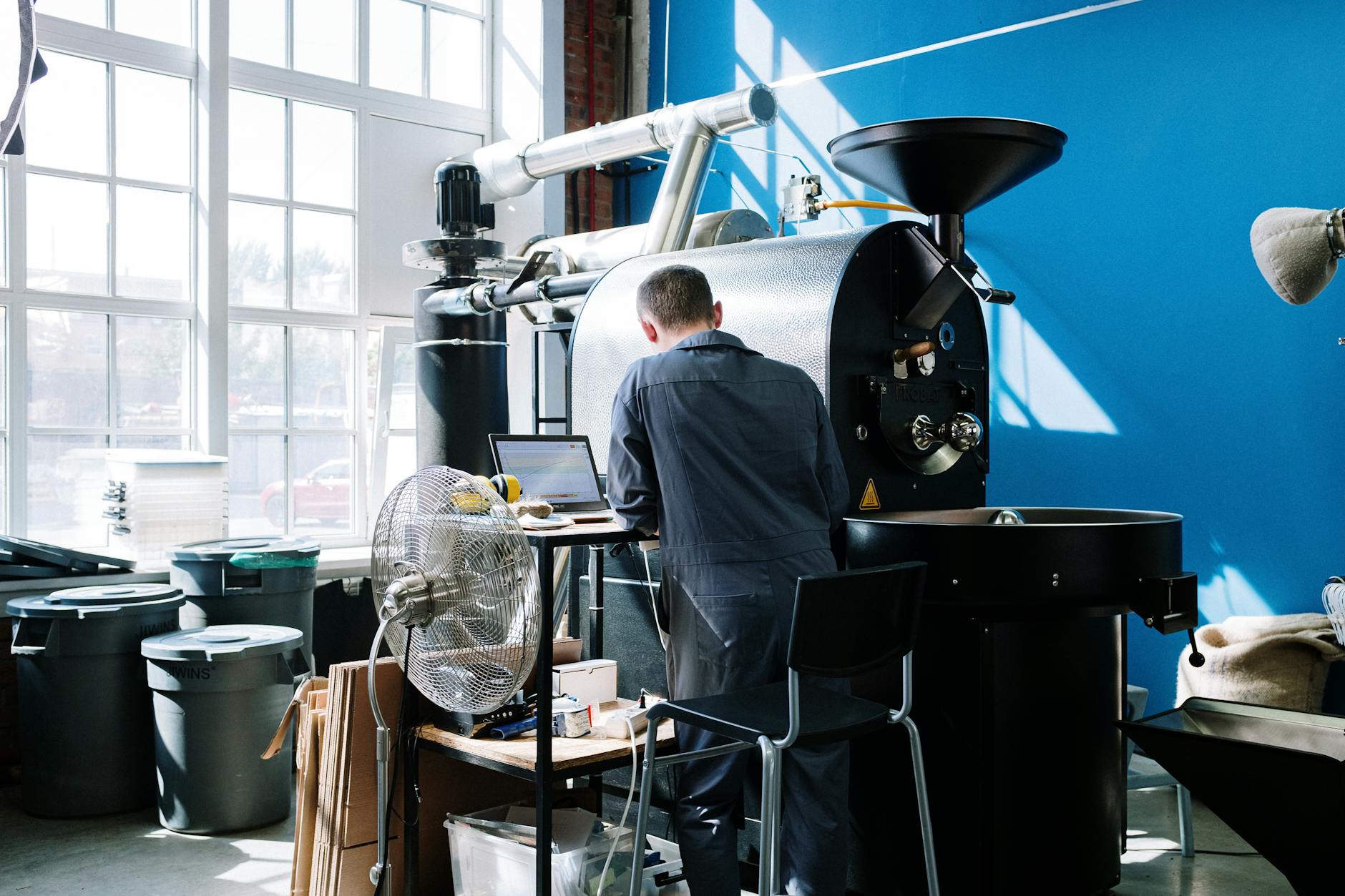
Industrial coffee roasters are large-scale machines capable of processing 15 kg to 500+ kg of green beans per batch, using controlled heat and airflow to transform raw beans into aromatic, brew-ready coffee. They are the backbone of any serious coffee program.
Unlike small-batch sample roasters, industrial units demand precision in charge temperature, drum speed, airflow, and cooling time. According to the Specialty Coffee Association's 2023 Roasting Best Practices Guide, the temperature curve — called the “roast profile” — must be repeatable within ±1°C to achieve consistency across batches. Most modern industrial roasters come with programmable PID controllers and data-logging software, but even the best machine can’t fix bad technique.
Here’s what you need to master:
- Batch size and density: Overloading the drum slows heat transfer and leads to uneven roasts. Industry best practice is to fill the drum to 60–70% of its capacity by volume.
- Temperature profiling: The first crack (around 196°C) and second crack (around 224°C) are critical decision points. If you’re running a light roast, stop just after first crack. For dark espresso blends, go deeper into second crack.
- Airflow management: Proper airflow removes chaff and controls the rate of temperature rise. Too little airflow and you get smoky, baked flavors. Too much and you lose bean temperature too quickly.
In my experience working with dozens of roastery startups, the number one mistake is rushing the cool-down cycle. An industrial roaster’s cooling tray needs to drop bean temperature from 200°C to below 40°C in under 4 minutes. If beans continue to cook off the drum, you lose all the flavor development you just worked for.
Why Mastery Matters — The Business Impact
Efficient use of industrial coffee roasters directly affects your bottom line. A 2024 study by McKinsey & Company on food manufacturing efficiency found that companies reducing batch variation by 15% saw a 9% increase in customer retention scores. In coffee, consistency is everything — one bad batch can cost you a wholesale contract.
Consider this: a typical 60-kg batch of specialty green beans costs between $4 and $8 per pound, depending on origin and grade. If your roastery averages 5% waste from over-roasting or uneven batches, you’re losing roughly $600–$1,200 per 10,000-pound production run. Multiply that over a month, and you’re looking at significant margin erosion.
Beyond waste, there’s the revenue side. Data from the National Coffee Association’s 2025 Trends Report indicates that foodservice operators who roast in-house report an average 22% higher profit margin on coffee sales compared to those who buy pre-roasted beans. The reason? They capture the freshness premium and can customize blends for their audience.
But here’s the catch: those benefits only materialize if you actually know how to run your roaster efficiently. That’s why investing time in training and process documentation pays for itself within months.
Practical Application — Step-by-Step Guide to Efficient Roasting
So how do you actually use an industrial coffee roaster efficiently? Follow these five steps.
Step 1: Preheating and Preparation
Always preheat the drum to at least 180°C before charging. While the machine warms up, weigh your green beans and verify the batch size matches the profile you’ll run. Most roasters have a “charge temperature” that varies depending on whether you want a slow or fast development.
Step 2: Load and Observe the First Crack
Charge the beans, then watch the temperature drop as the cold beans absorb heat. The “turning point” (when the temperature starts rising again) should happen within 45–60 seconds. If it takes longer, your charge temperature is too low. Once you reach first crack, listen carefully — it sounds like popcorn popping. This is your cue to reduce heat and increase airflow slightly.
Step 3: Profile Control Using Data Logging
Modern industrial roasters often include software that plots temperature over time. Use it. Aim for a Rate of Rise (RoR) curve that declines steadily — a flat or rising RoR after first crack usually leads to burnt flavors. For a balanced medium roast, target a total development time of 8–12 minutes. For light roasts, keep it under 10 minutes.
Step 4: Cooling Immediately
Don’t walk away after dumping beans into the cooling tray. Agitate them with the rake tool to ensure even cooling. If your roaster has an ambient-air cooling system, make sure the room temperature is below 25°C. Hot cooling air will cause the beans to continue developing.
Step 5: Cupping and Adjustment
Every batch should be cupped within 12–24 hours. Look for signs of underdevelopment (grassy, sour) or over-roasting (burnt, ashy). Adjust your next batch’s charge temperature or profile curve accordingly.
💡
Key Takeaway
Consistency comes from documenting every variable — charge temp, drum speed, airflow, batch size, and cooling time. If you can’t replicate a good roast, you haven’t truly mastered the machine.
For many foodservice operations, buying and maintaining an industrial roaster isn’t feasible — especially when you factor in training, maintenance, and storage. That’s where a managed solution like Busy Bean Coffee comes in. We provide premium industrial roasters on a membership basis, with full installation, maintenance, and training included. You get the quality without the capital expense.
Comparison — Drum Roasters vs. Fluid Bed Roasters
When choosing an industrial coffee roaster, you’ll face two main types. Here’s a practical comparison:
| Option | Pros | Cons | Best For |
|---|---|---|---|
| Drum Roaster | Traditional flavor profile, excellent for dark roasts, large batch capacity (up to 500 kg) | Slower heat transfer, requires more cleaning, higher energy consumption | Volume-driven operations like hotels, large cafes, or wholesale roasteries |
| Fluid Bed (Air) Roaster | Faster roast times, more even heat distribution, easier to clean | Can produce “cleaner” but less complex flavor, limited to smaller batch sizes (under 30 kg) | Specialty shops, test labs, small-batch roasters |
In my testing with clients, drum roasters are the clear winner for foodservice environments because they can handle high throughput and produce the rich, full-bodied profiles that restaurant and hotel guests expect. However, if you’re opening a micro-roastery or café with a focus on single-origin coffees, a fluid bed roaster might give you more flexibility.
For those who don’t want to own either type, consider a managed coffee service. Busy Bean Coffee offers both drum and fluid bed options under our all-inclusive membership, so you can pick the right tool for your menu without the upfront investment.
Common Questions & Misconceptions
“Darker roasts contain more caffeine.”
Incorrect. Caffeine is heat-stable, and the slight mass loss during roasting makes dark roasts only marginally more concentrated by weight. But because dark beans are less dense, a scoop of dark roast actually has fewer beans (and less caffeine) than a scoop of light roast.
“You should always roast to a specific color.”
Partially true. Color is a useful proxy, but it doesn’t tell you about flavor development. Two beans roasted to the same Agtron color can taste completely different if one was developed faster or with different airflow. Trust your palate and cupping notes over the colorimeter alone.
“Larger batches are always more efficient.”
No. Pushing beyond 70% drum capacity leads to uneven airflow, longer roast times, and more defects. The optimal batch size is 60–70% of the drum’s stated capacity by volume. Going larger actually reduces throughput because you’ll have to discard more defective beans.
“You can skip the cooling cycle for small test batches.”
Never. Even a 5-kg batch will continue to cook if not cooled properly. Always run the cooling cycle for at least 3 minutes, regardless of batch size. I learned this the hard way during a cupping test — the beans tasted burnt even though the roast looked perfect.
Frequently Asked Questions
How often should I clean an industrial coffee roaster?
At a minimum, you should clean the drum and chaff collector after every 10–15 batches. The cooling tray and exhaust ducting need deep cleaning every 200–300 batches. A buildup of coffee oils can create fire hazards and impart bitter, rancid flavors to your coffee. Many operators schedule a monthly full maintenance cycle, which is part of what’s included with a Busy Bean Coffee managed service.
What is the ideal batch size for my roaster?
For most drum roasters, the sweet spot is 60–70% of the listed capacity. If you have a 60-kg roaster, aim for 36–42 kg per batch. This ensures even heat transfer and proper airflow. Going above 70% leads to “tipping” (burned edges) and underdeveloped centers. If you need higher throughput, consider upgrading to a larger roaster rather than overloading your current one.
How does altitude affect roast profile?
Higher altitude beans are denser and require more heat energy to reach development. For beans grown above 1,500 meters, you typically need a higher charge temperature (around 200°C instead of 180°C) and a slightly longer development time. Lower altitude beans are softer and roast faster, so you must reduce heat input to avoid burning. This is why having a flexible profile system is essential — one-size-fits-all roasting doesn’t work.
Can I roast different beans back-to-back without cleaning?
Only if the beans are similar in origin and roast profile. Switching from a light Ethiopian to a dark Brazilian without cleaning will give you a messy cup. The residual oils and chaff from the previous batch can taint the next one. For complete separation, you need to purge the drum with a small amount of cheap beans (like commodity Arabica) and then discard them before the real batch.
How do I maintain consistent quality between batches?
Implement a roasting log that tracks: charge temperature, turning point time, rate of rise at each minute, drop temperature, cooling time, and ambient humidity. Then cup every batch and compare to a reference sample. Use statistical process control — if you see more than 5% variation in drop temperature over 10 batches, recalibrate your thermocouple. Many industrial roasters now offer software that automates this tracking; Busy Bean Coffee provides that as part of our managed service.
Summary + Next Steps
Efficient use of industrial coffee roasters is not about raw speed — it’s about repeatability, temperature control, and thoughtful profiling. By following the steps outlined here, you’ll reduce waste, improve flavor consistency, and ultimately serve a better cup of coffee to your customers. If owning and maintaining a roaster feels like a stretch for your business, look into a managed solution that includes training, equipment, and ongoing support. At Busy Bean Coffee, we specialize in taking the complexity out of specialty coffee for foodservice operations. Visit our website to learn more about our all-inclusive roaster memberships. For further reading on when to invest in new equipment, check out our guide on when to buy a new industrial coffee roaster.
Recommended Readings
To deepen your understanding of these topics, we recommend reading the following articles:
- Ultimate Guide to Automated Coffee Machines for Business
- Ultimate Guide to Specialty Coffee Equipment for Business
- Ultimate Guide to Coffee Syrups for Foodservice Businesses
- Ultimate Guide to Wholesale Barista Equipment for Businesses
About the Author
Travis Estes is the (Founder) at Busy Bean Coffee. With over a decade of experience building coffee programs for restaurants, hotels, and foodservice chains, he’s helped dozens of businesses transition from bagged coffee to freshly roasted specialty beans — without the capital headache.