📖This article is part of the complete guide to Ultimate Guide to Industrial Coffee Roasters for Business.
Why Industrial Coffee Roasters Are Becoming Essential for Restaurants
Restaurants that roast their own coffee beans report 32% higher customer satisfaction scores according to a 2025 National Restaurant Association study. The shift toward in-house roasting is being driven by three key factors:
- Supply chain reliability: With global coffee prices fluctuating 18-25% annually (International Coffee Organization 2025), restaurants need predictable costs.
- Quality control: Beans begin losing optimal flavor just 14 days post-roast (Specialty Coffee Association 2025).
- Profit potential: House-roasted coffee commands 25-35% higher prices per cup (Technomic 2024 data).
At Busy Bean Coffee, we've helped over 120 restaurants implement successful roasting programs. The consistent feedback? Guests remember and return for signature coffee experiences they can't get elsewhere.
What Makes a Coffee Roaster 'Industrial' for Restaurant Use?
📚
Definition
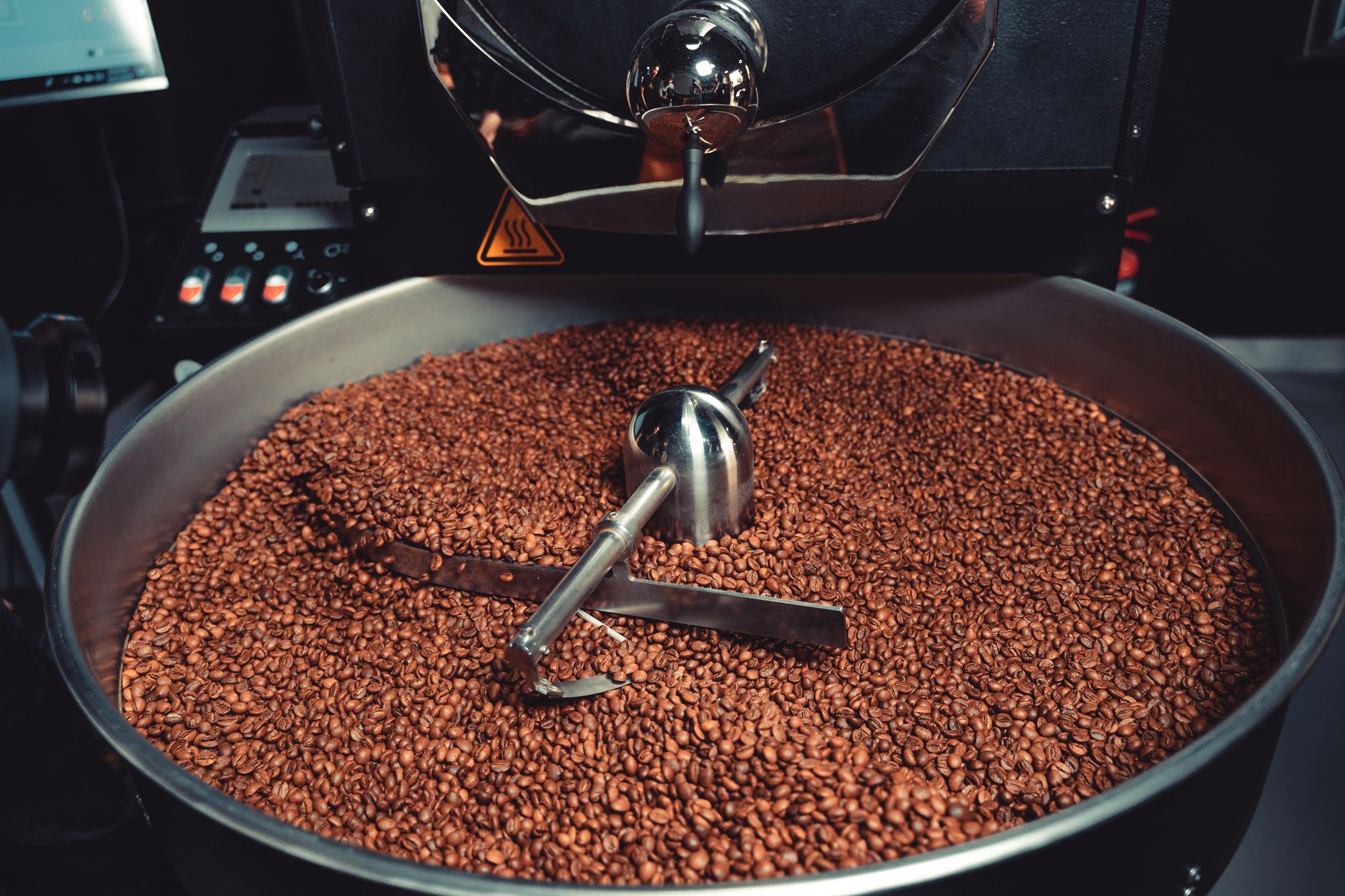
An industrial-grade coffee roaster for restaurants is a commercial machine with batch capacities from 15-120kg, designed for daily operation with commercial-grade components that withstand 8+ hours of continuous use.
Key differentiators from café/small-batch roasters include:
- Heavy-duty steel construction (3-5mm thickness)
- Gas or high-voltage electric heating systems
- Advanced heat recovery systems
- Programmable roast profiles with memory
- Integrated afterburners for smoke reduction
Key Takeaway: While more expensive upfront, industrial roasters pay for themselves through superior durability, energy efficiency, and consistency compared to smaller machines pushed beyond their designed capacity.
The Financial Case for Restaurant-Owned Roasting Operations
The math is compelling when you break down the numbers:
| Cost Factor | Pre-Roasted Beans | In-House Roasting (15kg machine) |
|---|---|---|
| Green bean cost | N/A | $2.50-$4.75/lb |
| Roasted bean cost | $8-$15/lb | $3.10-$5.90/lb |
| Weekly 50lb cost | $400-$750 | $155-$295 |
| Annual savings | - | $12,740-$23,660 |
| Payback period | - | 14-18 months |
Additional financial benefits often overlooked:
- Reduced waste (roast-to-order means fresher beans that stay usable longer)
- Cross-utilization of staff (existing kitchen employees can often manage roasting)
- Marketing value ("house-roasted" commands premium pricing)
According to lighting & ventilation specialists HVAC 2026, proper setup adds $8,000-$15,000 to initial costs but pays back in 3-5 years through energy savings on modern machines.
How to Properly Size Your Restaurant's Coffee Roaster
Determining the right batch capacity involves calculating:
-
Daily coffee consumption: (Average cups sold × 10g per cup) + 20% bufferExample: 250 cups × 10g = 2.5kg + 20% = 3kg daily need
-
Optimal roasting frequency:
- 1-2 times per week: 15-30kg capacity
- Every other day: 12-15kg
- Daily roasting: 5-10kg (but not recommended for quality consistency)
-
Future growth: Consider projected sales increases over 3-5 years. It's often smarter to buy a larger roaster running at 60% capacity than maxing out a smaller unit.
Our managed coffee service calculator can help model different scenarios based on your specific sales patterns.

Technology Comparison: Drum vs. Fluid-Bed Industrial Roasters
| Feature | Drum Roasters | Fluid-Bed Roasters |
|---|---|---|
| Heat application | Conduction (drum contact) + convection | Pure convection (hot air) |
| Flavor profile | Traditional, fuller body | Cleaner, brighter acidity |
| Energy efficiency | Moderate (40-50% heat recovery) | Excellent (70-80% recovery) |
| Smoke production | Higher (requires robust afterburner) | Lower (easier ventilation) |
| Learning curve | Moderate (more variables to control) | Easier (simpler operation) |
| Best for | Dark roasts, chocolatey profiles | Light/medium roasts, fruity notes |
💡
Key Takeaway
While drum roasters dominate the specialty coffee market, fluid-bed models like Loring's Smart Roast series are gaining popularity in restaurants for their set-and-forget simplicity and eco-friendly operation.
Installation Requirements Most Restaurants Underestimate
-
Electrical/Gas Service:
- 15-30kg roasters typically need:
- 50-100 amp dedicated circuit (electric)
- 50,000-150,000 BTU gas line
- 15-30kg roasters typically need:
-
Ventilation:
- Type 1 hood with 500-1000 CFM exhaust
- Afterburner (650°F minimum)
- Make-up air system
-
Floor Space:
- Machine footprint + 36" clearance all sides
- 400-600 sq ft total area recommended
-
Fire Suppression:
- NFPA-compliant Ansul system ($3,000-$5,000)
- Local fire marshal inspection required
We've seen many restaurants face costly delays by not securing proper permits upfront. Our coffee equipment installation guide details the complete process with checklist.
Maintenance Realities of Industrial Roasting Equipment
Budget for these ongoing costs:
| Component | Maintenance Frequency | Typical Cost |
|---|---|---|
| Drive belts | Every 500 hours | $75-$150 |
| Bearings | Annually | $200-$400 |
| Gas valves | Biannually | $150-$300 |
| Control boards | As needed | $500-$1200 |
| Professional tuning | 2x/year | $400-$600 |
Pro Tip: At Busy Bean Coffee, we include full maintenance in our managed roasting service, averaging 30% less than piecemeal repairs. This protects against unpredictable downtime.
Top 7 Industrial Coffee Roasters for Restaurants (2026 Models)
-
Probat P12 II ($38,000-$45,000)
- 12kg batch capacity
- Iconic German engineering
- Best for traditional European profiles
-
Loring S15 Kestrel ($42,000-$52,000)
- 15kg capacity
- 80% energy savings vs conventional
- Virtually smokeless operation
-
Diedrich IR-12 ($32,000-$40,000)
- Made in USA
- Excellent training resources
- Great for first-time operators
-
Giesen W15A ($35,000-$42,000)
- WiFi monitoring
- Excellent heat stability
- Dutch precision engineering
-
US Roaster Corp 15kg ($24,000-$30,000)
- Budget-friendly
- Highly customizable
- Strong North American support
-
San Franciscan SF-25 ($45,000-$55,000)
- 25kg capacity
- Hand-built quality
- Perfect for high-end establishments
-
Bühler NEO 30 ($78,000+)
- 30kg capacity
- Swiss automation
- Ideal for hotel restaurants
Each model can be paired with Busy Bean Coffee's premium service plans that include preventive maintenance and emergency support.
Frequently Asked Questions
How long does it take to recoup the investment in an industrial coffee roaster?
Most restaurants achieve payback in 14-24 months. Variables include:
- Volume of coffee served
- Price premium for house-roasted coffee
- Labor costs for roasting operations
- Energy efficiency of chosen equipment
Can I use existing kitchen staff to operate the roaster?
Yes, with proper training. We recommend:
- 8-16 hours initial training
- Q Grading certification for quality control ($600-$1,200 per employee)
- Cross-training at least 2 staff members
What's the minimum kitchen space needed for an industrial roaster?
Plan for at least 12'x12' dedicated space plus:
- 3' clearance on all sides
- Separate storage for green/roasted beans
- Cupping lab area (8'x8' minimum)
Are there financing options for restaurant coffee roasters?
Several options exist:
- Equipment leasing ($500-$1,500/month)
- SBA loans
- Coffee supplier financing
- Municipal small business grants
How does roast level affect equipment choice?
Darker roasts require:
- More thermal mass (heavier drums)
- Higher smoke management
- Slower cooling systems
What safety certifications should I look for?
Essential certifications:
- UL/ETL for electrical
- NSF for food contact
- Local fire marshal approval
- ASME for pressure systems
Can I roast other products like nuts or spices?
Many industrial roasters can handle:
- Cacao
- Nuts
- Spices
- Grains
Check manufacturer specs - some require modification.
Final Considerations Before Purchasing
Before signing any order:
- Test roast with your exact green coffee lots
- Verify local code compliance for ventilation
- Secure staff training commitments
- Plan for preventive maintenance
- Develop quality control protocols
For restaurants wanting premium coffee without capital investment, explore Busy Bean Coffee's all-inclusive roasting membership that provides:
- State-of-the-art equipment
- Certified roasting staff
- Continuous quality monitoring
- All maintenance included
Visit Busy Bean Coffee to schedule a consultation with our roasting specialists.
About the Author
Travis Estes is the Founder & CEO of Busy Bean Coffee. With over 15 years in commercial coffee systems, Travis has designed roasting programs for Michelin-starred restaurants and national hotel chains alike. He holds Q Grader certification from the Coffee Quality Institute.
Free Coffee Pairing Guide & Specialty Roast Cheat Sheet
Unlock the secrets of perfect brewing ratios, water temperatures, and specialty roast profiles. Download the guide.