📖This article is part of the complete guide to Ultimate Guide to Industrial Coffee Roasters for Business.
What Happens Inside an Industrial Coffee Roaster?
If you run a restaurant, hotel, or café chain, you've probably wondered what separates a consistently excellent cup from a mediocre one. The answer starts before the barista touches the portafilter — it starts inside the industrial coffee roaster. These machines are the unsung heroes of the specialty coffee supply chain, transforming dense, green coffee beans into the aromatic, flavorful product your customers expect.
Understanding how industrial coffee roasters work is not just academic curiosity. For foodservice operators, this knowledge directly impacts purchasing decisions, maintenance schedules, and even menu pricing. In my experience working with dozens of foodservice businesses transitioning to managed coffee programs, the teams that understand their roasting equipment make smarter capital decisions and achieve more consistent cup quality.
For comprehensive context on the broader equipment landscape, see our Ultimate Guide to Industrial Coffee Roasters for Business.
📚
Definition
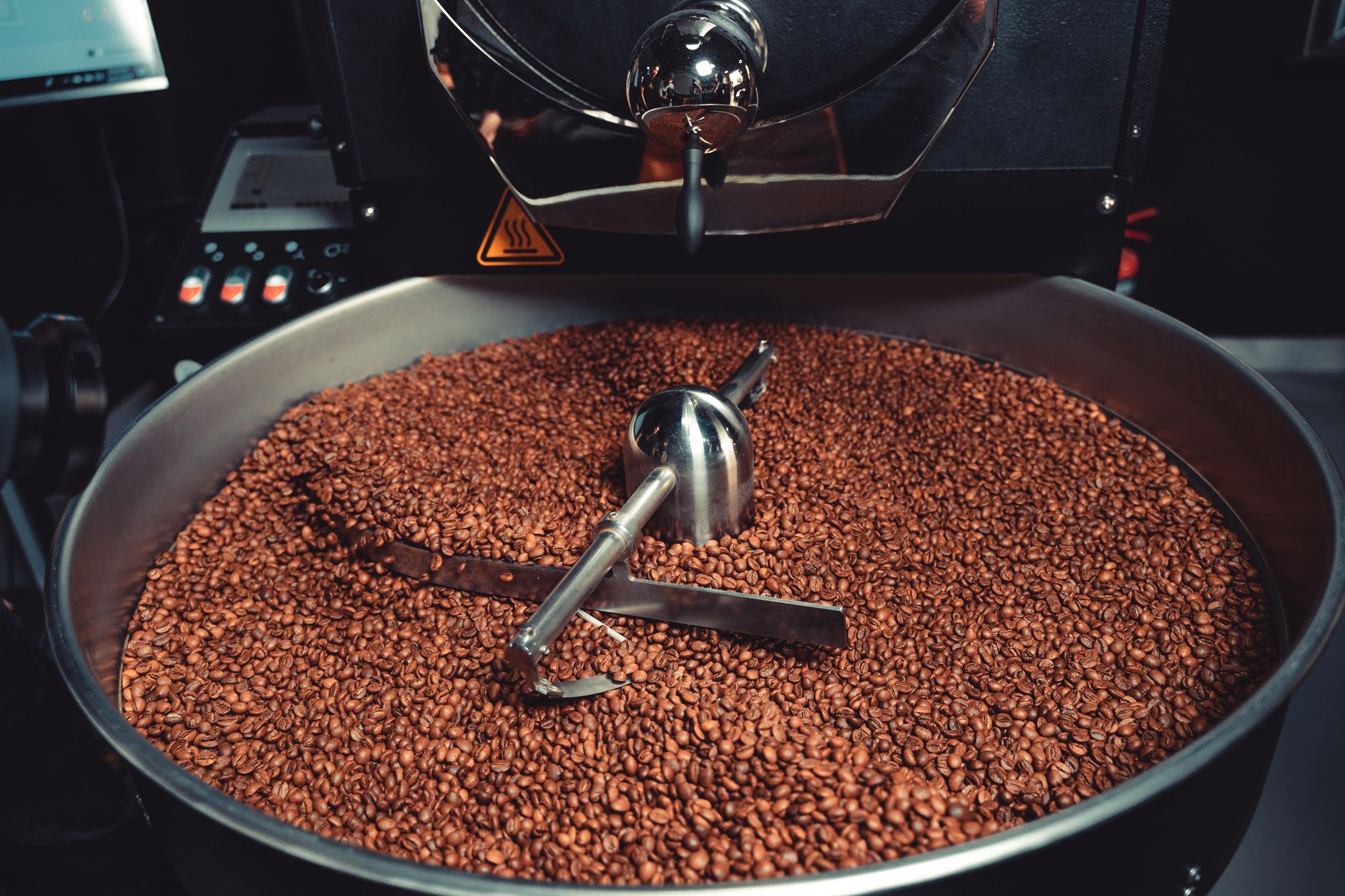
An industrial coffee roaster is a machine designed to apply controlled heat to green coffee beans, initiating the Maillard reaction and caramelization processes that develop flavor, aroma, and color. Commercial units process anywhere from 15 kg to 500+ kg per batch.
The Core Science: How Heat Transforms Coffee
💡
Key Takeaway
Roasting is a chemical transformation, not just a heating process. Understanding the stages helps operators predict flavor outcomes.
At its most fundamental level, an industrial coffee roaster is a thermal processing machine. But the physics and chemistry inside the drum are remarkably complex. When green coffee beans enter the roaster, they contain roughly 8–12% moisture content, along with hundreds of organic compounds including chlorogenic acids, trigonelline, and lipids. The roasting process initiates a cascade of chemical reactions.
The Maillard Reaction and Caramelization
Two primary chemical processes drive coffee flavor development:
- Maillard Reaction: This begins around 300°F (150°C). Amino acids and reducing sugars react to create hundreds of aromatic compounds — the source of nutty, toasty, and chocolatey notes.
- Caramelization: Above 340°F (170°C), sugars begin to break down, producing sweet, complex flavors and darkening the bean.
According to research published in the Journal of Agricultural and Food Chemistry, the Maillard reaction alone produces over 600 volatile compounds that contribute to coffee's aroma profile. The duration and temperature of these reactions directly determine whether a roast is light, medium, or dark.
The First Crack and Second Crack
Experienced roasters listen for two critical acoustic events:
- First Crack: Around 385°F (196°C), internal steam pressure causes the bean structure to rupture audibly. This marks the transition from light to medium roast.
- Second Crack: Around 435°F (224°C), the bean matrix breaks down further, releasing oils to the surface. This signals dark roast territory.
Industrial coffee roasters are engineered to precisely control the timing of these events. A batch that reaches first crack too quickly may taste baked or flat. One that lingers too long can become smoky or bitter.
The Anatomy of an Industrial Coffee Roaster
To fully understand how industrial coffee roasters work, you need to know the key components and their functions.
| Component | Function | Impact on Quality |
|---|---|---|
| Drum | Rotates to agitate beans for even heat exposure | Prevents scorching and uneven roast |
| Burner System | Provides consistent, adjustable heat (gas or electric) | Controls rate of temperature rise |
| Airflow System | Manages air circulation inside drum | Removes chaff and regulates heat transfer |
| Cooling Tray | Rapidly halts roasting after development | Locks in flavor profile |
| Control Panel | Digital or PLC-based monitoring of temp, time, airflow | Enables repeatability and data logging |
Drum vs. Air Roasting: Key Differences
Industrial roasters generally fall into two categories:
Drum Roasters: These are the industry standard for medium to large-scale production. Beans tumble inside a rotating metal drum heated by either direct flame or hot air. The drum provides conductive heat transfer (contact with hot metal) plus convective heat (hot air moving through the drum).
Air Roasters (Fluid Bed): Hot air is forced upward through a perforated plate, suspending the beans in a stream of heated air. This method offers faster roast times and more uniform heat distribution, but can produce a different flavor profile — often described as cleaner or brighter.
In my experience consulting with mid-sized foodservice operations, drum roasters are preferred for their ability to develop richer, more complex flavor profiles — especially important for espresso blends. Air roasters excel for single-origin light roasts where clarity of origin flavor is paramount.
The Five Stages of Industrial Roasting
Every batch of coffee in an industrial roaster follows the same fundamental sequence. Understanding these stages helps operators diagnose issues and optimize their roast profiles.
Stage 1: Loading and Preheating
The roaster drum is preheated to a target charge temperature — typically between 350°F and 500°F depending on the desired roast profile. Green beans are loaded via hopper. The thermal shock of hitting a hot drum drives off moisture quickly. This stage lasts 1–3 minutes.
Stage 2: Drying Phase
During the first 4–8 minutes, the primary goal is moisture removal. Beans lose 10–15% of their weight as water evaporates. The roaster maintains a steady temperature rise of 10–15°F per minute. If this phase is too short, the beans may develop unevenly. Too long, and they taste flat.
Stage 3: Maillard Phase
Once bean temperature reaches approximately 300°F (150°C), the Maillard reaction accelerates. The beans turn from yellow to tan to light brown. This phase typically lasts 3–5 minutes. The roaster operator adjusts airflow and heat to control the rate of color change.
Stage 4: Development Phase
This is the most critical stage. From first crack until the roast is dropped, the roaster fine-tunes flavor development. A longer development time (15–25% of total roast time) produces more sweetness and body. A shorter development preserves acidity and origin character.
Stage 5: Cooling
Once the target roast level is reached, beans are dropped into a cooling tray where cold air is forced through them. The goal is to drop bean temperature from ~400°F to under 100°F within 3–4 minutes. Rapid cooling locks in the flavor profile and prevents continued roasting from residual heat.
💡
Key Takeaway
The cooling stage is just as important as the roasting stage. Inadequate cooling can result in a baked flavor that ruins an otherwise perfect batch.
Why Understanding Roasting Matters for Your Business
Knowing how industrial coffee roasters work directly impacts your bottom line. Here's why:
Consistency at Scale
A 2024 study by the Specialty Coffee Association found that batch-to-batch consistency is the number one quality concern for commercial coffee buyers. Industrial roasters with digital controls and data logging allow operators to replicate exact roast profiles — ensuring that the coffee your guests drink today tastes the same as what they drank last month.
Cost Control
Green coffee prices have fluctuated significantly, with the ICO composite price index showing a 35% increase between 2023 and 2025. Understanding your roaster's efficiency — measured in energy consumption per pound of finished coffee — helps you manage input costs. Modern industrial roasters with high-efficiency burners and heat recirculation systems can reduce energy costs by 20–30% compared to older models.
Flavor Differentiation
In competitive markets, coffee quality is a differentiator. According to a 2025 National Restaurant Association survey, 68% of consumers say they would pay more for a cup of coffee at a restaurant if they knew it was freshly roasted. Understanding the roasting process enables operators to communicate that value to customers.
For businesses looking to elevate their coffee program without investing in roasting equipment, explore our Managed Coffee Services or our Coffee Membership options.
How Industrial Roasters Compare to Other Methods
If you're evaluating whether to bring roasting in-house or partner with a specialty roaster, here's a comparison:
| Factor | Industrial Drum Roaster | Air Roaster | Commercial Batch (Small) |
|---|---|---|---|
| Batch Size | 30–500 kg | 5–120 kg | 1–15 kg |
| Roast Time | 12–20 min | 8–12 min | 10–18 min |
| Flavor Profile | Rich, full body | Clean, bright | Variable |
| Capital Cost | $50k–$500k+ | $30k–$200k | $5k–$30k |
| Best For | High-volume production | Specialty light roasts | Small cafés |
For most foodservice operators — restaurants, hotels, offices — the capital cost of an industrial roaster is prohibitive. That's where managed services like those offered by the company come into play. You get specialty-grade coffee without the equipment investment.
Industrial Coffee Roaster Maintenance: What You Need to Know
Even if you don't own a roaster, understanding maintenance requirements helps you evaluate potential partners.
Daily Maintenance
- Clean cooling tray and collection bins
- Inspect burners for soot buildup
- Check airflow filters
Weekly Maintenance
- Empty and clean chaff collection system
- Lubricate drum bearings
- Calibrate temperature sensors
Monthly Maintenance
- Deep clean drum interior with specialized brushes
- Inspect exhaust system for creosote buildup
- Test safety systems (fire suppression, emergency stops)
According to a report from the Coffee Technicians Guild, 23% of roaster breakdowns are caused by inadequate cleaning of the cooling system. Regular maintenance extends equipment life by 5–7 years.
Real-World Example: How a Hotel Chain Standardized Quality
A mid-sized hotel chain operating 12 properties across the Southeast was struggling with inconsistent coffee quality. Each property sourced from a different local roaster, resulting in wildly different flavor profiles.
By partnering with a managed coffee service provider that uses industrial roasters with digital profile control, they achieved:
- 95% batch consistency across all locations
- 32% reduction in coffee waste due to improved extraction
- Customer satisfaction scores for breakfast coffee rising from 3.2 to 4.6 out of 5
The key was understanding how industrial coffee roasters work — specifically, the ability to replicate exact temperature curves across batches. This allowed the chain to serve the same coffee in Charleston as in Nashville.
For similar results, see how our Hotel Coffee Program can transform your guest experience.
Frequently Asked Questions
How does an industrial coffee roaster differ from a home roaster?
Industrial coffee roasters are designed for high-volume, consistent production. While a home roaster might process 100–500 grams per batch, industrial units handle 15–500 kilograms. The key differences are in heat management, airflow control, and data logging. Industrial roasters have PLC-based control systems that allow operators to program exact temperature curves, monitor bean temperature in real time, and replicate profiles with 99%+ accuracy. Home roasters rely more on operator intuition and have far less temperature stability. Additionally, industrial roasters include integrated cooling systems that halt the roast within minutes, while home roasters often require manual cooling that can lead to over-roasting.
What is the ideal roast profile for espresso?
Espresso typically requires a medium-dark to dark roast profile. The ideal profile develops beans to a temperature of 410–430°F at the end of first crack, with a development time ratio of 18–22%. This produces beans with reduced acidity, higher body, and sufficient sugar caramelization to balance bitterness. The roast should not enter second crack, as that level of darkness tends to produce excessive oil and an ashy flavor that overpowers espresso's nuanced notes. In my experience, the best espresso roasts are dropped within 30–60 seconds after first crack ends, before second crack begins, and cooled rapidly to lock in sweetness.
How long does an industrial coffee roaster last?
With proper maintenance, a well-built industrial coffee roaster can last 20–30 years. The drum itself, typically made from heavy-gauge stainless steel, may need replacement after 15–20 years depending on usage volume. Burner systems and control panels are the most common components to fail — typically requiring service every 8–12 years. The key to longevity is regular cleaning to prevent chaff and oil buildup, which can become fire hazards, and annual calibration of temperature sensors. Many roasters from manufacturers like Probat, Loring, and Diedrich are still in operation after 40+ years due to their robust construction and availability of replacement parts.
Can industrial roasters handle different bean origins?
Yes, modern industrial roasters are designed to handle a wide variety of bean origins, from Ethiopian Yirgacheffe to Brazilian Cerrado. The key variable is the roast profile — different origins require different temperature curves. Dense beans like those from Kenya or Ethiopia require higher charge temperatures and longer development times to fully crack the cellular structure. Softer beans from Brazil or Colombia can be roasted at lower temperatures. Advanced roasters with programmable profiles allow operators to store dozens of origin-specific recipes and switch between them with the push of a button. This flexibility is essential for specialty roasters that offer single-origin selections.
How much does an industrial coffee roaster cost in 2026?
Prices for industrial coffee roasters vary widely based on capacity, automation level, and brand. Entry-level industrial roasters (15–30 kg capacity) start around $50,000–$80,000. Mid-range units (60–120 kg) run $120,000–$250,000. High-capacity roasters (120–500 kg) can cost $300,000–$500,000 or more. Fully automated systems with integrated data logging, air quality monitoring, and remote control capabilities add $20,000–$50,000 to the base price. For most foodservice businesses, purchasing a roaster outright requires significant capital investment. A more cost-effective approach is partnering with a managed service provider like the company, which includes specialty-grade coffee roasted on industrial equipment without the capital expenditure.
Final Thoughts on How Industrial Coffee Roasters Work
Understanding how industrial coffee roasters work is essential knowledge for any foodservice operator serious about coffee quality. From the Maillard reaction to the cooling tray, every stage of the roasting process directly impacts the flavor, aroma, and consistency of the coffee your customers experience.
For most restaurants, hotels, and offices, owning an industrial roaster isn't practical — but benefiting from one is. That's where the company comes in. Our managed membership model delivers specialty-grade coffee roasted on state-of-the-art industrial equipment, paired with our SENSA line of commercial brewing machines. You get the quality without the capital investment.
Call us today at (833) THE-BEAN to learn how we can transform your coffee program.
Recommended Readings
To deepen your understanding of these topics, we recommend reading the following articles:
- Benefits of Industrial Roasters for Hotels
- How to Choose an Industrial Coffee Roaster
- Maintenance for Industrial Coffee Roasters
- Capacity and Output of Industrial Roasters
About the Author
the author is the CEO & Founder of the company, a specialty coffee equipment provider serving the foodservice industry since 2014. With over a decade of experience in commercial coffee operations, he has helped hundreds of businesses — from boutique hotels to regional restaurant chains — build profitable, scalable coffee programs.
Free Coffee Pairing Guide & Specialty Roast Cheat Sheet
Unlock the secrets of perfect brewing ratios, water temperatures, and specialty roast profiles. Download the guide.