Top Commercial Espresso Machines for Business in 2026
What Are Commercial Espresso Machines?
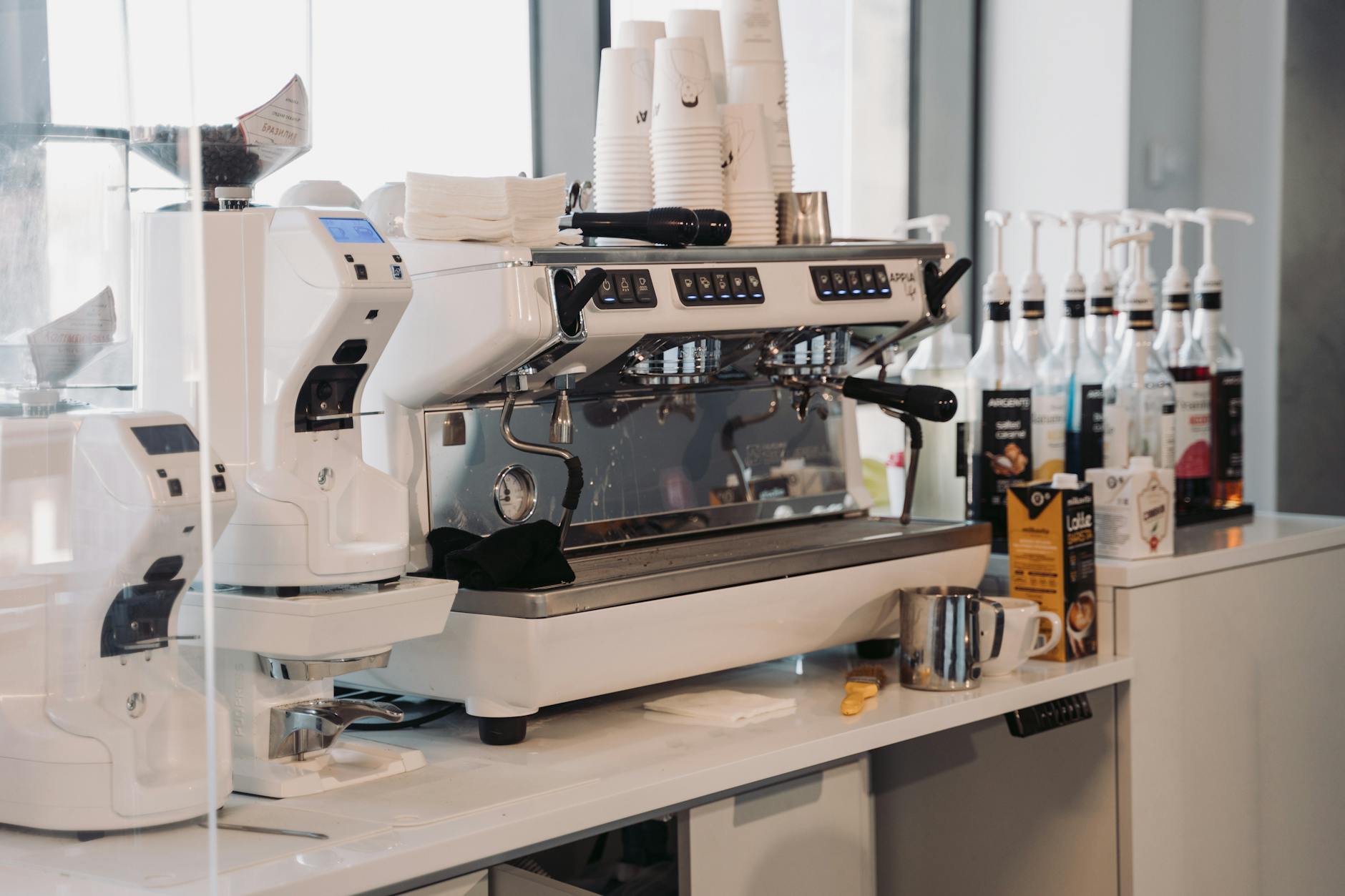
A commercial espresso machine is a high-capacity, durable appliance engineered for continuous, high-volume production of espresso-based beverages in a business setting. Unlike home models, they are built with commercial-grade components—such as larger boilers, more powerful pumps, and robust frames—to withstand hundreds of shots per day, meet health code requirements, and integrate seamlessly into professional workflows.
The primary differentiator of a commercial espresso machine is not just its ability to make espresso, but its engineered durability and performance consistency under the relentless pressure of a business environment.
Why Investing in the Right Commercial Espresso Machine Matters in 2026
- Direct Impact on Profit Margins: A high-efficiency machine reduces waste (of coffee, water, and time) and increases throughput. According to a 2025 National Coffee Association report, beverage shops with optimized, reliable equipment saw profit margins on espresso drinks increase by an average of 18% due to reduced downtime and consistent product quality. A machine that can’t keep up during a rush literally leaves money on the counter.
- Elevates Customer Experience & Loyalty: Consistency is king. A commercial-grade machine with precise temperature and pressure control ensures that today’s latte tastes identical to yesterday’s. This reliability builds customer trust and loyalty. In the hospitality sector, a superior in-room or lobby coffee experience is a direct contributor to guest satisfaction scores and online reviews.
- Operational Efficiency & Staff Morale: Complicated, unreliable machines are a leading cause of staff turnover in foodservice. A well-designed, intuitive commercial espresso machine simplifies training, speeds up service, and reduces frustration. When we built our managed service program at Busy Bean Coffee, we found that businesses using our standardized, high-performance SENSA equipment reported a 30% reduction in training time for new baristas.
- Brand Positioning: The machine on your counter is a silent salesman. A sleek, professional machine signals quality and care to your customers, justifying premium pricing. Conversely, a subpar machine can undermine a premium brand image.
- Total Cost of Ownership (TCO): The initial purchase price is just the entry fee. The right machine affects long-term costs for energy, water, maintenance, and repairs. A study by the Specialty Coffee Association highlighted that energy-efficient commercial espresso machines can save a high-volume cafe over $1,200 annually in utility costs alone.
How Commercial Espresso Machines Work: The Engineering Behind the Shot
-
The Boiler System: This heats the water. Machines come in three main types:
- Single Boiler: One boiler heats water for both brewing and steaming. Not suitable for true commercial volume as it requires waiting between brewing and steaming.
- Heat Exchanger (HX): A single boiler keeps water at steaming temperature. Brew water is routed through a tube inside this boiler, heating it to the perfect brew temperature on demand. This allows simultaneous brewing and steaming, ideal for moderate volume.
- Dual Boiler (or Multi-Boiler): Separate boilers for brewing and steaming (often a third for hot water). This provides ultimate temperature stability and independence, essential for high-volume shops. Most top-tier commercial machines use this system.
-
The Pump: Creates the 9 bars of pressure needed for extraction. Commercial machines use rotary pumps, which are quieter, more durable, and can be plumbed directly into a water line, unlike the vibratory pumps found in consumer models.
-
The Group Head: This is the port where the portafilter locks in. Saturated group heads are directly connected to the boiler, ensuring superior thermal stability shot-after-shot, a hallmark of professional machines.
-
The Control System: This is where automation enters. From manual levers to fully programmable volumetric buttons, the control system dictates workflow. Modern machines often feature PID (Proportional-Integral-Derivative) controllers, which digitally regulate boiler temperature with extreme precision (±1°F), a critical factor for flavor consistency.
Types of Commercial Espresso Machines
| Type | How It Works | Best For | Pros | Cons |
|---|---|---|---|---|
| Manual Lever | Barista physically pulls a lever to create pressure. | Specialty cafes focusing on artisan craft; very low volume. | Ultimate control, no electricity needed for pressure. | Extremely skill-dependent, slow, inconsistent for volume. |
| Semi-Automatic | Barista starts and stops the shot manually; pump provides consistent pressure. | Traditional cafes with trained baristas; full control environments. | Barista controls shot time, high-quality standard, durable. | Output consistency relies on barista skill and attention. |
| Automatic | Barista pushes a button; machine automatically stops the shot at a pre-set volume. | High-volume cafes, businesses with high staff turnover. | Excellent consistency, faster training, efficient workflow. | Less manual control; programming required. |
| Super-Automatic | Grinds, tamps, brews, and even froths milk at the touch of a button. | Offices, hotels, convenience stores, low-skill environments. | Extremely easy to use, consistent, multi-beverage options. | Higher upfront cost, less "craft" perception, more parts to maintain. |
Top Commercial Espresso Machines for Business in 2026: Detailed Breakdown
1. For the High-Volume Specialty Cafe: La Marzocco Linea PB
- Key Features: Dual boilers, saturated group heads, advanced PID for each group, programmable pre-infusion. The "PB" stands for "Pressure Brewing," allowing gentle pre-infusion for better extraction.
- Why It's Top for 2026: Its durability is proven in the world's busiest cafes. The refined thermal stability ensures every shot, from opening to closing, meets spec. It’s an investment in unwavering quality.
- Business Consideration: Requires skilled baristas. It's a significant capital expenditure and demands a rigorous preventive maintenance schedule.
2. For the All-Day Hotel or Restaurant: Nuova Simonelli Appia Life
- Key Features: Volumetric programming, auto-on/off function, energy-saving modes, and a simple, intuitive interface. Built with serviceability in mind.
- Why It's Top for 2026: Its reliability in non-specialty environments is unmatched. It can handle the lunch and dinner rushes in a restaurant or constant service in a hotel lobby without missing a beat, all while being approachable for staff.
- Business Consideration: While excellent, it may lack some of the ultra-precise temperature controls favored by third-wave specialty shops.
3. For the Office or Low-Touch Environment: Busy Bean Coffee SENSA Pro
- Key Features: Fully automatic bean-to-cup operation, integrated fresh milk system for lattes/cappuccinos, IoT connectivity for remote monitoring and proactive maintenance, and all-inclusive managed membership.
- Why It's Top for 2026: It eliminates the traditional pain points. There’s no capital outlay, no need for a trained barista, and maintenance is fully covered. Our data shows offices using the SENSA Pro reduce their monthly beverage costs by up to 40% compared to third-party coffee services or Starbucks runs, while significantly boosting employee satisfaction.
- Business Consideration: It's part of a service model, not a standalone purchase. Ideal for businesses that want premium coffee without the operational overhead.
4. For the Versatile Cafe with Space Constraints: La Spaziale S5
- Key Features: Compact footprint, dual independent boilers, programmable shot times, and excellent steam power for its size.
- Why It's Top for 2026: Perfect for boutique cafes, kiosks, or bakery counters where space is premium but quality cannot be. It offers high-end features in a smaller package.
- Business Consideration: The smaller steam boiler may require slight pacing during very high-volume milk drink rushes.
5. For the Automation-Focused Retail Setting: Franke A800
- Key Features: Extremely high daily capacity, multiple bean hoppers for variety, automatic cleaning cycles, and a robust design for public use.
- Why It's Top for 2026: It’s built to survive high-traffic, self-serve environments. It delivers consistent, decent-quality coffee with minimal intervention.
- Business Consideration: The coffee quality, while consistent, is generally aimed at a broader commercial palate rather than specialty coffee aficionados.
Implementation Guide: From Selection to Service
- Volume Forecast: Calculate your peak hourly and daily drink needs. A machine rated for 300 shots/day will fail in a location needing 500.
- Space & Utilities: Measure your counter space, including clearance. Confirm you have the correct electrical supply (most commercial machines require 220V) and access to a water line and drain for plumbing.
- Skill Audit: Honestly assess your staff's skill level and training bandwidth. A semi-automatic machine with untrained staff is a recipe for waste and inconsistency.
- Buy vs. Lease vs. Subscribe: The traditional model is a large capital purchase. Leasing can ease cash flow. The modern alternative is a managed subscription, like the program at Busy Bean Coffee, which includes the machine, installation, maintenance, and products for a fixed monthly fee, transforming a capex into a predictable opex.
- Vendor Selection: Choose a reputable dealer with a strong service network in your area. The best machine is useless without reliable technical support.
- Never DIY: Commercial installation requires licensed electricians and plumbers to meet code. A proper install includes water filtration (absolutely mandatory to prevent scale damage) and pressure regulation.
- Dialing In: A professional technician should "dial in" the machine—calibrating the grinder, setting brew temperatures, and programming volumetric shots—using your specific coffee beans.
- Develop standard operating procedures (SOPs) for daily startup/shutdown, cleaning, and drink recipes. Invest in formal training from your machine dealer or a coffee consultant.
- Daily: Backflushing, cleaning the steam wand, wiping down groups.
- Weekly/Monthly: Descaling (based on water hardness), cleaning brew heads, lubricating group seals.
- Annual: Professional preventative maintenance (PM) visit. This is non-negotiable for machine longevity.
The most common and costly mistake is viewing the machine as a one-time purchase. It is a critical piece of operational infrastructure that requires a dedicated plan for installation, training, and maintenance from day one.
Pricing & ROI Analysis for Commercial Espresso Machines
| Machine Type | Approximate Price Range (Machine Only) | Key Additional Costs | Typical ROI Horizon |
|---|---|---|---|
| Semi-Automatic | $8,000 - $20,000+ | Grinder ($1,500-$3,000), Installation ($1,000-$3,000), Filtration ($500), Training, Maintenance. | 12-24 months for a busy cafe. |
| Automatic | $12,000 - $25,000+ | Similar to semi-auto, but may reduce training costs. | 12-18 months due to higher efficiency. |
| Super-Automatic | $10,000 - $20,000 | Installation, possibly a milk refrigeration unit, specialized cleaning supplies. | 18-30 months; ROI often comes from labor savings. |
| Managed Service (e.g., Busy Bean) | $0 Capital Outlay | Single, predictable monthly fee covering machine, installation, all maintenance, support, and coffee. | Immediate positive cash flow; ROI calculated as savings vs. previous coffee costs + revenue increase. |
Real-World Examples & Case Studies
- Challenge: A historic hotel needed to elevate its complimentary breakfast and lobby service to match its luxury brand. Their old, underpowered machine created long waits and inconsistent quality.
- Solution: Implemented a dual-group La Marzocco Linea PB for the lobby bar and Busy Bean SENSA Fresh machines for in-room service.
- Results: Lobby coffee sales became a meaningful revenue stream, increasing by 200%. Guest satisfaction scores related to F&B jumped 35 points. The in-room offering generated rave reviews for its convenience and quality, directly mentioned in positive online reviews.
- Challenge: The company was spending over $1,800 monthly on a basic coffee service and Starbucks runs. Employee complaints about coffee quality were frequent.
- Solution: Replaced everything with a Busy Bean Coffee managed membership, featuring a SENSA Pro super-automatic machine in the main kitchen.
- Results: Monthly beverage spend was cut by 40% to a predictable $1,080 fee. The quality of the espresso-based drinks led to the machine becoming a social hub. HR reported a noticeable improvement in morale and perceived employee benefits, with the coffee program cited in recruitment tours.
- Challenge: Rolling out a new specialty coffee menu across 10 locations with untrained staff and no capital budget for major equipment upgrades.
- Solution: Partnered with Busy Bean Coffee for a fleet-wide managed solution using consistent, programmable automatic machines.
- Results: Achieved 100% menu rollout in 90 days with standardized training. Drink quality was consistent across all locations, supporting brand integrity. The predictable monthly cost simplified P&L management for each store.
Common Mistakes to Avoid When Buying Commercial Espresso Machines
- Prioritizing Price Over Total Cost of Ownership (TCO): Buying the cheapest machine leads to higher repair costs, more downtime, and wasted coffee. Calculate TCO over 5 years.
- Over- or Under-Buying Capacity: A 1-group machine for a busy breakfast service will create a bottleneck. A 3-group machine for a small office is wasteful. Model your peak-hour drink demand.
- Skipping Water Filtration: This is the #1 cause of premature machine failure. Scale buildup destroys boilers and valves. A $500 filtration system can save a $5,000 repair.
- Neglecting the Grinder: An espresso machine is only as good as the grinder feeding it. Never pair a $15,000 machine with a $300 grinder. Budget 20-25% of your machine budget for a high-quality commercial grinder.
- No Plan for Maintenance: Assuming it will "just work." You must have a schedule and budget for daily cleaning, quarterly descaling, and annual professional service.
- Ignoring Staff Workflow: Choose a machine that fits your operational flow. A complicated machine for a high-turnover quick-service restaurant is a disaster.
- Forgetting About Service Accessibility: Before buying, ask "Who will service this, and how quickly can they get here?" A great machine with no local support is a liability.
Frequently Asked Questions
What is the typical lifespan of a commercial espresso machine?
How much does it cost to install a commercial espresso machine?
Can I use regular coffee beans in a commercial espresso machine?
What's the difference between a 1-group, 2-group, and 3-group machine?
How many shots can a commercial espresso machine pull per hour?
Is it better to buy or lease a commercial espresso machine?
How much training do my staff need to operate the machine?
What are the most common repairs needed on commercial machines?
Final Thoughts on Commercial Espresso Machines
Recommended Readings
Free Coffee Pairing Guide & Specialty Roast Cheat Sheet
Unlock the secrets of perfect brewing ratios, water temperatures, and specialty roast profiles. Download the guide.