📖This article is part of the complete guide to Ultimate Guide to Commercial Coffee Grinders for Businesses.
In my experience working with high-traffic hotel breakfast bars and bustling urban cafes, the most common point of failure isn't the espresso machine; it's the grinder. When you are pushing 500+ cups an hour, a grinder that cannot manage thermal stability becomes a liability, leading to inconsistent extraction and wasted specialty coffee. For a comprehensive overview, explore our Ultimate Guide to Commercial Coffee Grinders for Businesses.
What Are High Volume Commercial Grinders?
📚
Definition
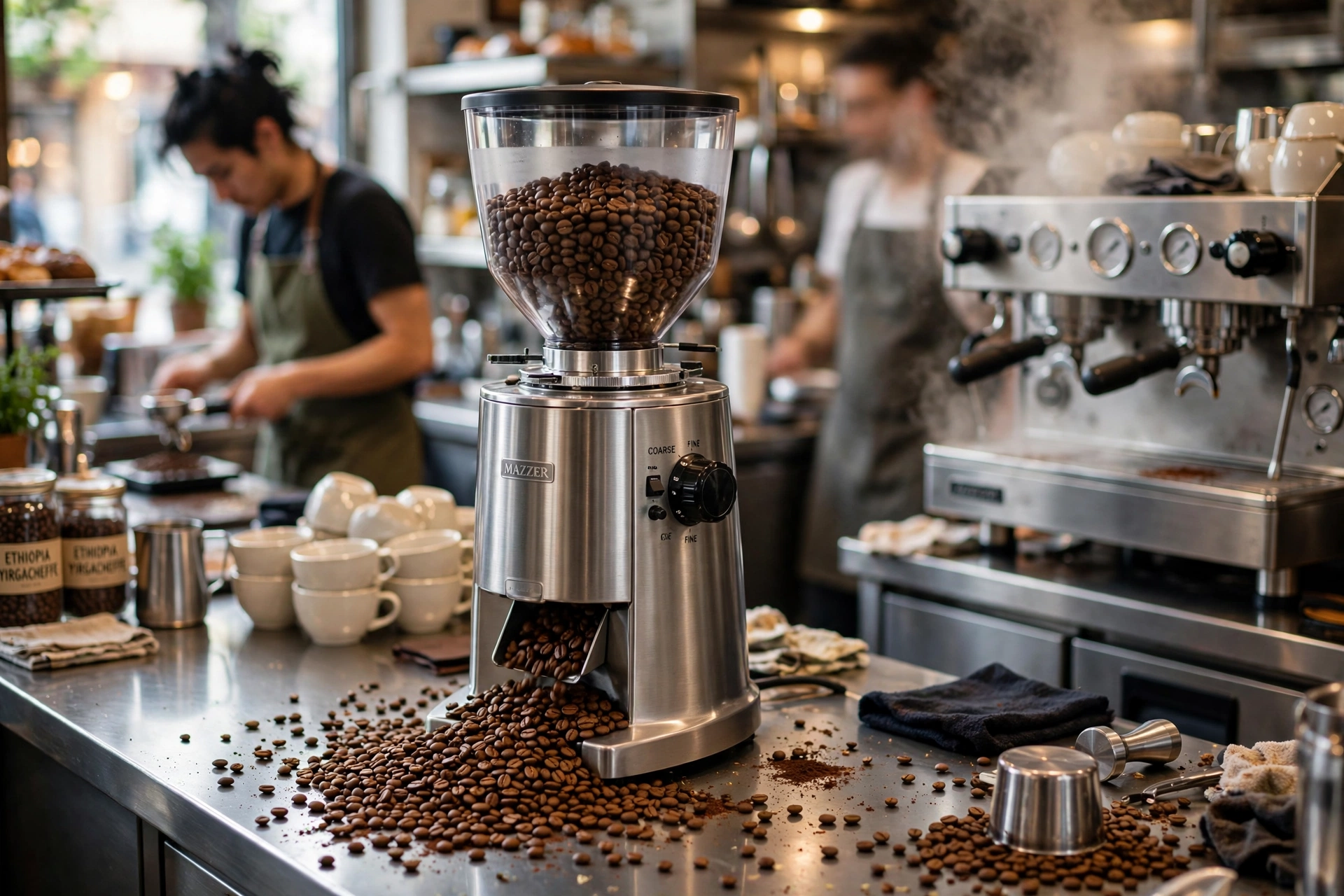
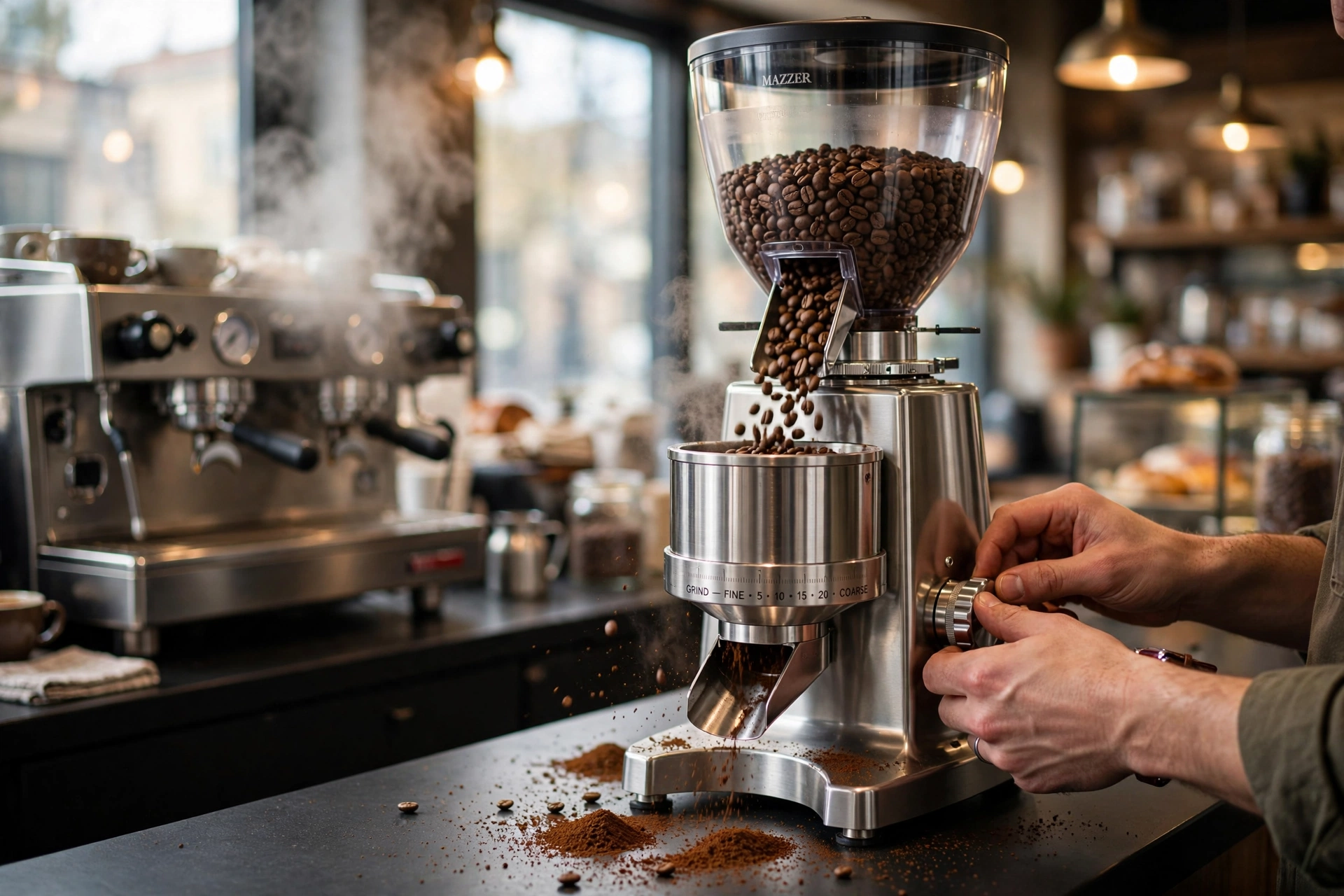
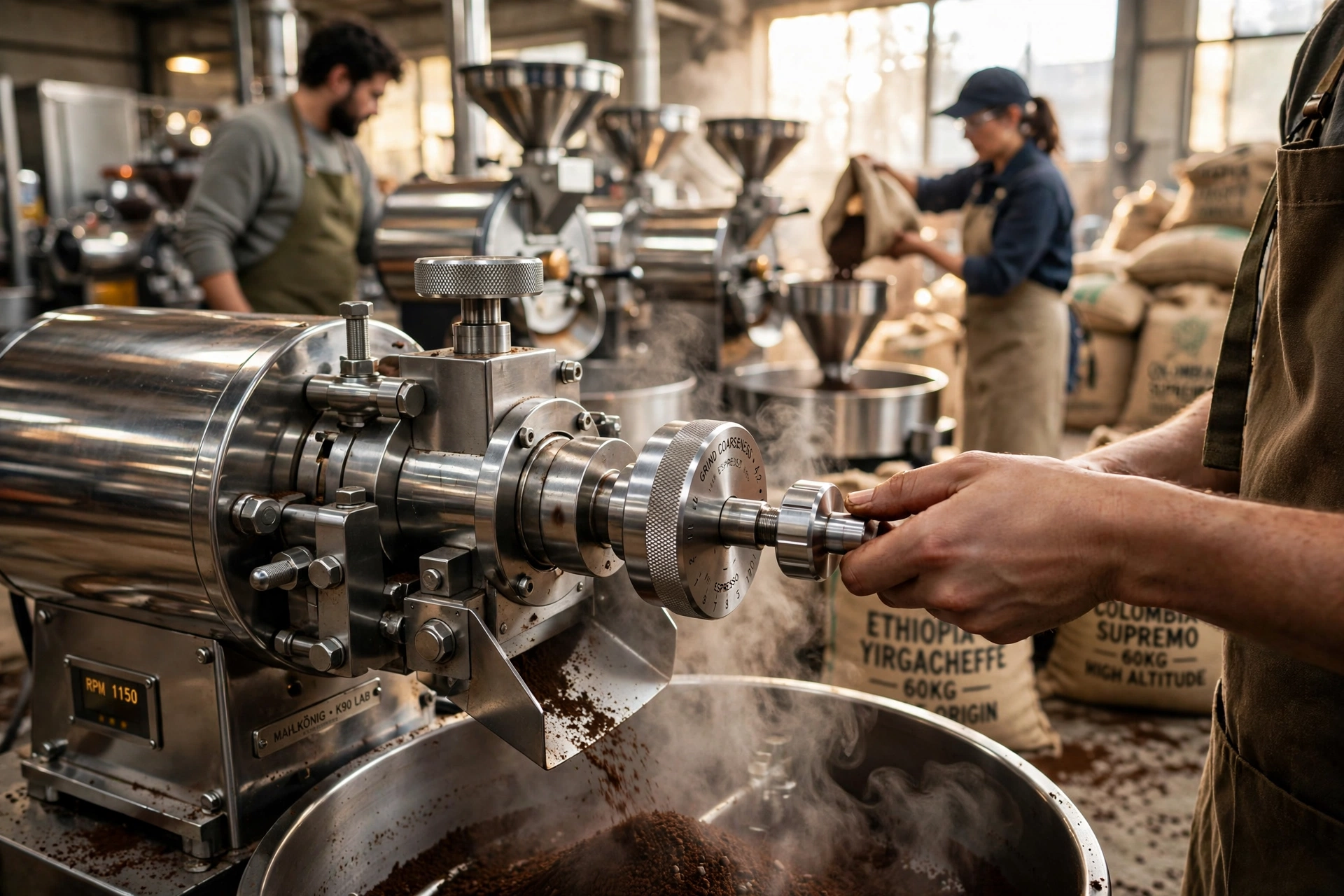
High volume commercial grinders are heavy-duty coffee milling machines engineered with oversized motors and advanced cooling systems to maintain grind consistency across hundreds of consecutive cycles without overheating.
High volume commercial grinders are distinguished from standard commercial units by their duty cycle. While a standard grinder might handle a few dozen shots before the burrs heat up, high-capacity units utilize massive flat or conical burrs and high-torque motors to process kilograms of coffee per hour. In 2026, these machines increasingly integrate sensors to adjust for temperature fluctuations, ensuring that the first shot of the morning is identical to the five-hundredth shot of the lunch rush.
When we analyzed the workflow of several clients in Mount Pleasant, SC, we found that switching to a high-volume unit reduced barista fatigue and decreased ticket times by nearly 15%. These machines are built for endurance, often featuring reinforced chassis and industrial-grade components that can withstand the vibrations and heat of a professional kitchen. They are the backbone of any operation where speed is as important as quality.

Why High Volume Grinders Matter for Business Scalability
High volume commercial grinders matter because thermal stability is the only way to protect your margins. When burrs heat up during continuous use, they expand, which alters the gap between the burrs and shifts the grind size. This leads to "channeling" in the espresso puck, resulting in sour or bitter coffee that must be thrown away. According to the Specialty Coffee Association (SCA), maintaining precise grind consistency is fundamental to achieving the technical standards required for specialty coffee certification.
In a high-traffic environment, a 5% waste rate due to grind drift can cost a business thousands of dollars per year in lost coffee beans. By utilizing equipment designed for high throughput, businesses in Mount Pleasant and surrounding areas ensure that their Coffea arabica is processed with clinical precision, regardless of the volume. This consistency builds customer loyalty; guests return because the beverage tastes exactly the same every time they visit.
Furthermore, the impact on labor is significant. High-volume grinders often feature larger hoppers and faster dosing mechanisms, meaning baristas spend less time refilling and adjusting and more time interacting with customers. When you integrate these into a professional Sensa Coffee Service in Mount Pleasant SC: Complete Guide, the synergy between high-end equipment and managed service creates a seamless operational flow that is nearly impossible to achieve with consumer-grade or low-volume commercial gear.
How to Integrate High Volume Grinders into Your Workflow
Implementing high volume commercial grinders requires more than just plugging them in; it requires a strategic approach to placement and calibration. The first step is determining your peak hourly volume. If you are serving more than 60 customers per hour, you should look specifically for grinders with active cooling or exceptionally large burr sets (80mm or larger) to mitigate heat soak.
Step 1: Thermal Zoning
Place your grinders in a well-ventilated area away from other heat-generating equipment like ovens or steam wands. In a high-volume environment, ambient temperature affects how quickly the burrs cool down between doses. I've seen cases where moving a grinder just twelve inches away from a toaster reduced the frequency of grind adjustments by 20%.
Step 2: Calibration and Dialing In
High-capacity machines require a rigorous "dialing in" process every morning. Use a digital scale to ensure dose consistency within 0.1 grams. Because these machines move so much product, even a tiny deviation in the grind setting is magnified over hundreds of shots. For those managing complex sites, our Automatic Coffee Machines for Hotels and Hospitality in 2026 often pair best with grinders that offer programmable dosing to eliminate human error.
Step 3: Hopper Management
To maintain the freshness of the coffee bean, avoid overfilling the hopper. While high-volume grinders have large capacities, keeping a 4-hour supply of beans prevents oxidation and ensures the flavor profile remains vibrant. This is particularly important for high-altitude Arabica coffee, which can lose its volatile aromatic compounds quickly when exposed to air.
Step 4: Routine Purging
Between different roast types or after a period of inactivity, always purge 10-20 grams of coffee. This removes "stale" grounds trapped in the chamber, ensuring the next customer receives a fresh, high-quality brew. This level of attention to detail is what separates a standard coffee shop from a true specialty coffee destination.

High-Volume Grinders vs. Standard Commercial Units
Choosing between a standard unit and a high-volume machine depends entirely on your projected growth and current traffic. A standard grinder is sufficient for a low-traffic office or a small bakery, but it will fail under the pressure of a peak-hour rush in a hotel or restaurant.
| Feature | Standard Commercial | Generic "Cheap" High-Vol | Professional High-Volume |
|---|---|---|---|
| Motor Power | Low to Medium | Medium (prone to overheating) | High-Torque Industrial |
| Burr Material | Stainless Steel | Hardened Steel (wears fast) | Titanium-Coated or Ceramic |
| Heat Management | Passive Cooling | Basic Fan | Active Heat Dissipation |
| Daily Capacity | 5-10 kg | 15-20 kg | 30+ kg |
| Consistency | Drifts after 20 shots | Unstable during peaks | Rock-solid throughout shift |
Many businesses make the mistake of buying a "generic" high-capacity grinder that claims high output but lacks the thermal engineering to support it. These machines often use cheaper motors that burn out under load. A truly professional high-volume grinder, like those we recommend at Busy Bean Coffee, is an investment in uptime. When your equipment is certified by NSF International, you aren't just buying a machine; you are buying a guarantee of sanitary and mechanical safety in a commercial environment.
Common Mistakes When Scaling Your Grinding Capacity
One of the biggest mistakes I see business owners make is neglecting the relationship between the grinder and the espresso machine. You cannot pair a high-volume grinder with a single-group machine; the bottleneck simply shifts. To truly scale, you need a balanced system. This is why we emphasize a holistic Foodservice Coffee Program in Rock Hill SC: Complete Guide where equipment is matched to the expected output of the venue.
Another frequent error is ignoring burr wear. In a high-volume setting, burrs are consumables. If you are grinding 20kg of coffee a week, your burrs will lose their sharpness significantly faster than a low-volume shop. When burrs dull, the motor has to work harder, creating more heat, which further degrades the grind quality. I recommend a burr inspection every 500kg of coffee processed. If you notice a drop in flow rate or a "muddy" taste in the espresso, it's time to replace the burrs.
Furthermore, many operators fail to implement a structured cleaning schedule. Coffee oils build up rapidly in high-capacity machines, creating a rancid taste that can ruin expensive specialty coffee. Using a vacuum to clear the chamber daily and a deep-clean cycle weekly is non-negotiable. For more on this, refer to our Maintenance Tips for Commercial Coffee Grinders.
Lastly, avoid the temptation to "over-dial" the machine during a rush. If the grind is slightly off, some baristas try to compensate by tamping harder or changing the dose. This creates inconsistency. The only solution to a grind drift is to adjust the grinder itself. A high-volume machine should allow for micro-adjustments without needing to stop the motor, which is a feature you should prioritize during procurement.
Frequently Asked Questions
How often should I replace burrs in a high-volume grinder?
In a high-throughput environment, burrs typically need replacement every 6 to 12 months, depending on the volume of coffee processed. For a shop processing 20-30kg per week, I recommend checking for sharpness every six months. Dull burrs increase friction, which generates excessive heat and leads to inconsistent particle size distribution. This directly impacts the flavor, often resulting in a bitter, over-extracted cup. Regularly scheduled replacements prevent unexpected downtime and maintain the integrity of your specialty coffee program.
Does a larger burr size always mean better quality?
Not necessarily, but in high-volume settings, larger burrs (e.g., 80mm+) are generally superior because they have more surface area to grind the coffee. This means the coffee spends less time in contact with the burrs, reducing the amount of heat transferred to the beans. Lower heat equals better flavor preservation and more stability throughout the day. However, the quality of the material (e.g., titanium coating) and the precision of the alignment are more important than the size alone.
What is the difference between flat and conical burrs for high-volume use?
Flat burrs are generally preferred for high-volume espresso because they produce a more uniform particle size, which is essential for the precision required in specialty coffee. They are easier to align and often provide a cleaner taste profile. Conical burrs, while excellent for versatility and often quieter, can produce more "fines" (micro-particles), which can lead to faster clogging in high-volume portafilters. For pure speed and consistency in a cafe, flat burrs are the industry standard.
Can I use a high-volume grinder for multiple roast levels?
Yes, but it requires a dedicated workflow. High-volume grinders have a larger "dead space" where coffee remains in the chamber. If you switch from a dark roast to a light roast, you must purge a significant amount of coffee to ensure no old beans contaminate the new batch. Some businesses invest in two separate high-volume grinders—one for each roast—to eliminate waste and ensure the purest flavor profile for their customers.
How do I know if my grinder is overheating during peak hours?
The most obvious sign of overheating is "grind drift," where the coffee starts flowing too fast or too slow despite no change in settings. You can also feel the hopper or the discharge chute; if they are hot to the touch, the burrs are likely overheating. Professional high-volume units mitigate this with active cooling, but in extreme conditions, you may need to implement a "cooling rotation" if you use multiple machines. Maintaining a cool environment is key to preventing flavor degradation.
Conclusion
Investing in reliable high volume commercial grinders is the only way to ensure that your business can scale without sacrificing the quality of the coffee. When the morning rush hits, your equipment should be the last thing you worry about. By prioritizing thermal stability, industrial-grade burrs, and a rigorous maintenance schedule, you protect your margins and your brand reputation.
Whether you are operating a hotel in Mount Pleasant or a busy medical office, the goal is always the same: consistent, delicious coffee delivered with speed. If you're looking to upgrade your current setup or build a new program from the ground up, we invite you to explore our Ultimate Guide to Commercial Coffee Grinders for Businesses for a deep dive into the best equipment for every business size.
For those who want a completely hands-off experience, Busy Bean Coffee provides all-inclusive managed coffee solutions that take the guesswork out of equipment maintenance and bean sourcing. Let us handle the technicalities so you can focus on your customers. Visit www.busybeancoffee.com to see how our membership can transform your beverage service.
Free Coffee Pairing Guide & Specialty Roast Cheat Sheet
Unlock the secrets of perfect brewing ratios, water temperatures, and specialty roast profiles. Download the guide.