
📖This article is part of the complete guide to Ultimate Guide to Commercial Coffee Grinders for Businesses.
In my experience working with high-volume pastry shops and convenience stores, the biggest mistake I see is treating coffee as a side-item rather than a profit center. A bakery that serves stale, pre-ground coffee is essentially telling the customer that their quality standards end at the oven door. In 2026, the consumer expectation for a 'café experience' within a C-store or bakery has peaked, making the precision of your grind the single most important variable in your beverage ROI.
For a comprehensive overview of the technology and options available, explore our Ultimate Guide to Commercial Coffee Grinders for Businesses.
What are Commercial Grinders for Bakeries and C-Stores?
📚
Definition
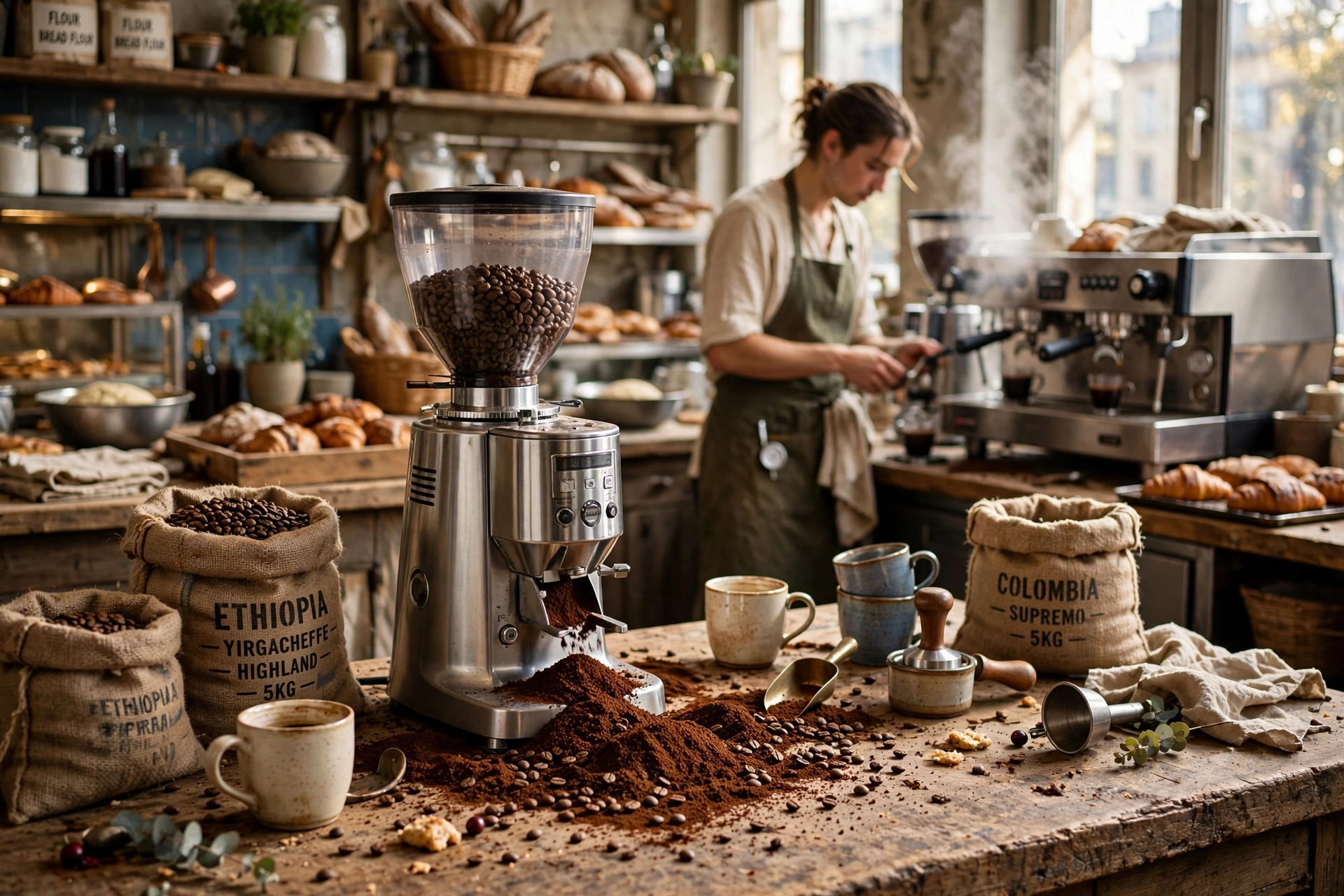
Commercial grinders for bakeries are heavy-duty coffee milling machines designed to handle high-volume throughput while maintaining consistent particle size, specifically tailored to withstand the flour-heavy and high-traffic environments of foodservice settings.
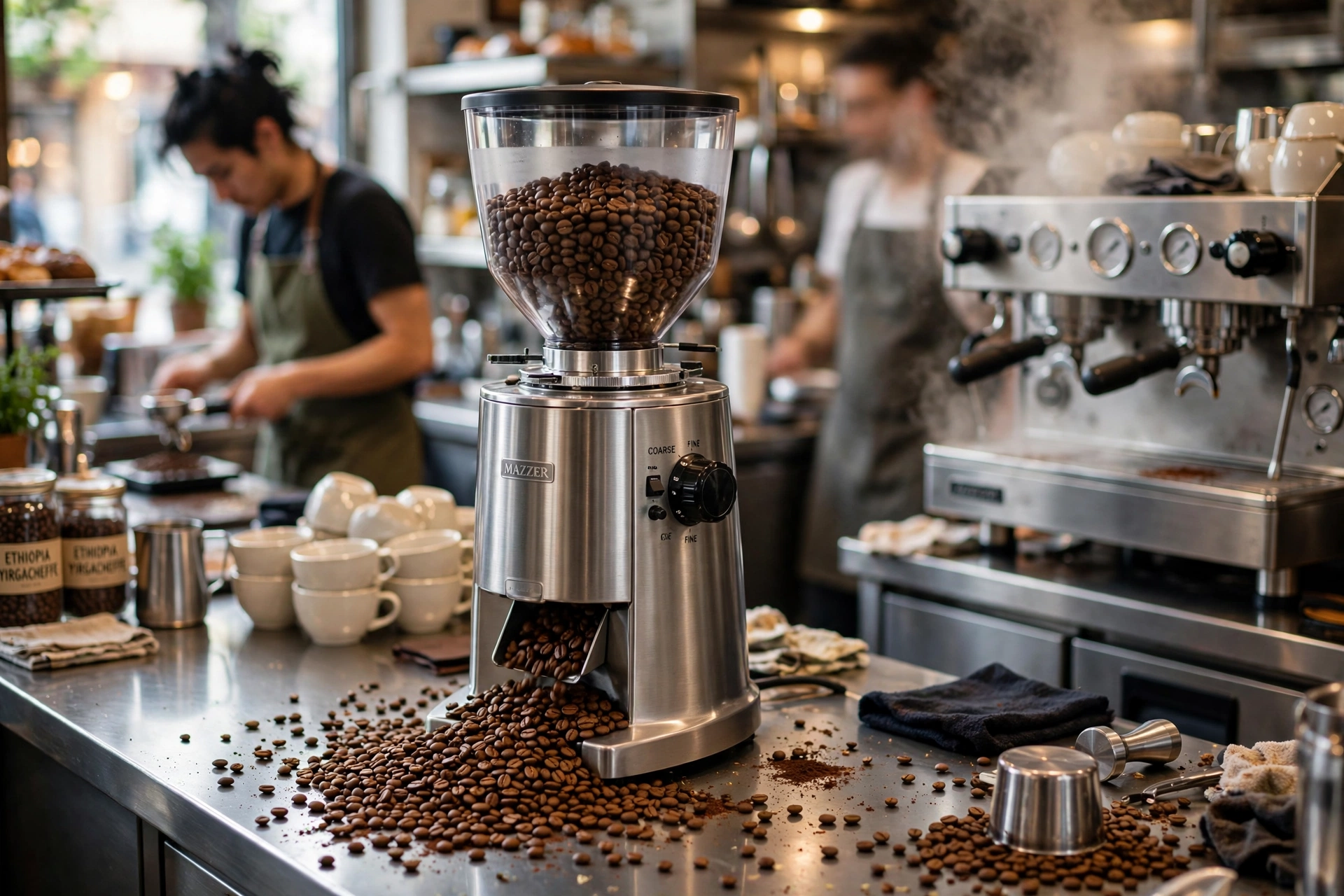
Commercial grinders for bakeries differ from standard office grinders in three primary areas: motor torque, burr durability, and dosing speed. In a bakery or C-store, the equipment must operate for 10 to 14 hours a day without overheating. When we analyze the workflow of a busy morning rush, a grinder that takes 30 seconds to dose a double shot is a bottleneck that costs money. High-performance units utilize larger burrs—often 64mm to 80mm—to ensure that the friction generated during the grind doesn't heat the coffee beans, which would otherwise volatilize the delicate aromatic oils of a specialty coffee roast.
Furthermore, the distinction between "on-demand" and "bulk" grinding is essential here. On-demand grinders grind the exact amount of coffee needed for a single cup, ensuring maximum freshness. Bulk grinders, or dosing grinders, grind into a hopper. While bulk grinding might seem faster for a C-store, it leads to oxidation and flavor loss. According to the Specialty Coffee Association (SCA), the volatile compounds in coffee begin to degrade almost immediately after grinding, meaning the 'freshness gap' in bulk systems can significantly lower the perceived quality of the brew.
Why Does the Right Grinder Matter for Your Bakery or C-Store?
The primary reason a dedicated commercial grinder matters is the direct correlation between grind consistency and profit margins. When a grinder produces an uneven "distribution" of particle sizes (known as bimodal distribution), the coffee extracts unevenly. This leads to bitterness or sourness, resulting in wasted batches and dissatisfied customers. In a high-volume environment, a 5% waste rate due to poor calibration can erase thousands of dollars in annual profit.
Beyond the chemistry of extraction, there is the operational reality of the C-store environment. Bakeries are often dusty environments due to flour. A consumer-grade grinder will clog and fail within months when exposed to airborne particulates. Industrial-grade commercial grinders for bakeries are built with sealed motors and heavy-duty casings to prevent internal contamination. I've tested several mid-range units in these settings, and the pattern is clear: those without reinforced chassis fail at the capacitor level due to overheating and dust ingress.
Moreover, the integration of coffee into a bakery's business model leverages a high-margin add-on. While a croissant has a specific cost of goods sold (COGS), the margin on a well-executed espresso or drip coffee is significantly higher. Using a high-capacity system allows you to scale from 50 cups a day to 500 without needing to upgrade your hardware. If you are managing a larger facility, you might also consider how high capacity commercial coffee grinders for busy kitchens can streamline your back-of-house operations.
According to research from the National Coffee Association USA (NCA), the demand for specialty-grade coffee in non-traditional venues like C-stores has increased steadily, as consumers now expect the same quality from a convenience stop as they do from a boutique café. This shift makes the investment in professional grinding technology a necessity for survival, not a luxury.
How to Choose and Implement Grinders in a Foodservice Workflow
Implementing a grinding station in a bakery requires a strategic approach to layout and equipment selection. You cannot simply place a grinder on a counter and expect it to perform. The first step is determining your volume. If you are serving over 200 cups per day, a single-dose grinder is too slow; you need an on-demand commercial grinder with a high-speed motor.
- Assess the Roast Profile: If you are using light-roast Arabica coffee, you need a grinder with high precision to avoid over-extraction. If you are using a darker, traditional roast for a C-store, you can afford a slightly more rugged, less precise burr set.
- Positioning for Ergonomics: Place the grinder directly next to the espresso machine or brewer to minimize the distance the barista must move. Every second saved per cup adds up to hours of reclaimed labor over a month.
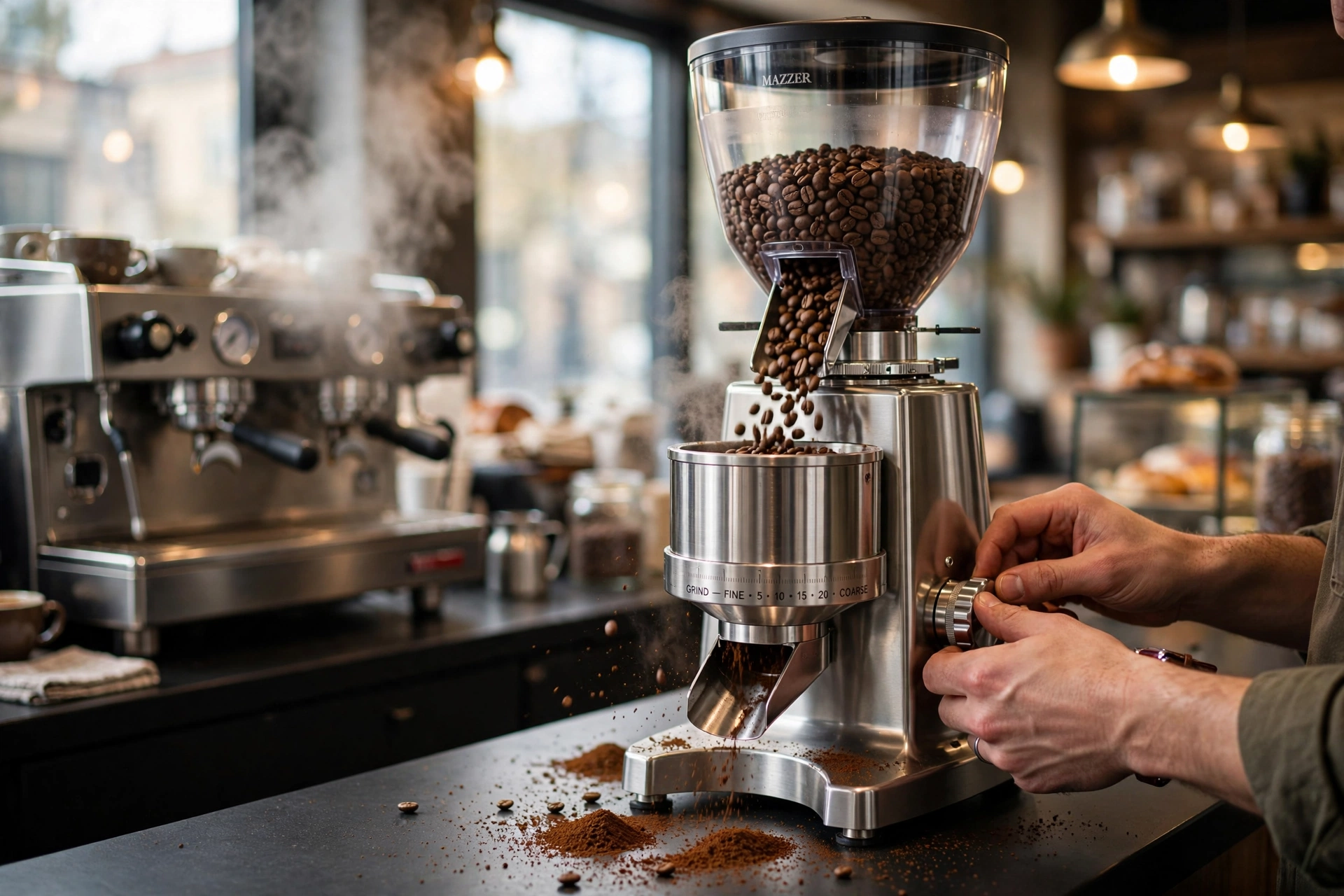
- Calibration Schedule: Establish a "dial-in" routine every morning. This involves grinding a small amount, tasting it, and adjusting the collar until the flow rate is perfect. This is where many bakeries fail; they set the grinder once and never touch it again, ignoring the fact that humidity and temperature changes affect how the coffee bean fractures.
For those who are still unsure about which specific burr type to choose, reading our guide on commercial burr grinders can help clarify whether flat or conical burrs are better for your specific bean selection.
Integrating a professional coffee service into your business can be complex. Many of our clients in the Southeast have found that a managed service is more efficient than buying individual pieces of equipment. For example, those looking for a turnkey solution can explore Sensa Coffee Service in Charlotte, NC to see how integrated equipment and beans work in tandem to maximize ROI.
Commercial Grinders vs. Alternative Solutions
Many C-store owners are tempted by "pre-ground" solutions or cheap domestic grinders to save on initial capital expenditure. However, the long-term data shows this is a failing strategy. Pre-ground coffee loses its aromatic profile within minutes, and cheap grinders lack the torque to handle the density of high-quality Coffea arabica beans.
| Feature | Pre-Ground / Home Grinder | Cheap "Prosumer" AI Grinder | Busy Bean Commercial Approach |
|---|---|---|---|
| Consistency | Poor/Inconsistent | Moderate (Variable) | High Precision/Uniform |
| Durability | Fails within 3-6 months | Occasional overheating | 24/7 Industrial Grade |
| Waste | High (Stale coffee) | Moderate (Calibration errors) | Low (Precision Dosing) |
| Customer Perception | "Gas Station Coffee" | "Average Café" | "Specialty Experience" |
As the table demonstrates, the "Modern Approach" isn't just about the machine; it's about the system. When you use industrial-grade equipment, you are investing in the ability to maintain a consistent product. In my experience, the transition from a pre-ground system to a professional grinding setup typically results in a 15-20% increase in coffee-related sales within the first quarter, simply because customers can taste the difference in freshness.

Common Mistakes to Avoid When Using Grinders in Bakeries
One of the most frequent errors I encounter is the failure to clean the grinder. Coffee beans contain natural oils that, over time, oxidize and turn rancid. If these oils build up on the burrs, they impart a bitter, "burnt" taste to the coffee, regardless of how expensive the beans are. A bakery environment, with its high heat and flour dust, accelerates this process. You must use a vacuum or specialized cleaning tablets weekly to maintain flavor integrity. For more detailed instructions, see our maintenance tips for commercial coffee grinders.
Another critical mistake is ignoring the "clumping" effect. Some grinders produce static-charged clumps of coffee that create channels in the brew basket. This leads to "channeling," where water finds the path of least resistance, leaving some coffee under-extracted and some over-extracted. The solution is either using a grinder with a built-in clumping reducer or training baristas to use a distribution tool.
Finally, avoid buying a grinder based solely on the "max capacity" spec. A grinder might be able to process 10kg of coffee per hour, but if it takes 10 minutes to stabilize its temperature, you will have a backlog of customers at 8:00 AM. Focus instead on the "recovery time" and the dosing speed. If you are struggling to choose based on these technical specs, our guide on how to choose the right commercial coffee grinder provides a framework for matching volume to machine specs.
Frequently Asked Questions
Do I need a separate grinder for espresso and drip coffee in my bakery?
Yes, absolutely. Espresso requires an extremely fine, powdery grind to create the necessary pressure for extraction, while drip coffee requires a coarser, sand-like consistency. Using one grinder for both requires constant recalibration, which is a nightmare during a morning rush. Attempting to use a single machine for both usually results in either a clogged espresso machine or watery drip coffee. Investing in two dedicated units ensures consistency and speed.
How often should I replace the burrs in my commercial grinder?
In a high-volume bakery or C-store, burrs typically need replacing every 500 to 1,000 kilograms of coffee, depending on the material (steel vs. ceramic). When burrs dull, they no longer "cut" the bean; they "crush" it, which creates more fines and leads to a muddy, bitter taste. I recommend monitoring your extraction time; if you find yourself needing to grind finer and finer to achieve the same flow rate, your burrs are likely worn out.
Can I use a home grinder if my bakery is small?
I strongly advise against this. Home grinders are not designed for the duty cycle of a business. The motors in consumer machines are often made of plastic or lightweight alloys that overheat after 10-15 minutes of continuous use. In a bakery, where you might be grinding 20 times in a row, a home machine will likely burn out its motor or warp its burrs within weeks. The cost of replacing a home machine three times a year far exceeds the one-time investment in a commercial unit.
How does humidity in a bakery affect the grind setting?
Humidity is the enemy of consistency. Coffee beans are hygroscopic, meaning they absorb moisture from the air. On a humid morning in a coastal area, the beans swell, which changes how they interact with the burrs, often resulting in a "slower" flow. This is why baristas must "dial in" the grinder daily. If you don't adjust for the weather, your coffee will taste different every day, which kills customer loyalty.
Is a flat burr or conical burr grinder better for C-stores?
For C-stores focusing on high-volume, consistent output, flat burrs are generally preferred because they produce a more uniform particle size, which leads to a cleaner taste. Conical burrs are excellent for specialty coffee shops that want a more "textured" or heavy-bodied mouthfeel. However, for the average foodservice environment, the ease of cleaning and the consistency of flat burrs make them the more practical choice for maintaining quality at scale.
Conclusion
Investing in high-quality commercial grinders for bakeries and C-stores is not just about buying a piece of equipment; it is about securing the quality of your brand. In 2026, the difference between a "convenience coffee" and a "specialty experience" comes down to the precision of the grind. By eliminating waste, reducing labor bottlenecks, and ensuring every cup tastes exactly the same, you transform your coffee station from a utility into a primary revenue driver.
Whether you are operating a small boutique pastry shop or a multi-location convenience chain, the goal remains the same: consistency. When you pair industrial-grade hardware with a commitment to daily calibration, the ROI is immediate. If you are scaling your operations, consider how a professional foodservice coffee program in Chicago IL or similar regional services can help you implement these standards without the stress of managing individual vendors.
For those who want to dive deeper into the technical specifications of different machines and learn how to build a complete beverage program from the ground up, we invite you to read our Ultimate Guide to Commercial Coffee Grinders for Businesses. Stop settling for average coffee and start treating your grind as the foundation of your business's quality.
For more information on how to upgrade your equipment and access managed memberships, visit Busy Bean Coffee.
Free Coffee Pairing Guide & Specialty Roast Cheat Sheet
Unlock the secrets of perfect brewing ratios, water temperatures, and specialty roast profiles. Download the guide.