
📖This article is part of the complete guide to Ultimate Guide to Commercial Coffee Grinders for Businesses.
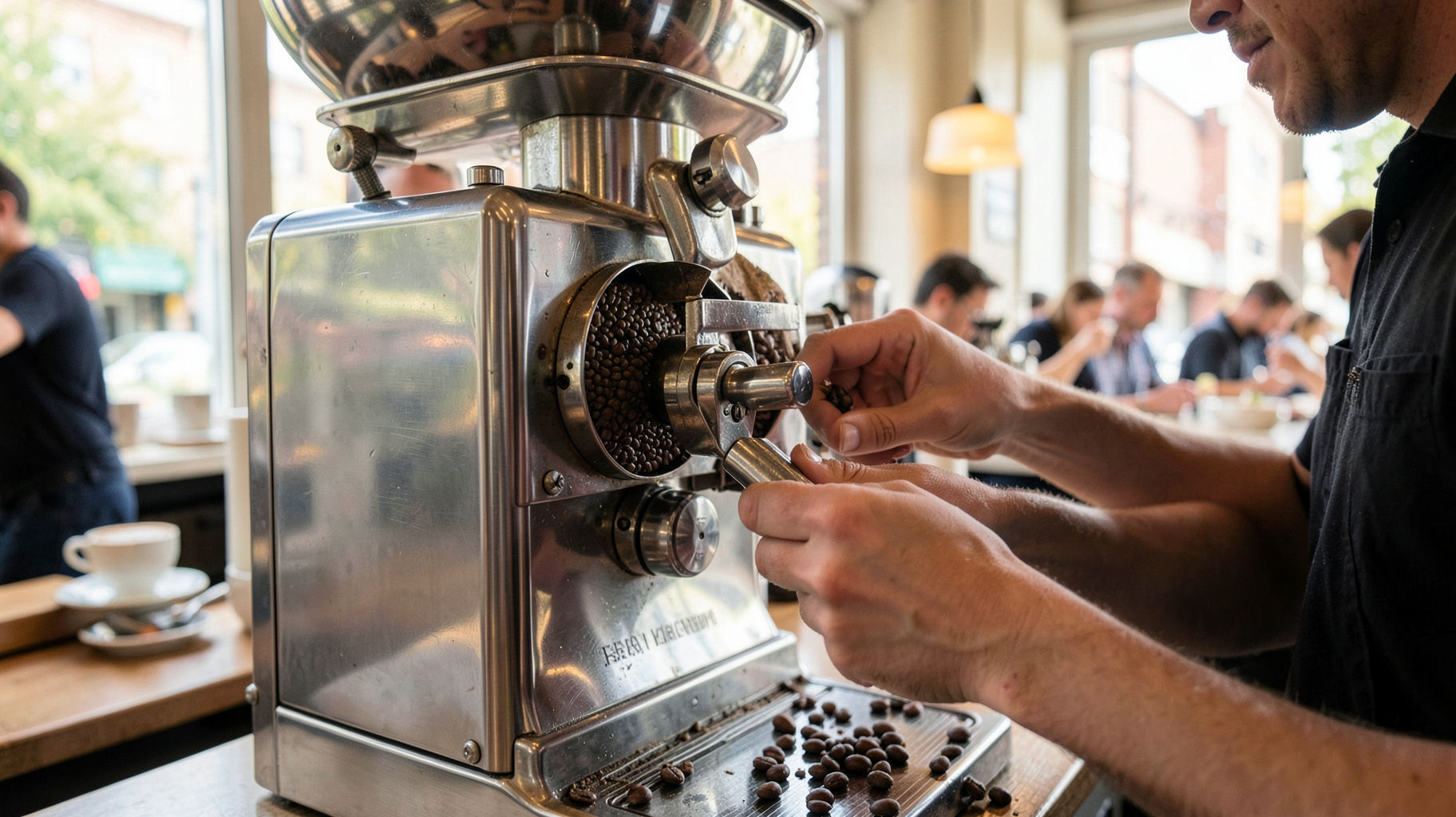
I once walked into a high-volume café in Mount Pleasant, SC, during a morning rush only to find the head barista staring in defeat at a grinder that had completely seized. The shop was losing roughly $150 in sales every twenty minutes because their primary tool for specialty coffee was offline. This is the nightmare of every foodservice operator: a mechanical failure at peak hour. When you troubleshoot commercial coffee grinder issues, you aren't just fixing a machine; you are protecting your hourly revenue and ensuring your Coffea arabica beans are extracted to their full potential.
For a comprehensive overview of the hardware required to avoid these failures, explore our Ultimate Guide to Commercial Coffee Grinders for Businesses.
What Does It Mean to Troubleshoot Commercial Coffee Grinders?
📚
Definition
Troubleshooting a commercial coffee grinder is the systematic process of identifying, isolating, and resolving mechanical or electrical malfunctions that prevent a grinder from producing a consistent particle size or maintaining a steady flow of coffee grounds.
When you troubleshoot commercial coffee grinder performance, you are essentially auditing the relationship between the motor, the burrs, and the bean. In my experience working with dozens of high-volume venues, most "broken" grinders are actually just poorly maintained or miscalibrated. The goal is to restore the equipment to its factory specification—or better—to ensure that the espresso machine receives a perfectly dosed puck every time. This involves checking for obstructions, verifying voltage stability, and assessing the wear and tear on the grinding surfaces.
Many operators make the mistake of adjusting the grind collar blindly when they see a flow issue. However, true troubleshooting requires looking at the variables. If the coffee is flowing too slowly, is it because the grind is too fine, or is it because the burrs are clogged with old oils? If the motor is humming but not turning, is it a capacitor failure or a pebble in the coffee bean batch? Understanding these distinctions prevents you from causing further damage to expensive equipment.

Why Does Precise Troubleshooting Matter for Your Business?
In the specialty coffee industry, consistency is the only currency that matters. If your grinder fluctuates by even a few microns, your extraction time shifts, and your customer receives a sour or bitter shot. According to the Specialty Coffee Association (SCA), the precision of the grind is the single most influential variable in espresso quality. When you can effectively troubleshoot commercial coffee grinder issues in-house, you eliminate the "dead time" spent waiting for a technician, which can often take 24 to 48 hours in busy markets like Mount Pleasant, SC.
Beyond quality, there is a significant financial impact. A grinder that is struggling due to clogged burrs puts extra strain on the motor. This increases heat friction, which not only degrades the flavor of the coffee bean but also shortens the lifespan of the motor. I've seen motors burn out three years early simply because the staff never cleaned the chutes. By implementing a rigorous troubleshooting and maintenance protocol, you extend the ROI of your equipment and reduce emergency capital expenditure.
Furthermore, labor efficiency is tied directly to equipment reliability. A barista who has to spend ten minutes "dialing in" a malfunctioning grinder is a barista who isn't serving customers. When the equipment is calibrated and functioning, the workflow is seamless. This is especially true for those using Sensa Coffee Service in Mount Pleasant SC: Complete Guide, where the expectation for high-end output is matched by the need for operational efficiency.
How to Resolve Common Grinder Malfunctions Step-by-Step
When you encounter a problem, the first rule is to stop the machine immediately. Continuing to run a struggling grinder can turn a $50 fix into a $1,000 motor replacement. Here is the professional approach to resolving the most frequent issues.
Problem 1: The Grinder is "Choking" or Producing Very Little Coffee
If the motor sounds strained and the output is minimal, you likely have a blockage or an extreme setting error. First, check the hopper for "popcorn" beans—over-roasted or unusually hard beans that can wedge between burrs. Second, check the grind setting. If the collar is turned too tight, the burrs may be touching, which can cause the motor to stall.
- Clear the Chamber: Turn off the power and manually remove any visible debris from the burr chamber.
- Adjust the Collar: Move the adjustment dial to a coarser setting and attempt a short burst.
- Deep Clean: If the problem persists, remove the upper burr and use a vacuum to clear the internal chutes. Oils from the coffee bean can build up and create a "paste" that slows down the flow.
Problem 2: Inconsistent Grind Size (The "Bimodal" Distribution)
When you see a mix of very fine powder and large chunks, your burrs are likely out of alignment or worn down. This is common in high-volume environments where the machine runs for 10+ hours a day.
- Inspect the Burrs: Remove the burrs and look for "rounding" of the sharp edges. If the teeth look smooth, they need replacement.
- Verify Stability: Ensure the grinder is on a level surface. Vibration from nearby equipment can actually shift the internal alignment of some lower-end commercial models.
- Purge the System: After any adjustment, grind at least 200g of coffee to ensure the old particles are completely cleared. This is a step many forget, leading them to believe the machine is still broken.
Problem 3: Loud, Grinding Noises or Excessive Vibration
Noise is the first signal of mechanical failure. A high-pitched squeal usually indicates a bearing issue, while a rhythmic thumping suggests a foreign object in the chamber.
- Isolate the Sound: With the machine off, manually rotate the burrs (if possible) to feel for resistance.
- Check Mounting: Ensure all screws and the hopper assembly are tight. Vibration often comes from loose housings rather than the motor itself.
- Lubricate/Clean: Ensure no coffee dust has entered the motor housing. Use compressed air to clear the vents.
For those who prefer a managed approach to avoid these headaches, integrating an automated coffee machine for hotels can significantly reduce the manual troubleshooting load on staff.
Comparing Maintenance Approaches
Depending on your budget and expertise, you will likely fall into one of these three categories of equipment management. In my experience, the "Middle Ground" is often a trap that leads to the most downtime.
| Feature | Traditional Manual Approach | Generic/Cheap AI-based Tooling | Busy Bean Managed Approach |
|---|---|---|---|
| Detection | Reactive (Wait until it breaks) | Predictive (Basic alerts) | Proactive (Scheduled auditing) |
| Repair Speed | Slow (Waiting for 3rd party) | Medium (DIY via YouTube) | Fast (On-call expert support) |
| Equipment Life | Short (Frequent failures) | Variable (Improper fixes) | Long (Preventative care) |
| Cost Model | Unpredictable spikes | Low initial / High risk | Predictable monthly fee |
Common Mistakes to Avoid When Troubleshooting
I have seen many talented baristas accidentally destroy their equipment by trying to be "too helpful." Avoid these five critical errors:
1. Adjusting the Grind While the Motor is Running
Some grinders allow this, but on many commercial models, adjusting the collar while the burrs are spinning can cause the burrs to collide. This creates a "burr kiss" that can chip the steel and permanently ruin the calibration. Always stop the motor before making micro-adjustments.
2. Using Water to Clean Burrs
This is a catastrophic mistake. Water causes immediate oxidation (rust) on the steel burrs and can seep into the motor housing, causing a short circuit. According to NSF International, equipment sanitation must follow specific guidelines to avoid contamination and damage. Use dedicated grinder cleaning tablets (made of food-grade chemicals that dissolve) or a vacuum.
3. Ignoring the "Purge" Period
Changing the grind setting doesn't happen instantly. There is always a residual amount of coffee in the chamber. If you change the setting and immediately judge the shot, you are tasting the old setting. You must purge the system to see the real result.
4. Over-Tightening Adjustment Screws
In an effort to stabilize a machine, some operators over-tighten the housing screws. This can warp the frame of the grinder, throwing the burrs out of alignment. Use the manufacturer's specified torque; if you don't have a torque wrench, "finger tight plus a quarter turn" is the general rule.
5. Neglecting the Hopper Seal
If your coffee is tasting stale, the problem isn't the burrs—it's the seal. A loose hopper allows oxygen to enter, oxidizing the coffee bean. This makes the beans harder or softer, which changes the grind behavior. Troubleshooting the bean is as important as troubleshooting the machine.

Pro Tip: The "Sift Test" for Calibration
If you aren't sure if your troubleshooting is working, perform a sift test. Take a sample of 50g of ground coffee and pass it through a series of professional sieves. If you see a high percentage of "fines" (dust) despite a coarse setting, your burrs are likely worn or damaged. This provides empirical data rather than relying on a barista's "feeling," which can be subjective.
For those operating in different regions, such as those utilizing Sensa Coffee Service in Charlotte, NC, the local humidity can also affect how you troubleshoot. High humidity makes beans "clump," which can mimic a blockage. In these cases, the solution isn't a mechanical fix, but the addition of a clumping tool or an adjustment in bean storage.
Frequently Asked Questions
Why is my commercial grinder making a high-pitched noise?
A high-pitched noise typically indicates that the burrs are too close together or are touching, which is known as "burr rub." This happens when the grind is set too fine for the physical tolerances of the machine. It can also signal a failing ball bearing in the motor. You should immediately coarsen the grind and check for a change in sound. If the noise persists, the motor bearings likely need replacement to avoid a total seizure.
How often should I actually replace my burrs?
Burr lifespan depends entirely on your volume. For a high-capacity shop, burrs should typically be replaced every 500kg to 1,000kg of coffee. When burrs lose their sharpness, they no longer "cut" the bean; they "crush" it. This produces more fines and inconsistent sizing, which leads to channeling in your espresso shots. If you find you are having to use increasingly finer settings to get the same extraction, it is time to replace the burrs.
Can I use a vacuum cleaner to clean my grinder?
Yes, and you should. Using a vacuum is the safest way to remove coffee oils and old grounds from the chute and chamber without introducing moisture or abrasive chemicals. However, ensure you are using a vacuum with a plastic nozzle to avoid scratching the burrs. Vacuuming the internal components every week prevents the build-up of "caked" coffee, which is a leading cause of flow inconsistency and motor strain.
Why does my grinder work fine in the morning but fail in the afternoon?
This is almost always due to "heat soak." As a commercial grinder runs throughout the day, the motor and burrs heat up. Heat causes the metal to expand, which slightly alters the distance between the burrs. This is why you must "dial in" your grinder throughout the day. Additionally, the beans themselves can change temperature, affecting their brittleness. This isn't a failure of the machine, but a characteristic of the physics of coffee roasting and grinding.
What should I do if a stone or piece of metal gets into the burrs?
Turn off the machine immediately and unplug it. Never try to "grind through" a foreign object, as this will instantly chip the burrs and may burn out the motor. Remove the hopper and the top burr. Use a pair of tweezers or a vacuum to carefully extract the object. After removal, inspect the burr edges for nicks. If the burrs are chipped, they must be replaced, as any imperfection will lead to uneven particle distribution.
Conclusion
Mastering the ability to troubleshoot commercial coffee grinder issues is the difference between a chaotic morning rush and a streamlined operation. By focusing on precision, avoiding the temptation to use water for cleaning, and adhering to a strict purging schedule, you ensure that your specialty coffee remains consistent. Remember that mechanical failure is rarely a surprise; it is usually the result of a series of small, ignored warning signs—like a slight increase in noise or a subtle shift in flavor.
If you find that the stress of maintaining your own equipment outweighs the benefits, it may be time to move toward a managed solution. At Busy Bean Coffee, we handle the installation, maintenance, and calibration so you can focus on your customers. For a deeper dive into selecting hardware that minimizes these issues, return to our Ultimate Guide to Commercial Coffee Grinders for Businesses.
For more information on professional beverage setups, visit www.busybeancoffee.com.
Free Coffee Pairing Guide & Specialty Roast Cheat Sheet
Unlock the secrets of perfect brewing ratios, water temperatures, and specialty roast profiles. Download the guide.