📖This article is part of the complete guide to Ultimate Guide to Commercial Coffee Grinders for Businesses.
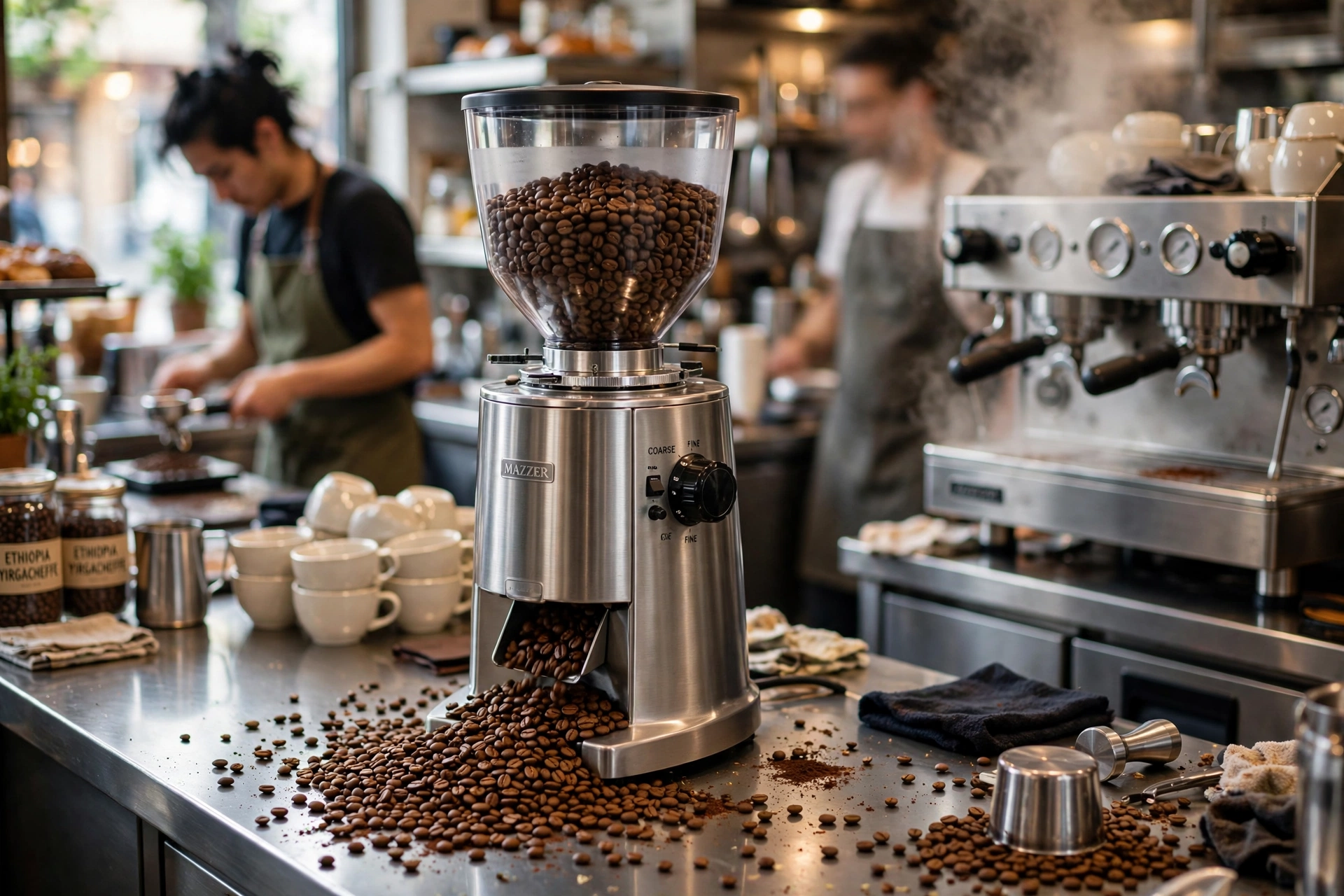
In my experience working with high-volume cafes in Mount Pleasant, SC, the difference between a profitable morning rush and a chaotic one often comes down to a few seconds of waste. I once audited a mid-sized cafe that was losing nearly 1.5 pounds of specialty coffee per week simply because their timed grinders were over-shooting the dose, leaving heaps of wasted grounds on the counter. Transitioning to on-demand commercial grinders doesn't just save beans; it stabilizes the extraction quality for every single guest.
For a comprehensive overview of equipment selection, explore our Ultimate Guide to Commercial Coffee Grinders for Businesses.
What are On Demand Commercial Grinders?
📚
Definition
On demand commercial grinders are precision coffee milling machines that grind the exact amount of coffee beans required for a specific dose only at the moment the barista initiates the brew cycle, eliminating the need for a dosing chamber.
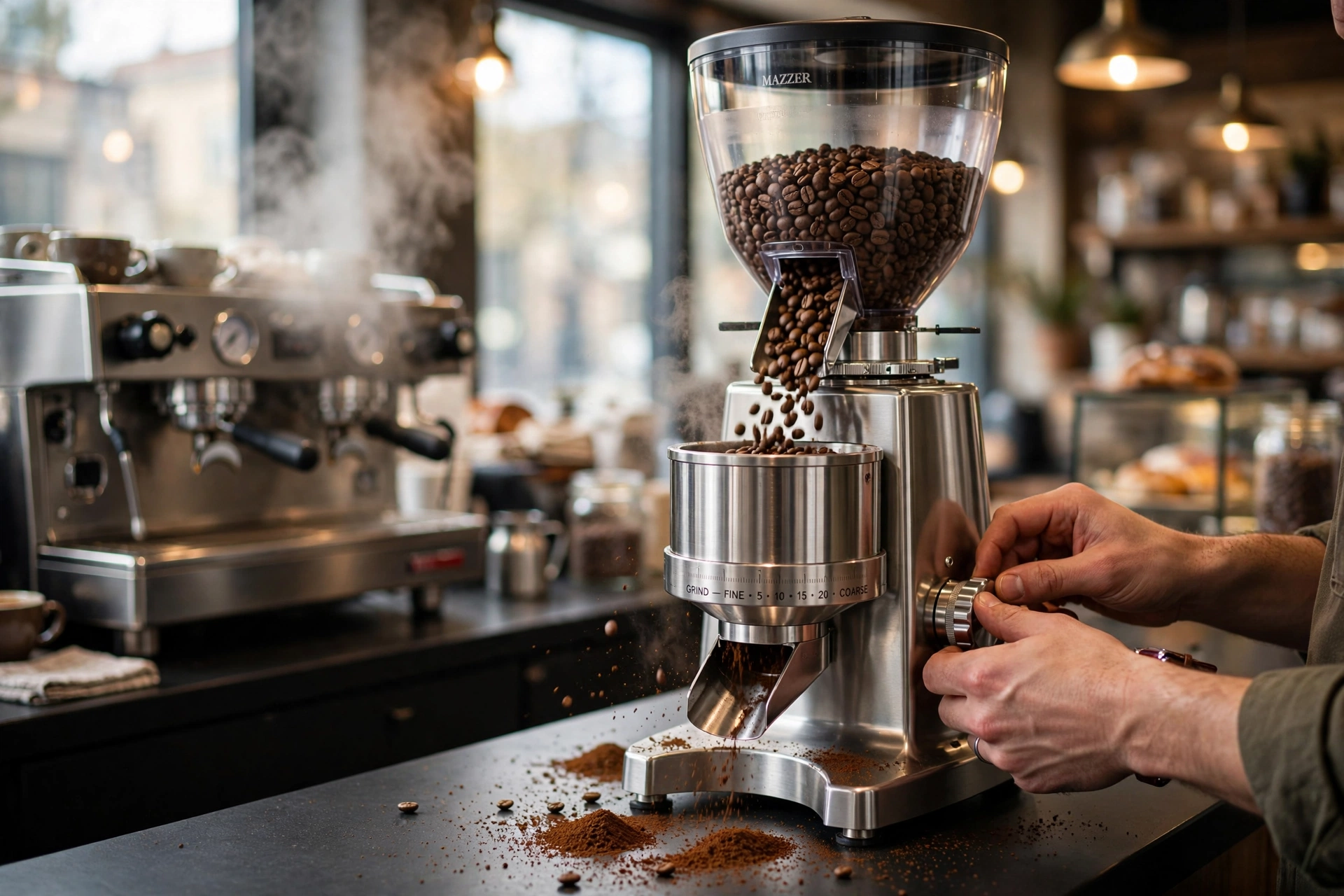
On-demand commercial grinders operate on a volumetric or weight-based system rather than a simple timer. In a traditional dosing grinder, beans are ground into a hopper (the dosing chamber), and the barista manually scoops out the coffee. In contrast, on-demand systems dispense the coffee directly into the portafilter. This mechanism ensures that the coffee bean is crushed and extracted almost instantaneously, preventing the volatile aromatic compounds from oxidizing in the air.
When we analyze the workflow of a busy barista, the efficiency gains are clear. By removing the "scoop and level" phase, the barista can focus on tamping and milk texturing. This technological shift is essential for anyone serving Coffea arabica, as the delicate notes of high-altitude beans degrade rapidly once the cell structure is broken by the burrs. If coffee sits in a hopper for even ten minutes, the flavor profile shifts from vibrant to flat.

Why Does On-Demand Grinding Matter for Your Business?
Precision and consistency are the two pillars of profitability in the specialty coffee industry. The primary reason on-demand commercial grinders are non-negotiable for busy cafes is the drastic reduction in coffee waste. According to the Specialty Coffee Association (SCA), maintaining precise temperature and dosage is the most critical factor in achieving a balanced extraction. When you use a traditional timer-based system, any change in bean density or humidity affects how much coffee is dispensed, leading to inconsistent shots.
From a financial perspective, the ROI is immediate. A cafe serving 300 lattes a day that wastes just 2 grams of coffee per drink is throwing away 600 grams of coffee daily. Over a year, that is over 210 kilograms of wasted product. By implementing an on-demand system, you recover that cost while ensuring that every customer receives a shot that meets the rigorous standards of the National Coffee Association USA (NCA), which emphasizes the importance of freshness in consumer satisfaction ratings.
Furthermore, on-demand systems reduce the cognitive load on your staff. A barista in the middle of a 7:00 AM rush in a busy downtown area cannot be expected to manually calibrate a dosing chamber every few minutes. On-demand technology allows for "set it and forget it" precision, provided the machine is calibrated correctly at the start of the shift. This leads to faster ticket times and higher customer throughput. For those managing high-traffic locations, integrating these machines into a broader foodservice coffee program in Rock Hill SC can transform the operational flow of the beverage station.
How to Implement On-Demand Grinders in a High-Volume Workflow
Implementing on-demand commercial grinders requires more than just plugging in a machine; it requires a strategic approach to calibration and placement. The goal is to create a "zero-step" movement where the barista moves the portafilter from the espresso machine to the grinder and back with minimal travel distance. This ergonomic optimization is what separates world-class cafes from average ones.
Step 1: Dialing in the Dose
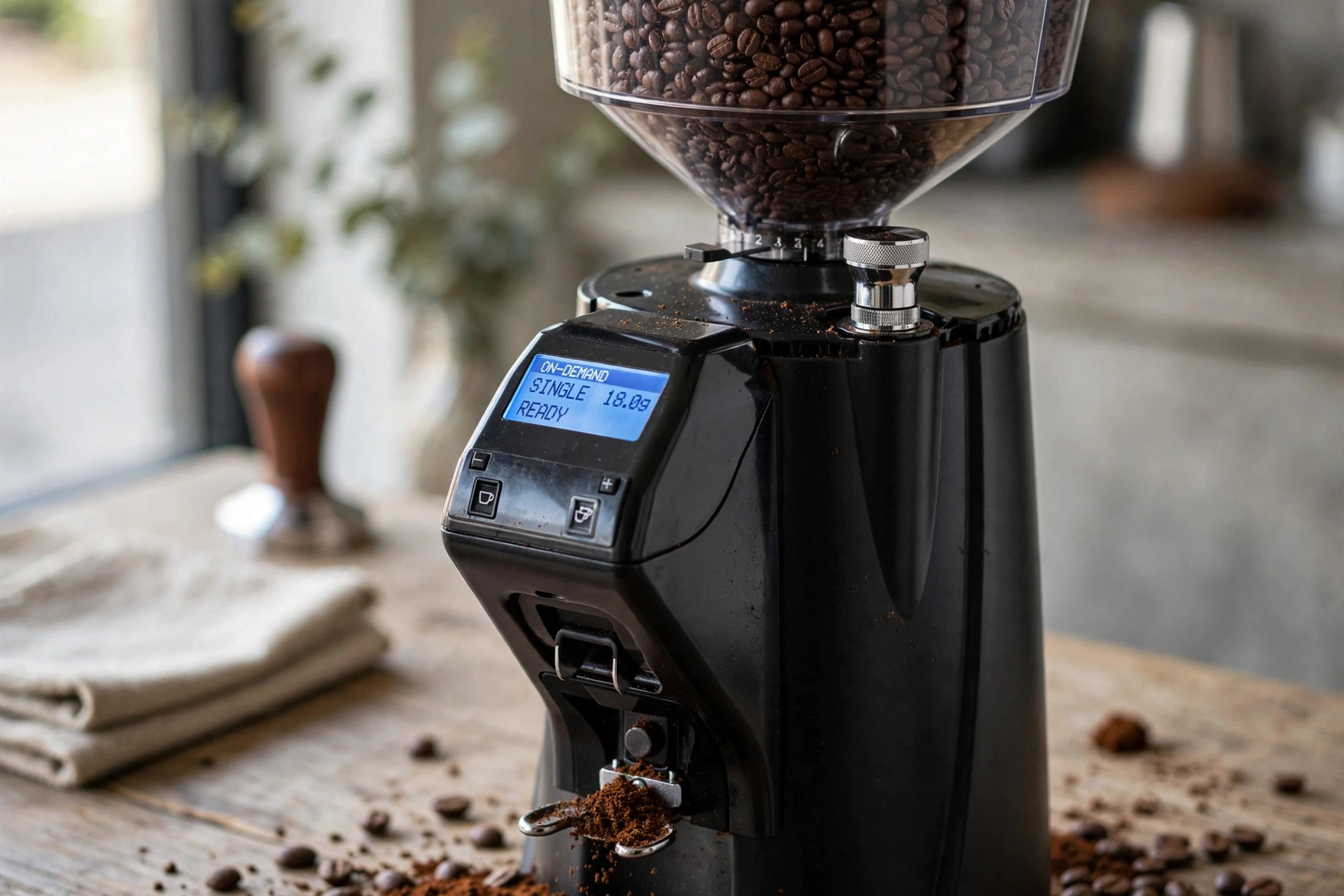
Begin by weighing a single dose of coffee using a high-precision scale. Set the on-demand grinder to dispense what you believe is 18 grams. Weigh the result. If it is 19 grams, adjust the digital setting down. This process must be repeated every time you open a new bag of beans, as roast dates and bean sizes vary. I recommend checking the dose every two hours during peak service to account for humidity shifts.
Step 2: Managing the Hopper Volume
Avoid filling the hopper to the brim. While it seems efficient, coffee beans degrade when exposed to oxygen. Keep only enough beans in the hopper for 2-3 hours of service. This ensures the coffee bean retains its oils and aromatic complexity, which is especially important when utilizing the premium roasts found in a Sensa Coffee Service in Charlotte, NC.
Step 3: Thermal Management
High-volume grinding generates heat. Heat transfer from the burrs to the coffee can cause "scorching" or overly bitter notes. Ensure your on-demand grinder has adequate ventilation and is not placed directly next to a heat-emitting oven or steamer. If you are operating in a humid environment, like a cafe in Mount Pleasant, SC, the beans may clump more frequently; using a grinder with an integrated clumping preventer is highly recommended.
Step 4: Integration with Training
Train your baristas to recognize the "visual cue" of a correct dose. Even with on-demand technology, the height of the coffee mound in the portafilter can vary. Baristas should be trained to use a distribution tool to ensure the grounds are level before tamping, preventing channeling and ensuring a uniform extraction.
On-Demand vs. Traditional Grinders: A Business Comparison
Choosing between on-demand and traditional dosing systems depends on your volume and quality targets. However, for any business aspiring to be a specialty coffee destination, the a-priori choice is on-demand.
| Feature | Traditional Dosing Grinder | Generic Timer-Based AI Grinder | Professional On-Demand System |
|---|---|---|---|
| Waste Levels | High (Significant powder loss) | Moderate (Inconsistent dosing) | Ultra-Low (Precision dosing) |
| Freshness | Low (Coffee sits in chamber) | Moderate (Freshly ground) | Maximum (Ground at second of use) |
| Workflow Speed | Slow (Manual scooping/leveling) | Fast (Automatic but inconsistent) | Optimized (Direct-to-portafilter) |
| Consistency | Variable (Depends on barista) | Unstable (Prone to drift) | High (Digital calibration) |
| Cost of Entry | Low | Moderate | High (Investment in quality) |
As shown in the table, the "Generic Timer-Based" approach often promises speed but fails on consistency. These machines often suffer from "drift," where the dose changes as the motor heats up. A professional on-demand system, like those provided through Sensa Coffee Service in Raleigh NC, maintains a strict tolerance regardless of the volume of shots pulled.
Common Mistakes to Avoid When Using On-Demand Grinders
One of the most common mistakes I see is the "over-reliance on the screen." Baristas often trust the digital readout on the grinder without ever checking the actual weight of the dose. Digital settings are a guide, not a guarantee. In my experience, a grinder can show "18g" while actually dispensing 17.2g due to bean density changes. Always use a scale for the first five shots of the day.
Another frequent error is neglecting the burr cleanliness. On-demand grinders move a lot of coffee quickly, and coffee oils build up on the burrs faster than in low-volume settings. This buildup creates friction, which increases heat and alters the grind size. According to NSF International, maintaining sanitary standards for food-contact surfaces is not just about hygiene but about performance. If you don't clean your burrs, your on-demand precision becomes irrelevant because the grind quality is degraded.
Furthermore, many cafe owners fail to match the grinder capacity to their peak hour volume. Using a small, home-style "on-demand" grinder in a commercial setting will lead to motor burnout. Ensure your equipment is rated for commercial use and capable of handling the heat generated by continuous operation. If you're unsure of the capacity needed, you might want to look into high capacity commercial grinders for busy kitchens to see the difference in duty cycles.

Finally, avoid the temptation to "over-tamp" to compensate for a light dose. If the on-demand grinder is under-dosing, the solution is to adjust the grinder settings, not to push harder on the tamper. Over-tamping does not fix a lack of coffee; it only creates a puck that is too dense, leading to an over-extracted, bitter shot that ruins the customer experience.
Pro Tip: The Humidity Factor in Mount Pleasant, SC
For those operating in the coastal humidity of Mount Pleasant, SC, you will notice that your on-demand grinders "drift" more than they would in a drier climate. Humidity causes coffee beans to absorb moisture, which changes the way they interact with the burrs. I've found that in these regions, baristas need to recalibrate their doses at least three times a day—once at opening, once after the mid-morning rush, and once before the afternoon lull. This ensures that the consistency of the specialty coffee remains top-tier regardless of the weather outside.
For those expanding their footprint into other regions, considering a Sensa Coffee Service in Greenville SC can provide a similar level of managed precision across multiple locations, ensuring that a latte in Mount Pleasant tastes exactly like a latte in Greenville.
Frequently Asked Questions
Does an on-demand grinder really reduce waste?
Yes, significantly. Traditional grinders dispense coffee into a chamber where a percentage of the grounds always remain behind or are spilled during the transfer to the portafilter. On-demand commercial grinders dispense the exact weight directly into the basket. This eliminates the "waste heap" on the counter and can reduce raw material loss by 10% to 15% depending on the volume of the cafe.
How often should I calibrate my on-demand grinder?
At a minimum, you must calibrate at the start of every business day. However, for high-volume cafes, I recommend a "check-and-adjust" every two to four hours. Factors such as temperature, humidity, and the transition to a new bag of beans all affect the grind size and dose weight. A quick weigh-in of one shot every few hours prevents a catastrophic drop in quality.
Can on-demand grinders handle high-volume rushes?
Absolutely, provided the machine is a true commercial-grade unit. Professional on-demand grinders are designed with high-torque motors and heat-resistant burrs that can handle hundreds of cycles per hour without overheating. If you are experiencing slowdowns, the bottleneck is usually the barista's workflow, not the grinder's ability to dispense coffee.
Is the higher cost of on-demand grinders justified?
For a business, the cost is justified through the combination of reduced waste and increased speed. When you calculate the cost of wasted coffee beans over 12 months, the savings often cover a significant portion of the machine's price. More importantly, the consistency in taste leads to higher customer retention, which is far more valuable than the initial capital expenditure.
Do I need special training for my staff to use these?
While they are more intuitive than dosing grinders, staff still need training on "dialing in." They must understand that the digital number on the screen is a starting point and that the scale is the final authority. Training should focus on the relationship between grind size, dose weight, and extraction time to ensure the coffee remains in the specialty range.
Conclusion
Investing in on-demand commercial grinders is a strategic move that transforms a cafe from a simple coffee shop into a precision beverage operation. By eliminating waste, ensuring absolute freshness, and speeding up the barista's workflow, you create a sustainable model for growth. Whether you are serving the morning commute in Mount Pleasant, SC, or managing a large-scale operation through Sensa Coffee Service in Jacksonville, FL, the shift to on-demand technology is the most effective way to protect your margins and your brand's reputation.
Consistency is the hallmark of a professional establishment. When a customer knows that their favorite drink will taste exactly the same every time they visit, you have built a loyal base. This level of reliability is only possible when you control every variable of the process, starting with the grind. For those looking to build a complete infrastructure, from equipment to maintenance, we recommend exploring our Sensa Coffee Service in Columbia SC options.
To fully master your equipment selection and understand how these machines fit into a larger business strategy, return to our Ultimate Guide to Commercial Coffee Grinders for Businesses.
Ready to upgrade your beverage program? Visit Busy Bean Coffee to discover how our all-inclusive managed coffee solutions can remove the stress of equipment maintenance and supply chain management from your daily operations.
Free Coffee Pairing Guide & Specialty Roast Cheat Sheet
Unlock the secrets of perfect brewing ratios, water temperatures, and specialty roast profiles. Download the guide.