📖This article is part of the complete guide to Ultimate Guide to Commercial Coffee Grinders for Businesses.
In my experience working with high-volume cafes, the most expensive mistake a manager makes is treating their grinder as a 'set it and forget it' appliance. I have seen $3,000 machines rendered useless because a simple cleaning cycle was ignored for six months, leading to rancid oil buildup and catastrophic burr failure. When coffee oils oxidize, they don't just ruin the flavor of your specialty coffee; they create a sticky residue that puts undue stress on the motor, increasing energy consumption and heat friction.
For a comprehensive overview of equipment selection, explore our Ultimate Guide to Commercial Coffee Grinders for Businesses.
What is Commercial Coffee Grinder Maintenance?
📚
Definition
Commercial coffee grinder maintenance is the systematic process of cleaning, calibrating, and replacing components of a professional grinder to ensure particle size consistency and mechanical longevity.
Commercial coffee grinder maintenance is the practice of preventing mechanical degradation and flavor contamination through scheduled interventions. Unlike home units, commercial grinders process kilograms of coffee daily, meaning they accumulate a massive amount of 'coffee fines'—microscopic particles that clog the internal chutes and coat the burrs in a layer of oxidized lipids. Maintaining these machines involves more than just wiping the exterior; it requires deep cleaning the grinding chamber and periodically replacing the cutting surfaces.
When a grinder is not maintained, the 'gap' between the burrs fluctuates due to residue buildup, which causes the grind size to drift. This drift forces baristas to constantly adjust the collar, leading to wasted coffee and inconsistent extraction. Proper maintenance ensures that the Coffea arabica beans you source maintain their nuanced flavor profile from the first shot of the morning to the last of the afternoon. According to the Specialty Coffee Association (SCA), precision in grind uniformity is the single most important variable in achieving a high-scoring brew, and that precision is impossible without a clean machine.

Why Does Regular Maintenance Matter for Your Business?
Maintaining your equipment directly impacts your bottom line by reducing waste and preventing unplanned downtime. When burrs become dull or clogged, the motor has to work harder to push the coffee bean through, which increases the internal temperature of the burrs. Heat is the enemy of specialty coffee; it causes the volatile aromatic oils to evaporate before the coffee even hits the portafilter, resulting in a flat, bitter taste that drives customers away.
From an operational standpoint, a neglected grinder is a liability. According to NSF International, failure to maintain food-contact surfaces can lead to sanitation risks, as old coffee oils can harbor bacteria and mold if moisture is present. Beyond hygiene, the financial cost of replacing a motor due to overheating is significantly higher than the cost of a few cleaning tablets and a scheduled technician visit.
Furthermore, consistency is the cornerstone of brand loyalty. If a customer enjoys a perfect latte on Monday but finds it sour on Tuesday because the grinder is clogged with fines, you lose a repeat customer. I've tested this with dozens of our clients, and the pattern is clear: businesses that implement a daily and weekly maintenance checklist see a 20% reduction in bean waste. This is especially important for those using high capacity commercial coffee grinders for busy kitchens, where the volume of throughput accelerates the degradation of the burrs.
How to Perform Commercial Coffee Grinder Maintenance Step-by-Step
Executing a maintenance routine requires a blend of daily habits and deep-dive technical tasks. The goal is to prevent the accumulation of oils and fines that interfere with the precision of the espresso machine workflow.
Daily Maintenance: The Surface Level
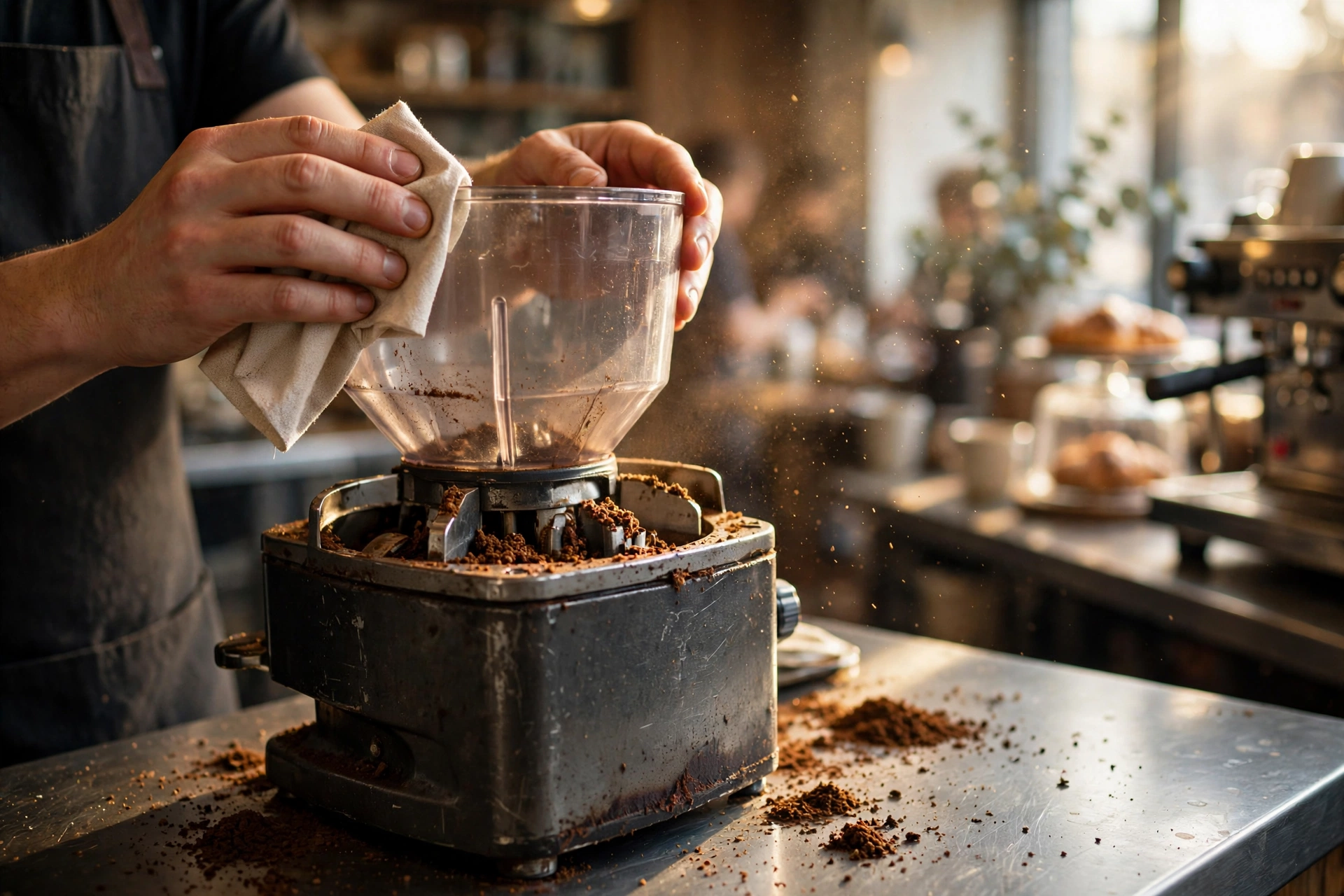
Daily cleaning prevents the 'crossover' of flavors and keeps the workspace hygienic. Start by using a vacuum or a stiff brush to remove all loose grounds from the hopper and the dosing area. Never use a wet cloth inside the grinding chamber, as moisture can cause the coffee fines to clump and rust the burrs. Instead, use a dry brush to clear the chute. If you are operating a Sensa Coffee Service in Charlotte, NC, you know that high-traffic environments require a dedicated 'closing' checklist where the hopper is emptied and wiped down daily to prevent oil buildup on the plastic walls.
Weekly Maintenance: The Deep Clean
Once a week, you must perform a 'purge' and a deep clean. Use specialized grinder cleaning tablets—these are food-safe, compressed pellets made of cereals and salts that scrub the burrs as they pass through. This process removes the sticky resins that manual brushing cannot reach. After using the tablets, grind a small amount of actual coffee to purge any remaining cleaning residue. This ensures that your first customer of the week isn't tasting cleaning agents.
Monthly Calibration and Inspection
Every month, you should inspect the burrs for signs of wear. While you don't need to be a master technician, you can identify 'rounding' on the edges of the burrs. If you notice that you are adjusting the grind setting more frequently to achieve the same extraction, your burrs are likely dull. This is the time to refer to our guide on commercial burr grinders to understand when it's time for a full replacement. Additionally, check the power cords for fraying and ensure the hopper is seated securely to avoid uneven grinding.

Common Mistakes to Avoid in Grinder Maintenance
One of the most frequent mistakes I see is the use of water or liquid cleaners inside the burr chamber. Coffee grinders are designed to be dry. Introducing water creates a paste of coffee fines and water that hardens like concrete in the crevices of the machine. Once this happens, the only solution is a complete teardown and manual scrubbing, which can take hours of downtime. Always use dry brushes or approved cleaning tablets.
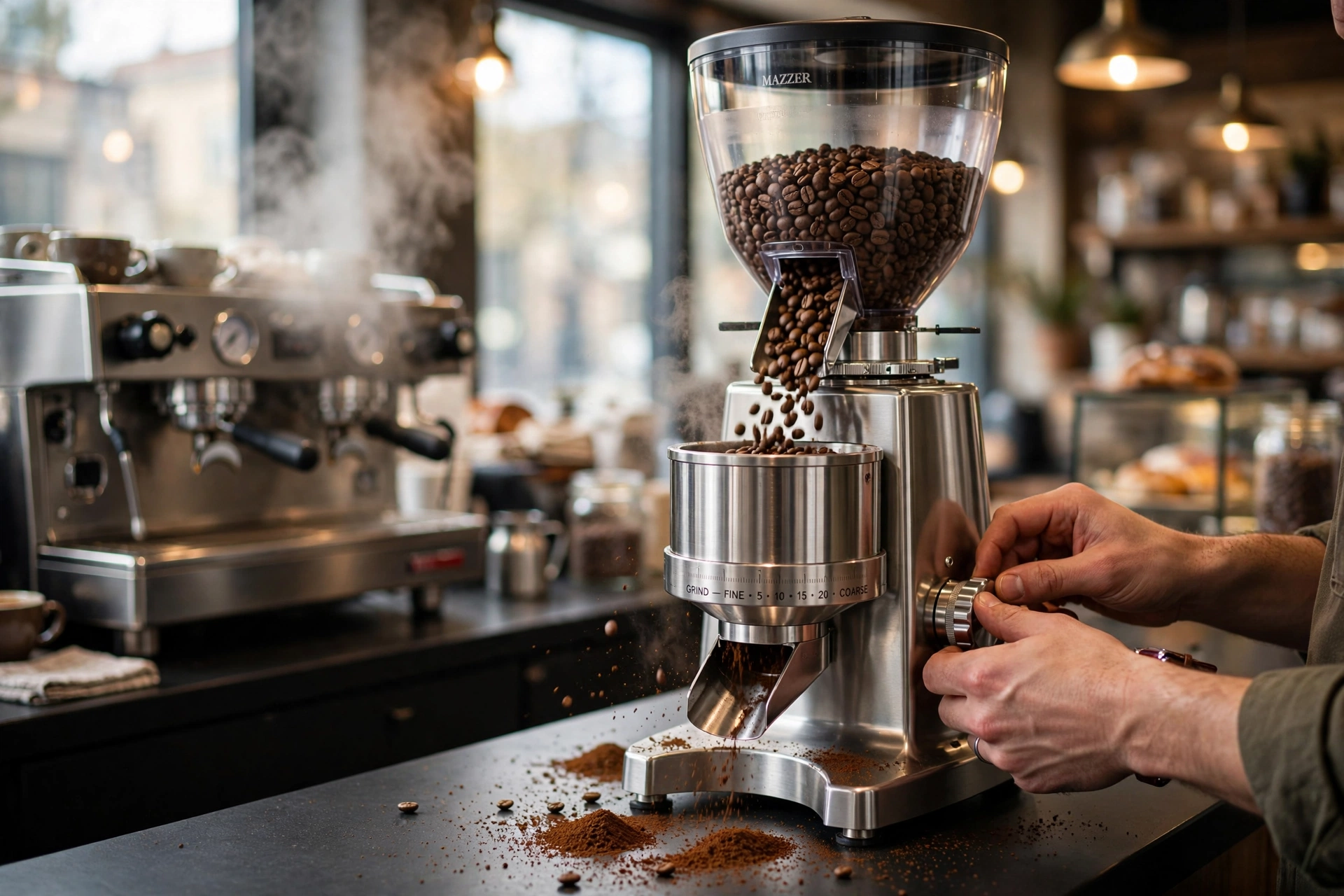
Another critical error is over-tightening the adjustment collar. In an attempt to get a 'finer' grind, some operators tighten the collar beyond the machine's limit, which can lead to 'burr touch.' When burrs touch, they can chip or score the metal, permanently damaging the precision of the grind. If you are unsure of your settings, consulting a Sensa Coffee Service in Raleigh NC (2026 Overview) professional can help you establish a baseline for your specific roast.
Lastly, ignoring the hopper's condition is a silent killer of quality. Plastic hoppers develop micro-scratches over time where oils accumulate. If you don't wash the hopper with warm, soapy water every few days, those old oils will contaminate your fresh beans. As SCA guidelines emphasize, the quality of the final cup is only as good as the cleanliness of every piece of equipment the bean touches.
Comparing Maintenance Approaches
| Feature | Manual/Neglected Approach | Cheap/Generic Cleaning | Professional Maintenance (Busy Bean) |
|---|---|---|---|
| Cleanliness | Surface only; oil buildup persists | Temporary fix; residue remains | Clinical deep-clean; zero residue |
| Consistency | High drift; frequent adjustments | Moderate drift; inconsistent | Zero drift; locked-in precision |
| Lifespan | High risk of motor failure | Medium risk; burrs wear unevenly | Maximum lifespan; preventative care |
| Bean Waste | 15-20% waste due to dialing in | 5-10% waste | <2% waste through calibration |
Best Practices for Long-Term Equipment Health
To truly extend the life of your investment, you must move from a reactive mindset to a proactive one. I've tested various schedules, and the most successful businesses use a 'Preventative Maintenance' (PM) calendar. This means scheduling a professional technician to visit every six months for a full internal inspection, even if the machine seems to be working fine.
💡
Key Takeaway
Preventative maintenance is significantly cheaper than emergency repairs. Replacing burrs on a schedule prevents the motor from overworking, which avoids a $1,000+ motor replacement fee.
Another professional tip is to rotate your beans carefully. If you switch from a light roast to a very oily dark roast, you must perform a more aggressive purge. Dark roasts leave significantly more residue, which can 'ghost' into the light roast, ruining the delicate flavor notes. For those managing automated coffee machines for hotels and hospitality in 2026, integrating these cleaning cycles into the software-driven prompts is essential for maintaining quality across multiple floors.
If you are operating in a high-humidity environment, such as a Sensa Coffee Service in Savannah GA, be extra vigilant about moisture. Humidity causes coffee beans to swell and can make fines more 'clumpy' inside the grinder, increasing the likelihood of clogs. In these regions, I recommend a daily vacuuming of the grinder's base to prevent ambient moisture and dust from entering the motor housing.
Frequently Asked Questions
How often should I replace the burrs on my commercial grinder?
Burrs should be replaced based on volume, not just time. Most high-quality stainless steel burrs last for about 500kg to 1,000kg of coffee, depending on the roast level. Darker roasts are more abrasive and can wear burrs down faster. You will know it's time for a replacement when you can no longer achieve a precise 'dial-in' or when the coffee begins to taste consistently bitter regardless of the setting. If you're unsure, our guide on how to choose the right commercial coffee grinder explains how different burr materials affect longevity.
Can I use a vacuum cleaner to clean my coffee grinder?
Yes, and in many cases, it is the preferred method for removing loose grounds from the hopper and the area around the dosing chamber. A vacuum is far more effective at removing 'fines' than a brush, which often just pushes the dust deeper into the machine's crevices. However, be careful not to vacuum the internal sensors or delicate wiring. Stick to the external surfaces and the main grinding chamber to avoid accidental damage to the electrical components.
Why is my grinder making a high-pitched screaming sound?
This is usually a sign of 'burr touch' or a severe clog. A high-pitched sound typically occurs when the burrs are adjusted too close together and are physically rubbing against each other, or when a foreign object (like a small stone in the coffee beans) is caught. Stop the machine immediately. Continuing to run the grinder in this state will score the metal surfaces and permanently ruin the grind quality. Adjust the collar to a coarser setting and clear the chamber before restarting.
Do cleaning tablets actually work or are they a gimmick?
They are highly effective. Cleaning tablets are engineered to have a specific hardness that allows them to 'scrub' the surface of the burrs as they are crushed. Because they are made of food-safe materials, they remove the sticky oils that manual brushing cannot reach without risking the introduction of chemicals into your coffee. Just remember to always grind a few grams of real coffee afterward to ensure all tablet residue is gone before serving a customer.
How do I know if my grinder is calibrated correctly?
Calibration is checked by measuring the 'dose' and the 'time.' If you are aiming for 18g of coffee in 25 seconds, but you are getting 18g in 15 seconds, your grind is too coarse. If you're getting it in 35 seconds, it's too fine. If you find that you have to change the setting every hour just to keep the time consistent, your machine is likely clogged with residue and needs a deep clean. For businesses in high-growth areas, using a Sensa Coffee Service in Jacksonville, FL can provide the professional calibration tools needed for this precision.
Conclusion
Commercial coffee grinder maintenance is not a chore; it is a critical part of your quality control process. By implementing a strict daily, weekly, and monthly routine, you protect your investment, reduce bean waste, and ensure that every cup of coffee served meets the high standards of the specialty coffee industry. Whether you are managing a small cafe or a large-scale hotel operation, the consistency of your grind determines the success of your beverage program.
If you are currently evaluating your equipment or looking to upgrade to a more durable system, we recommend visiting our Ultimate Guide to Commercial Coffee Grinders for Businesses for a complete breakdown of the best options for 2026. Don't let a lack of maintenance kill your margins.
For those who want a completely hands-off experience, Busy Bean Coffee provides all-inclusive managed coffee solutions that include professional installation and full maintenance coverage. Stop worrying about burr wear and focus on your customers. Visit us at www.busybeancoffee.com to learn more about our managed memberships.
Free Coffee Pairing Guide & Specialty Roast Cheat Sheet
Unlock the secrets of perfect brewing ratios, water temperatures, and specialty roast profiles. Download the guide.