
Introduction
Investing in a commercial espresso machine is one of the most significant decisions a coffee business can make. Whether you're opening a new café, upgrading an existing setup, or adding coffee service to a hotel or restaurant, the wrong machine can cost you thousands in wasted beans, lost revenue, and frustrated baristas. Conversely, the right machine becomes the heart of your operation, driving repeat customers and a strong reputation.
This commercial espresso machine buying guide for 2026 will walk you through every critical factor: machine types, key features, pricing, maintenance, and how to choose a partner that ensures your investment pays off. For a broader overview of the market, see our complete guide to commercial espresso machines.
Types of Commercial Espresso Machines
Before diving into features, it's essential to understand the main categories of commercial espresso machines. Your choice here determines workflow, consistency, and labor costs.
Semi-Automatic Machines
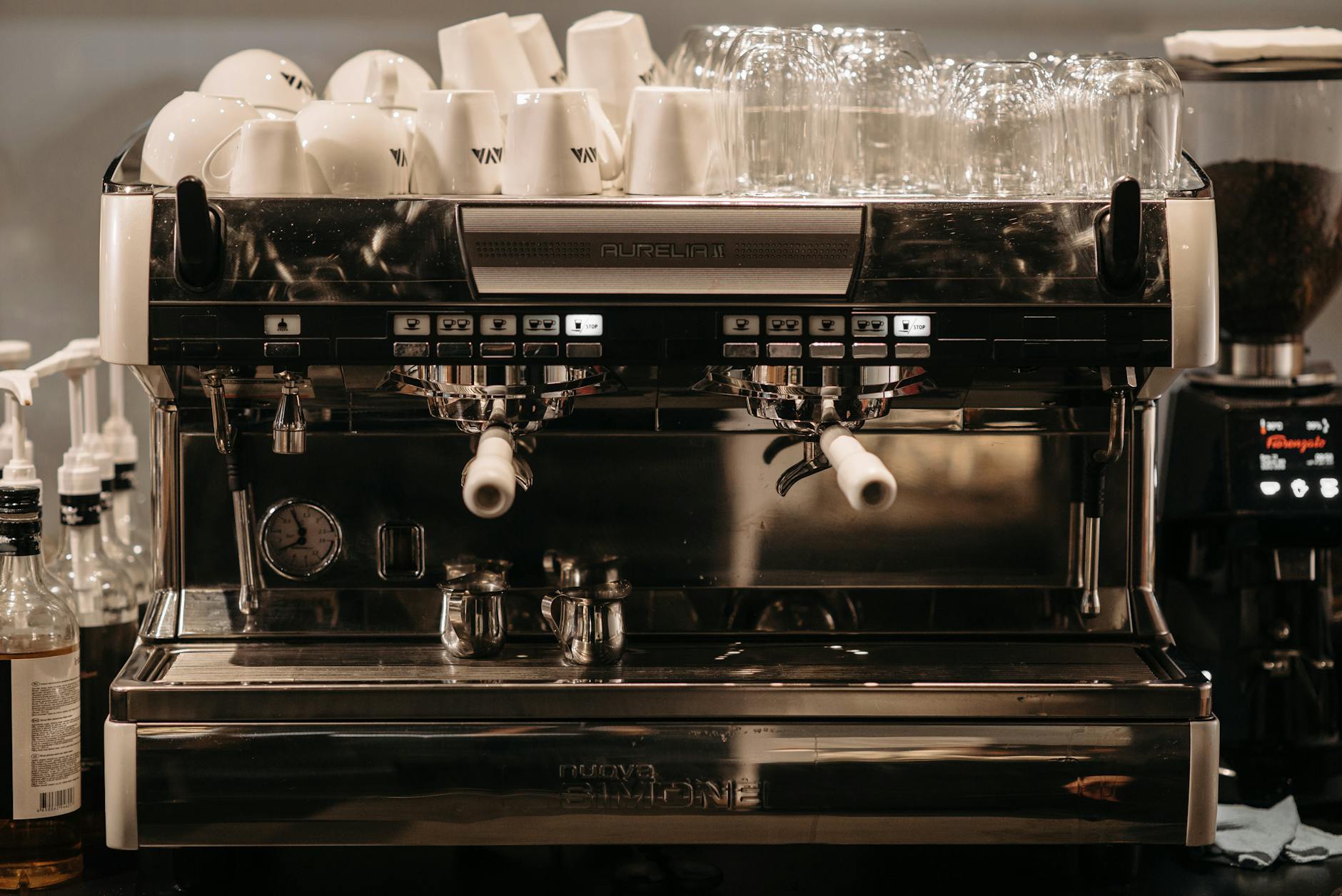
These are the industry standard for specialty coffee shops. The barista controls the extraction time manually by starting and stopping the pump. This allows for fine-tuning each shot but requires skilled, trained staff. Brands like La Marzocco and Nuova Simonelli dominate this segment.
Automatic Machines
Automatic machines handle the extraction cycle — the machine stops the water flow after a programmed volume. This improves consistency across shifts but reduces the barista's control. They are a popular choice for high-volume chains.
Super-Automatic Machines
These machines grind, dose, tamp, and extract with the push of a button. Some even steam milk automatically. Super-automatics are ideal for offices, hotels, and convenience stores where speed and consistency are prioritized over artisanal control. The Busy Bean Coffee SENSA line, for example, offers super-automatic models that deliver café-quality espresso with minimal training.
Manual (Lever) Machines
These are rare in commercial settings today. They require significant skill and physical effort. However, some high-end specialty shops use them for a unique, hands-on experience.
💡
Key Takeaway
For most foodservice businesses in 2026, the choice comes down to semi-automatic (for control) or super-automatic (for consistency and ease). For a deeper comparison, read our guide on semi-automatic vs. automatic commercial espresso machines.
Key Features to Evaluate
Boiler System
- Single Boiler: Heats water for both brewing and steaming, but not simultaneously. Slow for high volume.
- Heat Exchanger: One boiler maintains brew temperature while a separate heat exchanger creates steam. Good for medium volume.
- Dual Boiler: Separate boilers for brew and steam. Best for high-volume, specialty-focused operations. This is the gold standard for consistency.
Group Heads
The number of group heads determines how many shots you can pull simultaneously. A two-group machine is standard for most cafés (60-120 shots/day). A three-group machine is needed for high volume (200+ shots/day).
Steam Power
Look at the steam boiler capacity and the number of steam wands. If you serve many milk-based drinks, a machine with powerful, dry steam is non-negotiable.
Durability and Build Quality
Commercial machines are built to last 5-10 years in heavy use. Look for stainless steel frames, brass boilers, and E61 group heads (a classic, reliable design).
Ease of Maintenance
Machines with automatic backflush cycles, removable brew groups, and easy access to internal components reduce downtime. This is where the Busy Bean Coffee managed membership model shines — we handle all maintenance so you never worry about a broken machine.
Pricing and ROI
Commercial espresso machines range from $3,000 for entry-level models to $20,000+ for top-tier Italian machines. However, the purchase price is only the beginning. Installation, plumbing, electrical work, and ongoing maintenance can add 30-50% to the total cost of ownership.
| Feature | Entry-Level | Mid-Range | High-End | Premium (Managed) |
|---|---|---|---|---|
| Price Range | $3k - $6k | $6k - $12k | $12k - $20k | $0 upfront (managed) |
| Build | Basic stainless | Solid brass/stainless | Full brass/copper | Premium SENSA line |
| Boiler Type | Single/Heat Exchanger | Heat Exchanger/Dual | Dual Boiler | Dual Boiler |
| Maintenance | Owner responsibility | Owner responsibility | Owner responsibility | Included (managed) |
| Lifespan | 3-5 years | 5-7 years | 7-10 years | Continuous support |
According to a 2025 report by the Specialty Coffee Association, the average café spends $1,200 annually on espresso machine maintenance and repairs. Over a five-year period, that's $6,000 — often exceeding the initial machine cost. This is why many businesses are shifting to managed coffee service models.
For a detailed breakdown of costs, see our article on how much does a commercial espresso machine cost.
How to Choose the Right Machine for Your Business
Step 1: Estimate Your Volume
Calculate your peak hour demand. If you serve 100 coffee drinks per day, a single-group machine will struggle. For 200+ drinks, you need a two-group or three-group machine.
Step 2: Define Your Skill Level
If you have experienced baristas, a semi-automatic machine gives you artistic control. If you rely on shift workers with varying skills, a super-automatic is safer.
Step 3: Consider Your Space
Commercial machines are large. Measure your counter space, plan for ventilation, and ensure you have adequate electrical (208-240V) and plumbing (water line and drain).
Step 4: Evaluate Total Cost of Ownership
Factor in installation, training, maintenance, and replacement parts. A $5,000 machine that requires $2,000/year in maintenance is more expensive than a $12,000 machine with a $0/year service contract.
Step 5: Choose a Service Partner
This is the most overlooked step. A machine is only as good as the support behind it. Busy Bean Coffee offers an all-inclusive managed membership that covers installation, maintenance, support, and training for one predictable monthly fee. You run the business; we handle the coffee.
💡
Key Takeaway
The best machine for your business is the one that matches your volume, skill level, and budget — and comes with reliable support.
Top Brands to Consider
La Marzocco
The gold standard for specialty coffee. Italian-made, durable, and beautiful. Expect to pay $8,000-$20,000. Best for high-end cafés.
Nuova Simonelli
Industry workhorse. Used in many World Barista Championships. Reliable and serviceable. Price range: $5,000-$12,000.
Rancilio
A step below the top tier but excellent value. The Rancilio Classe series is popular in mid-range cafés and restaurants. Price range: $4,000-$8,000.
SENSA by Busy Bean Coffee
Designed specifically for managed coffee service. The SENSA line (Duo, Fresh, Soluble, Pro, Drip) offers super-automatic precision with a focus on reliability and ease of maintenance. These machines are not sold retail — they are only available through Busy Bean Coffee's managed membership model. This ensures every machine is professionally installed, maintained, and supported.
For a comprehensive comparison, see our guide on top commercial espresso machine brands compared.
Maintenance and Cleaning
A commercial espresso machine requires daily, weekly, and monthly maintenance to perform consistently and last.
Daily
- Backflush with cleaning powder after each shift
- Purge steam wands
- Wipe down group heads and drip tray
Weekly
- Deep clean steam wands
- Clean the grinder burrs
- Descale the machine (depending on water hardness)
Monthly
- Replace water filters
- Inspect gaskets and seals
- Professional deep clean (or as part of your managed service)
Neglecting maintenance leads to scale buildup, bitter coffee, and expensive repairs. According to a study by the Specialty Coffee Association, poorly maintained machines can reduce extraction efficiency by 15-20%, directly impacting flavor and profitability.
For a complete maintenance schedule, read our guide on commercial espresso machine maintenance and cleaning.
Frequently Asked Questions
What is the best commercial espresso machine for a small café?
For a small café serving 50-100 drinks per day, a two-group semi-automatic machine from Rancilio or Nuova Simonelli is a solid choice. If you want to minimize training and ensure consistency, consider a super-automatic from the SENSA line. The key is to match the machine's capacity to your volume — an oversized machine wastes energy, while an undersized one creates bottlenecks during peak hours.
How much does a commercial espresso machine cost in 2026?
Prices range from $3,000 for entry-level models to $20,000+ for premium Italian machines. However, the total cost of ownership includes installation ($500-$2,000), plumbing ($300-$1,000), and annual maintenance ($800-$1,500). Many businesses find that a managed membership model with Busy Bean Coffee eliminates upfront costs and includes all maintenance for a predictable monthly fee.
How long do commercial espresso machines last?
With proper maintenance, a quality commercial espresso machine lasts 5-10 years. Machines in high-volume settings (200+ drinks/day) may need replacement sooner. The boiler, group heads, and pump are the most critical components. Regular descaling and backflushing extend lifespan significantly.
What is the difference between a semi-automatic and a super-automatic machine?
A semi-automatic machine requires the barista to start and stop the extraction manually, giving full control over the shot. A super-automatic machine grinds, doses, tamps, and extracts automatically, often with programmable settings. Semi-automatics are preferred by specialty cafés; super-automatics are ideal for offices, hotels, and high-volume chains where consistency is paramount.
Do I need a commercial espresso machine for an office coffee program?
It depends on your volume and expectations. If your office serves 20+ specialty drinks per day, a super-automatic commercial machine like the SENSA Pro is an excellent investment. It eliminates the need for a dedicated barista and delivers consistent quality. For smaller offices, a high-end pod machine may suffice, but the per-cup cost is higher and the quality lower.
Conclusion
Choosing the right commercial espresso machine is a strategic decision that impacts your coffee quality, operational efficiency, and bottom line. By understanding machine types, key features, and total cost of ownership, you can make an informed choice that serves your business for years to come.
This commercial espresso machine buying guide for 2026 has covered the essentials, but the most important factor is the support behind the machine. A managed coffee service partner like Busy Bean Coffee eliminates the headaches of ownership — no capital expense, no maintenance surprises, no downtime. Just great coffee, every day.
Ready to upgrade your coffee program? Contact Busy Bean Coffee today for a free consultation and discover how our SENSA line and all-inclusive membership can transform your business.
About the Author
the author is the CEO & Founder of Busy Bean Coffee, a specialty coffee equipment provider serving foodservice businesses since 2014. With over a decade of experience in commercial coffee systems, he has helped hundreds of hotels, restaurants, and offices build profitable, hassle-free coffee programs.
Free Coffee Pairing Guide & Specialty Roast Cheat Sheet
Unlock the secrets of perfect brewing ratios, water temperatures, and specialty roast profiles. Download the guide.