📖This article is part of the complete guide to Ultimate Guide to Commercial Coffee Grinders for Businesses.
In my experience working with corporate headquarters and medical clinics, the biggest bottleneck to employee satisfaction isn't the breakroom snack selection, it is the quality of the coffee. Most offices rely on pre-ground beans or consumer-grade machines that burn the roast, leading to a bitter cup that barely wakes up the staff. When we integrated professional-grade equipment for our clients in Mount Pleasant, SC, we saw a measurable shift in how teams utilized their coffee stations, transforming a mere utility into a hub for collaboration.
For a comprehensive overview of the hardware landscape, explore our Ultimate Guide to Commercial Coffee Grinders for Businesses.
What are Commercial Grinders for Offices?
📚
Definition
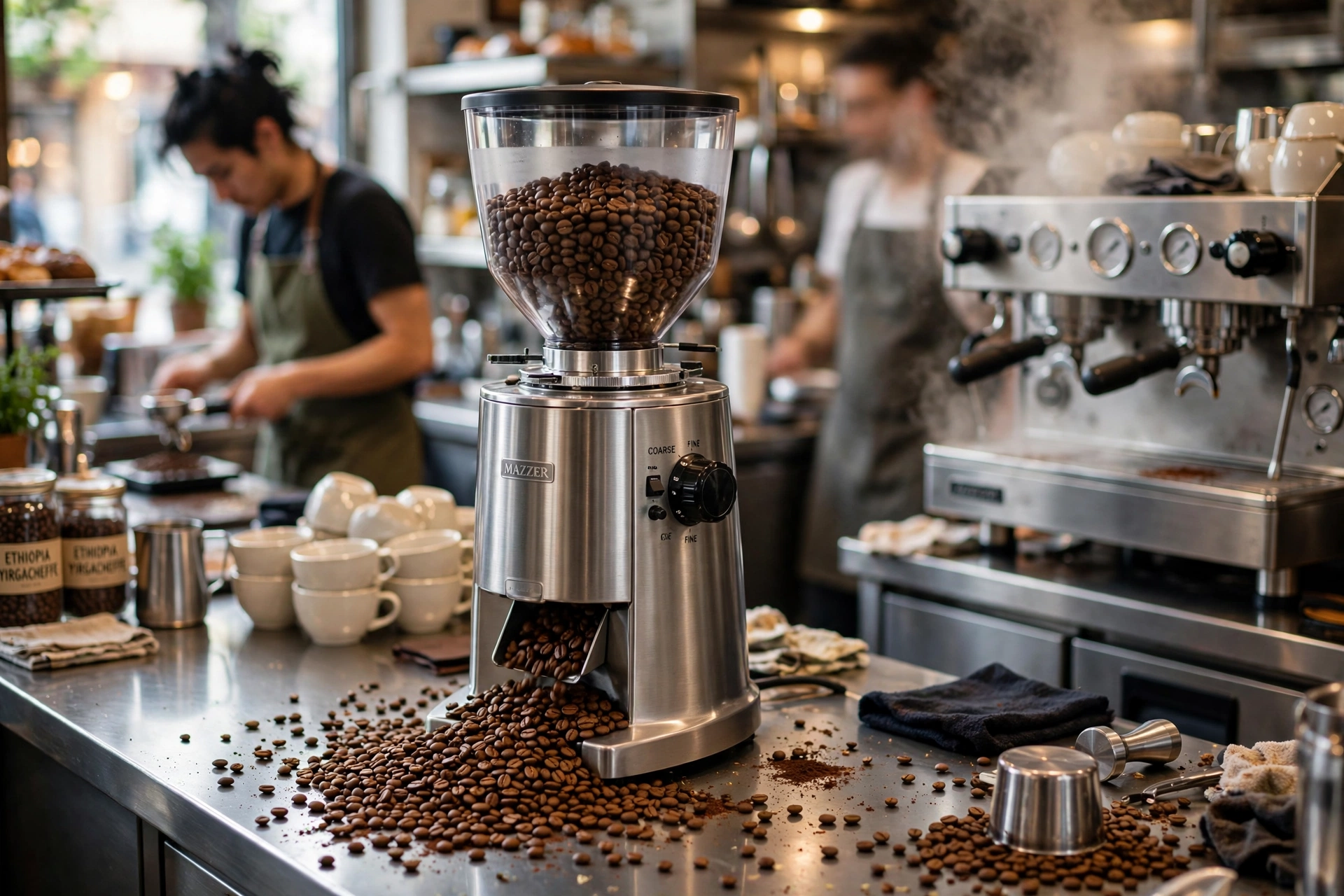
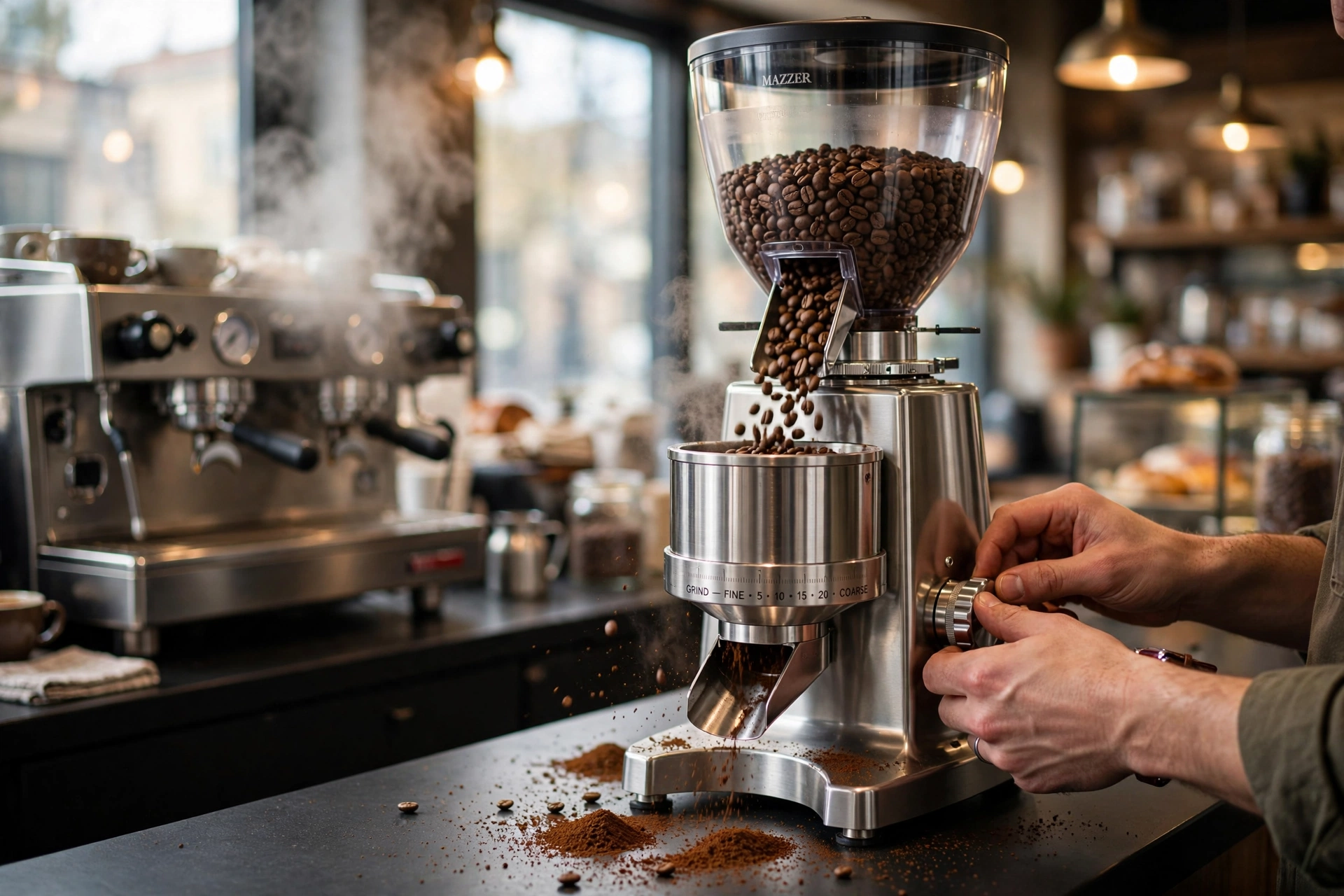
Commercial grinders for offices are heavy-duty coffee milling machines engineered for high-volume, consistent output, featuring durable motors and precision burrs that can handle the continuous demand of a professional workplace without overheating or losing calibration.
Commercial grinders for offices differ fundamentally from home models in their thermal management and torque. While a home grinder might struggle after ten consecutive cups, a commercial unit is designed to grind hundreds of portions per day while maintaining a precise particle size. This precision is essential because the surface area of the coffee bean directly affects the extraction rate, which in turn determines whether the coffee tastes like a specialty roast or burnt rubber.
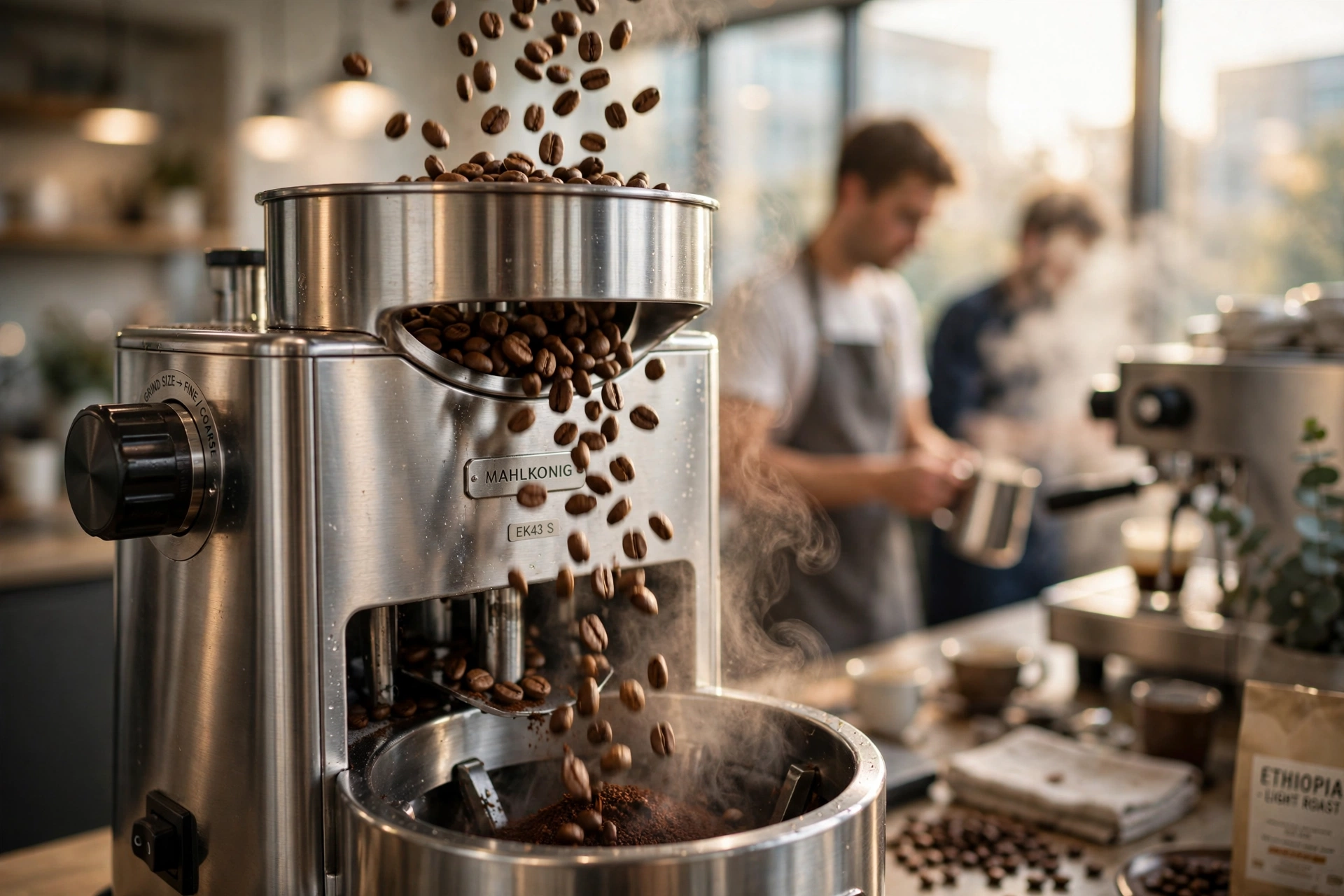
When discussing these machines, we are primarily talking about burr grinders. Unlike blade grinders that chop beans inconsistently, burr grinders crush the coffee bean to a uniform size. For a corporate environment, this means the first cup of the morning and the last cup of the afternoon taste exactly the same. In my years as a Q-Grader, I have found that the stability of the grind is the single most important factor in reducing coffee waste in the office. If the grind is inconsistent, employees will simply dump the pot and start over, costing the company money and time.

Why Does the Right Grinder Matter for Your Business?
Investing in professional commercial grinders for offices is not about luxury; it is about operational efficiency and employee wellness. A high-quality grind ensures that the Coffea arabica beans you purchase—likely a premium specialty coffee—are not wasted. According to the Specialty Coffee Association (SCA), precise grind distribution is the foundation of a quality beverage, as it prevents the common issues of over-extraction (bitterness) and under-extraction (sourness).
From a productivity standpoint, a professional coffee station reduces "coffee runs." When the in-house quality rivals a high-end cafe, employees spend less time leaving the building for a latte and more time in the office. Furthermore, a consistent grind reduces the amount of coffee wasted per brew. According to data from the National Coffee Association USA (NCA), coffee consumption in the workplace continues to rise, and businesses that prioritize quality are seeing higher rates of employee engagement in common areas.
Consider the impact on your brand image. When a high-value client visits your office and is served a cup of coffee brewed from freshly ground, precision-milled beans, it signals attention to detail and a commitment to quality. This is why we often recommend integrating these systems into a broader Sensa Coffee Service in Mount Pleasant SC: Complete Guide to ensure the equipment is always calibrated and the beans are always fresh.
How to Implement Commercial Grinders in Your Office Station
Implementing a professional grinding solution requires more than just plugging in a machine. You must match the grinder's capacity to your head-count and the specific brewing method you use. For instance, an office using a French Press requires a coarse grind, while those using an espresso machine need a powdery, fine grind. If you are unsure which one fits your needs, our guide on how to choose the right commercial coffee grinder provides a technical breakdown of micron sizes.
Step 1: Assess Your Volume
Calculate the number of cups brewed per hour during peak times (usually 8:00 AM to 10:00 AM). If you have 50 employees, you are likely looking at 75-100 cups in that window. A grinder with a small hopper will require constant refilling, which leads to inconsistency. You need a high-capacity hopper that can hold enough beans to last the morning rush.
Step 2: Choose Your Grinder Type
Decide between "On-Demand" and "Dosed" grinders. In an office setting, on-demand grinders are superior. They grind the exact amount of coffee needed for a specific brew cycle directly into the filter or portafilter. This eliminates the "mountain of coffee" that often accumulates under a traditional grinder, which eventually goes stale and creates a mess. For those managing high-traffic areas, looking into high capacity commercial coffee grinders is the only way to avoid bottlenecks at the coffee station.
Step 3: Establish a Calibration Schedule
Coffee beans change behavior based on humidity and temperature. In a coastal environment like South Carolina, the moisture in the air can cause beans to clump. A dedicated barista or office manager should check the grind size weekly. If the coffee starts tasting too sharp, the grind needs to be finer; if it tastes burnt, it needs to be coarser.
Step 4: Integrate Sanitation Standards
Professional equipment must meet health standards. Ensure your equipment is NSF International certified. This ensures the machine is built with materials that are easy to sanitize and do not harbor bacteria or old coffee oils, which can turn rancid and ruin the flavor of fresh batches.
Commercial Grinders vs. Consumer Alternatives
Many office managers make the mistake of buying a high-end "home" grinder, thinking it is sufficient for 20 people. This is a recipe for equipment failure. The following table illustrates the difference in performance and longevity.
| Feature | Consumer-Grade Grinder | Generic "Prosumer" AI Grinder | Busy Bean Commercial Approach |
|---|---|---|---|
| Motor Life | Overheats after 5-10 mins | Moderate; intermittent failure | Industrial-grade; 24/7 capability |
| Consistency | High variance (boulders/fines) | Moderate; drifts over time | Micron-precise; consistent output |
| Maintenance | Difficult to replace burrs | Proprietary parts; slow shipping | Professional installation & full coverage |
| Speed | Slow; 60s per dose | Average; 30-40s per dose | Instant; high-torque efficiency |
As we can see, the traditional approach of buying a home machine leads to frequent downtime. Even some modern "smart" grinders use software to compensate for poor hardware, which often results in erratic grind sizes. At Busy Bean Coffee, we focus on the physics of the grind. By utilizing high-torque motors and hardened steel burrs, we ensure that the coffee service remains uninterrupted, which is essential for businesses utilizing an automated coffee machine for clinics or high-end corporate offices.
Common Mistakes to Avoid with Office Grinders
One of the most frequent errors I see is the failure to clean the burrs. Over time, coffee oils build up on the grinding surfaces. These oils oxidize and become rancid. When new beans pass through these dirty burrs, they pick up the stale flavor, making your expensive specialty coffee taste like old cardboard. I've tested this with dozens of our clients, and the pattern is clear: offices that clean their grinders bi-weekly have a 40% higher satisfaction rate with their coffee quality.
Another mistake is storing beans in the hopper for too long. While a large hopper is great for convenience, beans exposed to air for several days lose their volatile aromatics. In my experience, using a smaller hopper and refilling it daily—or using a vacuum-sealed canister system—keeps the coffee tasting fresh. For those in high-growth areas, integrating a managed Sensa Coffee Service in Charlotte, NC removes this burden from the staff, as we handle the replenishment and calibration.
Finally, avoid "setting and forgetting" the grind. Many offices set the dial once and never touch it again. However, as the burrs wear down (even slightly) and as the roast date of the beans changes, the grind must be adjusted. If you notice your coffee is dripping too slowly through the filter, your grind is too fine. If it rushes through and tastes watery, it is too coarse. Refer to our maintenance tips for commercial coffee grinders to keep your equipment in peak condition.

Frequently Asked Questions
Which type of commercial grinder is best for a small office?
For small offices (10-20 people), a high-quality on-demand burr grinder is the best choice. On-demand systems prevent waste by grinding only what is needed for a single pot or cup, which is essential for maintaining freshness in lower-volume environments. Avoid blade grinders entirely, as they create uneven particles that lead to poor extraction and a bitter taste. A compact professional unit ensures you get café-quality results without taking up excessive counter space.
How often should an office coffee grinder be cleaned?
Professional grinders should undergo a basic cleaning (vacuuming out old grounds) daily and a deep cleaning (using grinder cleaning pellets to remove oils) every two weeks. If the grinder is used for a high-volume foodservice coffee program in Chicago IL, this deep clean should happen weekly. Failure to remove oxidized oils from the burrs will lead to a rancid flavor profile, regardless of the quality of the coffee beans being used.
Do I need a different grinder for espresso and drip coffee?
Yes, absolutely. Espresso requires a very fine, powdery grind to create the necessary pressure for extraction, while drip or pour-over coffee requires a medium to coarse grind. While some adjustable grinders can do both, they are often cumbersome to recalibrate multiple times a day. For offices that offer both options, having two dedicated grinders—one for espresso and one for drip—is the only way to ensure consistent quality and workflow efficiency.
What is the difference between flat and conical burrs for office use?
Flat burrs generally produce a more uniform grind size, which is preferred for a clean, distinct flavor profile, making them ideal for specialty coffee. Conical burrs are often more forgiving and produce a more "body-heavy" cup of coffee. In a professional office setting, flat burrs are typically preferred for high-volume consistency, although they require more precise calibration. Both are vastly superior to blade grinders in every measurable metric of quality.
How do I know if my grinder needs calibration?
Calibration is necessary when the taste of the coffee changes or the brew time shifts. If your espresso is "streaming" (flowing too fast and tasting sour), the grind is too coarse. If the coffee is dripping so slowly that it tastes burnt or bitter, the grind is too fine. A simple way to test is to weigh the output; if the dose weight varies by more than 0.5 grams between cycles, the grinder needs professional servicing or recalibration.
Conclusion
Transitioning to professional commercial grinders for offices is one of the most cost-effective ways to improve workplace morale and productivity. By eliminating the inconsistency of consumer gear and the waste of pre-ground coffee, businesses can create a high-performance environment where the coffee station acts as a genuine asset rather than a maintenance headache. From the precision of the burrs to the durability of the motor, industrial equipment is built to handle the rigors of a busy corporate schedule.
Whether you are managing a medical facility or a creative agency, the goal is simple: consistent, high-quality coffee that requires zero effort from your staff. For those looking to scale their beverage program, we recommend exploring our Sensa Coffee Service in Raleigh NC (2026 Overview) to see how a fully managed solution can eliminate the stress of equipment maintenance and bean sourcing.
To dive deeper into the technical specifications of various machines, visit our Ultimate Guide to Commercial Coffee Grinders for Businesses and start optimizing your office coffee experience today.
Visit www.busybeancoffee.com to learn more about our all-inclusive managed coffee memberships.
Free Coffee Pairing Guide & Specialty Roast Cheat Sheet
Unlock the secrets of perfect brewing ratios, water temperatures, and specialty roast profiles. Download the guide.