📖This article is part of the complete guide to Ultimate Guide to Commercial Coffee Grinders for Businesses.
I once consulted for a boutique hotel in Mount Pleasant, SC, that purchased three low-end grinders thinking they were saving money. Within six months, the motors burned out due to high-volume usage, and the inconsistent grind size led to an estimated 15% waste in expensive specialty coffee beans. The mistake I made early on—and that I see constantly—is focusing on the sticker price rather than the cost per cup over the machine's lifespan. When you analyze the total cost of ownership, a 'cheap' grinder is often the most expensive piece of equipment in the building.
For a comprehensive overview of hardware and specifications, explore our Ultimate Guide to Commercial Coffee Grinders for Businesses.
What Determines the Commercial Coffee Grinder Cost?
📚
Definition
Commercial coffee grinder cost refers to the Total Cost of Ownership (TCO), encompassing the initial purchase price, installation, energy consumption, and the recurring cost of burr replacement and calibration labor.
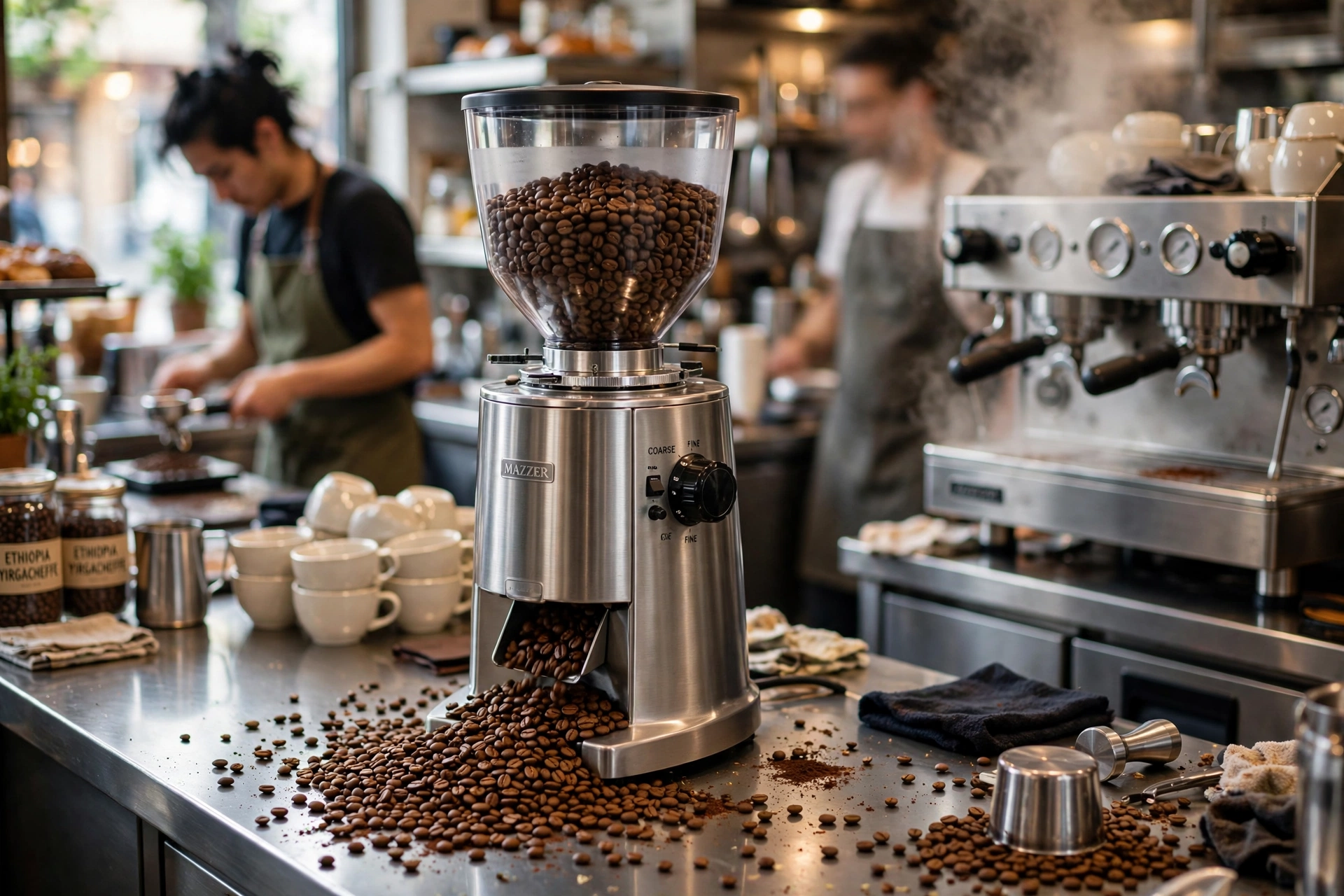
When evaluating the cost of a professional grinding system, the price is primarily driven by the burr material and the motor's duty cycle. Entry-level commercial units typically range from $500 to $1,500, while high-end, precision-engineered machines for specialty coffee environments can exceed $5,000. The difference lies in the precision of the grind and the ability of the motor to maintain a consistent temperature during heavy use.
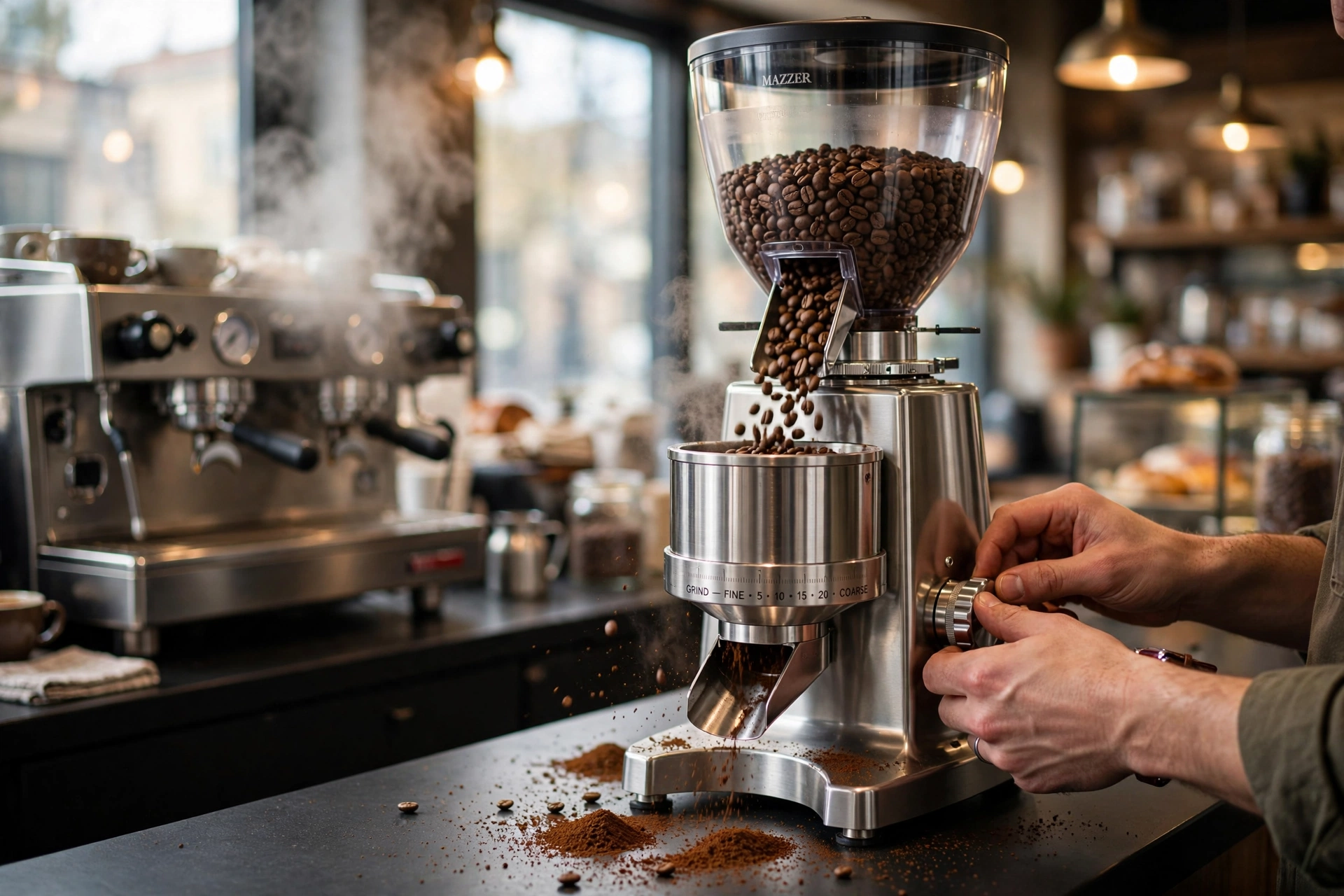
In my experience working with high-volume cafes, the most significant cost driver is the 'grind consistency.' A machine that fluctuates by just a few microns can ruin a shot of espresso, leading to significant product waste. According to the Specialty Coffee Association (SCA), precision in grinding is fundamental to achieving the flavor profiles required for specialty coffee certification. When you pay more for a grinder, you are essentially paying for the engineering that prevents heat transfer from the motor to the coffee bean, which would otherwise volatilize the aromatic oils and flatten the taste.
Beyond the initial hardware, you must factor in the cost of installation and calibration. A professional setup ensures the machine is level and the dosage is accurate. If you are operating in a high-traffic area, such as a medical facility using automated coffee machines for clinics, the cost of downtime becomes a critical variable. A $2,000 machine with a 2-year warranty is cheaper in the long run than a $800 machine that requires monthly technician visits.

Why Does Grinder Cost Impact Your Business Bottom Line?
Investing in the right commercial coffee grinder cost bracket matters because the grinder is the single most important variable in coffee quality, often more so than the espresso machine itself. A high-precision grinder ensures that every gram of Coffea arabica is extracted efficiently. If your grind is inconsistent, you will experience 'channeling,' where water finds the path of least resistance through the coffee puck, resulting in a sour, under-extracted brew. This leads to 'dialing-in' waste—the coffee thrown away while trying to find the right setting—which can cost a busy shop hundreds of dollars per month.
According to the National Coffee Association USA (NCA), consumer demand for specialty coffee continues to rise, meaning businesses cannot afford to serve mediocre coffee. When a customer pays $6 for a latte, they expect a consistent flavor profile. If your equipment fails to deliver, you lose the lifetime value of that customer. For businesses in competitive markets, like those seeking Sensa Coffee Service in Charlotte, NC, the ability to maintain a high-quality output during a morning rush is a competitive advantage that justifies a higher initial equipment spend.
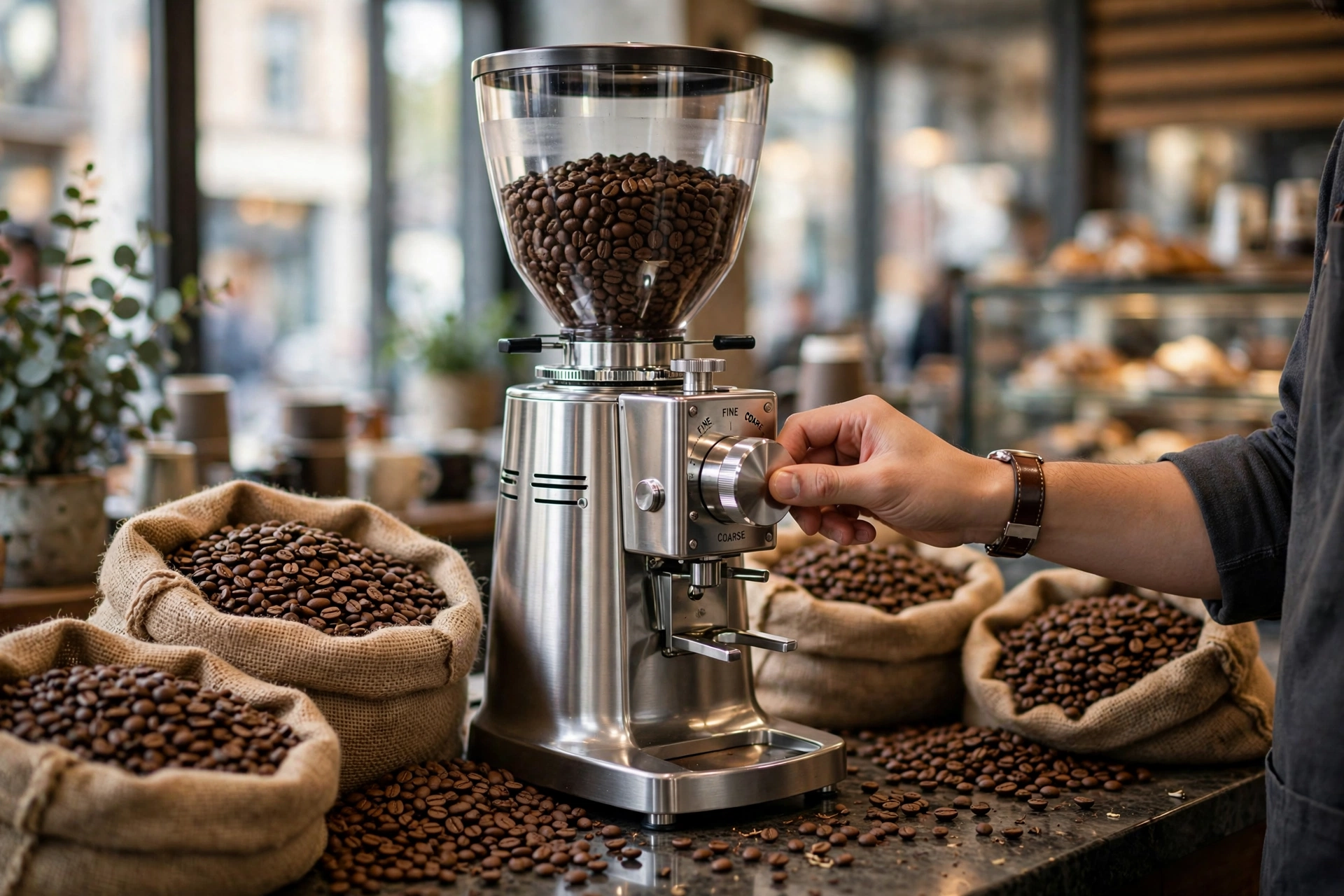
Furthermore, the energy efficiency and durability of the unit impact operational expenses. Higher-end grinders often feature more efficient motors and better thermal management. This not only reduces the electricity bill but also extends the life of the burrs. Lower-cost grinders often use thinner steel for the burrs, which dulls faster. As a Q-Grader, I've noted that poor-quality burrs create more 'fines' (microscopic dust), which clog the espresso machine's group head and increase the frequency of required cleaning cycles.
| Feature | Budget Grinders ($500-$1.5k) | Mid-Range ($1.5k-$3k) | Premium ($3k+) |
|---|---|---|---|
| Burr Material | Hardened Steel | High-Grade Steel/Titanium | Precision Ceramic/Specialty Steel |
| Heat Management | Passive/Minimal | Active Cooling/Heavy Heat Sinks | Advanced Thermal Control |
| Consistency | Moderate (Varies by Load) | High (Consistent for 50+ shots) | Extreme (Lab Grade Precision) |
| Longevity | 2-3 Years (Heavy Use) | 5-7 Years | 10+ Years with Maintenance |
| Best Use Case | Low-volume office/Small cafe | Standard restaurant/Cafe | Specialty Roastery/High-end Hotel |
How to Calculate Your Real Investment and ROI?
To determine the actual commercial coffee grinder cost, you must move beyond the invoice price and calculate the cost per dose. Start by totaling the purchase price and adding the estimated cost of two sets of replacement burrs over a five-year period. Then, add the cost of professional calibration every six months.
For example, if you buy a budget grinder for $1,000 but spend $200 a year on replacements and $300 on technician visits, your 5-year cost is $3,500. Conversely, a $2,500 premium grinder with a 5-year warranty and burrs that last longer might only cost you $3,000 total. This is why we emphasize a managed approach, similar to the Sensa Coffee Service in Mount Pleasant SC, where equipment costs are bundled into a predictable monthly fee to eliminate unexpected CAPEX spikes.
Step-by-step ROI calculation:
- Direct Costs: Purchase Price + Shipping + Installation.
- Maintenance Costs: (Annual Burr Replacement Cost × Years) + (Annual Calibration Cost × Years).
- Waste Analysis: Estimate the weight of coffee wasted during daily 'dialing-in.' (e.g., 100g/day = 36.5kg/year). Multiply by the cost of your coffee beans per kg.
- Downtime Risk: Estimate the lost revenue of 2 days of downtime per year.
In my experience, businesses that integrate commercial burr grinders explained into their planning find that the 'waste analysis' step is usually the biggest shock. A precision grinder can reduce daily waste by 30% to 50% simply because the settings remain stable throughout the day.

Common Budgeting Mistakes and What to Avoid
One of the most frequent errors I see is the 'scaling mistake.' A business owner buys a grinder suited for a small cafe, but as they grow, they find the motor cannot keep up with the volume. This leads to 'grind creep,' where the burrs heat up and the grind size actually changes as the machine works, requiring the barista to constantly adjust the collar. If you expect high volume, you must invest in high capacity commercial coffee grinders for busy kitchens from the start. Replacing a core piece of equipment during peak season is a logistical nightmare.
Another mistake is ignoring the certification of the equipment. Many business owners buy consumer-grade 'prosumer' grinders to save money. However, these often lack the NSF International certification. In many jurisdictions, using non-certified equipment in a commercial kitchen can lead to health department fines or insurance claim denials in the event of an electrical fire. Ensuring your equipment meets NSF/ANSI 4 standards is a non-negotiable cost of doing business safely.
Finally, avoid the 'feature trap.' Many grinders come with expensive digital displays and programmable timers that add $500 to the price but provide zero impact on the actual quality of the coffee. As a Q-Grader, I care about the burr geometry and the motor torque, not whether the machine has a touch screen. Focus your budget on the mechanical components that affect the flavor of the coffee bean, not the aesthetics of the chassis.
If you are unsure which tier fits your current volume, reading our guide on how to choose the right commercial coffee grinder can help you avoid overpaying for features you won't use.
Implementation Guide: Integrating Grinders into Your Budget
When planning your 2026 coffee program, do not treat the grinder as a standalone purchase. Instead, view it as part of your total beverage ecosystem. If you are deploying a foodservice coffee program in Chicago IL or another major city, the cost of labor for a skilled barista to maintain the machine is often higher than the cost of the machine itself.
Pro Tip: The Hybrid Budgeting Strategy
For those who cannot afford a $4,000 investment upfront, I recommend a hybrid approach. Invest in one high-end 'primary' grinder for your main espresso offering and a more affordable, reliable 'secondary' grinder for decaf or seasonal beans. This ensures your flagship product is perfect while keeping the overall CAPEX manageable.
Deep Dive: The Impact of Bean Quality on Cost
Using high-grade specialty coffee requires a more precise grinder. If you are using cheaper, commodity-grade beans, a mid-range grinder is sufficient. However, if you are sourcing expensive, single-origin Arabica, the cost of the grinder becomes an insurance policy for your ingredients. A poor grinder will make expensive beans taste cheap, effectively wasting your entire procurement budget.
For businesses that want to avoid these calculations entirely, the managed coffee membership model at Busy Bean Coffee is designed to remove the friction. We provide the premium SENSA equipment and all maintenance for one predictable monthly fee, shifting the cost from a heavy upfront CAPEX to a manageable OPEX. This is particularly effective for those utilizing Sensa Coffee Service in Raleigh NC, where operational efficiency is key to scaling.
Frequently Asked Questions
How much does a typical commercial coffee grinder cost in 2026?
Depending on the volume and precision required, costs generally fall into three tiers. Entry-level commercial grinders range from $500 to $1,500, suitable for low-volume offices or small cafes. Mid-range professional units cost between $1,500 and $3,000, offering better thermal stability and consistency for standard restaurants. Premium, high-capacity grinders for specialty cafes typically cost $3,000 to $6,000+, featuring precision burrs and advanced motor cooling. These prices exclude installation and recurring maintenance.
Is a more expensive grinder actually better for the taste of the coffee?
Yes, because higher-priced grinders typically have better burr alignment and superior thermal management. In the world of specialty coffee, heat is the enemy; if the motor transfers heat to the beans during grinding, it alters the chemical composition of the oils, leading to a 'burnt' or flat taste. Premium grinders use larger, higher-quality burrs that rotate at optimized speeds to minimize friction and heat, ensuring the nuance of the coffee bean is preserved in the cup.
How often should I budget for burr replacement?
Burr replacement intervals depend entirely on your volume. For a high-volume cafe, you should expect to replace burrs every 500kg to 1,000kg of coffee. In a standard restaurant setting, this might happen every 12 to 24 months. Budgeting for this is essential, as dull burrs create inconsistent particle sizes, which forces your baristas to waste more coffee during the 'dialing-in' process. I recommend adding a yearly 'burr fund' to your operational budget to avoid unexpected downtime.
Can I use a prosumer grinder in a commercial environment to save money?
While tempting, using prosumer equipment in a commercial setting is a high-risk strategy. Most prosumer grinders are not designed for the duty cycle of a business; they lack the cooling systems necessary to run for hours without overheating. Furthermore, they often lack the NSF certification required by health departments and insurance companies. In my experience, the cost of replacing a failed prosumer grinder and paying potential fines far outweighs the initial savings of $1,000.
What is the most cost-effective way to maintain a commercial grinder?
The most cost-effective method is a rigorous preventative maintenance schedule. This includes daily cleaning of the hopper and weekly deep-cleaning of the burr chamber to remove rancid coffee oils. Investing in a professional calibration service every six months is also cheaper than replacing a motor that has been strained by clogged burrs. For those who prefer a hands-off approach, managed services like those provided by Busy Bean Coffee include all maintenance in the monthly fee, ensuring the machine always runs at peak efficiency.
Conclusion
Understanding the commercial coffee grinder cost is not about finding the cheapest price tag, but about calculating the lowest cost per cup. When you factor in bean waste, labor for calibration, and the risk of equipment failure, the 'expensive' precision grinder often becomes the most economical choice for a growing business. Whether you are managing a small clinic or a large-scale hospitality operation using Sensa Coffee Service in Jacksonville, FL, the quality of your grind is the foundation of your customer experience.
If you are ready to stop guessing your equipment costs and start serving world-class coffee, explore our all-inclusive managed coffee solutions. By removing the burden of capital expenditure and maintenance, we allow you to focus on your business while we handle the technical precision. For a deeper dive into the hardware options and how to integrate them into your business model, return to our Ultimate Guide to Commercial Coffee Grinders for Businesses.
Visit www.busybeancoffee.com to learn how we can transform your beverage service into a profit center.
Free Coffee Pairing Guide & Specialty Roast Cheat Sheet
Unlock the secrets of perfect brewing ratios, water temperatures, and specialty roast profiles. Download the guide.