What Are the Essential Commercial Espresso Machine Features?
Walk into any espresso equipment showroom and you'll be bombarded with jargon: PID controllers, pre-infusion chambers, dual boilers, rotary pumps, volumetric dosing, steam wand configurations, and a dozen other "must-have" features. For a restaurant owner, hotel manager, or café operator in 2026, the pressure to choose the right machine is intense — get it wrong and you're stuck with a $15,000 paperweight that can't keep up with morning rush.
💡
Key Takeaway
Not every feature matters equally. The best commercial espresso machine features are the ones that match your specific volume, skill level, and service model.
In my experience working with dozens of foodservice businesses across the Southeast, the difference between a profitable coffee program and a money pit often comes down to three things: consistency, throughput, and serviceability. Before you sign a lease or write a check, you need to know which features are non-negotiable and which are nice-to-haves.
For comprehensive context on the broader landscape, see our Commercial Espresso Machines guide.
The 7 Commercial Espresso Machine Features That Matter Most
1. Boiler Configuration: Dual Boiler vs. Heat Exchanger
The boiler system is the heart of any commercial espresso machine. It determines your ability to brew and steam simultaneously without temperature fluctuation.
Dual Boiler Systems — Two separate boilers: one dedicated to brewing at 200°F (93°C) and another for steam at 265°F (130°C). This configuration eliminates temperature cross-talk, meaning you can pull a shot and steam milk at the exact same time without the brew temperature dropping. According to a 2024 study by the Specialty Coffee Association, dual boiler machines maintain temperature stability within ±0.5°F, compared to ±2.0°F for single-boiler heat exchangers.
Heat Exchanger Systems — A single boiler that heats water for both brewing and steaming. The brew water passes through a tube (the heat exchanger) inside the steam boiler, so it's heated indirectly. These are less expensive but require more skill to manage temperature. For high-volume operations, the temperature variance can lead to inconsistent shots.
Recommendation: If you're serving more than 100 shots per day, invest in a dual boiler machine. For lower volumes or if you have a skilled barista who can manage temperature surfing, a heat exchanger can be cost-effective.
📚
Definition
Temperature surfing is a technique where a barista flushes water through the group head before pulling a shot to stabilize the temperature after the boiler has been heating.
2. Group Head Design: E61 vs. Saturated Groups
The group head is where the magic happens — it's the component that distributes hot water evenly through the coffee puck. There are two dominant designs.
E61 Group Head — An iconic design with a large brass mass that acts as a thermal stabilizer. It uses a thermosiphon circulation system that passively maintains temperature. E61 groups are beautiful, classic, and widely serviceable. However, they have a slower thermal recovery time and can be less efficient for high-volume environments.
Saturated Group Head — The group head is physically connected to the boiler, so it's constantly "saturated" with boiler-temperature water. This provides superior thermal stability and faster recovery between shots. Most modern high-end machines use saturated groups.
Which one wins? For specialty coffee shops where temperature precision is everything, saturated groups are superior. For a hotel breakfast buffet or office break room where throughput matters more than micro-adjustments, E61 is perfectly adequate.
3. Pump System: Rotary vs. Vibratory
This is one of the most misunderstood commercial espresso machine features. The pump generates the 9 bars of pressure needed for proper espresso extraction.
Rotary Pumps — These use a rotating mechanism to create consistent, quiet pressure. They can be plumbed directly into a water line (no tank refilling) and maintain pressure even during back-to-back shots. Rotary pumps are standard on all serious commercial machines.
Vibratory Pumps — These use a solenoid-driven piston and are typically found in prosumer or entry-level commercial machines. They're louder, less durable, and cannot be plumbed in. They also struggle to maintain pressure during peak demand.
My rule of thumb: If you're serving more than 50 shots per day, a rotary pump is non-negotiable. I've seen too many small cafés try to save $1,000 on a vibratory pump machine only to replace it within 18 months.
4. PID Temperature Controller
PID (Proportional-Integral-Derivative) controllers are electronic systems that maintain water temperature within a tight range by continuously adjusting the heating element. Without PID, machines use a pressure-stat (a mechanical switch) that allows temperature to swing by 4–6°F before kicking the heater back on.
According to research published by the Coffee Science Foundation, temperature variance of more than 2°F significantly impacts extraction yield and flavor consistency. PID controllers keep variance under 0.5°F.
Is PID essential? For any business that cares about shot-to-shot consistency — yes. For a high-volume cafeteria where speed trumps nuance, a well-calibrated pressure-stat can suffice. But in 2026, PID is becoming standard on most commercial machines, and I recommend it for anyone serious about quality.
5. Pre-Infusion Capability
Pre-infusion is the process of wetting the coffee puck at low pressure (2–4 bars) before ramping up to full extraction pressure (9 bars). This allows the coffee to expand evenly, reducing channeling and improving extraction.
Modern machines offer two types:
- Line Pressure Pre-Infusion — Uses the incoming water pressure (typically 2–3 bars) to wet the puck. Simple but effective.
- Progressive/Programmable Pre-Infusion — Allows the barista to control the duration, pressure curve, and pause time. This is a feature found on top-tier machines like La Marzocco Strada and Slayer.
Does it matter? For specialty coffee operations that use light-roast beans, programmable pre-infusion is a game-changer. For medium-to-dark roasts used in most commercial settings, line pressure pre-infusion is sufficient.
6. Steam Wand Power and Configuration
If you serve milk-based drinks — lattes, cappuccinos, flat whites — your steam wand is arguably as important as your brew group.
Key metrics:
- Boiler steam pressure: Should be at least 1.5 bars for commercial use
- Hole count: 4-hole tips provide faster steaming than 2-hole tips
- Articulation: Wands that rotate 360 degrees are easier to use in tight spaces
In my experience, the biggest mistake operators make is buying a machine with an underpowered steam boiler. If your machine can't keep up with a rush of five consecutive cappuccino orders, you'll create a bottleneck that frustrates customers and staff alike.
7. Programmability and Volumetric Controls
Modern commercial espresso machines offer programmable shot volumes, pre-infusion times, and even water-to-coffee ratios. These features are invaluable for maintaining consistency across multiple baristas.
Volumetric dosing allows you to program the exact water volume for a single or double shot. When the barista presses the button, the machine stops automatically once the programmed volume is reached.
Programmable temperature profiles let you adjust brew temperature for different coffee origins — a lighter roast from Ethiopia might need 200°F while a dark roast blend works best at 198°F.
Who needs this? Multi-location operations, high-turnover staff environments, and any business that prioritizes drink consistency over artisanal flexibility.
Why These Commercial Espresso Machine Features Matter for Your Business
Choosing the right features directly impacts your bottom line. Let me give you a concrete example from a client I worked with in Mount Pleasant, SC. A 50-seat café was using a single-boiler heat exchanger machine with a vibratory pump. During morning rush, they could only pull about 40 shots per hour. After upgrading to a dual boiler, rotary pump machine with PID control, their throughput jumped to 90 shots per hour. At $4.50 per latte, that's an additional $225 in potential revenue per peak hour.
According to a 2025 report by Technomic, coffee accounts for 8–12% of total beverage sales in full-service restaurants, and specialty coffee drinks have the highest profit margins at 65–80%. Investing in the right features isn't an expense — it's a revenue driver.
💡
Key Takeaway
The right commercial espresso machine features don't just make better coffee — they make better business.
How to Match Features to Your Business Type
| Business Type | Must-Have Features | Nice-to-Have Features | Budget Range |
|---|---|---|---|
| High-Volume Café | Dual boiler, rotary pump, saturated group heads, PID, volumetric dosing | Programmable pre-infusion, multi-boiler, flow profiling | $15,000–$25,000 |
| Hotel Breakfast/Buffet | Heat exchanger, rotary pump, E61 group heads, 4-hole steam tip | PID, volumetric dosing | $6,000–$12,000 |
| Office Break Room | Heat exchanger, vibratory or rotary pump, simple controls | Automatic milk frother, compact footprint | $3,000–$8,000 |
| Restaurant (à la carte) | Dual boiler, rotary pump, PID, 2+ group heads | Pre-infusion, programmability | $10,000–$18,000 |
| Specialty Coffee Bar | Dual boiler, saturated groups, PID, programmable pre-infusion, flow profiling | Multi-boiler, Bluetooth monitoring, pressure profiling | $20,000–$35,000 |
Common Mistakes When Selecting Commercial Espresso Machine Features
Mistake 1: Buying Based on Brand Alone
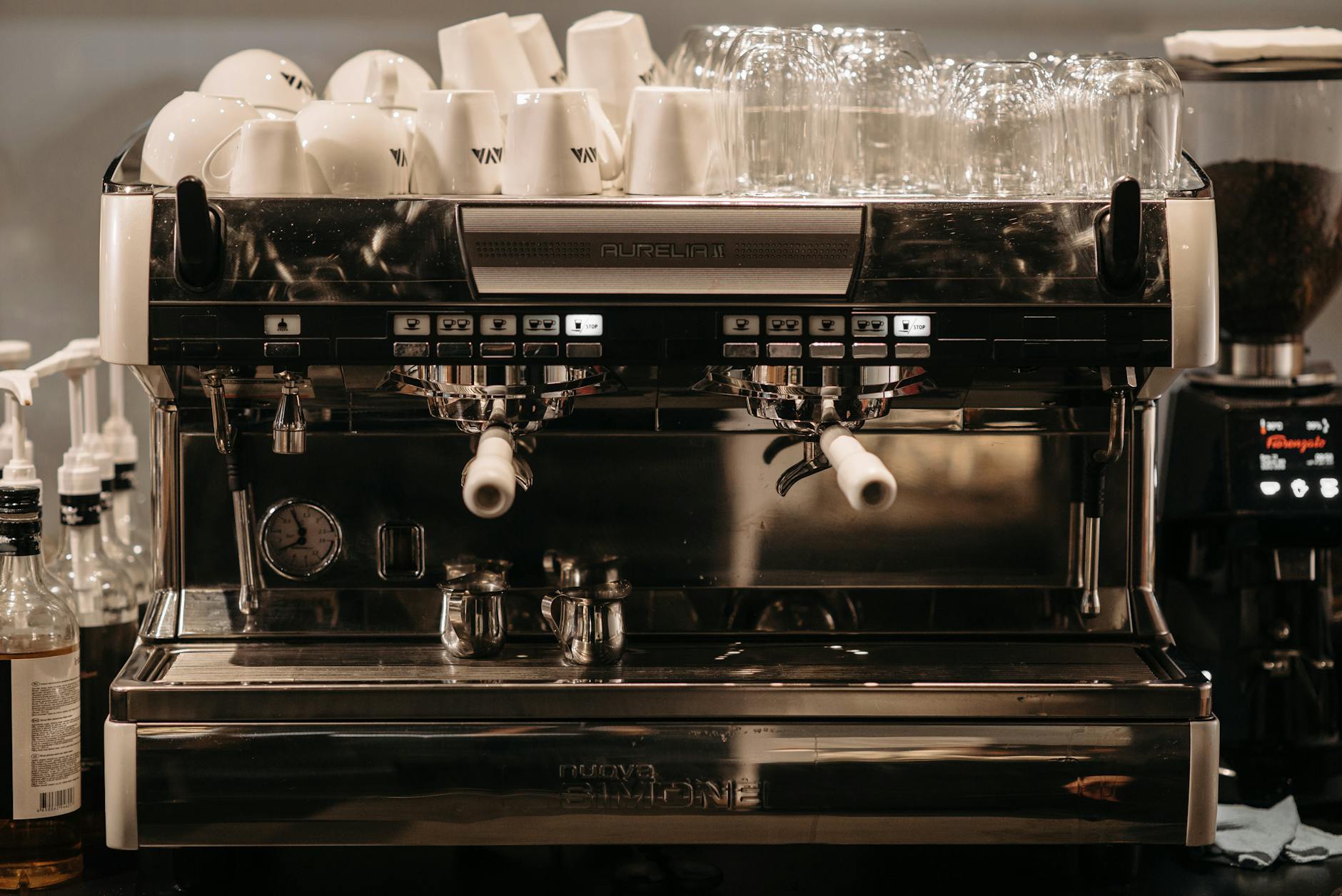
I've seen operators spend $25,000 on a La Marzocco because "it's the best" when their actual needs would have been perfectly served by a $12,000 Nuova Simonelli. Brand prestige doesn't increase throughput or improve serviceability.
Mistake 2: Ignoring Service and Parts Availability
A machine with exotic features is useless if you can't get it repaired quickly. In my experience, choosing a machine from a brand with local certified technicians is more important than having every bell and whistle. The Busy Bean Coffee SENSA line, for example, prioritizes serviceability with modular components that can be swapped in minutes.
Mistake 3: Over-Investing in Features You Won't Use
Do you really need flow profiling if your baristas have less than six months of experience? Probably not. Focus on features that directly address your operational bottlenecks.
Mistake 4: Underestimating Water Quality Requirements
Many operators don't realize that commercial espresso machines require specific water hardness and filtration. Hard water will scale up your boiler in months, not years. A water filtration system is not a feature of the machine itself, but it's essential for protecting your investment.
Best Practices for Choosing Commercial Espresso Machine Features
- Audit your peak volume — Count the number of drinks you serve during your busiest hour. Multiply by 1.5. That's your minimum machine capacity.
- Test drive before you buy — Most reputable dealers will let you pull shots on their demo machines. Bring your own coffee and milk.
- Consider total cost of ownership — A cheaper machine with expensive repairs can cost more over five years than a premium machine with a service contract. The Commercial Espresso Machine Buying Guide breaks this down in detail.
- Prioritize training — The best features in the world are wasted if your staff doesn't know how to use them. Look for suppliers that include white-glove training, like Busy Bean Coffee does with its managed membership model.
- Plan for growth — Buy a machine with one more group head than you currently need. Running out of capacity six months in is expensive.
Frequently Asked Questions
What is the most important commercial espresso machine feature for a small café?
For a small café serving 50–100 drinks per day, the most critical feature is a dual boiler system with a rotary pump. The dual boiler ensures you can brew and steam simultaneously without temperature drops, which directly impacts drink quality and speed. A rotary pump allows you to plumb the machine directly into your water line, eliminating the need to refill a reservoir during service. Together, these features provide the consistency and throughput needed to handle morning rush without frustration. PID temperature control is a close third priority — it eliminates the guesswork and ensures every shot is extracted at the optimal temperature. If your budget is tight, prioritize the rotary pump and plan to add a PID-equipped machine later.
Are PID controllers worth the extra cost on commercial machines?
Absolutely. PID controllers typically add $500–$1,500 to the machine's price, but they eliminate the 4–6°F temperature swings common with mechanical pressure-stats. For any business selling specialty coffee drinks, consistency is the name of the game. A customer who gets a perfect latte on Tuesday and a bitter one on Wednesday will notice — and they'll go elsewhere. The Coffee Science Foundation found that temperature stability within ±1°F significantly reduces the incidence of under-extracted (sour) or over-extracted (bitter) shots. Over a year of operation, the cost of inconsistent coffee in lost repeat business far exceeds the upfront investment in PID. For high-volume operations, PID is not optional — it's a requirement.
Can I use a home espresso machine for light commercial use?
Technically yes, but practically no. Home machines are designed for 5–10 shots per day. Using one for commercial purposes will void the warranty and likely cause premature failure of the pump, boiler, and group head seals. Commercial machines are built with higher-grade materials — brass and stainless steel instead of aluminum and plastic — and have larger boilers, stronger pumps, and more durable group heads. A home machine attempting to serve 50 shots in an hour will overheat, lose pressure, and produce inconsistent shots. More importantly, health departments in most jurisdictions require NSF-certified commercial equipment. Using a home machine could result in failed inspections. Invest in a proper commercial machine — it's a business expense, not a personal indulgence.
What features should I look for in an office coffee service machine?
For office environments, the priorities shift from barista control to ease of use and reliability. Look for a machine with automatic volumetric dosing so employees can get a consistent shot with one button press. A built-in grinder (often called a "super-automatic") eliminates the need for staff training on grinding and tamping. A heat exchanger system is usually sufficient for office volumes (20–50 shots per day), and a compact footprint is important for break room counters. Automatic milk frothing is a huge plus — employees can press a button for a latte without any skill required. Finally, choose a machine from a provider that includes maintenance and service, like the managed membership model offered by Busy Bean Coffee. Offices don't have a barista on staff to troubleshoot a clogged group head.
How often should I replace my commercial espresso machine?
With proper maintenance, a commercial espresso machine should last 7–10 years. However, the useful lifespan depends on volume, water quality, and maintenance frequency. A high-volume café pulling 200+ shots per day may need to replace internal seals and gaskets annually and may see significant wear by year 5. A lower-volume hotel or office machine can easily last 10+ years. Signs it's time to replace include: frequent breakdowns despite regular maintenance, inability to maintain consistent temperature, rust or corrosion on the frame, and increasing repair costs that exceed 50% of the machine's value. Many operators find that switching to a managed service model like Busy Bean Coffee's eliminates the capital expenditure and ensures they always have modern, well-maintained equipment.
Conclusion
Selecting the right commercial espresso machine features is about matching technology to your specific operational reality. Don't get seduced by flashy features you'll never use. Focus on the fundamentals — boiler configuration, group head design, pump type, and temperature control — and choose a machine that matches your volume, staff skill level, and service model.
Remember: the best machine is the one that consistently delivers great coffee, keeps up with your rush, and doesn't require a PhD to operate. Whether you're opening a new café in Charleston or upgrading the break room in a Charlotte office, the features I've outlined here will serve as your roadmap.
For a deeper dive into the full selection process, revisit our Commercial Espresso Machines guide. And if you want to skip the capital expense entirely, explore how Busy Bean Coffee's all-inclusive managed membership gives you premium SENSA equipment, white-glove installation, and full maintenance for one predictable monthly fee. You run the business. We handle the coffee.
Recommended Readings
To deepen your understanding of these topics, we recommend reading the following articles:
- Best Commercial Espresso Machines for Offices
- Commercial Espresso Machine Maintenance and Cleaning
- Semi-Automatic vs. Automatic Commercial Espresso Machines
- Top Commercial Espresso Machine Brands Compared
About the Author
the author is the CEO & Founder of Busy Bean Coffee, a specialty coffee equipment provider serving foodservice businesses across the United States since 2014. With over a decade of experience equipping hotels, restaurants, offices, and healthcare facilities, he has personally helped hundreds of operators select the right commercial espresso machine features for their unique needs.
Free Coffee Pairing Guide & Specialty Roast Cheat Sheet
Unlock the secrets of perfect brewing ratios, water temperatures, and specialty roast profiles. Download the guide.