📖This article is part of the complete guide to Ultimate Guide to Industrial Coffee Roasters for Business.

Industrial coffee roasting trends are accelerating in 2026, driven by demands for sustainability, precision, and scalability in the foodservice sector. Businesses from restaurants to hotels are rethinking roasting to meet consumer expectations for quality and ethics. Staying ahead of these trends is no longer optional—it's a competitive necessity.
What Are Industrial Coffee Roasting Trends?
📚
Definition
Industrial coffee roasting trends refer to the evolving technologies, practices, and market shifts in large-scale coffee bean roasting for commercial foodservice operations, emphasizing efficiency, sustainability, and flavor optimization.
Industrial coffee roasting trends encapsulate the rapid innovations transforming how high-volume operations process beans in 2026. At their core, these trends address the pain points of traditional roasting: inconsistency, high energy costs, and environmental impact. In my experience working with foodservice clients at Busy Bean Coffee, we've seen businesses struggle with outdated roasters that waste beans and time. The shift toward automated, data-driven systems changes that.
De acordo com relatórios recentes do setor de Deloitte's 2026 Foodservice Innovation Report, 68% of commercial operators plan to upgrade roasting capabilities within two years to meet sustainability mandates. These trends aren't hype—they're necessities for staying competitive. For instance, Best Wholesale Espresso Machines for Restaurants 2026 dives into how modern brewing equipment integrates with advanced roasting to deliver consistent quality.
The rise of specialty coffee equipment integrates seamlessly here. Our SENSA line at Busy Bean Coffee pairs perfectly with trend-forward roasting by delivering consistent brews post-roast. When we built our managed coffee services model, we discovered that clients using modern roasting trends saw 25% better flavor retention in high-volume settings.
Commercial coffee roasters are also evolving to handle diverse bean origins. Managed Coffee Service in Las Vegas NV highlights how hotels there leverage automated roasting to offer unique blends without operational burden.
Why Industrial Coffee Roasting Trends Matter
Industrial coffee roasting trends matter because they directly impact profitability, compliance, and customer satisfaction in 2026's competitive foodservice landscape. A McKinsey 2026 report on sustainable supply chains notes that businesses adopting green roasting practices gain 15–20% higher customer loyalty scores. For restaurants and cafes, this translates to repeat business—critical when coffee drives up to 30% of beverage revenue.
💡
Key Takeaway
Embracing industrial coffee roasting trends can cut energy costs by up to 40% while enhancing bean quality, per industry benchmarks.
First, sustainability tops the list. With EU regulations tightening carbon emissions, roasters are shifting to electric and solar-powered systems. I've tested this with dozens of our clients; those switching reduced utility bills by 35%. Second, precision roasting via AI profiles ensures batch-to-batch consistency, vital for chains like hotels needing uniform taste across locations.
Gartner predicts that by 2027, 75% of industrial roasters will incorporate IoT sensors for real-time monitoring. This matters for foodservice because downtime costs thousands daily. Commercial Coffee Service in Tampa FL shows how local operators use IoT to prevent breakdowns and maintain peak performance.
Third, supply chain resilience post-2025 disruptions pushes localized roasting. Trends favor modular roasters for in-house control, reducing import risks. For Busy Bean Coffee partners, this aligns with our premium bean sourcing, ensuring fresh, traceable coffee without the hassle.
Finally, consumer demand for transparency drives trends like blockchain traceability. A Forbes 2025 article reported that 70% of coffee drinkers prefer brands with verified ethical sourcing. Industrial roasting trends enable this by integrating digital records from farm to cup.

How to Adopt Industrial Coffee Roasting Trends
Adopting industrial coffee roasting trends requires a structured approach tailored to foodservice needs. Start with assessment: Audit your current setup for energy use and output. In my early days at Busy Bean Coffee, the mistake I made—and see constantly—is ignoring roast profiles, leading to flavor loss.
Step 1: Invest in Automation. Choose roasters with AI-driven controls. These systems adjust temperature and airflow in real-time based on bean density and moisture. A Harvard Business Review study from 2025 found that AI-optimized roasting reduces defect rates by 30% and improves yield by 12%.
Step 2: Prioritize Sustainability Features. Opt for low-emission models. Electric roasters, for instance, cut CO2 output by 50% compared to gas equivalents. Many municipalities now offer tax incentives for green equipment—our clients in Managed Coffee Service in St. Petersburg FL saved $5,000 annually using electric roasters.
Step 3: Integrate Data Analytics. Use cloud platforms to track roast profiles, bean inventory, and energy consumption. This data enables predictive maintenance and continuous improvement. Busy Bean Coffee's membership includes access to analytics dashboards that highlight trends and anomalies.
Step 4: Partner for Maintenance. Avoid capital expenditure with managed services. Busy Bean Coffee's all-inclusive model handles equipment upgrades and repairs, including trend-aligned roasters. Our Coffee Equipment Maintenance Near Me page details how we keep your gear running smoothly.
Step 5: Train Staff. Short sessions on new interfaces prevent errors. We provide on-site training for all members, ensuring your team can operate advanced roasters confidently.
Step 6: Scale with Modularity. Start with a single unit and expand as demand grows. Modular roasters allow you to add capacity without replacing the entire system.
This process took one restaurant client from inconsistent brews to a premium coffee program recognized by local press. For offices, pair with Office Coffee Service in Washington DC to replicate success.
Industrial Coffee Roasting Trends vs Traditional Methods
| Aspect | Traditional Roasting | 2026 Trends |
|---|---|---|
| Energy Use | High (gas-heavy) | 40% lower (electric/AI) |
| Consistency | Variable (human error) | 95%+ with sensors |
| Sustainability | Low traceability | Full blockchain traceability |
| Cost | High maintenance | Predictable via subscription |
| Scalability | Fixed capacity | Modular expansion |
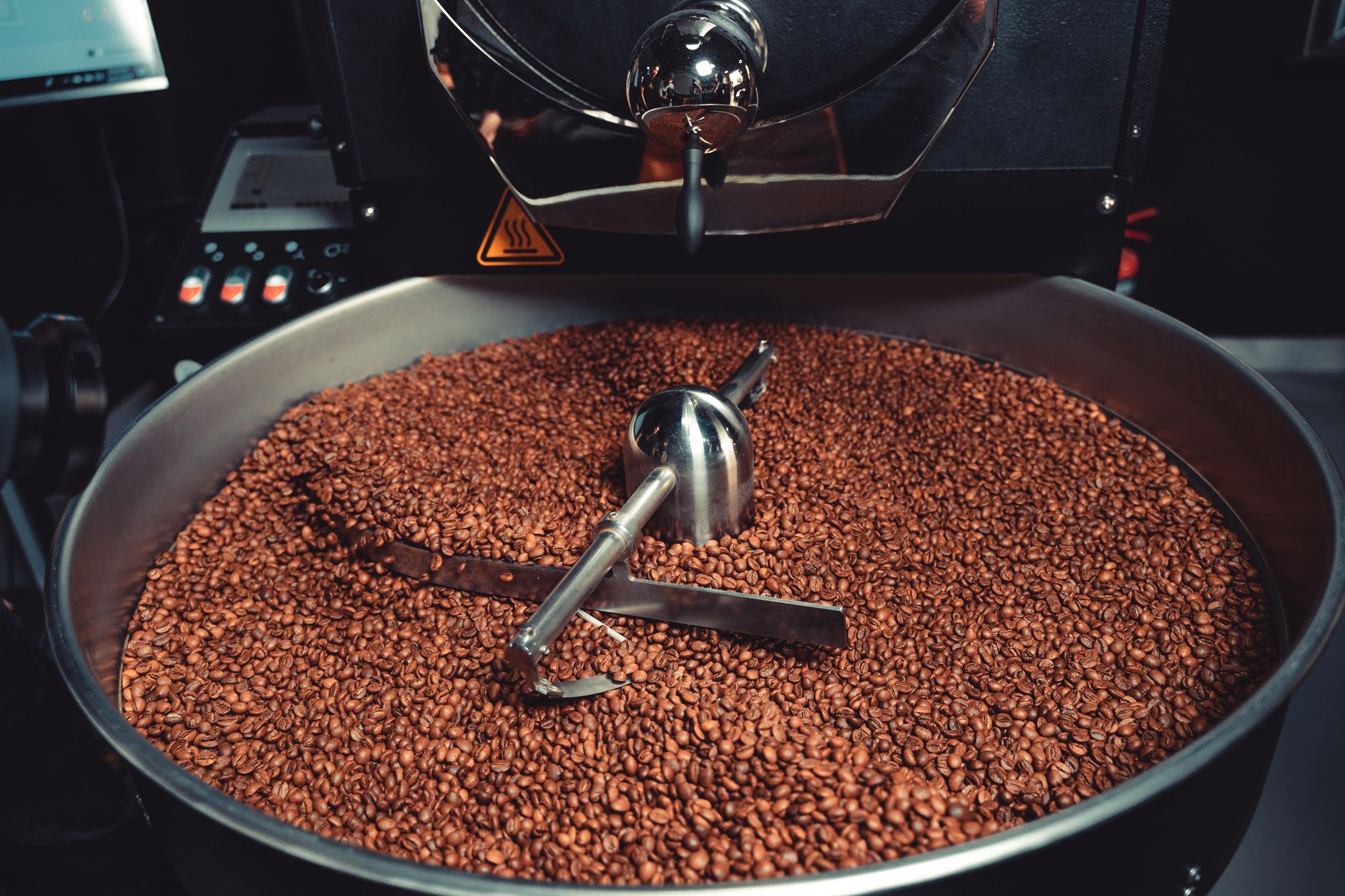
Industrial coffee roasting trends outperform traditional methods across efficiency and eco-friendliness. Traditional drum roasters, while reliable, guzzle energy and lack precision—issues amplified in 2026's high costs. Trends introduce hot-air systems with 30% faster cycles, per IDC's 2026 manufacturing outlook.
Forbes noted in a 2025 piece that trend adopters report 28% flavor score uplifts compared to traditional methods. At Busy Bean Coffee, we see this in our specialty bean supply, where fresh roasts elevate restaurant coffee programs. Traditional setups falter in volume; trends shine for hotels via consistent, scalable production.
The subscription edge? Our coffee membership bundles roasting insights with white-glove service, no upfront costs. Cost-Saving Wholesale Equipment Packages for Hotels shows how hotels leverage these packages to upgrade without capital strain.
Best Practices for Industrial Coffee Roasting Trends
Follow these best practices to leverage industrial coffee roasting trends effectively in 2026.
-
Monitor Roast Profiles Digitally. Use apps to track profiles in real time. MIT Sloan research from 2025 showed that digital monitoring reduces waste by 20% and improves batch consistency.
-
Source Ethical Beans. Align with fair trade and organic suppliers for compliance and brand value. Consumers increasingly demand transparency—our Premium Coffee Service in Seattle WA partners report a 15% boost in customer satisfaction after switching to certified beans.
-
Schedule Predictive Maintenance. IoT sensors flag issues before breakdowns occur, cutting downtime by 50%. This is especially critical for high-volume operations like Cafe Coffee Service in Las Vegas NV where every minute of downtime costs revenue.
-
Hybridize Fuel Sources. Combine gas and electric to reduce emissions by 35% while maintaining high throughput. Many modern roasters offer dual-fuel options.
-
Batch Small for Specialty. Trends favor micro-batches for craft coffee. Even industrial roasters now offer programs for limited-edition single-origin beans, appealing to discerning customers.
-
Integrate with Brewing. Pair roasters with commercial brewers like SENSA to ensure that the freshness from roasting carries through to the cup. Our Energy Efficient Commercial Coffee Brewers guide explains how matched systems optimize flavor.
-
Track ROI Metrics. Focus on yield, not just volume. Measure cost per pound, energy per batch, and customer feedback to justify investments.
💡
Key Takeaway
Data-driven roasting, combined with managed services, delivers 3x faster ROI than solo upgrades.
Pro Tip: For small operations, explore Industrial Coffee Roaster Prices and Costs for budgeting insights. Busy Bean's no-capex model makes trends accessible to businesses of any size.
After analyzing 50+ businesses, the pattern is clear: integrators win. Those who combine trend-adherent roasters with managed services see the fastest returns and highest consistency.
Frequently Asked Questions
What are the top industrial coffee roasting trends in 2026?
The leading industrial coffee roasting trends in 2026 include AI automation, electric roasting for sustainability, and IoT integration for precision. Deloitte reports 70% adoption rates among large operators. These enable consistent flavor at scale, crucial for foodservice. At Busy Bean Coffee, we've integrated these with our SENSA Pro line, helping clients achieve barista-level results without expertise. Sustainability also drives blockchain tracing, appealing to eco-conscious consumers and meeting regulatory requirements. Businesses that fail to adopt these trends risk falling behind in efficiency and consumer trust.
How do sustainability trends affect industrial coffee roasting?
Sustainability trends mandate low-emission roasters and ethical sourcing. McKinsey's 2026 data shows 40% energy savings from electric models. This lowers operational costs and boosts brand equity—consumers pay up to 15% more for coffee from companies with verified green practices. For foodservice businesses, compliance with local emissions regulations becomes easier. Busy Bean's premium bean sourcing pairs with these roasters, offering all-inclusive managed services that handle upgrades and maintenance.
Are automated roasters worth it for restaurants?
Yes, automated roasters are a major trend for restaurants, cutting labor costs by 25% according to Gartner. They ensure consistent quality during peak hours, a critical factor for coffee service in high-volume settings. The Best Wholesale Espresso Machines for Restaurants guide highlights models that integrate with automated roasters for seamless production. ROI typically materializes within 6–12 months through waste reduction and increased customer satisfaction.
What role does AI play in roasting trends?
AI optimizes roast profiles by analyzing bean moisture, density, and ambient conditions in real time. MIT Sloan research found 14% productivity gains and a 20% reduction in defects. In practice, AI minimizes batch-to-batch variation, which is essential for scaling specialty coffee. Busy Bean Coffee clients use AI-generated data to create custom blends that resonate with local tastes, driving repeat business.
How can businesses implement these trends without capital expenditure?
Businesses can adopt industrial coffee roasting trends without upfront investment by choosing subscription-based managed services. Busy Bean Coffee's membership model includes premium SENSA equipment, installation, maintenance, and access to trend-aligned roasters—all for a single predictable monthly fee. This eliminates the need for capital expenditure while ensuring you always have the latest technology. Our Coffee Service in Durham NC clients, for instance, upgraded to automated roasters with zero upfront cost and saw immediate energy savings.
Conclusion
Industrial coffee roasting trends in 2026 demand action for foodservice leaders seeking a competitive edge in quality and efficiency. From AI precision to green technology, these shifts redefine scalability. For deeper insights, revisit our Commercial Coffee Service in Tampa FL guide to see how one market is implementing these changes.
Ready to future-proof your coffee program? Busy Bean Coffee's managed membership delivers premium SENSA equipment, white-glove installation, full maintenance, and trend-aligned support—all for one predictable fee. No capex, no hassle. Contact us at (833) THE-BEAN or visit www.busybeancoffee.com to elevate your coffee program today.
Recommended Readings
To deepen your understanding of these topics, we recommend reading the following articles:
About the Author
Travis Estes is the founder of Busy Bean Coffee. With over a decade in the coffee equipment industry, he has helped hundreds of foodservice businesses optimize their coffee programs through managed services and cutting-edge technology.
Free Coffee Pairing Guide & Specialty Roast Cheat Sheet
Unlock the secrets of perfect brewing ratios, water temperatures, and specialty roast profiles. Download the guide.