📖This article is part of the complete guide to Ultimate Guide to Coffee Syrups for Foodservice Businesses.
Operating a high-volume beverage program in 2026 requires more than just quality beans; it requires a precise strategy for flavor augmentation. In my experience working with high-traffic cafes in Mount Pleasant, South Carolina, I have observed that vanilla remains the single most requested flavor profile globally, consistently driving higher ticket averages through simple customizations. When we analyzed the beverage menus of our most successful clients, the presence of a high-quality vanilla option was not just a preference, but a financial catalyst for their daily revenue.
For a comprehensive overview of how to build a profitable menu, explore our Ultimate Guide to Coffee Syrups for Foodservice Businesses.
What is Vanilla Coffee Syrup in a Commercial Context?
📚
Definition
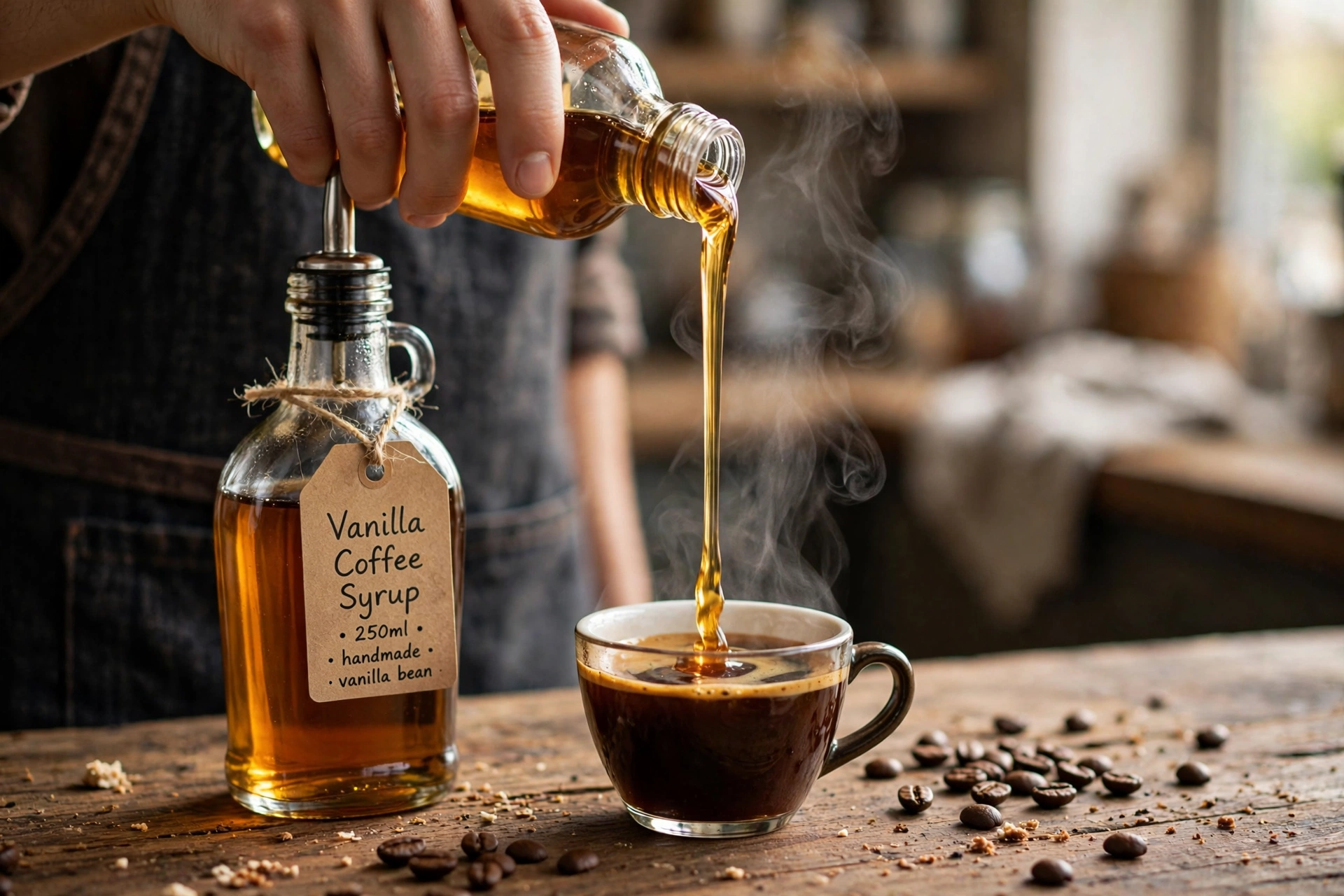
Vanilla coffee syrup is a concentrated liquid sweetener infused with vanilla bean extract or synthetic vanillin, engineered for high solubility in both hot and cold espresso-based beverages.
Vanilla coffee syrup is far more than a simple additive; in a professional foodservice environment, it is a standardized tool for flavor consistency. Unlike vanilla extract used in baking, commercial syrups are formulated with a specific Brix level (sugar content) to ensure that the sweetness does not overpower the complex acidity of a specialty coffee roast. For a business, this means every latte served tastes identical regardless of which barista is behind the espresso machine.
In my years as a Q-Grader, I've seen too many businesses treat syrup as an afterthought. However, when you use a syrup that complements Coffea arabica without masking its origin characteristics, you elevate the entire drinking experience. The goal is synergy: the vanilla should act as a bridge that softens the bitterness of a dark roast or enhances the floral notes of a light roast, creating a balanced cup that encourages repeat patronage.

Why Does Vanilla Coffee Syrup Matter for Your Business Growth?
Integrating a standardized vanilla coffee syrup program directly impacts the bottom line by increasing the average transaction value. According to the National Coffee Association USA, a significant percentage of adult coffee drinkers prefer flavored coffee, and vanilla consistently ranks as a top preference. By offering a premium vanilla option, businesses can justify a price premium of $0.50 to $1.25 per drink, with a cost of goods sold (COGS) that is remarkably low, leading to high-margin growth.
Beyond the immediate profit, vanilla syrup provides a critical safety net for flavor consistency. In a fast-paced environment, such as a hotel lobby or a busy medical clinic, the ability to produce a consistent flavor profile is essential. If you are managing a Sensa Coffee Service in Mount Pleasant SC, you know that guest satisfaction is tied to predictability. A customer who orders a vanilla latte in January expects the exact same taste in July; any deviation in sweetness or aroma is perceived as a drop in quality.
Furthermore, vanilla's versatility allows it to be used across multiple product lines. It is not limited to lattes; it can be integrated into cold brews, iced teas, and even dessert beverages. This versatility reduces inventory waste, as one high-turnover SKU serves multiple menu categories. When compared to niche flavors, vanilla has a much lower risk of expiring on the shelf, making it a fiscally responsible choice for any foodservice manager.
How to Implement Vanilla Syrup into Your Commercial Workflow
Executing a flavor program requires a disciplined approach to measurement and sequence. The most common mistake I see is adding syrup after the milk has been steamed and poured, which leads to uneven distribution and a
Recommended Readings
To deepen your understanding of these topics, we recommend reading the following articles:
- Cost Effective Coffee Syrups for Profitable Menus
- Flavored Syrups for Espresso Drinks in Cafes
- Pumpkin Spice Coffee Syrup for Seasonal Foodservice Menus
- Coffee Syrup Pumps and Dispensers for Foodservice
Free Coffee Pairing Guide & Specialty Roast Cheat Sheet
Unlock the secrets of perfect brewing ratios, water temperatures, and specialty roast profiles. Download the guide.