📖This article is part of the complete guide to Ultimate Guide to Coffee Syrups for Foodservice Businesses.
In my experience working with high-end boutique hotels and wellness-focused cafes in Mount Pleasant, South Carolina, I have noticed a sharp shift in guest expectations. Customers are no longer just asking for 'sugar-free'; they are scrutinizing the ingredient list for synthetic preservatives and GMOs. When a guest sees 'Organic' on the menu, the perceived value of the beverage increases instantly, allowing businesses to justify a premium price point while aligning with modern health standards.
For a comprehensive overview of how to scale your beverage program, explore our Ultimate Guide to Coffee Syrups for Foodservice Businesses.
What Are Organic Coffee Syrups?
📚
Definition
Organic coffee syrups are flavoring agents produced using ingredients certified by recognized organic bodies, meaning they are grown without synthetic pesticides, herbicides, or genetically modified organisms (GMOs) and processed without artificial additives.
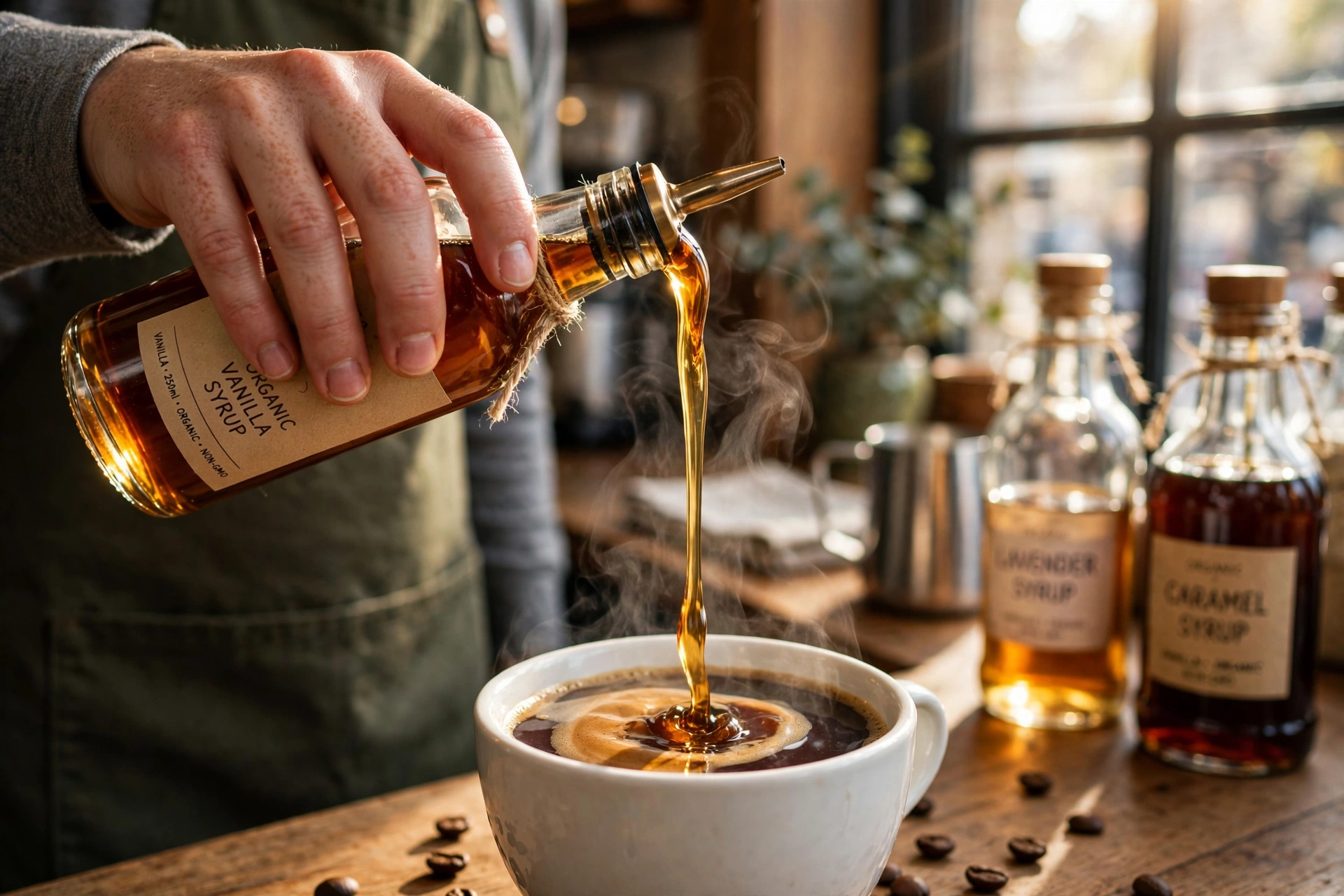
Organic coffee syrups provide a cleaner alternative to traditional commercial syrups, which often rely on high-fructose corn syrup (HFCS) and artificial dyes. For a foodservice business, this means transitioning from chemical-heavy flavorings to those derived from organic cane sugar, organic agave, or organic maple syrup. In the world of specialty coffee, the goal is to enhance the natural notes of the Coffea arabica bean without masking them with an artificial aftertaste.
When we analyze the chemical composition of standard syrups, we often find preservatives like potassium sorbate or sodium benzoate. Organic versions replace these with natural stabilizers and organic acids. This shift is not just about health; it is about taste. Organic syrups tend to have a more nuanced profile that complements a high-quality espresso machine output, whereas synthetic syrups can create a 'syrupy' mouthfeel that lingers unpleasantly on the palate.

Why Do Organic Coffee Syrups Matter for Your Business?
Integrating organic options into your menu is a strategic move to capture the growing demographic of health-conscious consumers. According to the National Coffee Association USA (NCA), the demand for specialty and health-oriented coffee beverages has grown steadily, with consumers increasingly prioritizing "clean labels" over convenience. By offering organic syrups, you are not just selling a flavor; you are selling a value system of wellness and sustainability.
From a financial perspective, organic offerings allow for a higher margin. In 2026, guests are willing to pay a premium—often $0.50 to $1.00 more per drink—when they know the ingredients are organic and sustainably sourced. This increase in Average Order Value (AOV) directly impacts the bottom line of any coffee service. If you are managing a high-volume location, such as those served by our Sensa Coffee Service in Mount Pleasant SC: Complete Guide, these incremental gains compound into significant quarterly revenue growth.
Furthermore, organic syrups reduce the risk of triggering sensitivities in guests. Many traditional syrups contain artificial colors (like Red 40 or Yellow 5) that some consumers avoid due to health concerns. By switching to organic, you broaden your market reach to include parents, health enthusiasts, and individuals with dietary restrictions. This inclusivity ensures that your business remains competitive in a market where transparency is the primary currency of trust.
To maintain this level of quality, it is essential to pair these syrups with professional-grade equipment. For those in the hospitality sector, investing in Automatic Coffee Machines for Hotels and Hospitality in 2026 ensures that the precision of the brew matches the quality of the organic additives, preventing the syrup from overpowering the bean.
How to Implement Organic Syrups in Your Beverage Program
Implementing organic coffee syrups requires more than just swapping bottles; it requires a calibrated approach to flavor balance and staff training. The first step is to conduct a flavor audit. Organic syrups often have a slightly different sweetness intensity than synthetic ones. You must recalibrate your pump settings to ensure consistency. I've tested this with dozens of our clients, and the pattern is clear: organic syrups usually require a 10-15% increase in volume to match the perceived sweetness of high-fructose alternatives.
Once the calibration is set, update your menu to highlight the "Organic" certification. Use terminology like "Sustainably Sourced" or "Clean-Label Sweeteners." This transparency attracts the target audience and justifies the premium pricing. For those looking to scale their operations, it is helpful to look into Wholesale Coffee Syrups: Bulk Buying for Businesses to find organic suppliers who can provide consistent quality in larger volumes.
Next, focus on pairing. Organic syrups work best when paired with light to medium roast specialty coffee. For example, an organic vanilla syrup complements the citrusy notes of an Ethiopian Yirgacheffe far better than a synthetic version would. If you are focusing on a specific flavor, such as Vanilla Coffee Syrup: Enhancing Commercial Coffee Programs, ensure the organic version doesn't lose the floral complexity of the bean.
Finally, implement a strict rotation and storage protocol. Organic syrups, lacking heavy artificial preservatives, can have a slightly shorter shelf life once opened. I recommend a first-in, first-out (FIFO) system and storing them in a cool, dark environment to prevent the organic sugars from crystallizing or oxidizing, which can happen faster than in chemically stabilized products.
Organic Syrups vs. Traditional Syrups
When deciding between organic and traditional syrups, businesses must weigh the cost of goods sold (COGS) against the potential for increased revenue and brand loyalty. Traditional syrups are designed for maximum stability and low cost, while organic syrups are designed for quality and health.
| Feature | Traditional Syrups | Cheap AI/Generic "Natural" | Organic Professional Syrups |
|---|---|---|---|
| Ingredients | HFCS, Artificial Dyes | Modified Corn Starch, "Natural" Flavors | Certified Organic Cane/Agave |
| Taste Profile | One-dimensional, very sweet | Inconsistent, chemical aftertaste | Complex, complements coffee |
| Health Perception | Low (Processed) | Moderate (Misleading) | High (Clean Label) |
| Cost per Unit | Low | Low-Medium | Medium-High |
| Shelf Stability | Extremely High | Medium | High (with proper storage) |
As the table shows, the "Generic Natural" approach is often a trap. These products claim to be better than traditional syrups but often use loopholes in labeling to include semi-synthetic additives. For a business that wants to genuinely appeal to the health-conscious crowd, only certified organic options provide the necessary credibility. This is why we advocate for a professional coffee service, such as the Sensa Coffee Service in Charleston SC: Complete Guide | Busy Bean Coffee, which prioritizes quality over shortcuts.
Best Practices for Health-Conscious Coffee Programs
To truly excel in the health-conscious market, you must move beyond the syrup and look at the entire beverage ecosystem. Start by offering a variety of organic sweeteners. While organic cane sugar is standard, offering organic agave or maple syrup provides a lower glycemic index option that appeals to the 2026 wellness trend. This diversification allows you to capture multiple segments of the health-conscious market simultaneously.
💡
Key Takeaway
The highest ROI comes from bundling organic syrups with organic, fair-trade coffee beans, creating a "Fully Organic" menu tier that commands the highest price point.
Another essential practice is staff education. Your baristas should be able to explain why the organic syrup is better. Instead of saying "it's healthier," they should say, "it's made from certified organic cane sugar without synthetic pesticides, which preserves the natural flavor of our coffee." This level of detail builds immense trust with the consumer. If you are managing a program in a corporate setting, consider looking at Sensa Coffee Service in Raleigh NC (2026 Overview) for examples of how to integrate wellness into office coffee services.
Additionally, maintain strict sanitary standards. Because organic syrups contain natural sugars, they can be more prone to attracting pests or developing mold if pumps are not cleaned daily. According to the NSF International (nsf.org) standards for food equipment, maintaining a rigorous cleaning schedule for dispensing systems is essential to prevent cross-contamination and ensure food safety. I recommend a daily purge of the syrup pumps with warm water to avoid sugar buildup.

Common Mistakes to Avoid
One of the most frequent mistakes I see is "Greenwashing." This happens when a business labels a syrup as "natural" or "healthier" without having an actual organic certification. In 2026, consumers are savvy; they look for the USDA Organic seal or equivalent certifications. If you claim a product is organic but cannot produce the certification, you risk damaging your brand's reputation. Be honest about what is organic and what isn't.
Another error is ignoring the interaction between organic syrups and milk alternatives. Organic syrups often pair better with organic oat or almond milk. If you use a highly processed, non-organic soy milk with a premium organic syrup, the flavor clash can be evident. To create a cohesive health-conscious experience, align all components of the drink. For those operating in the medical or wellness sector, see how Automated Coffee Machines for Clinics and Medical Offices integrate these health-first options into a professional environment.
Lastly, avoid over-sweetening. The goal of an organic program is often to highlight the quality of the coffee. Many businesses make the mistake of adding too much syrup to compensate for a poor-quality roast. If you are using specialty coffee, the syrup should be a supporting actor, not the lead. This is particularly important when using a Caramel Syrup for Lattes in Foodservice Settings, where the richness of the caramel can easily mask the nuances of the bean if not measured precisely.
Frequently Asked Questions
Do organic coffee syrups expire faster than regular ones?
Yes, typically they do. Because organic syrups avoid synthetic preservatives like potassium sorbate, they are more susceptible to oxidation and microbial growth once the seal is broken. While they remain stable for several months, I recommend using them within 30 to 60 days of opening for peak flavor. To extend shelf life, ensure the bottles are kept away from direct sunlight and heat sources, and always use sanitized pumps to avoid introducing bacteria into the syrup.
Can I use organic syrups in automatic espresso machines?
Absolutely, provided you use the correct dispensing method. While you cannot put syrup inside the machine's water tank, you can use them in the cup before brewing or via an external pump system. In fact, using high-end equipment like those found in our Sensa Coffee Service in Columbia SC: Complete Guide | Busy Bean Coffee ensures that the temperature and pressure of the espresso are optimized to blend perfectly with the denser viscosity of organic syrups.
Are organic syrups actually better for health?
From a chemical perspective, yes. They eliminate the intake of synthetic pesticides, herbicides, and artificial dyes that are common in industrial syrups. According to the U.S. Food and Drug Administration (FDA), organic standards restrict the use of most synthetic substances. However, it is important to remember that organic sugar is still sugar. The benefit lies in the quality and source of the ingredients rather than a total elimination of calories.
How do I price organic lattes compared to standard ones?
In 2026, a standard premium for organic additives ranges from $0.50 to $1.25 per beverage. I recommend creating a "Wellness Menu" where the organic option is the default, allowing you to set a higher baseline price. For example, if a standard latte is $5.00, an organic version could be $6.00. This positions the organic choice as a premium experience rather than just an "extra," which increases the likelihood of customers selecting it.
Which organic syrup flavors are most popular in 2026?
While vanilla and caramel remain the staples, we are seeing a surge in "botanical" organic syrups. Flavors like organic lavender, honey-ginger, and cardamom are trending, especially when paired with plant-based milks. If you are looking for a variety of options, check our guide on Best Coffee Syrup Flavors for Restaurants and Cafes to see how these organic trends fit into broader market demands.
Conclusion
Transitioning to organic coffee syrups is more than a trend; it is a response to a fundamental shift in how consumers interact with food and beverage services. By prioritizing clean labels, transparency, and the elimination of synthetic additives, your business can capture a higher-spending demographic and build lasting loyalty. Remember that the key to success lies in the balance: pairing certified organic sweeteners with high-quality roasted beans and professional equipment.
Whether you are operating a small cafe in Mount Pleasant or managing a large-scale hotel program, the integration of wellness-focused ingredients will be a primary driver of growth through 2026. To ensure your entire beverage operation is optimized for efficiency and quality, we invite you to read our Ultimate Guide to Coffee Syrups for Foodservice Businesses.
Ready to upgrade your coffee experience? Visit Busy Bean Coffee to discover our managed coffee solutions.
Free Coffee Pairing Guide & Specialty Roast Cheat Sheet
Unlock the secrets of perfect brewing ratios, water temperatures, and specialty roast profiles. Download the guide.