📖This article is part of the complete guide to Ultimate Guide to Automated Coffee Machines for Businesses.
Waiting rooms in medical clinics are often high-stress environments where the smallest amenities can significantly shift a patient's perception of care. In my experience working with healthcare administrators, the difference between a cold, sterile waiting area and a welcoming environment often comes down to a high-quality beverage service. When patients are anxious about an appointment or exhausted after a long day, a premium cup of coffee acts as a psychological bridge, reducing perceived wait times and lowering stress levels.
For a comprehensive overview of the technology behind these systems, explore our Ultimate Guide to Automated Coffee Machines for Businesses.
What are Automated Coffee Machines for Clinics?
📚
Definition
Automated coffee machines for clinics are professional-grade, bean-to-cup brewing systems designed to produce café-quality espresso and coffee drinks with a single touch, requiring minimal manual intervention and maintenance from medical staff.
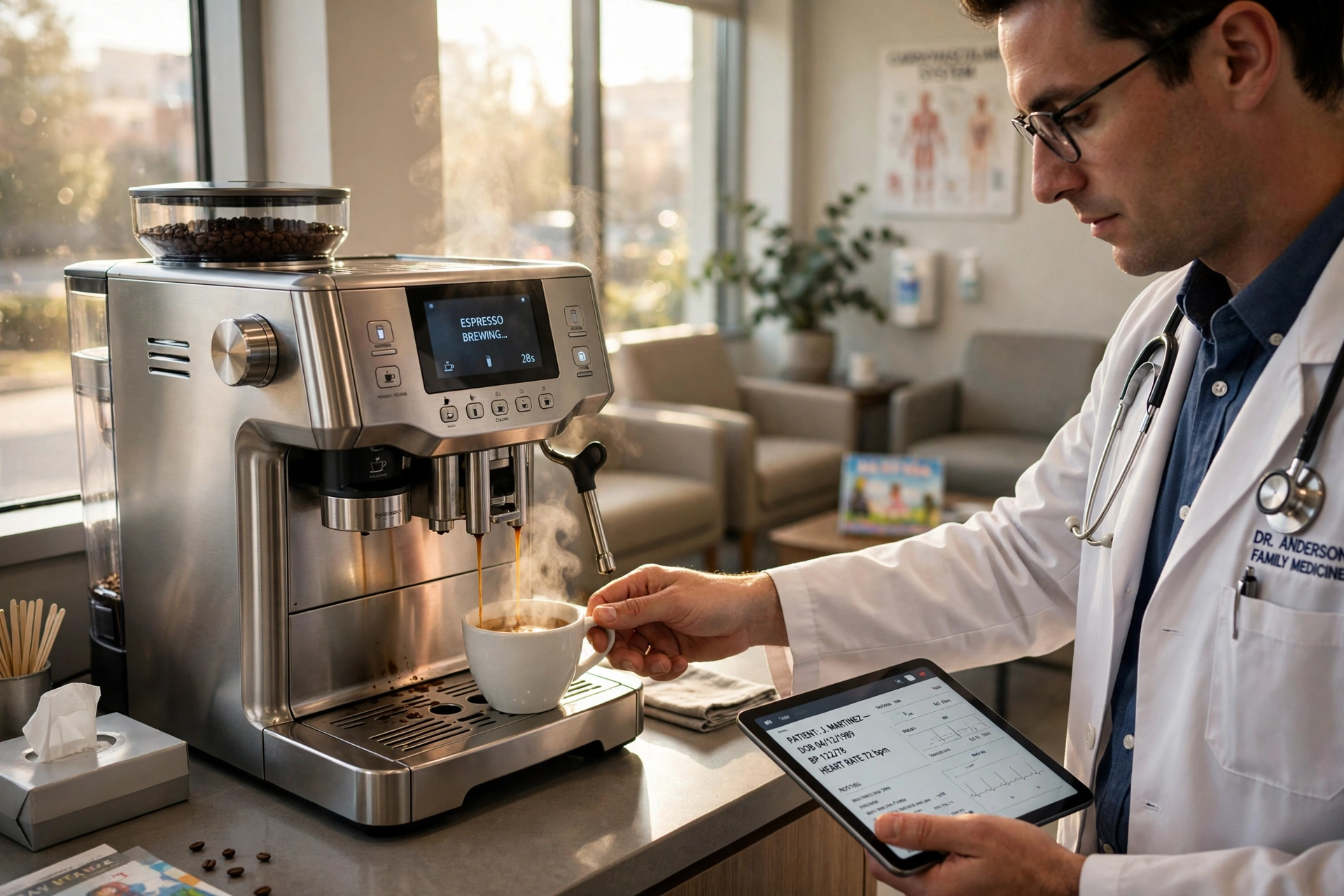
Automated coffee machines clinics use are specifically engineered to balance high output with extreme reliability. Unlike home machines, these systems are built to handle the continuous flow of both staff and patients throughout a 12-hour shift. They integrate precision grinding, tamping, and brewing into one unit, ensuring that every cup meets a consistent standard regardless of who is operating the machine.
In a medical setting, the "automation" aspect is the most fundamental value proposition. Medical assistants and nurses do not have the time to calibrate a manual espresso machine or clean up coffee grounds scattered across a counter. These machines handle the waste internally and offer programmable recipes, allowing a practitioner to get a perfect latte in the few minutes between patient consultations. By utilizing a managed service like Busy Bean Coffee, clinics can shift the burden of maintenance and restocking to experts, ensuring the machine is always operational.

Why Does Automated Coffee Matter in Medical Offices?
Implementing a professional coffee service in a healthcare environment is not about luxury; it is about operational efficiency and patient psychological comfort. When a patient enters a clinic in Mount Pleasant or any high-traffic medical hub, the sensory experience begins immediately. The smell of fresh Arabica coffee signals a level of hospitality that can distract from the anxiety of a medical procedure.
From a staff perspective, the impact is even more profound. Healthcare professionals operate under extreme cognitive load. According to the Specialty Coffee Association (SCA), specialty coffee provides a sensory experience that can aid in mental alertness and provide a necessary micro-break during stressful shifts. When a clinic provides a high-end automated system, it improves employee retention and morale by acknowledging the grueling nature of their work.
Furthermore, sanitation is paramount in a clinical environment. Traditional coffee pots (the "burners") often lead to scorched coffee and messy spills. Modern automated systems are designed with hygiene in mind. Following the standards set by NSF International, these machines utilize enclosed brewing paths and automated cleaning cycles that prevent the buildup of bacteria and mold, which is non-negotiable in a space where immunocompromised patients may be present.
To understand the broader advantages of this technology, you can read about the Key Benefits of Automated Coffee Machines for Foodservice, which apply equally to the healthcare sector's need for consistency and speed.
How to Implement a Coffee Solution in Your Clinic
Integrating a coffee station into a medical office requires a strategic approach to placement, plumbing, and product selection. You cannot simply plug in a machine and hope for the best; it must be a seamless part of the clinic's workflow.
Step 1: Strategic Zoning
Place the machine in a "neutral zone." For patients, this is typically the waiting area, away from the direct line of sight of the reception desk to avoid congestion. For staff, a dedicated breakroom machine is essential. I've seen clinics try to share one machine for both, which leads to patients wandering into staff-only areas. Separate your flows.
Step 2: Water Quality Management
Medical offices often have complex plumbing. To ensure the longevity of your espresso machine, a high-grade filtration system is mandatory. Mineral buildup (scale) is the number one cause of machine failure. Ensure your installation includes an inline filter that removes chlorine and reduces calcium.
Step 3: Selecting the Right Roast
Not all coffee beans are created equal. For clinics, I recommend a medium-roast Coffea arabica. It provides a balanced acidity and a smooth finish that appeals to the widest demographic of patients. Avoid overly dark, oily roasts as they can clog automated grinders more quickly and may be too intense for some patients.
Step 4: Establishing a Maintenance Schedule
Even the best machines fail if ignored. Implement a daily "end-of-day" rinse and a weekly deep clean. If you use the Busy Bean Coffee managed membership, this is handled for you, but for those managing it internally, a checklist is a must to avoid the dreaded "out of order" sign during a Monday morning rush.
For those wondering about the specific hardware, our guide on Bean to Cup Commercial Coffee Machines Explained provides a technical deep dive into the mechanics of these systems.
Choosing the Right Approach: Comparison Table
When deciding how to provide coffee, many clinic managers fall into the trap of choosing the cheapest option. Here is how the different approaches compare in a 2026 healthcare environment.
| Feature | Traditional Drip Pots | Generic Pod Machines | Busy Bean Coffee Managed Solution |
|---|---|---|---|
| Quality | Bitter, burnt, inconsistent | Mediocre, plastic taste | Barista-level Specialty Coffee |
| Labor | High (brewing, cleaning) | Moderate (pod waste) | Zero (Fully managed service) |
| Hygiene | Low (open pots, spills) | Moderate | High (NSF-compliant systems) |
| Cost Structure | Low upfront, high waste | Low upfront, high per-cup cost | Predictable monthly membership |
| Patient Perception | Basic / Outdated | Low-effort / Cheap | Premium / Attentive Care |
Common Mistakes to Avoid in Medical Coffee Services
I have analyzed dozens of clinic setups, and the same three mistakes repeat themselves. Avoiding these will save you thousands in equipment replacement and lost productivity.
1. Underestimating the Volume
Many clinics buy a "prosumer" machine thinking it can handle 50 cups a day. In reality, the pump cannot keep up with the demand during a morning rush, leading to lukewarm coffee and frustrated staff. Always size your machine for your peak hour, not your average hour.
2. Ignoring the "Cleanliness Gap"
There is a dangerous gap between when a machine looks clean and when it is actually sanitary. In a medical office, a moldy drip tray is a liability. This is why automated cleaning cycles are essential. If your machine doesn't prompt you to clean it, it's the wrong machine for a clinic.
3. Choosing Low-Quality Beans to Save Money
Using cheap, commodity-grade coffee beans is a mistake because it ruins the expensive equipment. Low-grade beans often contain more impurities and irregular shapes that can jam the grinders of a high-end automated system. Using a high-quality coffee bean ensures both the taste and the machine's lifespan.

If you are still unsure which model fits your specific patient volume, we suggest reading our guide on How to Choose an Automated Coffee Machine for Business to narrow down your specifications.
Deep Dive: The ROI of Patient Comfort
Some administrators view a premium coffee machine as an unnecessary expense. However, the ROI is found in patient retention and the "halo effect." According to market research by the National Coffee Association USA (NCA), coffee is a primary driver of social comfort in American professional environments. In a medical context, this translates to a patient feeling more relaxed and trusting of the provider.
When a patient feels cared for in the waiting room, they are more likely to perceive the actual medical consultation as positive. This is a documented psychological phenomenon where early positive interactions color the subsequent experience. By removing the friction of a bad waiting experience, clinics can improve their online reviews and patient satisfaction scores (HCAHPS), which directly impact reimbursement rates in some healthcare models.
Furthermore, the efficiency gained by staff is measurable. When a nurse doesn't have to spend ten minutes scrubbing a coffee pot or troubleshooting a jammed pod machine, that time is returned to patient care. In a high-volume clinic, saving 15 minutes of staff time per day across five employees equates to over 300 hours of recovered productivity per year.
Best Practices for Clinic Coffee Management
To maximize the benefit of your automated coffee machines clinics should follow these operational standards:
- Rotate Your Beans: Always use the freshest roast. Coffee begins to lose its volatile aromatic compounds shortly after roasting. Store beans in airtight containers away from direct sunlight.
- Offer a Variety of Milk Alternatives: In 2026, providing oat or almond milk is no longer optional; it is a standard expectation. Ensure your automated system can handle these or provide a refrigerated station nearby.
- Implement a "Scent Strategy": The aroma of coffee is a powerful tool. Place the machine where the scent can drift into the waiting area, creating an immediate atmosphere of warmth.
- Regularly Audit Your Waste: If you are using a pod system, the amount of plastic waste is staggering. Switching to a bean-to-cup system not only improves taste but aligns your clinic with modern sustainability goals.
💡
Key Takeaway
The most successful clinics treat their coffee service as an extension of their patient care, not as a breakroom afterthought.
For those expanding their services into diverse regions, it is helpful to look at how we implement these systems in specific markets, such as our Automated Coffee Service in Wilmington NC - Complete Guide.
Frequently Asked Questions
Are automated coffee machines hygienic for a medical office?
Yes, provided they meet industry standards. Professional automated machines are designed with closed-loop systems and automatic rinsing cycles that prevent residue buildup. When you choose a machine that is NSF certified, you are ensuring it meets strict sanitary requirements for commercial food equipment. Regular maintenance, such as daily descaling and milk line cleaning, ensures the environment remains sterile and safe for patients.
How much maintenance is required for bean-to-cup machines in clinics?
While they are "automated," they still require basic care. Daily tasks include emptying the dregs tray and the coffee grounds bin. Weekly tasks involve deep cleaning the milk frothing system and checking water filters. However, if you utilize a managed service like Busy Bean Coffee, the majority of this technical maintenance is handled by professionals, leaving your staff to focus solely on patient care.
Do these machines require a direct water line connection?
Most professional-grade automated machines prefer a direct water line to avoid the downtime associated with manually filling tanks. In a busy clinic, a tank that runs dry in the middle of a morning rush is a significant inconvenience. We recommend a plumbed-in installation with an integrated filtration system to ensure consistent water quality and uninterrupted service.
Can these machines handle a high volume of patients daily?
Absolutely. Commercial automated machines are built with heavy-duty boilers and high-torque grinders that can produce hundreds of cups per day without a drop in temperature or quality. The key is selecting a machine with the appropriate "daily cup capacity' for your specific patient flow to avoid overheating or premature wear and tear.
Is it expensive to switch from a pod machine to an automated bean-to-cup system?
While the upfront cost of a machine is higher than a pod brewer, the cost per cup is significantly lower. Pods are expensive and create massive waste. A managed membership model, like the one offered by Busy Bean Coffee, removes the capital expenditure entirely, replacing it with a predictable monthly fee that covers equipment, beans, and maintenance.
Conclusion
Integrating professional automated coffee machines for clinics is one of the simplest ways to elevate the patient experience and support a hardworking medical staff. By moving away from outdated drip pots or low-quality pod machines and embracing a managed, specialty-grade solution, you transform a sterile waiting room into a welcoming environment. The result is a decrease in patient anxiety, an increase in staff morale, and a professional image that reflects the high quality of care you provide.
If you're ready to modernize your medical office and remove the hassle of equipment maintenance, explore our Ultimate Guide to Automated Coffee Machines for Businesses to see how our all-inclusive membership can serve your practice. Let Busy Bean Coffee handle the beans and the boilers, so you can handle the patients.
Visit us at www.busybeancoffee.com to get started.
Free Coffee Pairing Guide & Specialty Roast Cheat Sheet
Unlock the secrets of perfect brewing ratios, water temperatures, and specialty roast profiles. Download the guide.