📖This article is part of the complete guide to Ultimate Guide to Coffee Syrups for Foodservice Businesses.
Buying coffee syrups by the bottle from a local grocery store is a fast way to erode your margins. In my experience working with high-volume cafes in Mount Pleasant, South Carolina, I have seen businesses lose up to 15% of their potential beverage profit simply because they failed to transition to a professional procurement model. When you move from retail purchasing to a strategic wholesale framework, you aren't just buying liquid sugar; you are optimizing your supply chain for scalability.
For a comprehensive overview of how to integrate these products into your operation, explore our Ultimate Guide to Coffee Syrups for Foodservice Businesses.
What are Wholesale Coffee Syrups?
📚
Definition
Wholesale coffee syrups are high-concentration flavor additives purchased in large volumes (gallons, cases, or pallets) directly from manufacturers or distributors to reduce the per-ounce cost for commercial foodservice operations.
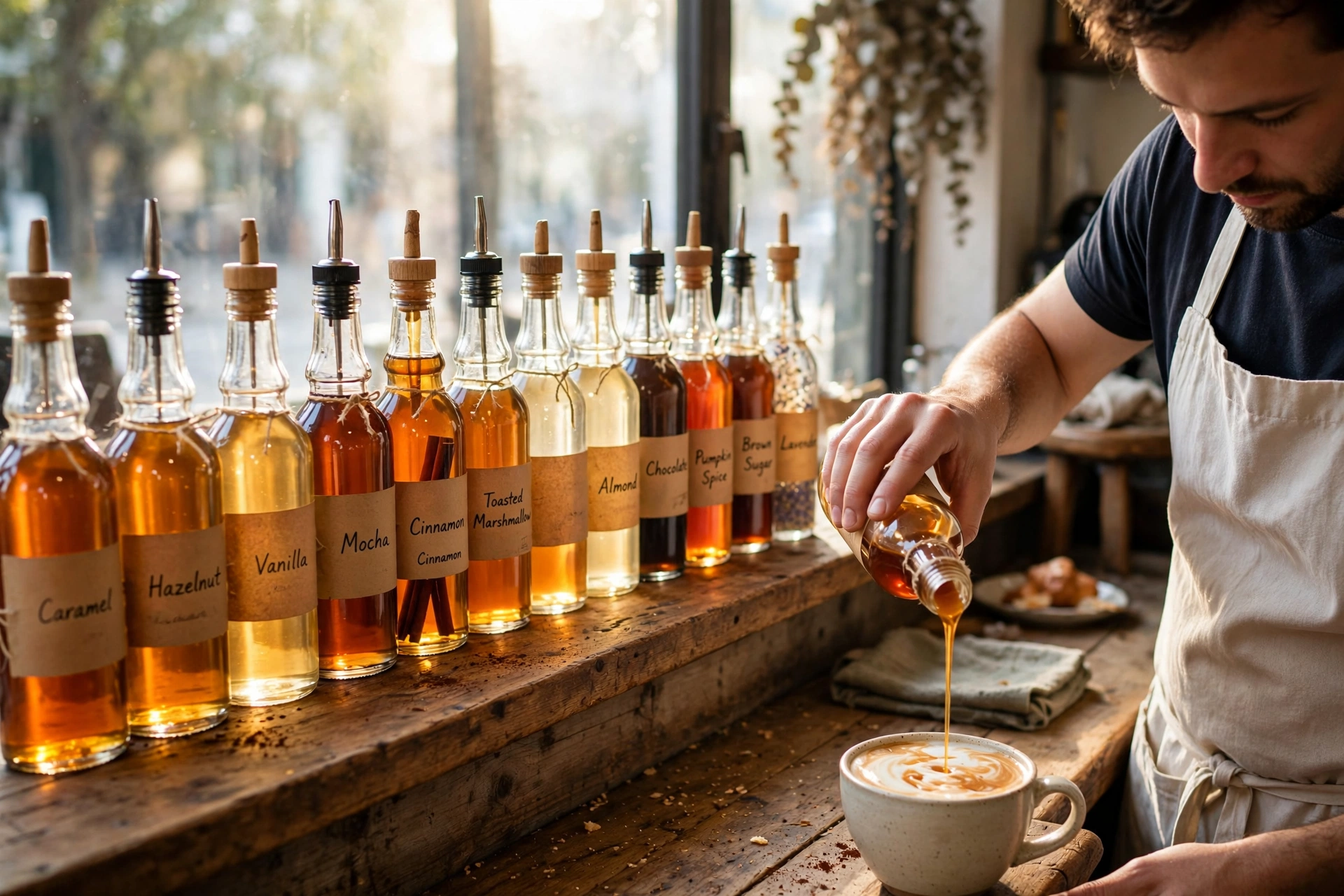
Wholesale coffee syrups differ from retail versions not only in volume but often in viscosity and sugar concentration. For a professional barista, the ability to maintain a consistent Brix level—the measurement of sugar content in a liquid—is fundamental to ensuring that a latte tastes the same on Monday morning as it does on Friday night. When businesses procure these in bulk, they typically shift from 750ml glass bottles to 1-gallon jugs or even larger BIB (Bag-in-Box) systems that integrate directly into their beverage stations.
In the context of specialty coffee, using a wholesale model allows a business to standardize its flavor profiles. Whether you are running an Sensa Coffee Service in Mount Pleasant SC: Complete Guide or a boutique hotel, the goal is to eliminate the variability that comes with small-batch retail buying. By sourcing wholesale, you ensure that the batch consistency of your Coffea arabica based beverages remains stable, which is a prerequisite for customer retention in the competitive 2026 landscape.

Why Does Bulk Buying Matter for Your Business Bottom Line?
Transitioning to wholesale coffee syrups is primarily a move to protect your Cost of Goods Sold (COGS). In the foodservice industry, the difference between a 5% and a 10% profit margin often comes down to procurement efficiency. According to the National Coffee Association USA (NCA), market trends indicate that consumers are increasingly seeking customized flavor experiences, which means your syrup consumption will only increase as you scale.
When you buy in bulk, you leverage economies of scale. A standard 750ml retail bottle might cost you $12.00, but a wholesale gallon can bring that cost per ounce down by 30% to 50%. This allows you to offer competitive pricing to your customers while maintaining a healthy margin. Furthermore, bulk procurement reduces the frequency of orders, which minimizes shipping costs and the administrative burden on your management team. Instead of spending four hours a week tracking small inventory gaps, you spend one hour a month managing a strategic replenishment cycle.
From an operational standpoint, wholesale buying reduces packaging waste. Moving away from individual glass bottles to bulk containers aligns better with modern sustainability goals and reduces the labor required for recycling and disposal. If you are managing a high-traffic environment, such as those requiring Sensa Coffee Service in Charleston SC: Complete Guide | Busy Bean Coffee, the efficiency of a bulk-fill system far outweighs the convenience of retail bottles.
| Feature | Retail Purchasing | Generic Cheap Bulk | Professional Wholesale (Busy Bean) |
|---|---|---|---|
| Price per Ounce | High (Retail Markup) | Low (Low Quality) | Optimized (Commercial Rate) |
| Consistency | Variable by Batch | Inconsistent / Artificial | High (SCA Standard Alignment) |
| Waste Level | High (Many Bottles) | Medium (Poor Packaging) | Low (Efficient Bulk Systems) |
| Supply Chain | Unreliable (Store Stock) | Volatile | Guaranteed Contractual Supply |
How to Implement a Bulk Syrup Procurement Strategy
Implementing a wholesale system requires more than just ordering more bottles; it requires a calculated approach to inventory management. The first step is conducting a flavor audit. Not every flavor is a winner. I've tested this with dozens of our clients and the pattern is clear: 20% of your flavors usually drive 80% of your revenue.
Recommended Readings
To deepen your understanding of these topics, we recommend reading the following articles:
- Vanilla Coffee Syrup
- Caramel Syrup for Lattes in Foodservice Settings
- Choosing Coffee Syrups to Elevate Hotel Guest Experiences
- Sugar Free Coffee Syrups for Office Break Rooms
Free Coffee Pairing Guide & Specialty Roast Cheat Sheet
Unlock the secrets of perfect brewing ratios, water temperatures, and specialty roast profiles. Download the guide.