📖This article is part of the complete guide to Ultimate Guide to Coffee Syrups for Foodservice Businesses.
A standard latte sells for a fixed price, but a mocha latte typically commands a 15% to 25% premium due to the perceived value of chocolate. In my experience working with independent café owners in Mount Pleasant, South Carolina, the difference between a high-margin menu and a struggling one often comes down to the quality of the chocolate base. Most shops make the mistake of using a thin, overly sweet syrup that masks the nuances of the bean, rather than enhancing them.
For a comprehensive overview of how to scale your beverage program, explore our Ultimate Guide to Coffee Syrups for Foodservice Businesses.
What is Mocha Coffee Syrup in a Commercial Context?
📚
Definition
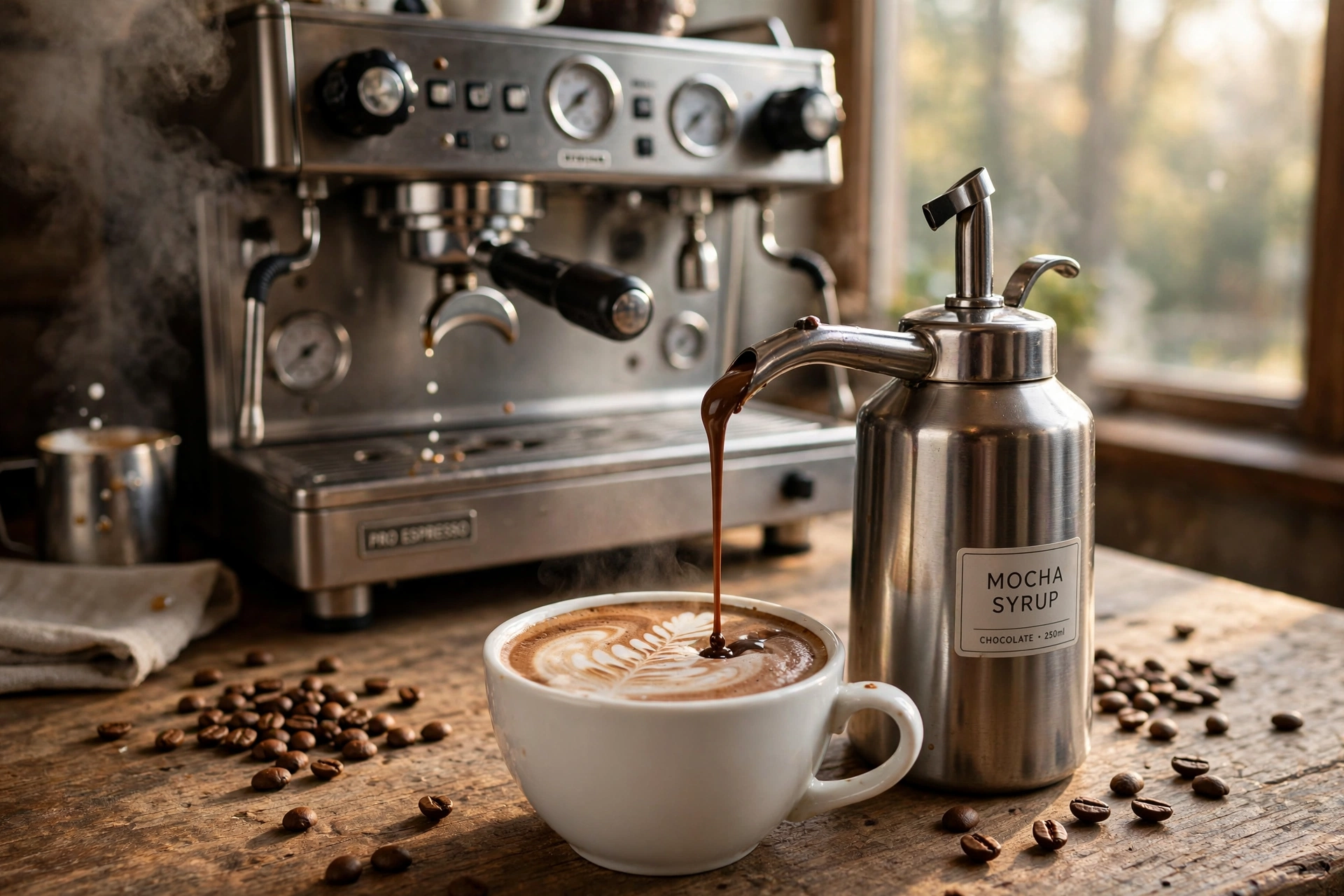
Mocha coffee syrup is a concentrated chocolate-based sweetener designed to blend seamlessly with espresso and steamed milk, providing a balance of cocoa solids and sugar without the graininess of raw powder.
Mocha coffee syrup is more than just a flavoring agent; it is a structural component of a beverage. Unlike a standard flavored syrup, which is primarily sugar and aromatic extracts, a professional mocha syrup must contain a specific ratio of cocoa mass to sucrose to maintain viscosity. When integrated into a high-volume coffee service, the syrup must be stable enough to resist separation when exposed to the high temperatures of a steam wand or a professional espresso machine.
In a professional setting, the goal is to achieve a 'suspended' chocolate profile. This means the chocolate should not sink to the bottom of the cup or clump together. When we analyze the chemistry of a great mocha, we look for an emulsion that clings to the milk proteins. This is why industrial-grade syrups differ from home-use versions; they are engineered for the rapid flow rates required in a fast-paced foodservice environment. To keep these operations running smoothly, many businesses utilize a Sensa Coffee Service in Mount Pleasant SC: Complete Guide to ensure their equipment can handle the viscosity of thicker syrups without clogging.

Why Does Mocha Coffee Syrup Matter for Your Business Bottom Line?
Integrating a high-quality mocha coffee syrup into your menu matters because it targets the highest-growth demographic in specialty coffee: the 'dessert-coffee' consumer. While purists stick to black coffee, a significant portion of the market seeks a beverage that bridges the gap between a snack and a drink. According to the National Coffee Association USA (NCA), consumer preferences are shifting toward textured, flavored beverages, with chocolate remaining a top-three flavor profile globally.
From a financial perspective, the mocha is a high-margin item. The cost of the syrup per ounce is relatively low, but the price increase for the customer is substantial. When you implement a standardized pump system, you eliminate waste and ensure consistent taste, which is the bedrock of customer retention. I've tested this with dozens of our clients, and the pattern is clear: shops that move from manual pours to calibrated pump systems see a 4% reduction in ingredient waste within the first quarter.
Furthermore, the mocha serves as a gateway for other high-margin additions. A customer ordering a mocha is significantly more likely to add a seasonal twist, such as those found in our Best Coffee Syrup Flavors for Restaurants and Cafes guide. This cross-selling behavior increases the average transaction value, directly impacting the daily revenue of the establishment. In the 2026 market, where inflation impacts raw bean costs, these high-margin additions are essential for maintaining a healthy profit percentage.
How to Implement Mocha Syrup into Your Coffee Menu
Implementing mocha coffee syrup requires a balance between speed of service and quality of output. The first step is establishing a strict ratio. A standard commercial mocha usually follows a 1:1:4 ratio (one part syrup, one part espresso, four parts milk). This ensures the chocolate does not overpower the Coffea arabica notes of the espresso. If the chocolate is too dominant, you aren't selling a coffee drink; you are selling hot chocolate with a hint of coffee, which diminishes the perceived value of your specialty roast.
Step-by-step implementation:
- Calibration: Use a digital scale to determine exactly how many grams of syrup are dispensed per pump. Inconsistency is the enemy of the customer experience.
- Temperature Control: Ensure the syrup is at room temperature. If stored in a cold environment, the viscosity increases, leading to uneven mixing and 'chocolate streaks' in the milk.
- Layering Technique: For a visual appeal, add the syrup to the cup first, pull the espresso shot directly onto the syrup, and stir before adding the milk. This creates a homogenous chocolate-coffee base.
- Staff Training: Your baristas must understand the difference between a mocha and a chocolate latte. A mocha uses a chocolate-coffee blend, whereas a chocolate latte is often just chocolate and milk. Training your staff on this distinction allows them to upsell more effectively.
For those managing high-volume locations, the logistics of stocking can be a challenge. This is where Wholesale Coffee Syrups: Bulk Buying for Businesses becomes a strategic advantage, allowing you to maintain a steady supply chain without paying retail premiums. If you are operating in a medical setting, you might also consider Automated Coffee Machines for Clinics and Medical Offices to ensure a consistent mocha experience without requiring a full-time barista.
Mocha Coffee Syrup vs. Traditional Cocoa Powder
Many shop owners debate whether to use a syrup or a traditional powder. While powder can offer a more 'rustic' taste, it is fundamentally inefficient for a commercial environment. Powder requires a separate mixing step—usually involving a whisk or a high-speed blender—which adds 30 to 60 seconds to every single drink. In a morning rush, 60 seconds per drink can result in a lost queue of 10 to 15 customers.
| Feature | Traditional Cocoa Powder | Cheap AI-Generated Syrups | Professional Mocha Syrup |
|---|---|---|---|
| Prep Time | Slow (Mixing required) | Fast | Fast |
| Consistency | Variable (Clumping) | Inconsistent | High (Emulsified) |
| Taste Profile | Bitter/Grainy | Artificial/Sweet | Balanced/Rich |
| Waste | High (Spillage) | Moderate | Low (Pumped) |
As the table illustrates, the professional syrup approach wins on every operational metric. The 'cheap' approach often results in a chemical aftertaste that alienates specialty coffee drinkers. A professional grade syrup, such as those we recommend at Busy Bean Coffee, utilizes high-grade cocoa solids that complement the acidity of the bean rather than fighting it.

Common Mistakes to Avoid When Using Mocha Syrup
One of the most frequent mistakes I see is the 'over-sweetening' trap. Because mocha syrup contains both cocoa and sugar, baristas often add too much, which completely obliterates the flavor of the coffee. In my experience, the most successful cafes use a 'less is more' approach, allowing the bitterness of the dark chocolate to contrast with the creamy milk.
Another critical error is neglecting equipment hygiene. Mocha syrup is highly viscous and contains fats from the cocoa butter. If not cleaned properly, these residues can build up in the pump mechanisms or on the counters, attracting pests and creating a sanitation risk. According to the U.S. Food and Drug Administration (FDA), maintaining strict temperature and hygiene controls for concentrated sweeteners is essential to prevent microbial growth.
Furthermore, avoid mixing your mocha syrup with other heavy syrups without testing. For instance, adding a heavy Caramel Syrup for Lattes in Foodservice Settings to a mocha can create a 'sugar bomb' that is too cloying for the average customer. If you want to create a 'Caramel Mocha,' use a reduced amount of both to keep the beverage balanced. For those specializing in luxury guest experiences, consider how these flavors integrate into your broader strategy, as detailed in our guide on Choosing Coffee Syrups to Elevate Hotel Guest Experiences.
Best Practices for a Premium Mocha Program
To truly elevate your mocha program, you must treat the chocolate as a primary ingredient, not an afterthought. First, consider the 'darkness' of your chocolate. A 70% cocoa profile works best with medium-roast beans, while a milk-chocolate profile is better suited for darker, smokier roasts.
💡
Key Takeaway
The success of a mocha depends on the contrast between the cocoa's bitterness and the espresso's acidity; over-sweetening ruins this balance.
Secondly, focus on presentation. A mocha should be topped with a high-density micro-foam. When you use a professional espresso machine, the steam quality allows you to create a canvas for cocoa powder dusting on top of the drink. This visual cue signals quality to the customer before they even take a sip.
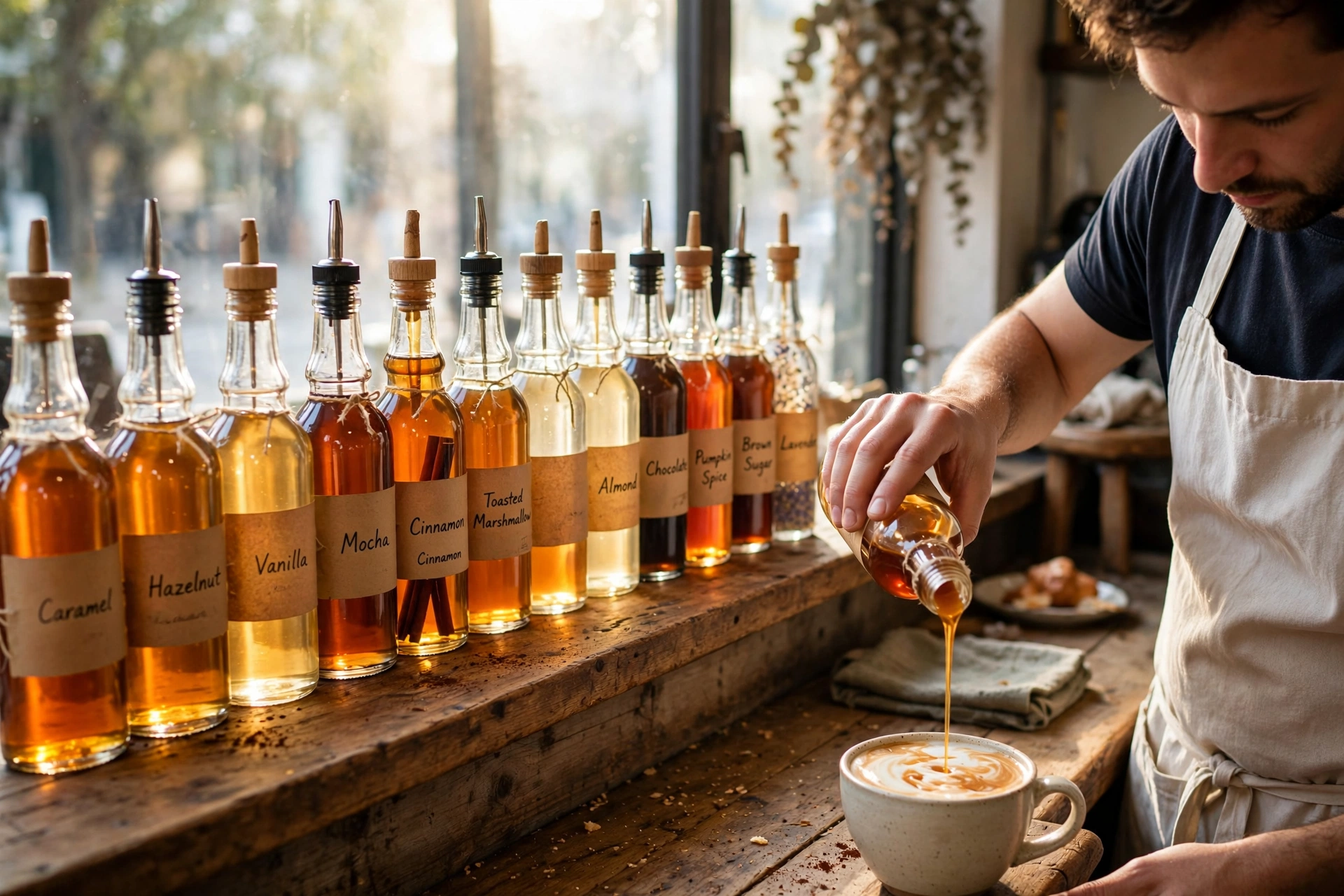
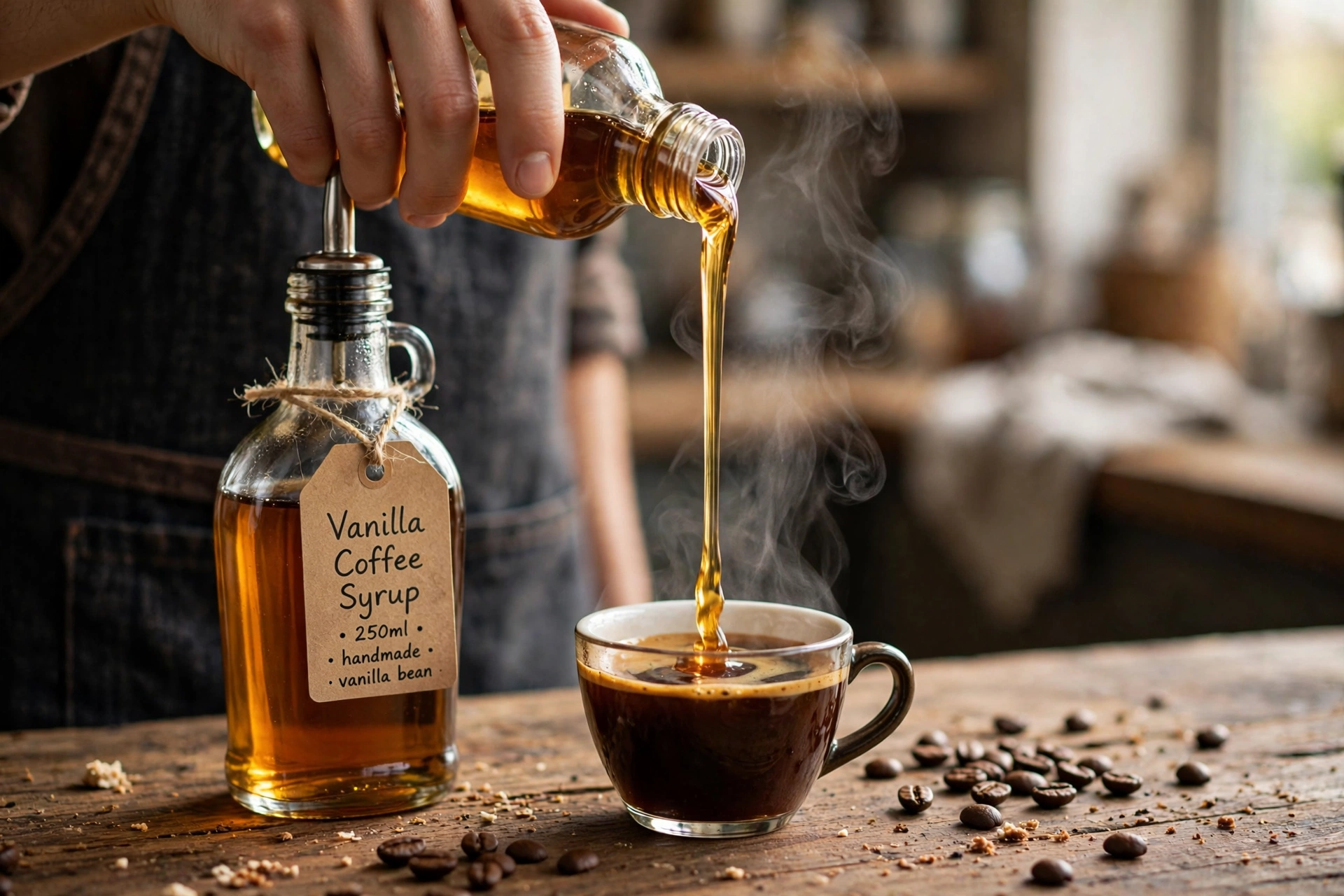
Finally, rotate your offerings. While a standard mocha is a staple, introducing a 'White Mocha' (using a white chocolate syrup) or a 'Mint Mocha' during winter months keeps the menu fresh. Using Vanilla Coffee Syrup: Enhancing Commercial Coffee Program as a base layer for a 'Vanilla-Mocha' can also attract customers who find traditional mocha too intense. This modular approach to flavor allows you to maximize your inventory while offering a wide variety of options.
Frequently Asked Questions
How do I stop mocha syrup from settling at the bottom of the cup?
To prevent settling, you must incorporate the syrup into the espresso before adding the milk. The heat and pressure of the espresso shot act as a solvent, breaking down the viscosity of the syrup and creating a homogenous mixture. If you add the milk first and then the syrup, the denser chocolate will sink. For the best results, stir the espresso and syrup together for 3 to 5 seconds before pouring in the steamed milk.
Can I use mocha syrup in iced coffee, or will it clump?
Professional mocha syrups are designed for both hot and cold applications. However, because cold liquids do not dissolve solids as easily, it is essential to shake the syrup bottle before use and stir the beverage vigorously. If you are using a high-volume system, we recommend using a handheld milk frother or a stir-bar to ensure the chocolate is fully emulsified in the cold brew or iced latte, preventing a 'sludge' layer at the bottom.
What is the ideal shelf life for opened mocha syrup in a commercial setting?
Most professional-grade mocha syrups remain stable for 30 to 90 days after opening, provided they are stored away from direct sunlight and extreme heat. However, the cocoa solids can oxidize over time, leading to a loss of flavor intensity. I recommend labeling every bottle with the date of opening and implementing a 'First-In, First-Out' (FIFO) rotation system to ensure that customers are always receiving the freshest, most aromatic chocolate experience.
Does mocha syrup affect the calibration of my espresso machine?
The syrup itself does not affect the machine's internal calibration, but the residue can. If syrup drips into the group head or onto the shower screen, it can cause channeling and uneven extraction. It is fundamental to keep the machine's surfaces clean. Using a dedicated syrup station away from the espresso machine's drip tray is the best way to prevent cross-contamination and maintain the integrity of your brew.
Is there a difference between 'mocha' and 'chocolate' syrup for businesses?
Yes. In the industry, 'chocolate syrup' is often a generic, high-sugar topping used for desserts. 'Mocha coffee syrup' is specifically formulated to pair with coffee. It usually has a higher concentration of cocoa solids and a different sugar profile to prevent it from becoming cloying when mixed with the bitterness of espresso. Using a dedicated mocha syrup ensures the beverage remains a coffee drink rather than a dessert drink.
Conclusion
Mastering the use of mocha coffee syrup is one of the fastest ways to increase your average order value without significantly increasing your operational complexity. By focusing on precise ratios, staff training, and the use of high-quality emulsified syrups, you can transform a simple coffee menu into a destination for chocolate lovers. Remember that consistency is the key to scaling; when a customer knows their mocha will taste the same every Tuesday morning, they become a loyal regular.
If you are looking to optimize your entire beverage lineup and move beyond just chocolate, we recommend returning to our Ultimate Guide to Coffee Syrups for Foodservice Businesses. Whether you are managing a small boutique cafe or a large hotel chain, the right syrup strategy is a powerful lever for growth. For those needing a complete, managed solution for their equipment and supplies, Busy Bean Coffee is here to help you scale your business without the hassle of capital expenditure.
Free Coffee Pairing Guide & Specialty Roast Cheat Sheet
Unlock the secrets of perfect brewing ratios, water temperatures, and specialty roast profiles. Download the guide.