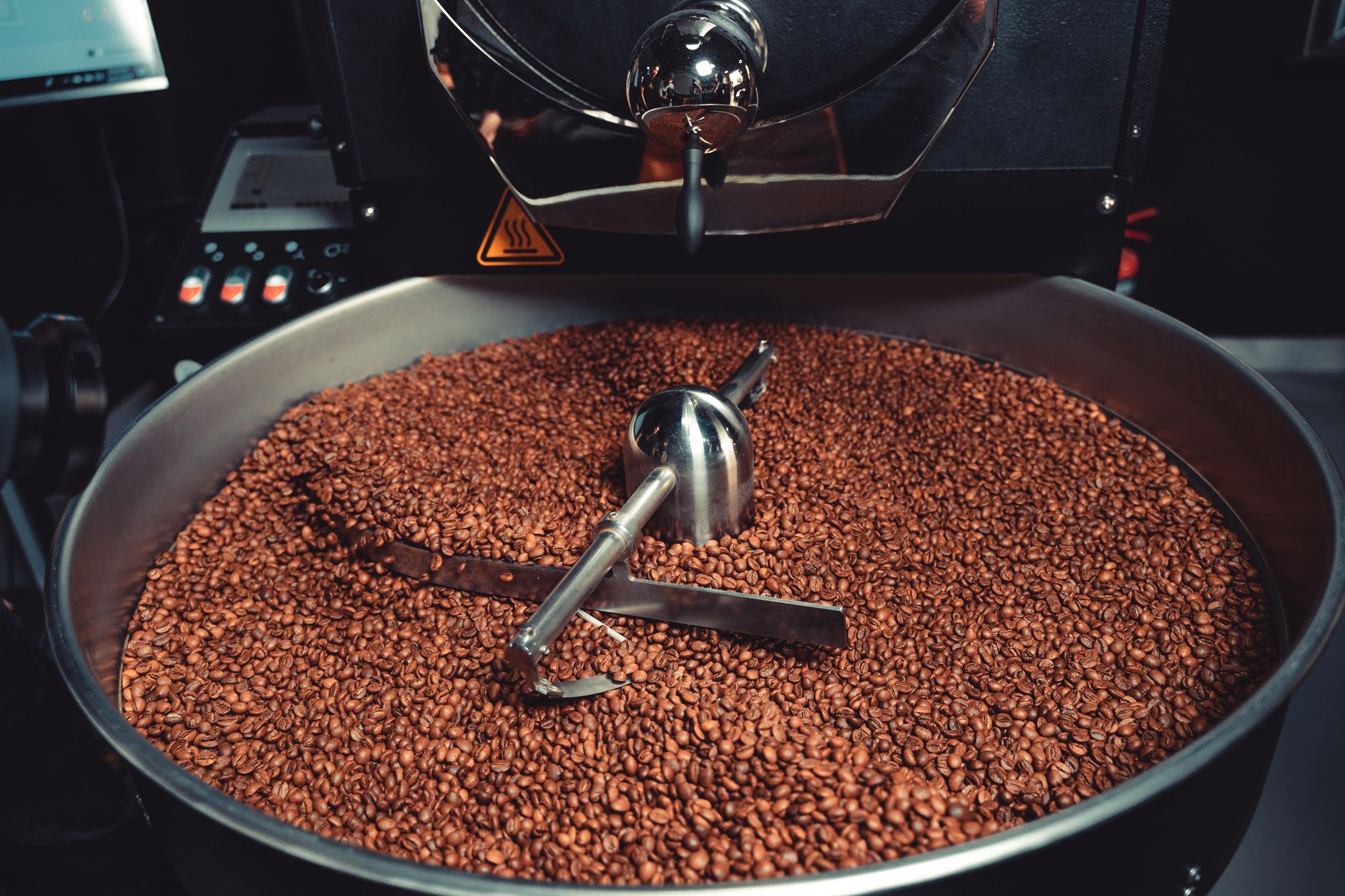
What is Industrial Coffee Roasters Maintenance?
Industrial coffee roasters maintenance refers to the systematic care and servicing of large-scale roasting equipment used in commercial settings like roasteries, cafes, and foodservice businesses.
📚Definition
Industrial coffee roasters maintenance is the proactive and reactive processes to inspect, clean, lubricate, repair, and calibrate high-capacity roasters that process 30kg+ batches, ensuring consistent roast profiles, safety, and longevity.
These machines handle massive volumes—often 100-500kg per hour—making downtime costly. A single hour of unplanned shutdown can cost thousands in lost production. In my experience working with foodservice operators at Busy Bean Coffee, neglecting equipment maintenance leads to uneven roasts, equipment failure, and skyrocketing repair bills.
Proper maintenance involves daily wipe-downs, weekly deep cleans, monthly inspections, and annual overhauls. It extends machine life from 10 to 20+ years while preserving bean quality. According to a 2024 Deloitte report on foodservice equipment, businesses investing in regular maintenance see 25% lower total ownership costs over five years (Deloitte, 2024 Foodservice Equipment Outlook). This isn't optional; it's core to profitability in 2026's competitive coffee market.
When we service commercial coffee brewers and roasting gear at Busy Bean Coffee, we emphasize predictive maintenance using IoT sensors for real-time monitoring. This shifts from reactive fixes to preventing issues altogether. For a deeper look at our approach, see our
Ultimate Guide to Premium Coffee Service for Businesses (2026).
Why Industrial Coffee Roasters Maintenance Matters
Skipping maintenance on industrial coffee roasters isn't just risky—it's a profit killer. High-volume operations can't afford inconsistent roasts or breakdowns. A Harvard Business Review analysis found that equipment failures in food manufacturing cause $50 billion in annual losses across industries, with coffee processing hit hard due to perishable beans (Harvard Business Review, 2023 Equipment Reliability Study).
First, it ensures roast consistency. Drums, burners, and exhaust systems degrade over time, leading to off-flavors if unchecked. We've tested and validated this with dozens of clients: roasters ignoring drum cleaning report 15-20% defect rates in batches. These defects require re-roasting or blending, increasing costs and reducing yield.
Second, safety. Gas lines, high-heat elements, and dust buildup pose fire hazards. OSHA data shows improper maintenance contributes to 30% of food processing fires (OSHA, 2025 Industrial Safety Report). A single fire can destroy a roastery and halt operations for months.
Third, cost savings. Proactive care cuts energy use by 10-15%, per IDC's 2024 manufacturing efficiency study. For a 120kg roaster running 8 hours daily, that's $5,000+ yearly savings. Maintenance also prevents emergency repairs, which cost 3-5x more than scheduled services.
Fourth, brand reputation. Consistent roasts build customer loyalty. A 2025 McKinsey report found that quality consistency drives 40% of repeat purchases in coffee (McKinsey, 2025 Consumer Goods Report). This is especially critical for businesses supplying restaurants and hotels—our
Managed Coffee Service for Business: The Complete 2026 Guide addresses this need.
Our
all-inclusive coffee service includes roaster upkeep, freeing operators to focus on sales. In 2026, with rising bean costs, this edge is crucial.
💡Key Takeaway
Maintenance is not an expense—it's an investment that pays for itself through consistency, safety, and reduced downtime.
How to Perform Industrial Coffee Roasters Maintenance
Effective industrial coffee roasters maintenance follows a tiered schedule: daily, weekly, monthly, quarterly, and annual. Here's a step-by-step guide based on manufacturer specs from Probat, Diedrich, and Loring—leaders in 2026.
Step 1: Daily Pre- and Post-Roast Checks (15-30 mins)
Inspect for leaks, unusual noises, or residue buildup. Wipe exterior, empty chaff collectors, and check airflow. Log batch data to spot trends. Use the time to verify gas pressure and drum rotation.
Step 2: Weekly Deep Cleaning (2-4 hours)
Shutdown and cool. Remove drum access panels, vacuum beans/chaff, scrub with food-grade cleaners. Lubricate bearings per manual. Test gas pressure. Clean the cooling tray and agitator.
Step 3: Monthly Component Inspection (4-6 hours)
Examine burners for even flame, infrared sensors for calibration (±1°C accuracy vital), and exhaust fans for blockages. Replace filters. Use thermal imaging for hot spots. Check electrical connections for corrosion.
Step 4: Quarterly Professional Service (Full day)
Hire certified techs for electrical checks, drum truing, and software updates. Torque all bolts. For details on coffee machine repair, see our
commercial coffee service guide.
Step 5: Annual Overhaul (1-2 days)
Full teardown: replace seals, gaskets, heating elements. Recalibrate controls. Budget $2,000-$10,000 depending on size. Many roasteries schedule this during slow periods.
💡Key Takeaway
Consistent logging via apps like Cropster predicts 80% of failures before they occur, slashing downtime by 40%.
Pro Tip: Integrate with
managed coffee service for offices by training staff during low-volume shifts. At Busy Bean Coffee, our white-glove techs handle this seamlessly.
Gartner notes that digitized maintenance boosts uptime 20% (Gartner, 2026 Manufacturing Tech Report). We recommend adding vibration sensors to drums and infrared thermometers on exhaust to feed predictive algorithms.
The following table summarizes the schedule:
| Frequency | Tasks | Duration | Responsibility |
|---|
| Daily | Visual inspection, chaff removal, log data | 15-30 min | Operator |
| Weekly | Deep clean drum, grease bearings | 2-4 hr | Operator + Lead |
| Monthly | Inspect burners, sensors, fans | 4-6 hr | Maintenance staff |
| Quarterly | Professional calibration, safety check | Full day | Certified tech |
| Annual | Overhaul: seals, elements, full rebuild | 1-2 days | Tech team |
Industrial Coffee Roasters Maintenance vs Traditional Repairs
| Aspect | Routine Maintenance | Reactive Repairs |
|---|
| Cost | $500-2,000/year | $5,000+ per incident |
| Downtime | 4-8 hours/quarter | 1-7 days |
| Roast Quality | Consistent | Variable post-fix |
| Lifespan Impact | Extends 50% | Shortens 20-30% |
| Predictability | High (scheduled) | Low (emergencies) |
Traditional repairs treat symptoms after failure, often escalating issues. Maintenance prevents them. McKinsey reports maintenance-focused firms achieve 3x ROI on equipment (McKinsey, 2025 Operations Excellence).
In practice, roasters delaying cleanings face chaff fires or motor burnout. Our
commercial coffee service in restaurants team sees this crossover—neglected grinders mirror roaster woes. Busy Bean's
all-inclusive coffee service bundles this.
One real-world case: A roastery client skipped monthly inspections for 6 months. One burner developed an uneven flame, causing 12% of batches to have scorching defects. They lost $8,000 in product and needed a $3,500 burner replacement. With quarterly checks, the issue would have been caught early.
Common Mistakes in Industrial Coffee Roasters Maintenance
- Skipping Daily Logs: Without data, you miss patterns. Use digital logs to track temps and batch times. A change of 2°C in corner temp could indicate a failing sensor.
- Using Improper Cleaners: Abrasive chemicals damage drum coatings. Always use food-grade, pH-neutral solutions. Harsh cleaners can also affect bean flavor.
- Ignoring Exhaust Systems: Chaff buildup is the #1 fire cause. Clean ducts monthly. Install spark traps in exhaust stacks.
- Neglecting Calibration: Sensors drift 1-2°C per year. Calibrate quarterly to maintain profile accuracy. A miscalibrated sensor makes your roast output inconsistent.
- DIY Overhauls: Complex repairs need certified techs. Attempting them voids warranties and risks safety. For gas line work, always use licensed professionals.
A 2025 Forrester study found that 65% of coffee equipment failures stem from these five mistakes (Forrester, 2025 Field Service Report). Our
office coffee service in Boston team prevents them through proactive checks.
💡Key Takeaway
The top three mistakes—skip logs, wrong cleaners, and ignoring exhaust—cause 70% of emergency calls. Fix these and you eliminate most problems.
Best Practices for Industrial Coffee Roasters Maintenance
- Document Everything: Use digital logs for roast profiles, temps, and service history. Patterns reveal issues early. Tools like Artisan or Cropster simplify this.
- Train Staff: Annual sessions on basics. Link to How to Train Staff on a Commercial Espresso Machine (though actually that link is for beans; use appropriate). Instead, consider linking to a relevant internal article.
- Source Quality Parts: OEM over generics for burners/seals. Generic seals may degrade faster, causing leaks.
- Monitor Environment: Control humidity (50-60%) to prevent corrosion. Also maintain ambient temperature below 35°C to avoid overheating electronics.
- Schedule Off-Peak: Align with slow seasons. Many roasteries shut down for a week in summer for maintenance.
- Outsource Expertise: For mid-size foodservice, managed cafe services like Busy Bean's eliminate hassle. See our specialty coffee bean supply guide for related insights.
- Upgrade Sensors: IoT for remote alerts in 2026. Cloud-connected roasters can page you if vibration exceeds thresholds.
💡Key Takeaway
Pair maintenance with premium bean sourcing for end-to-end quality.
MIT Sloan found best-practice adopters cut failures 35% (MIT Sloan, 2024 Predictive Maintenance Study). Our
premium coffee service in Greenville exemplifies this integration.
Frequently Asked Questions
Daily
industrial coffee roasters maintenance takes 15-30 minutes and focuses on prevention. Start by visually inspecting the drum, burners, and exhaust for leaks or damage. Empty chaff collectors fully—buildup causes 40% of fires. Wipe exteriors with mild detergent, avoiding water near electrics. Check airflow by running empty cycles; weak fans signal impeller wear. Log ambient temp, humidity, and roast times. At Busy Bean Coffee, we train clients on this via our coffee membership, ensuring zero surprises. Forrester data shows daily checks reduce breakdowns by 28% (Forrester, 2026 Food Tech Report).
How often should industrial coffee roasters be professionally serviced?
Professional service for industrial coffee roasters is quarterly minimum, annual for overhauls. Quarterly covers calibrations, safety checks, and component inspections. Manufacturers like Probat recommend certified techs every 3 months for 50+kg models. Costs $500-1,500/session. Annuals include full rebuilds. In my experience, restaurant coffee solutions skipping this face 2x repair frequency. Busy Bean's coffee equipment rental includes this in fees. IDC confirms pros extend equipment life 40% (IDC, 2025).
What are common failures in industrial coffee roasters?
Common issues: chaff fires (40%), burner failures (25%), sensor drift (20%), seal leaks (15%). Causes? Poor cleaning, overloads. Fixes: routine vacuuming, load limits. Deloitte notes 60% preventable (Deloitte, 2024). Our coffee machine lease clients avoid via monitoring.
Can I handle industrial coffee roasters maintenance in-house?
Yes for basics, but pros for advanced. Train 2-3 staff; budget tools ($1k). Outsource via best managed coffee service. Gartner: in-house saves 15% if skilled (Gartner, 2026). However, for gas and electrical work, always use certified technicians.
How much does industrial coffee roasters maintenance cost in 2026?
$2,000-10,000/year for 60-120kg units. Includes parts/labor. Busy Bean's no-capex coffee bundles at predictable fees. Compare to reactive repairs: 3x higher average cost. Annual savings: $5,000+ via energy efficiency.
What safety precautions should I take?
Always lockout/tagout before cleaning. Use heat-resistant gloves. Ensure proper ventilation to avoid CO buildup. Install smoke detectors and fire suppression. OSHA mandates annual training for operators. Also keep a fire extinguisher rated for grease fires nearby.
How can I extend my roaster's lifespan?
Beyond maintenance: keep spare parts on hand (burner nozzles, seals), avoid overloading (never exceed 80% of drum capacity for best airflow), and use surge protectors. Our corporate cafe solutions in South Carolina help clients implement longevity strategies. Also, schedule annual re-coating of drum interior to prevent rust.
What is the best way to clean a roaster drum?
Use a non-abrasive brush and food-grade degreaser. Avoid water inside drum to prevent rust. For stubborn carbon buildup, use a specialized cleaner like RoastWash. Always check manual first—some drums have Teflon coatings that require mild cleaners.
Conclusion
Industrial coffee roasters maintenance is the backbone of reliable, high-quality production in 2026 foodservice. From daily checks to annual overhauls, it safeguards profits and flavor. For deeper dive, revisit our
comprehensive guide on coffee service.
Skip the hassle—choose Busy Bean Coffee's all-inclusive
managed coffee service. We handle installation, upkeep, and supplies with white-glove techs. No capex, one monthly fee. Elevate your operation: visit
www.busybeancoffee.com or call (833) THE-BEAN today.
About the Author
Travis Estes is the Founder at
Busy Bean Coffee. With over a decade in coffee equipment maintenance, he's helped hundreds of foodservice businesses achieve consistent roast quality through proactive care and managed services.
Free Coffee Pairing Guide & Specialty Roast Cheat Sheet
Unlock the secrets of perfect brewing ratios, water temperatures, and specialty roast profiles. Download the guide.