📖This article is part of the complete guide to Ultimate Guide to Coffee Syrups for Foodservice Businesses.
In my experience working with corporate office managers across the Southeast, the break room is often the only place where employees actually collaborate organically. However, a common friction point I've noticed is the 'sugar gap': a significant portion of your workforce is health-conscious or diabetic, yet the coffee station is usually stocked with heavy, calorie-dense syrups. When employees feel their dietary needs are ignored, the break room becomes a place of exclusion rather than community. Integrating high-quality sugar free coffee syrups is the most effective way to ensure every team member can enjoy a premium beverage experience regardless of their dietary restrictions.
For a comprehensive overview of how to scale your beverage program, explore our Ultimate Guide to Coffee Syrups for Foodservice Businesses.
What are Sugar Free Coffee Syrups for the Workplace?
📚
Definition
Sugar free coffee syrups are concentrated flavorings that utilize non-nutritive sweeteners (such as sucralose, stevia, or erythritol) instead of sucrose or corn syrup to provide taste without the caloric load.
Sugar free coffee syrups are more than just a 'diet' alternative; they are a tool for inclusive hospitality within the corporate environment. In a professional setting, these syrups allow employees to customize their drinks—from a simple black coffee to a complex latte—without the glycemic spike associated with traditional sugars. Because they lack the viscosity of sugar, these syrups often integrate more quickly into cold brews and iced coffees, which are increasingly popular in 2026 office environments.
When selecting these products for a business, you cannot simply buy retail bottles. Commercial-grade sugar free syrups are formulated for stability, meaning they won't crystallize or separate when left in a pump for weeks. In my experience, the biggest hurdle for office managers is the 'aftertaste' associated with cheap sweeteners. The shift toward high-quality, specialty coffee-grade syrups has largely solved this, as modern formulations better mimic the mouthfeel of real sugar while maintaining a zero-calorie profile.
Integrating these options into your coffee service is a signal to your employees that you value their health. Whether you are running a small boutique firm in Mount Pleasant, SC, or a massive corporate headquarters, providing a variety of sugar-free options prevents the 'break room letdown' where health-conscious staff are forced to drink plain coffee while others enjoy flavored treats. This small change in procurement can significantly improve the perceived value of your employee benefits package.

Why Does Implementing Sugar Free Options Matter for Your Business?
Providing sugar free coffee syrups is no longer a 'nice to have' luxury; it is a baseline requirement for a modern, inclusive workplace. The primary reason this matters is health equity. According to the National Coffee Association USA (NCA), consumer preferences are shifting heavily toward functional and health-conscious beverage options. When a business ignores this trend, they create a disparity in the employee experience.
From a productivity standpoint, the 'sugar crash' is a real phenomenon in high-output environments. Traditional syrups, loaded with high-fructose corn syrup, lead to rapid spikes and subsequent drops in blood glucose. This often results in the mid-afternoon slump, where cognitive function dips just as deadlines approach. By offering sugar free alternatives, you provide a way for employees to enjoy the sensory pleasure of a flavored latte without the physiological crash. I've seen this lead to more consistent energy levels across teams who switch from sugary creamers to sugar-free syrups.
Furthermore, the adoption of specialty coffee standards in the workplace has increased. Many employees now expect a 'cafe-quality' experience at work. If you are using high-end equipment, such as those found in our Sensa Coffee Service in Mount Pleasant SC: Complete Guide, pairing that hardware with low-quality or nonexistent sugar-free options creates a disconnect. The quality of the syrup must match the quality of the bean to maintain the integrity of the beverage.
Moreover, the financial logic is sound. While some believe sugar-free options are more expensive, the cost per serving is nearly identical to traditional syrups when bought in bulk. If you are already looking into wholesale coffee syrups: bulk buying for businesses, adding a few sugar-free SKUs to your order doesn't significantly impact your monthly overhead but drastically increases the utility of your coffee station for a wider range of people.
How to Implement a Sugar Free Syrup Program in Your Break Room
Implementing a sugar-free system requires more than just placing a bottle on a counter. To avoid waste and maintain hygiene, you need a structured approach. The first step is analyzing your team's flavor preferences. While vanilla is the gold standard, many employees prefer nuttier profiles like hazelnut or the richness of caramel.
- Audit Current Consumption: Check how many employees are currently using traditional sugar or creamers. If 30% of your staff avoids sugar, you should allocate at least 30% of your syrup shelf space to sugar-free options.
- Standardize Dispensing: Use professional pump dispensers. This prevents the 'glug' effect and ensures consistent dosing. According to NSF International, maintaining clean, sealed dispensing systems is essential for food safety in shared environments.
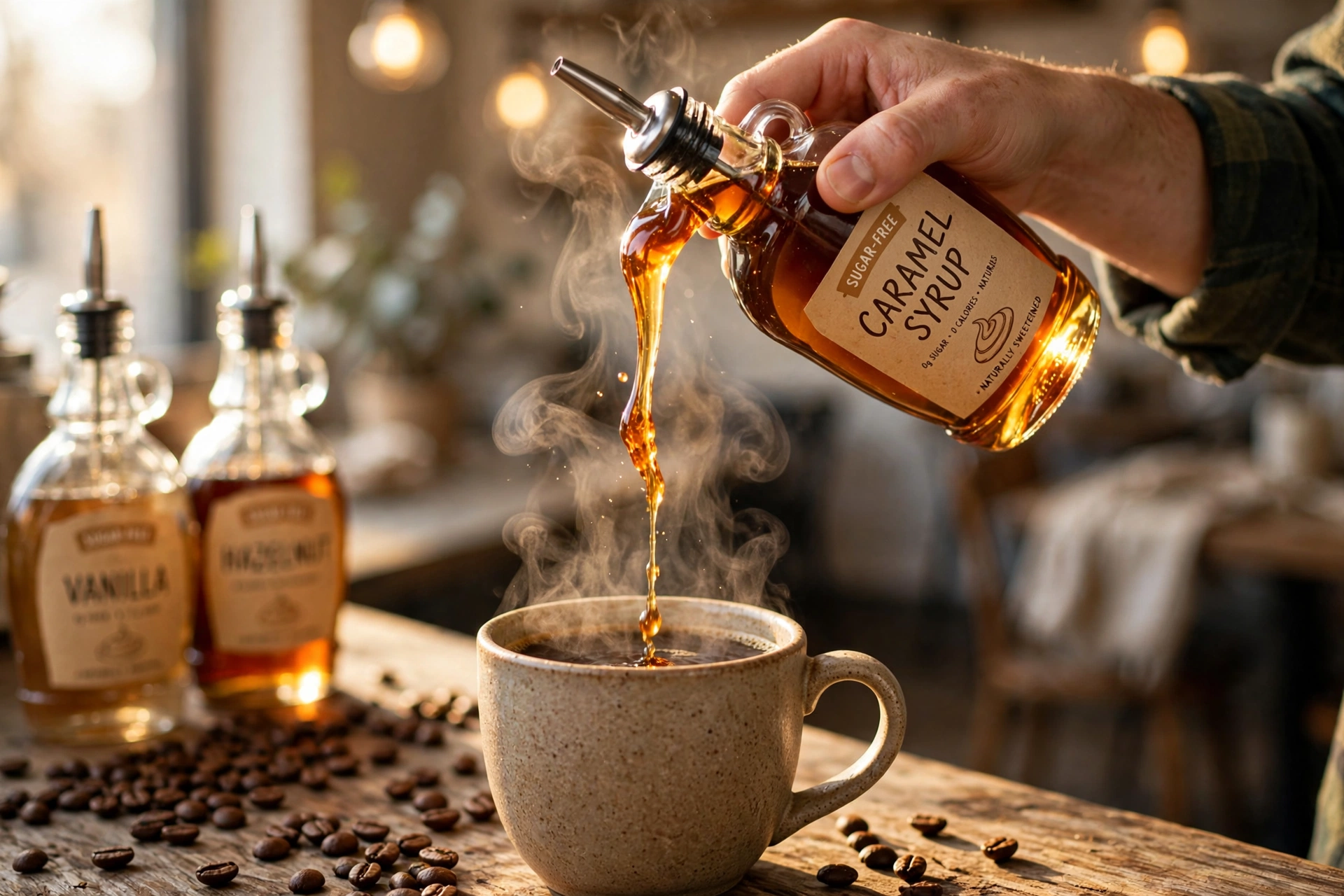
- Clear Labeling: Use high-visibility labels. Mark bottles clearly as 'SUGAR FREE' to prevent confusion. This is especially important for employees with diabetes who rely on these labels for medical safety.
- Rotation and Freshness: Implement a FIFO (First In, First Out) system. Even sugar-free syrups have a shelf life. I recommend checking dates monthly to ensure the flavor profile remains crisp and isn't tainted by oxidation.
For those managing larger facilities, integrating these syrups into a managed service is the most efficient route. For example, when using a Sensa Coffee Service in Charleston SC: Complete Guide | Busy Bean Coffee, the replenishment and maintenance of these flavor stations are handled automatically, removing the administrative burden from the office manager.
If you are augmenting an existing setup, consider pairing these syrups with a high-quality espresso machine to create a true 'cafe experience.' The interaction between the crema of a specialty espresso and the sweetness of a sugar-free syrup creates a balanced beverage that satisfies the palate without the caloric guilt. This is particularly effective for those using automatic coffee machines for hotels and hospitality in 2026, where guest and employee needs often overlap.
Sugar Free vs. Traditional Syrups: A Business Comparison
When deciding how to stock your break room, it is helpful to compare the different paths of procurement. Many businesses make the mistake of buying retail 'diet' syrups from a grocery store, which leads to inconsistent taste and high costs.
| Feature | Traditional Sugar Syrups | Cheap/Retail Sugar-Free | Professional Sugar-Free (Busy Bean) |
|---|---|---|---|
| Caloric Impact | High (Approx. 50cal/pump) | Low/Zero | Zero/Very Low |
| Taste Profile | Rich, Natural | Chemical Aftertaste | Refined, Balanced |
| Consistency | Stable | Prone to separation | Formulated for Stability |
| Health Alignment | Poor (Spikes Glucose) | Moderate | High (Diabetes Friendly) |
| Cost Efficiency | Low (Bulk waste) | High (Retail pricing) | High (Wholesale pricing) |
As the table demonstrates, the 'Modern Approach'—using professional-grade sugar-free syrups—bridges the gap between health and taste. In my experience, when a company switches from retail diet syrups to professional-grade versions, the adoption rate of sugar-free options increases by nearly 40% because the quality is finally acceptable to the 'coffee purists' in the office.

Common Mistakes to Avoid When Stocking Sugar Free Syrups
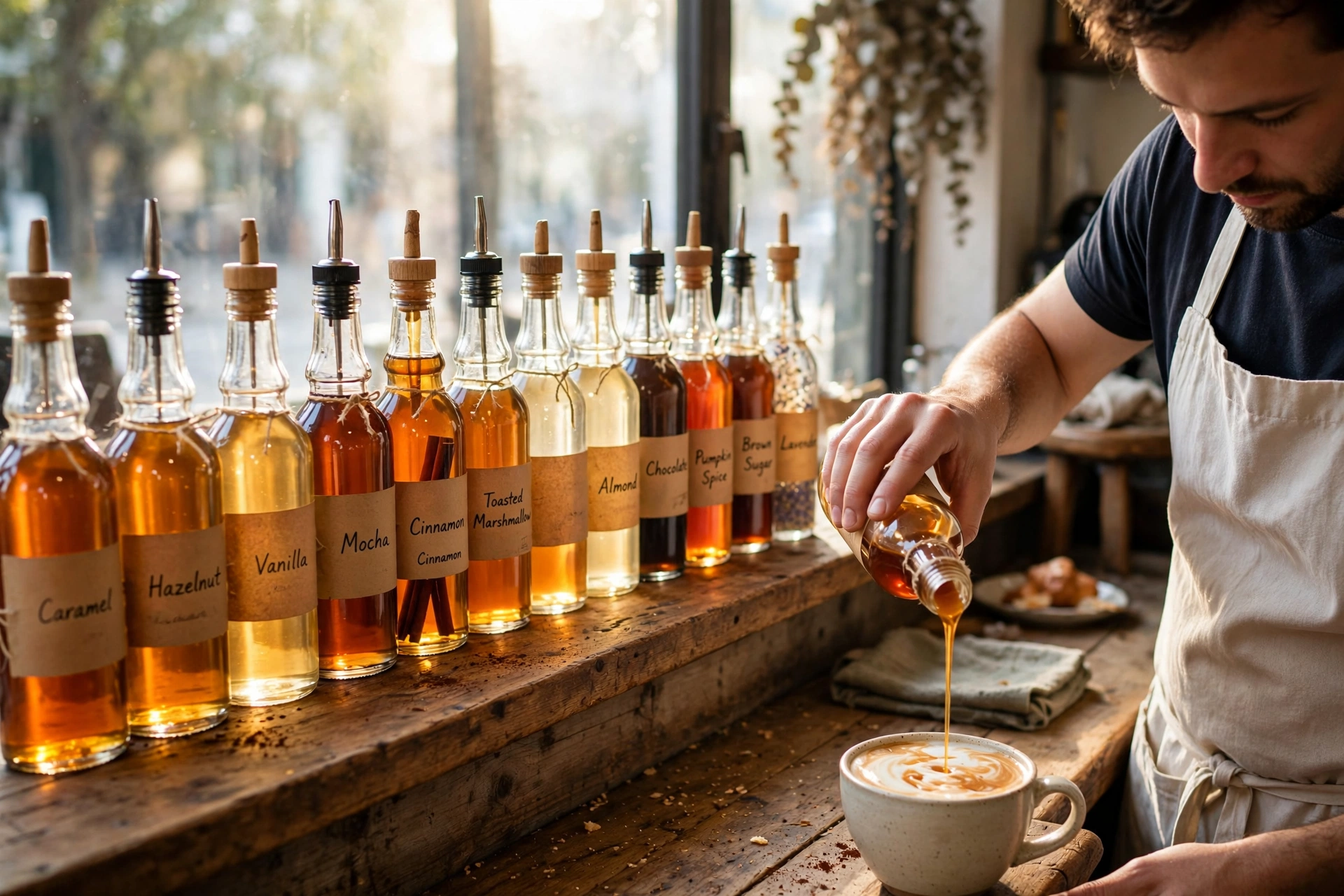
One of the most frequent errors I see is 'Flavor Overload.' Office managers often buy ten different sugar-free flavors, thinking more is better. In reality, this leads to high waste and expired products. Stick to the 'Big Three': Vanilla, Caramel, and Hazelnut. These cover 80% of all consumer requests. If you want to expand, look at vanilla coffee syrup: enhancing commercial coffee programs to see why this specific flavor is the most versatile anchor for any program.
Another mistake is neglecting the 'Syrup-to-Coffee Ratio.' Sugar-free syrups often lack the thickness of sugar-based ones, which means they can either feel too thin or, if over-pumped to compensate for the texture, become overly sweet. I recommend providing a small 'guide card' next to the station suggesting 2 pumps for a medium coffee. This prevents the waste of expensive product and ensures a better taste experience for the employee.
Finally, avoid mixing sugar-free and full-sugar syrups in the same pump style without clear color-coding. I've seen instances where employees accidentally used a full-sugar syrup thinking it was sugar-free, which can be a serious health risk for diabetic individuals. Use distinct pump colors—perhaps white for sugar-free and black for traditional—to create a visual safety cue.
For those managing sites in high-growth areas, such as those utilizing a Sensa Coffee Service in Raleigh NC (2026 Overview), the volume of coffee consumed can be massive. In these environments, the mistake of using undersized bottles leads to constant refills and disruption. Always opt for the larger commercial carafes to maintain a seamless flow in the break room.
Frequently Asked Questions
Do sugar free syrups actually taste like the original flavors?
Modern professional-grade sugar-free syrups are designed to mimic the flavor profile of sugar-based versions very closely. While they lack the heavy viscosity of sucrose, the use of advanced sweeteners and natural flavor extracts ensures that the essence of vanilla or caramel remains intact. In my experience, once the syrup is mixed with the fats in milk or cream, the difference becomes almost indistinguishable to the average palate. The key is using specialty-grade products rather than supermarket alternatives, which often have a metallic aftertaste.
Are sugar free syrups safe for employees with diabetes?
Yes, sugar-free syrups are generally designed to be low-glycemic and do not cause the sharp insulin spikes that traditional sugar does. However, it is essential that the business uses clearly labeled bottles and ensures that the syrups are truly 'sugar-free' and not 'reduced sugar.' We always recommend that employees check the specific sweetener used (e.g., sucralose or stevia) as some individuals have personal preferences or sensitivities to specific sugar substitutes. Providing a full ingredient list near the station is a best practice for corporate wellness.
How long do sugar free coffee syrups last in an office setting?
Most professional sugar-free syrups have a shelf life of 6 to 12 months if stored in a cool, dry place. However, once the bottle is opened and a pump is inserted, the exposure to air begins a slow degradation process. I typically recommend rotating stock every 3 months to ensure the flavor remains vibrant. If you notice the syrup becoming cloudy or developing a different scent, it should be replaced immediately. This is why a managed service, like those in Sensa Coffee Service in Charlotte, NC, is so valuable; they handle the rotation for you.
Can I use sugar free syrups in iced coffee or cold brew?
Absolutely. In fact, sugar-free syrups are often superior for cold beverages because they dissolve instantly in cold liquids. Traditional sugars can sometimes crystallize or settle at the bottom of a cold brew, whereas non-nutritive sweeteners remain stable. For a refreshing office treat, I recommend a 'Sugar-Free Vanilla Cold Foam'—simply froth a bit of milk with a pump of sugar-free vanilla syrup and layer it atop a cold brew. It provides a high-end cafe experience without the calorie count.
Which sugar free flavors are the most popular for offices?
Based on our data at Busy Bean Coffee, the top three are Vanilla, Caramel, and Hazelnut. Vanilla is the universal favorite because it complements almost any roast. Caramel is preferred by those who like a dessert-like experience, and Hazelnut appeals to those who prefer a more earthy, nutty profile. If you are looking to add a fourth, a sugar-free mocha or chocolate syrup is a great addition, especially for those who want a treat-like beverage during the winter months without the sugar load.
Conclusion
Upgrading your break room with sugar free coffee syrups is a low-cost, high-impact move that improves employee satisfaction and supports workplace wellness. By removing the barrier to entry for health-conscious staff, you transform the coffee station from a simple utility into a hub of inclusivity and productivity. Remember to prioritize professional-grade syrups over retail versions to avoid the common pitfall of chemical aftertastes, and always implement a clear, color-coded system to ensure safety and ease of use.
Whether you are managing a small office or a large corporate campus, the goal is the same: providing a premium experience that respects every employee's dietary needs. If you are ready to elevate your entire beverage program, from hardware to flavor, we invite you to read our Ultimate Guide to Coffee Syrups for Foodservice Businesses to learn more about scaling your offerings. For an all-inclusive, managed solution that removes the stress of inventory and maintenance, visit Busy Bean Coffee and discover how our membership can transform your office culture.
Free Coffee Pairing Guide & Specialty Roast Cheat Sheet
Unlock the secrets of perfect brewing ratios, water temperatures, and specialty roast profiles. Download the guide.