📖This article is part of the complete guide to Ultimate Guide to Coffee Syrups for Foodservice Businesses.
In my experience working with high-volume cafe owners in Mount Pleasant, South Carolina, the difference between a stagnant menu and a trending one usually comes down to a single pump of syrup. I have seen operators cling to basic vanilla for years, only to watch their Gen-Z and Millennial customer base migrate to competitors offering 'botanical' or 'savory-sweet' profiles. The current market shift isn't just about sweetness; it is about creating an experience that feels curated and artisanal.
For a comprehensive overview of how to integrate these additions, explore our Ultimate Guide to Coffee Syrups for Foodservice Businesses.
What are Trending Coffee Syrups and How Do They Shape Menus?
📚
Definition
Trending coffee syrups are seasonal or emerging flavor profiles that align with current consumer culinary preferences, often moving away from traditional sweetness toward complex, botanical, or culturally diverse taste palettes.
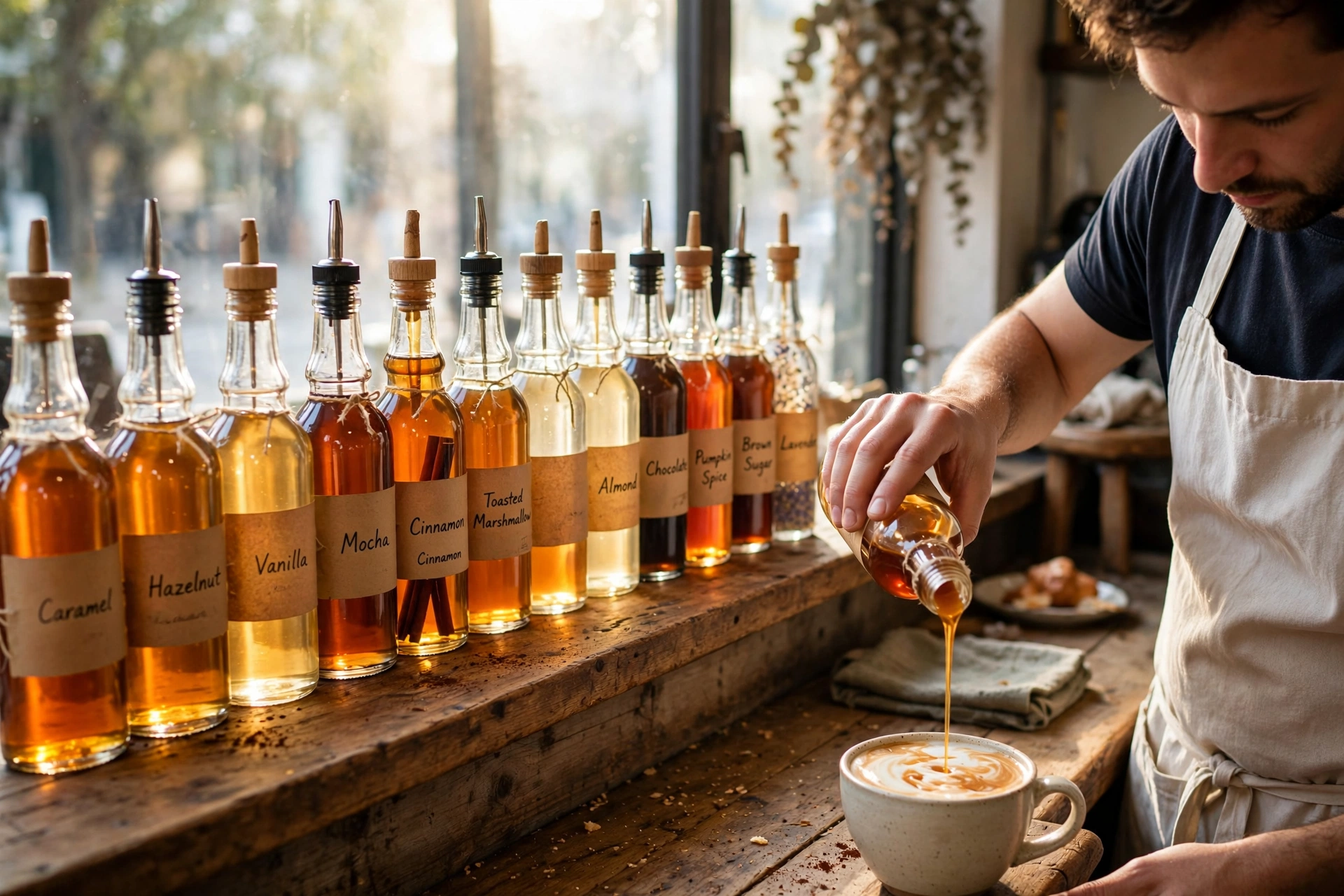
Trending coffee syrups are the strategic flavor additives used to pivot a beverage menu from standard to signature. In 2026, this means moving beyond the 'sugar-bomb' approach and embracing profiles that complement the natural acidity and notes of Coffea arabica. When a cafe introduces a trending flavor—such as lavender, salted pistachio, or spiced cardamom—they aren't just adding a taste; they are signaling to the customer that the business is current and attentive to global trends.
These syrups allow a business to implement a 'Limited Time Offer' (LTO) strategy. By introducing a rotating flavor every six weeks, cafes create a sense of urgency and a reason for customers to return. From a technical standpoint, these syrups must be stable and high-concentration to ensure consistency across every cup, regardless of who is operating the espresso machine.

In my time as a Q-Grader, I have observed that the most successful trending syrups are those that enhance rather than mask the quality of the bean. If you are using a high-grade specialty coffee, a heavy-handed pour of a low-quality syrup can destroy the nuance of the roast. The goal is a synergistic relationship where the syrup elevates the coffee bean's origin notes. This is why many modern cafes are shifting toward 'refined' syrups—those with lower sugar content and higher natural flavor extracts.
Why Do Trending Flavors Matter for Your Foodservice Business?
Integrating trending coffee syrups is fundamentally a revenue strategy. The primary driver is the increase in the Average Transaction Value (ATV). According to the National Coffee Association USA (NCA), a significant percentage of coffee drinkers now prefer customized beverages over plain black coffee, and these customizations are the highest-margin items on a menu.
When you add a 'Trending Flavor' surcharge (typically $0.50 to $1.00), your cost of goods sold (COGS) increases by only a few cents per serving, but your profit margin per cup spikes. This is the most efficient way to scale revenue without increasing your customer count. Furthermore, trending flavors drive organic social media marketing. A visually appealing, uniquely flavored latte is 'Instagrammable,' providing free advertising for your business in areas like Mount Pleasant, SC.
Beyond the finances, these flavors allow you to cater to diverse demographics. For instance, those looking for more sophisticated, less sugary options are gravitating toward botanical notes. This shift is reflected in the wider food industry, where consumers are demanding more 'functional' and 'natural' profiles. By diversifying your syrup rack, you prevent menu fatigue—the phenomenon where regular customers stop visiting because the offering has become predictable.
If you are scaling your operations, you might consider looking into Wholesale Coffee Syrups: Bulk Buying for Businesses to ensure your margins remain high while you experiment with these trends. The key is to balance the risk of a new flavor with the stability of a core offering.
How to Implement Trending Syrups in Your Beverage Program
Implementing new flavors requires a systematic approach to avoid waste and ensure quality. The first step is the 'Flavor Audit.' I recommend tasting your current espresso with the new syrup to identify the 'Sweet Spot'—the exact pump count where the syrup complements the coffee without overpowering the roast. For most specialty coffee programs, this is usually 1.5 to 2 pumps for a 12oz drink.
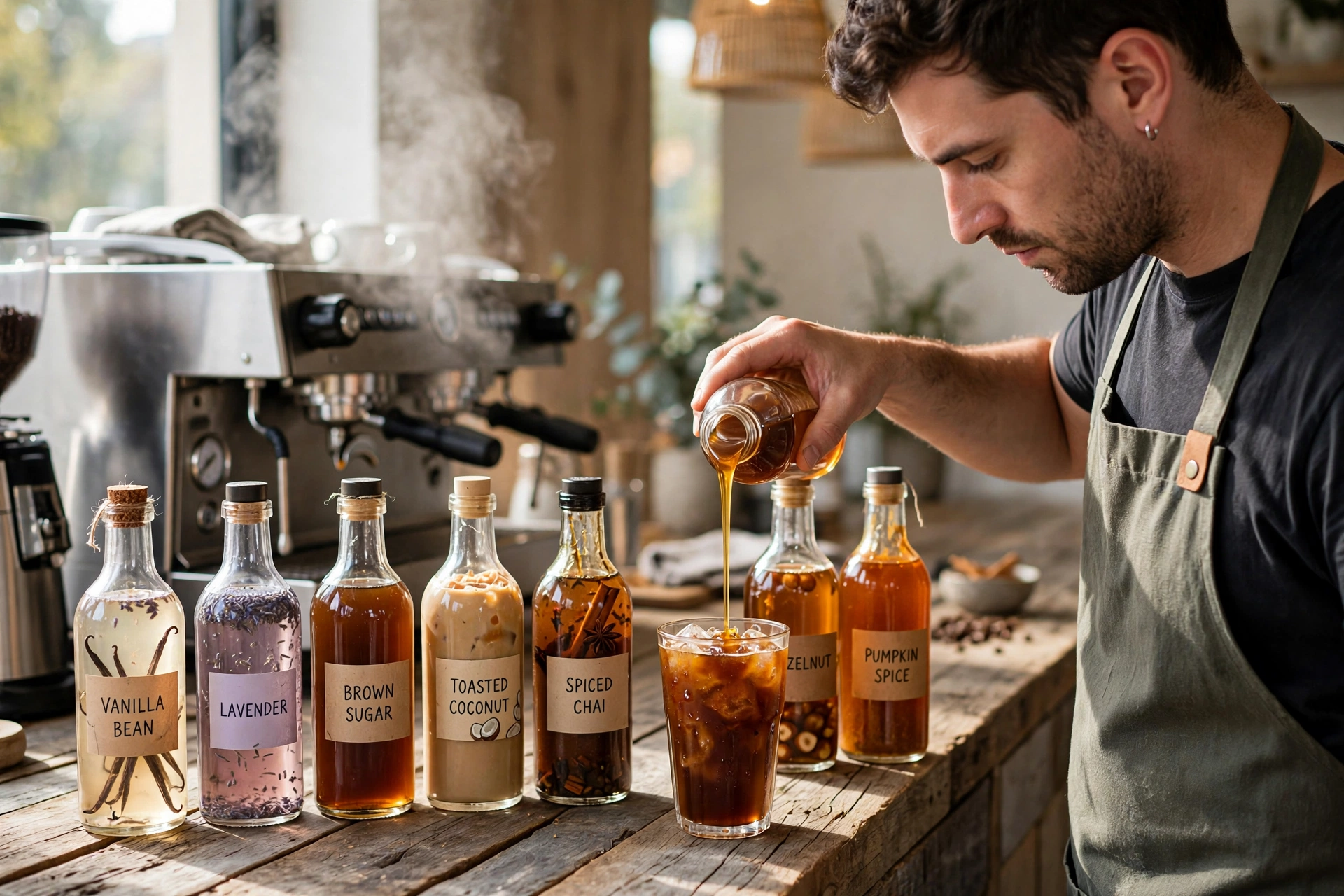
Next, create a 'Pairing Matrix.' Not every syrup works with every milk or coffee type. For example, a salted honey syrup works beautifully with a creamy oat milk latte but can taste cloying in a cold brew. I suggest testing your trending syrups across three formats: hot lattes, iced americanos, and cold foams. Cold foam, in particular, has become a primary vehicle for trending flavors in 2026, allowing the syrup to sit on top of the drink for maximum aromatic impact.
💡
Key Takeaway
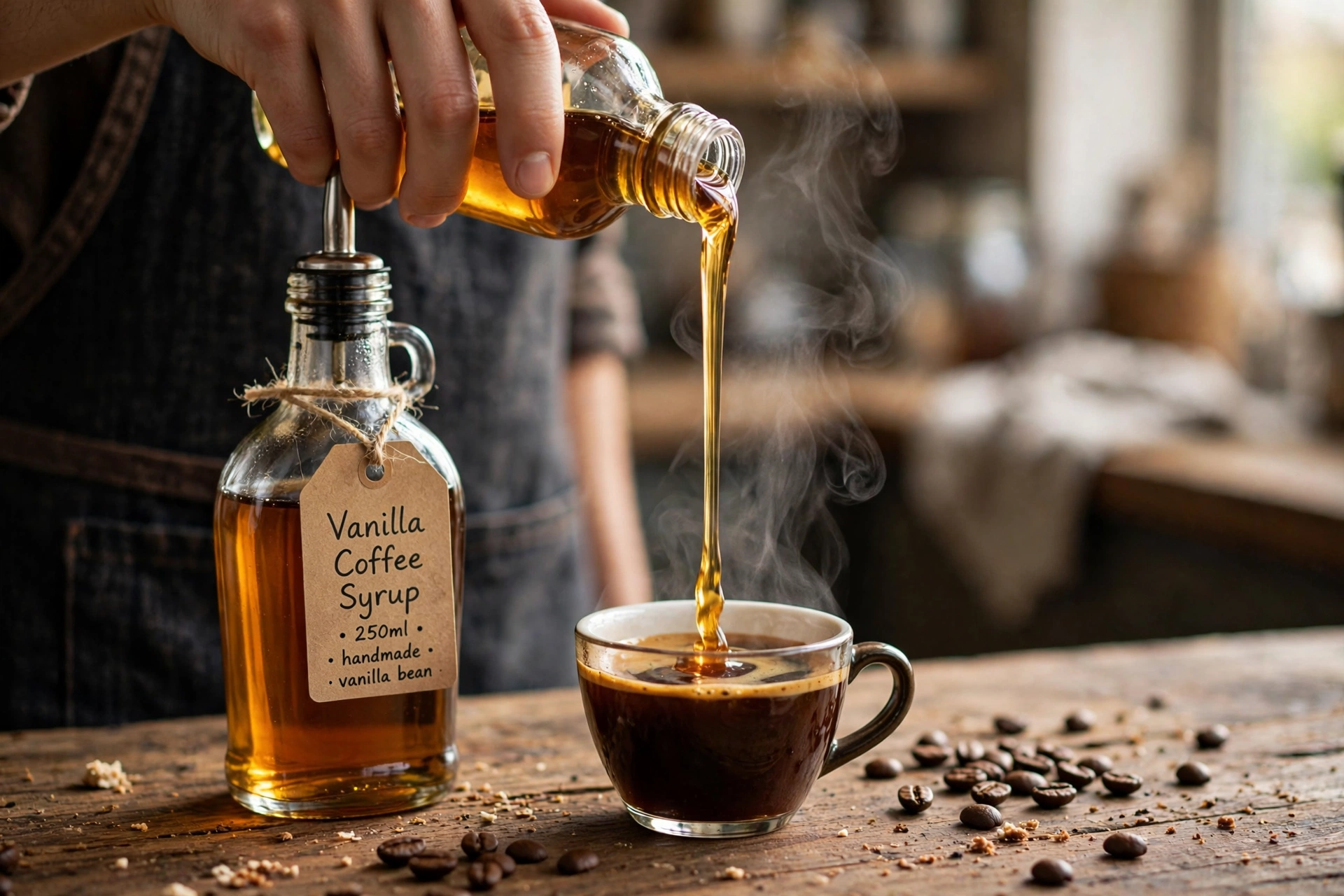
The most successful syrup implementations use a 'Core and Satellite' model: keep 3 staples (like Vanilla Coffee Syrup) and rotate 2 trending flavors monthly.
For those managing larger facilities, such as those utilizing Automatic Coffee Machines for Hotels and Hospitality in 2026, the implementation should be standardized via precise measurements. Training your baristas on the 'pump-to-ounce' ratio is essential. If one barista uses three pumps and another uses one, your brand consistency vanishes, and your COGS will fluctuate unpredictably.
Finally, market these flavors through 'Suggested Pairings.' Instead of just listing 'Lavender Syrup,' list it as 'The Spring Awakening: Lavender & Honey Latte.' This psychological framing increases the perceived value of the drink, allowing you to price it as a premium signature item rather than a simple modification.
Trending Coffee Syrups vs. Traditional Flavors
To understand the shift in the industry, we must compare the legacy approach to the modern, trend-driven approach. Traditional flavors were designed for mass appeal and high sweetness, often relying on synthetic corn syrups. Modern trending flavors are about complexity, texture, and an 'artisanal' feel.
| Feature | Traditional Approach | Cheap/Generic AI-Style | Modern Trending Approach |
|---|---|---|---|
| Flavor Profile | Basic (Vanilla, Hazelnut) | Overly sweet, synthetic | Complex (Botanical, Savory) |
| Customer Goal | Sugar craving | Price-point seeking | Culinary experience |
| Menu Strategy | Static (Same for 5 years) | Random, inconsistent | Seasonal/LTO Rotations |
| Margin Impact | Standard | Low (due to low quality) | High (Premium pricing) |
As seen in the table, the modern approach focuses on the experience. Using a high-quality Caramel Syrup for Lattes in Foodservice Settings as a base and layering it with a trending sea-salt or rosemary infusion can create a multi-dimensional flavor profile that justifies a premium price point. This is how modern cafes in competitive markets like Mount Pleasant maintain their edge.

Common Mistakes to Avoid When Using Trending Syrups
One of the most frequent mistakes I see is 'Flavor Overload.' Some operators try to be too trendy and offer 20 different syrups. This leads to massive inventory waste and 'decision paralysis' for the customer. A customer who takes five minutes to choose a syrup slows down your entire queue, reducing your hourly throughput. Stick to a curated list of 5–8 options.
Another critical error is neglecting the interaction between the syrup and the barista's technique. Syrups are dense; if they aren't properly integrated into the espresso before adding milk, you get 'syrup pooling' at the bottom of the cup. This results in a drink that starts too sweet and ends bland. I always train my staff to stir the espresso and syrup together thoroughly before frothing the milk.
Avoid using syrups that are not certified for commercial use. Many small-batch 'artisan' syrups found at farmers' markets lack the preservatives necessary for a high-volume foodservice environment. This can lead to spoilage or separation in the bottle. Ensure your products meet the safety standards outlined by the U.S. Food and Drug Administration (FDA) to ensure consumer safety and product longevity.
Lastly, don't ignore the 'Sugar-Free' trend. While 'trending' often implies new flavors, the trend toward wellness is permanent. If you introduce a trending botanical syrup, ensure you have a high-quality sugar-free alternative. Failure to do so alienates a significant portion of the health-conscious market, particularly in affluent areas of South Carolina.
Pro Tip: The Power of Custom Infusions
If you want to truly differentiate your cafe, don't just buy a bottle; create a 'Hybrid Signature.' Take a standard, high-quality syrup and infuse it with a fresh ingredient. For example, take a standard vanilla syrup and infuse it with a pinch of smoked sea salt. This creates a 'Smoked Vanilla' profile that is unique to your business and nearly impossible for competitors to replicate exactly. This is the pinnacle of coffee service excellence, transforming a commodity into a destination experience.
Frequently Asked Questions
How often should I rotate my trending coffee syrup flavors?
I recommend a rotation cycle of six to eight weeks. This duration is long enough for the flavor to gain traction and for your regulars to develop a preference, but short enough to maintain a sense of exclusivity. If a flavor remains popular beyond eight weeks, you can move it from the 'Trending' category to your 'Core' menu. This data-driven approach prevents you from committing to a permanent flavor that might eventually lose its appeal, keeping your menu fresh and exciting for your customers.
Do trending syrups affect the taste of specialty coffee beans?
Yes, they do. Depending on the concentration and flavor profile, a syrup can either enhance or mask the Coffea arabica notes. For instance, a light floral syrup like elderflower can complement the citrusy notes of an Ethiopian bean. However, a heavy chocolate syrup might completely hide the nuanced acidity of a high-altitude roast. To minimize negative impact, I suggest using a slightly lower dose of syrup when pairing with exceptionally high-scoring specialty coffees to preserve the bean's integrity.
How do I calculate the ROI of adding a new trending flavor?
To calculate ROI, track your 'Attachment Rate'—the percentage of coffee orders that include a syrup add-on. If your average coffee is $4.00 and the syrup add-on is $0.75, and your syrup cost per serving is $0.10, you are making a $0.65 profit per add-on. If 30% of your 200 daily customers choose the trending syrup, you are adding roughly $39.00 in pure profit daily, or over $1,100 per month, with zero additional labor cost. This makes trending syrups one of the highest-ROI decisions a cafe owner can make.
Which trending flavors are most popular for iced coffees versus hot coffees?
In 2026, we see a clear divide. Hot coffees trend toward 'comfort' and 'warmth'—think cardamom, toasted marshmallow, or cinnamon-brown sugar. Iced coffees, however, lean toward 'refreshment' and 'brightness.' Botanical flavors like lavender, rose, and mint, as well as fruit-forward profiles like raspberry or peach, perform significantly better in cold formats. Using a distinct 'Hot Menu' and 'Cold Menu' for your trending flavors allows you to maximize sales across all temperature preferences.
How can I ensure syrup consistency across different baristas?
Consistency is achieved through standardized tools and training. I strongly advise against 'free-pouring' syrups. Use calibrated pumps that deliver a precise milliliter amount per press. Create a visual 'Recipe Card' at each station that explicitly states: 'Large Latte = 3 Pumps.' When combined with a high-quality espresso machine and a consistent roasting profile, these standardized measurements ensure that a customer gets the exact same taste whether they visit your Mount Pleasant location or any other branch.
Conclusion
Integrating trending coffee syrups is more than a culinary choice; it is a strategic business move that increases margins and customer loyalty. By moving away from static menus and embracing a rotation of botanical, savory, and artisanal flavors, you transform your cafe from a simple stop into a destination. Whether you are serving a morning rush in Mount Pleasant, SC, or managing a high-end hotel lounge, the key lies in the balance between innovation and quality.
Remember that the foundation of any great flavored beverage is the quality of the coffee itself. No amount of syrup can hide a burnt roast or a poorly calibrated machine. To ensure your equipment is up to the task, we recommend a managed solution that removes the stress of maintenance and capital expense. For a deep dive into the best equipment for these strategies, return to our Ultimate Guide to Coffee Syrups for Foodservice Businesses.
If you're ready to elevate your beverage program with premium equipment and managed services, visit us at www.busybeancoffee.com to explore our all-inclusive memberships.
Free Coffee Pairing Guide & Specialty Roast Cheat Sheet
Unlock the secrets of perfect brewing ratios, water temperatures, and specialty roast profiles. Download the guide.