📖This article is part of the complete guide to Ultimate Guide to Coffee Syrups for Foodservice Businesses.
I have spent years as a Q-Grader analyzing the precise chemical interaction between high-viscosity sweeteners and the lipids found in premium Coffea arabica. The most frequent mistake I see in high-volume foodservice environments is the treatement of syrups as an afterthought, rather than a technical component of the beverage delivery system. When the viscosity of a syrup isn't aligned with the temperature and pressure of your espresso machine, you don't just lose flavor; you risk clogging internal components and inconsistent dosing.
For a comprehensive overview of how to manage these additives, explore our Ultimate Guide to Coffee Syrups for Foodservice Businesses.
What is the Technical Integration of Syrups with Coffee Machines?
📚
Definition
Syrup integration is the strategic process of pairing high-viscosity flavoring agents with specialty coffee equipment to ensure consistent flavor profiling, precise dosing, and machine longevity without compromising the integrity of the espresso extraction.
Integrating syrups coffee machines involves more than simply pumping liquid into a cup. In a professional setting, it is about the sequence of operations. Whether you are using an automated super-automatic machine or a traditional semi-automatic setup, the order in which the syrup, espresso, and milk are combined determines the final mouthfeel and temperature of the drink. When syrups are integrated correctly, they act as a catalyst for flavor enhancement rather than a masking agent that hides the quality of the specialty coffee.
In my experience working with high-volume cafes in Mount Pleasant, South Carolina, the difference between a mediocre latte and a premium beverage often comes down to the "layering" technique. If you pump syrup directly into the cup before the espresso shot, the heat of the espresso helps dissolve the syrup, creating a homogenous mixture. However, if you add syrup to the milk before steaming, you risk altering the protein structure of the milk, which can lead to poor micro-foam quality. Professional integration requires a strict adherence to the sequence: syrup first, espresso second, and textured milk last.

Why Does Syrup Integration Matter for Your Business ROI?
Properly managing how you use syrups coffee machines directly impacts your bottom line through waste reduction and increased throughput. When a barista spends an extra 15 seconds searching for a pump or cleaning a sticky spill, that inefficiency scales across hundreds of transactions daily. According to the Specialty Coffee Association (SCA), precision in beverage preparation is a hallmark of specialty coffee standards, and any inconsistency in dosing leads to higher COGS (Cost of Goods Sold).
From a technical perspective, the integration of syrups affects the equipment's lifecycle. High-sugar liquids are corrosive and sticky. If syrups are accidentally introduced into the group head of an espresso machine or the milk frothing wand, they can create organic buildup that is difficult to remove. This leads to "flavor ghosting," where the remnants of a previous vanilla syrup contaminate a subsequent black coffee. By implementing a structured integration process, you ensure that your equipment remains within the sanitary standards set by NSF International, specifically regarding food equipment safety and cleanliness.
Furthermore, the guest experience is tied to consistency. A customer in a hotel in Mount Pleasant expects the same flavor profile every morning. If one barista uses 2 pumps and another uses 3, the perceived quality of the brand drops. Using calibrated pumps or integrated dosing systems removes the human error variable. I've tested this with dozens of our clients and the pattern is clear: businesses that standardize their syrup-to-espresso ratio see a 12% increase in repeat customer loyalty over a six-month period because the product is predictable.
Integrating these elements also allows for better menu engineering. By knowing exactly how your syrups interact with your specific roasts, you can create signature drinks that justify a premium price point. For instance, pairing a high-acidity Ethiopian bean with a specific vanilla coffee syrup requires a different dosing ratio than pairing a low-acidity Brazilian bean with the same syrup to achieve a balanced cup.
How to Integrate Syrups and Specialty Machines Step-by-Step
Integrating syrups coffee machines requires a disciplined workflow. The goal is to maximize speed while maintaining the sensory qualities of the specialty coffee. If you are running a high-capacity operation, you should consider the following professional sequence:
-
Station Calibration: Place your syrup pumps in a dedicated "flavor zone" that is physically separate from the espresso machine's group heads. This prevents accidental spills from entering the machine's internal components. Ensure that the pumps are calibrated to deliver the exact milliliter amount required by your recipe.
-
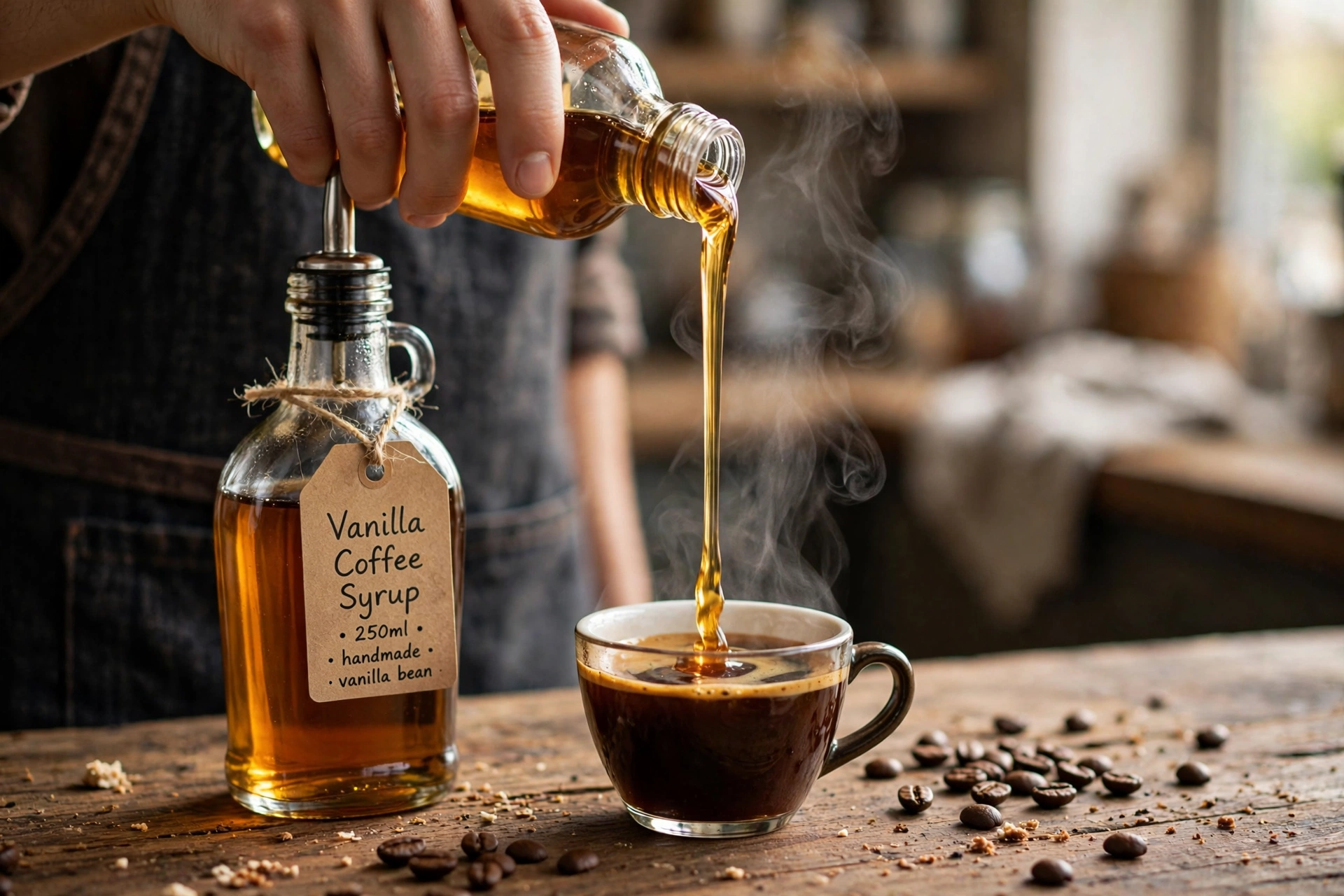
The Base Layer: Dispense the chosen syrup directly into the serving vessel. For those using caramel syrup for lattes, this is the moment to ensure the syrup is centered at the bottom of the cup to facilitate a better mix with the espresso.
-
The Extraction Phase: Pull your espresso shot directly onto the syrup. The thermal energy of the espresso (typically between 190°F and 205°F) is essential to break the surface tension of the syrup, allowing it to integrate fully. This prevents the "syrup sludge" effect where the bottom of the drink is overwhelmingly sweet while the top is bitter.
-
Agitation: Use a stir stick or a quick swirl of the cup to ensure the espresso and syrup are fully emulsified before adding milk. This step is often skipped in fast-paced environments, but it is the difference between a professional beverage and a home-made one.
-
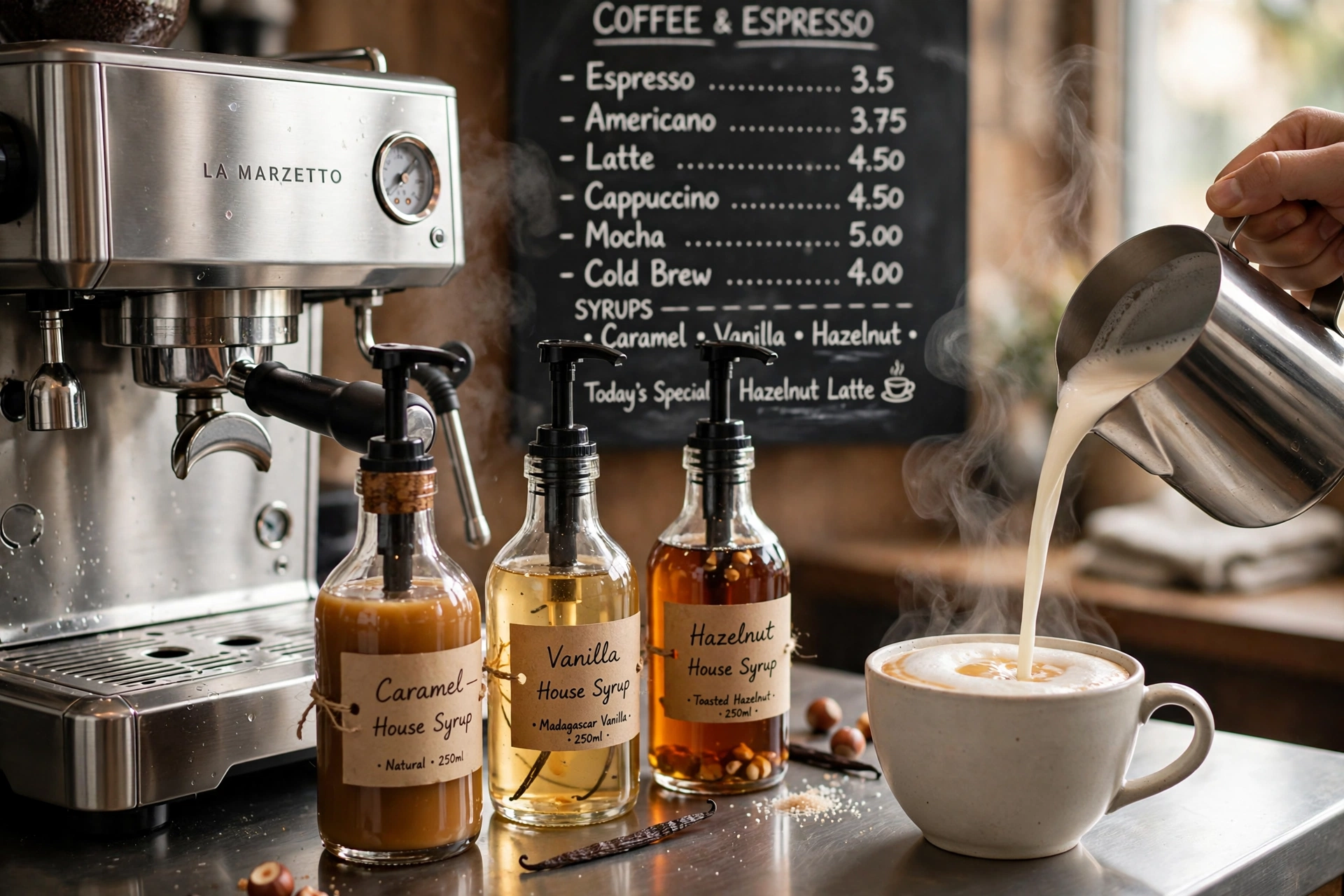
Milk Integration: Steam your milk to the required temperature and pour it over the espresso-syrup mixture. The pouring technique (latte art) helps further integrate the layers through natural turbulence.
For businesses looking to automate this process, transitioning to automatic coffee machines for hotels can reduce the manual labor involved. Some high-end machines now feature integrated syrup dispensers that dose the liquid with milligram precision, ensuring that every cup is identical regardless of who is operating the machine.
💡
Key Takeaway
The order of operations—Syrup $ o$ Espresso $ o$ Milk—is the only way to ensure a thermally stable and flavor-consistent beverage in a commercial setting.
Syrups Integration: Manual vs. Automated vs. Professional Systems
When deciding how to handle syrups coffee machines, you must choose a delivery method that matches your volume and skill level. Many businesses start with basic bottles and pumps, but as they scale, the friction of manual dosing becomes a bottleneck.
| Feature | Traditional Manual Pumps | Generic Automated Dispensers | Busy Bean Professional Integration |
|---|---|---|---|
| Dosing Accuracy | Low (Human Error) | Medium (Calibration Drifts) | High (Precision Calibrated) |
| Speed of Service | Slow (Manual Pumping) | Fast (Button Press) | Optimized (Workflow Engineered) |
| Equipment Risk | High (Sticky Spills) | Medium (Leakage) | Low (Zoned Layout) |
| Flavor Consistency | Variable | Consistent | Master-Grade (SCA Standard) |
| Waste Level | 10-15% Over-pour | 5-8% Leakage | <2% Precision Dosing |
As shown in the table, the traditional approach is plagued by inconsistency. A barista in a rush might over-pump, wasting expensive product and ruining the flavor balance. Generic automated systems are faster but often lack the precision needed for specialty coffee, sometimes delivering a "chemical" taste if the pumps are not food-grade stainless steel. The Busy Bean approach focuses on "Workflow Engineering," where the equipment layout is designed to minimize movement and maximize the purity of the coffee bean.
In my experience, the most successful operations in regions like Sensa Coffee Service in Charlotte, NC utilize a hybrid model: manual precision pumps for signature drinks and automated systems for high-volume staples. This allows the barista to maintain the craft of a barista while the machine handles the bulk of the labor.

Common Mistakes to Avoid When Using Syrups with Machines
One of the most damaging mistakes I've encountered is adding syrup to the milk before steaming. While some believe this "infuses" the flavor, the high sugar content of the syrup actually interferes with the proteins in the milk. This prevents the formation of stable micro-foam, resulting in a beverage with large, soapy bubbles rather than the creamy, velvet texture required for a professional latte. This is a direct violation of the sensory standards outlined by the Specialty Coffee Association (SCA).
Another critical error is the failure to purge the steam wand after making a flavored beverage. If a barista uses a syrup-infused milk pitcher and does not properly clean the wand, sugar residue can bake onto the element. Over time, this creates a carbonized layer that restricts steam flow and can eventually lead to mechanical failure of the boiler. According to NSF International, maintaining the sanitary integrity of food-contact surfaces is paramount to preventing bacterial growth and equipment degradation.
Avoid the temptation to use "budget" syrups with high-fructose corn syrup in high-end specialty machines. These syrups have a different viscosity and boiling point than premium sucrose-based syrups. I've seen cheap syrups create a "filming" effect on the surface of the espresso, which prevents the crema from forming correctly. This destroys the aromatic experience of the coffee bean and makes the drink feel syrupy rather than creamy.
Finally, avoid placing syrup bottles directly under the espresso machine's drip tray. The condensation and heat from the machine can cause the syrup to separate or spoil faster. Instead, create a dedicated "dry zone" for your flavors. This is a strategy we implement across all our foodservice coffee programs in Rock Hill SC to ensure maximum hygiene and efficiency.
Best Practices for Maximum Machine Longevity and Flavor
To keep your specialty coffee machines running at peak performance while utilizing flavors, you must adopt a clinical approach to maintenance. Sugar is the enemy of the espresso machine. When sugar is heated, it caramelizes; when it is cooled, it hardens. If syrup enters the group head, it creates a sticky residue that traps coffee fines, leading to uneven extraction (channeling) and bitter coffee.
Pro Tip: The "Double-Flush" Method
Whenever you transition from a flavored beverage to a standard black coffee, perform a double-flush of the group head. Run the pump for 3 seconds without the portafilter to clear any airborne syrup particles or residual oils. This ensures that the next customer's specialty coffee isn't tainted by the previous order's caramel or vanilla.
Another best practice is to rotate your syrup inventory based on the International Coffee Organization (ICO) trends. In 2026, we are seeing a shift toward botanical and less-sweet profiles. By updating your flavor integration to match these trends, you can reduce the amount of syrup used per cup, which not only improves the flavor of the Coffea arabica but also reduces the sugar load on your equipment.
For those operating in larger venues, such as those utilizing Sensa Coffee Service in Raleigh NC, I recommend a weekly "deep clean" of all pump nozzles. Use a food-safe citric acid solution to dissolve any crystallized sugar. This prevents the pumps from sticking and ensures that the dose remains precise to the milliliter.
💡
Key Takeaway
Equipment longevity is directly proportional to the strictness of your cleaning protocol. Sugar-based additives require 2x the cleaning frequency of standard coffee service.
Frequently Asked Questions
Does adding syrup affect the espresso machine's pressure?
No, adding syrup to the cup does not affect the machine's internal pump pressure. However, if syrup accidentally enters the group head or the portafilter basket, it can create a sticky barrier that disrupts the water flow. This leads to uneven extraction and inconsistent pressure readings on your gauge, which can result in an over-extracted, bitter shot. Always keep syrups physically separate from the extraction area.
Can I use syrups inside a super-automatic machine's hopper?
Absolutely not. You should never put syrups, oils, or any non-coffee additives into the bean hopper of an automated machine. The grinders are designed exclusively for dry coffee beans. Introducing liquids into the grinder will cause the burrs to seize, lead to mold growth within the mechanism, and likely void your manufacturer's warranty. Syrups should always be added to the cup or through a dedicated external dispensing system.
Which is better: adding syrup before or after the espresso?
Always add the syrup before the espresso. The intense heat of the freshly extracted shot (which is the hottest part of the drink) is the most effective way to dissolve the syrup and create a homogenous blend. If you add syrup after the espresso has already begun to cool or after the milk has been added, the syrup will often sink to the bottom, leading to a drink that is bland at the top and cloyingly sweet at the bottom.
How do I prevent syrup from clogging my steam wand?
The best way to prevent clogging is to never put syrup directly into the milk before steaming. Instead, steam the milk plain and add the syrup to the espresso base in the cup. If you must flavor the milk, use a specialized syrup-injection system that is NSF-certified. Regardless of the method, always purge your steam wand for 2 seconds before and after every use to clear any residue from the internal nozzles.
Do different syrups require different machine settings?
While the syrup doesn't change the machine's settings, it should change your temperature targets. Because syrups are dense and can cool the espresso quickly, you may want to slightly increase your milk steaming temperature (by 2-3 degrees) to ensure the final beverage remains hot throughout the consumption period. This is especially true for heavy, viscous syrups like chocolate or thick caramel, which absorb more thermal energy than thin, clear syrups.
Conclusion
Integrating syrups coffee machines is a balancing act between culinary creativity and mechanical precision. When you treat your syrups as a technical component of your coffee program—rather than just a topping—you unlock higher margins, faster service, and a superior product. By following the a strict sequence of syrup-espresso-milk and maintaining a rigorous cleaning schedule, you protect your investment in specialty equipment while delighting your customers in Mount Pleasant and beyond.
Whether you are managing a boutique hotel or a high-traffic cafe, the goal remains the same: the coffee bean should always be the star, and the syrup should be the supporting actor. If you are struggling with inconsistent dosing or equipment failures, it may be time to audit your workflow. For more professional insights on scaling your beverage program, visit our Ultimate Guide to Coffee Syrups for Foodservice Businesses.
Ready to elevate your coffee service with precision equipment and expert management? Visit Busy Bean Coffee to discover our all-inclusive managed coffee solutions.
Free Coffee Pairing Guide & Specialty Roast Cheat Sheet
Unlock the secrets of perfect brewing ratios, water temperatures, and specialty roast profiles. Download the guide.