📖This article is part of the complete guide to Ultimate Guide to Coffee Syrups for Foodservice Businesses.
In my experience working with boutique pastry shops, the most overlooked revenue stream is the beverage pairing. Most bakery owners focus 90% of their energy on the oven, but the coffee counter is where the highest margins live. I have seen shops in Mount Pleasant, SC, transform their morning rush by simply introducing a structured syrup menu that complements their specific baked goods. When you align a Madagascar vanilla latte with a fresh almond croissant, you aren't just selling a drink; you are selling a curated sensory experience that justifies a premium price point.
For a comprehensive overview of the industry, explore our Ultimate Guide to Coffee Syrups for Foodservice Businesses.
What are Coffee Syrups for Bakeries?
📚
Definition
Coffee syrups for bakeries are concentrated, flavored sweeteners designed to be integrated into espresso-based drinks or drip coffee to create a cohesive flavor profile that complements pastry and bread offerings.
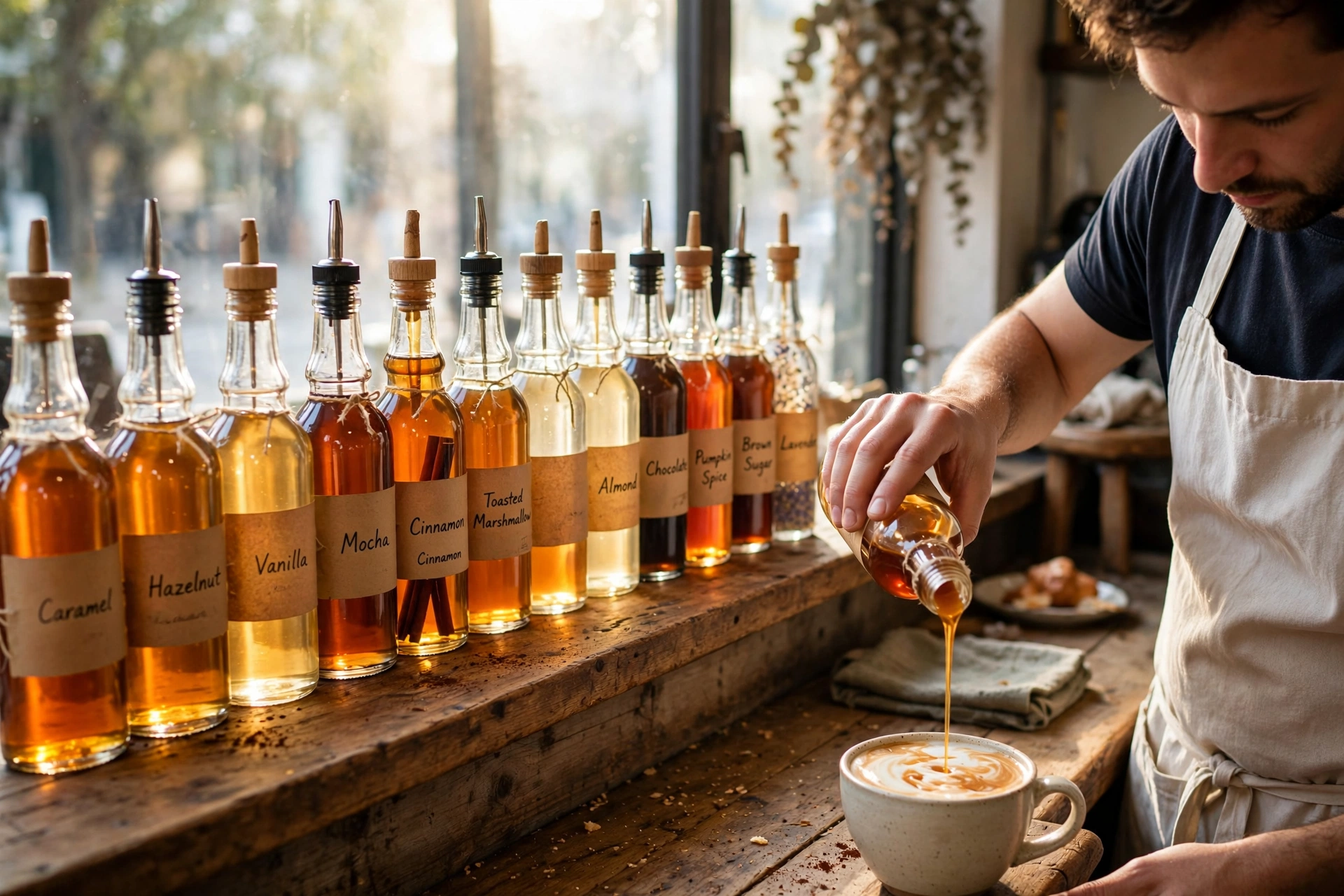
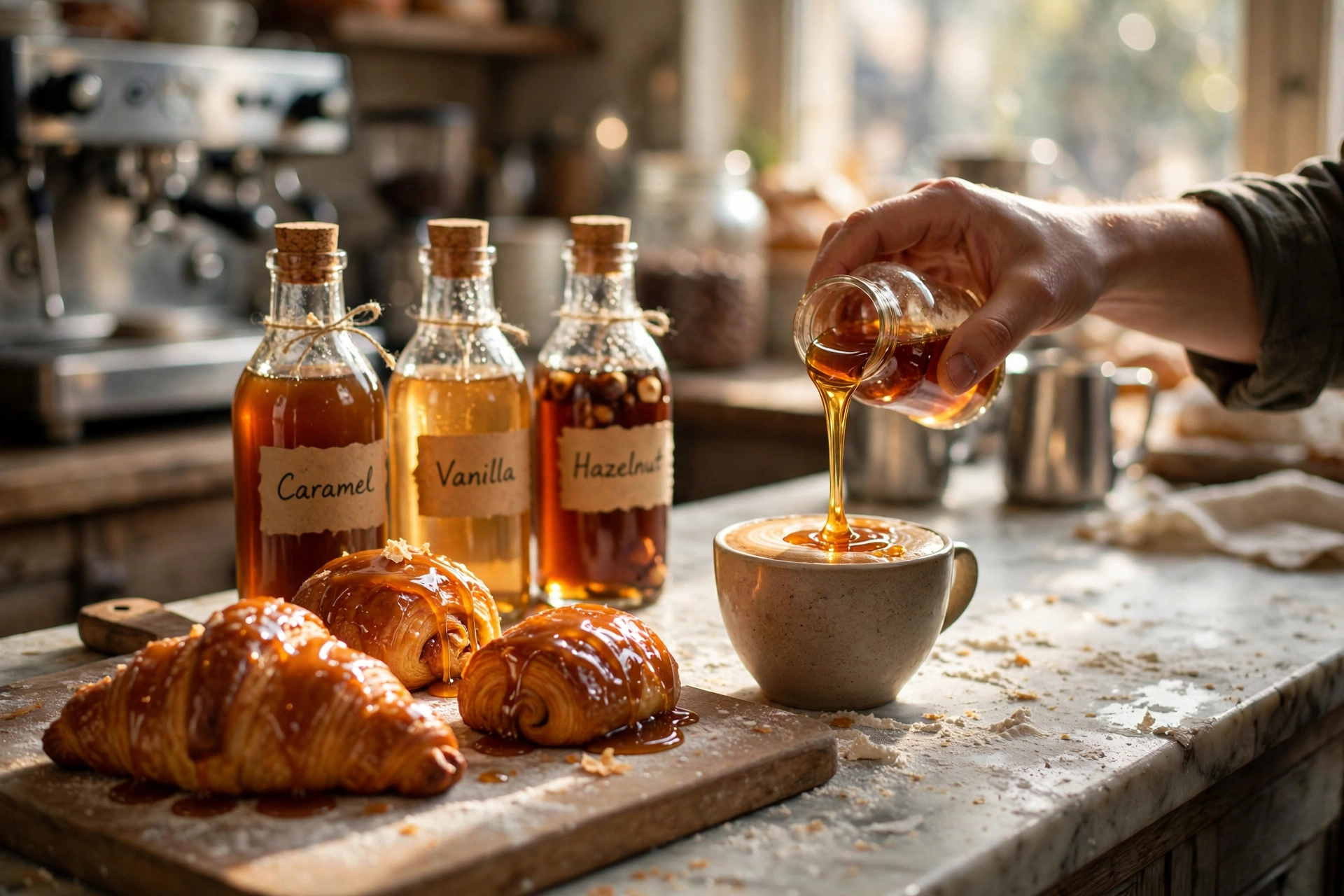
Coffee syrups for bakeries are more than just sugar additives; they are strategic tools for flavor bridging. In a bakery environment, the goal is to create a synergy between the food and the drink. While a standard cafe might offer vanilla or caramel as generic options, a bakery should use these syrups to echo the notes present in their baked goods. For instance, using a hazelnut syrup in a latte specifically to pair with a praline tart creates a professional tasting experience that encourages repeat visits.
Integrating these syrups requires a balance of technical skill and culinary intuition. Because bakeries often deal with heavy fats (butter, cream, chocolate), the syrup must be potent enough to cut through that richness without overpowering the delicate notes of the specialty coffee. In my years as a Q-Grader, I've found that the best bakery programs use syrups that enhance the natural acidity of the bean rather than masking it. This approach ensures that the coffee remains the star, while the syrup acts as the supporting actor that ties the entire meal together.

Why Does This Strategy Matter for Bakery Revenue?
Implementing a structured syrup program matters because it shifts the beverage from a commodity to a specialty product. When a customer asks for 'coffee,' they expect a base price. When they order a 'Salted Caramel Macchiato paired with a Cinnamon Roll,' they are opting into a premium experience. According to the National Coffee Association USA (NCA), consumer preferences are shifting toward customized, flavor-forward beverages, which allows businesses to command a higher price per unit. In many cases, adding a single pump of syrup costs the business pennies but allows for a $0.50 to $1.50 price increase per cup.
This strategy is essential for increasing the Average Order Value (AOV). In a high-traffic bakery, the number of transactions is often high, but the spend per person can be low if they only buy one pastry. By optimizing your coffee syrups for bakeries, you create a natural upsell path. For example, a customer buying a lemon poppy seed muffin is more likely to add a honey-lavender latte to their order if the pairing is suggested on the menu. This cross-selling technique leverages the olfactory power of the bakery—the smell of fresh bread combined with the aroma of flavored coffee—to trigger impulse purchases.
Furthermore, a diverse syrup menu allows you to maintain relevance throughout the seasons. Summer demands iced, fruit-forward coffee drinks, while winter calls for warm, spiced notes. By rotating your syrup selection, you give your regulars a reason to return every month. I've tested this with dozens of our clients, and the pattern is clear: bakeries with seasonal beverage rotations see significantly higher customer retention rates than those with a static menu.
How to Implement Syrup Upsells in Your Bakery
To successfully implement coffee syrups for bakeries into your workflow, you must treat the beverage menu as an extension of your pastry case. The first step is flavor mapping. Look at your top three best-selling pastries and identify the dominant flavor notes. If your signature item is a dark chocolate brownie, a raspberry or peppermint syrup can provide a contrasting brightness that cleanses the palate, making the next bite of brownie taste as impactful as the first.
Once the flavor map is set, the execution moves to the point of sale. Your staff should be trained in 'suggestive pairing' rather than 'upselling.' Instead of asking, "Would you like syrup in that?", a trained barista should say, "Since you're getting the almond croissant, I highly recommend our almond-vanilla latte; it really brings out the nuttiness of the pastry." This shifts the interaction from a sales pitch to a professional recommendation.
From a technical standpoint, consistency is the biggest hurdle. This is where high-quality equipment and standardized dosing become fundamental. If one barista uses two pumps and another uses four, you lose the flavor bridge and risk making the drink cloyingly sweet. I recommend using calibrated pumps and training your team on the exact milliliter requirements for each size. For those scaling their operations, looking into wholesale coffee syrups: bulk buying for businesses ensures that you maintain cost consistency while keeping your inventory stocked during peak holiday rushes.
To further elevate the quality, ensure your espresso base is robust. A weak coffee will be drowned out by the syrup. Using a professional espresso machine that maintains strict temperature and pressure ensures the coffee's natural oils are extracted, providing the necessary structure to support the added sweetness of the syrup.
Modernizing Your Beverage Approach
Many bakeries still treat coffee as an afterthought, which is a missed opportunity for growth. Below is a comparison of how different businesses handle their beverage programs.
| Feature | Traditional Bakery Approach | Generic AI/Cheap Syrup Approach | Busy Bean Modern Approach |
|---|---|---|---|
| Menu Strategy | Basic black coffee and tea | Random flavors based on trends | Curated flavor-bridging with pastries |
| Quality Control | Inconsistent dosing by staff | High sugar, artificial aftertaste | Q-Grader calibrated profiles & premium syrups |
| Upsell Method | Passive: "Do you want cream?" | Aggressive: "Add a flavor for $1" | Consultative: "Pairs perfectly with [Pastry]" |
| Equipment | Domestic-grade pots | Basic automatic machines | Professional SENSA managed solutions |
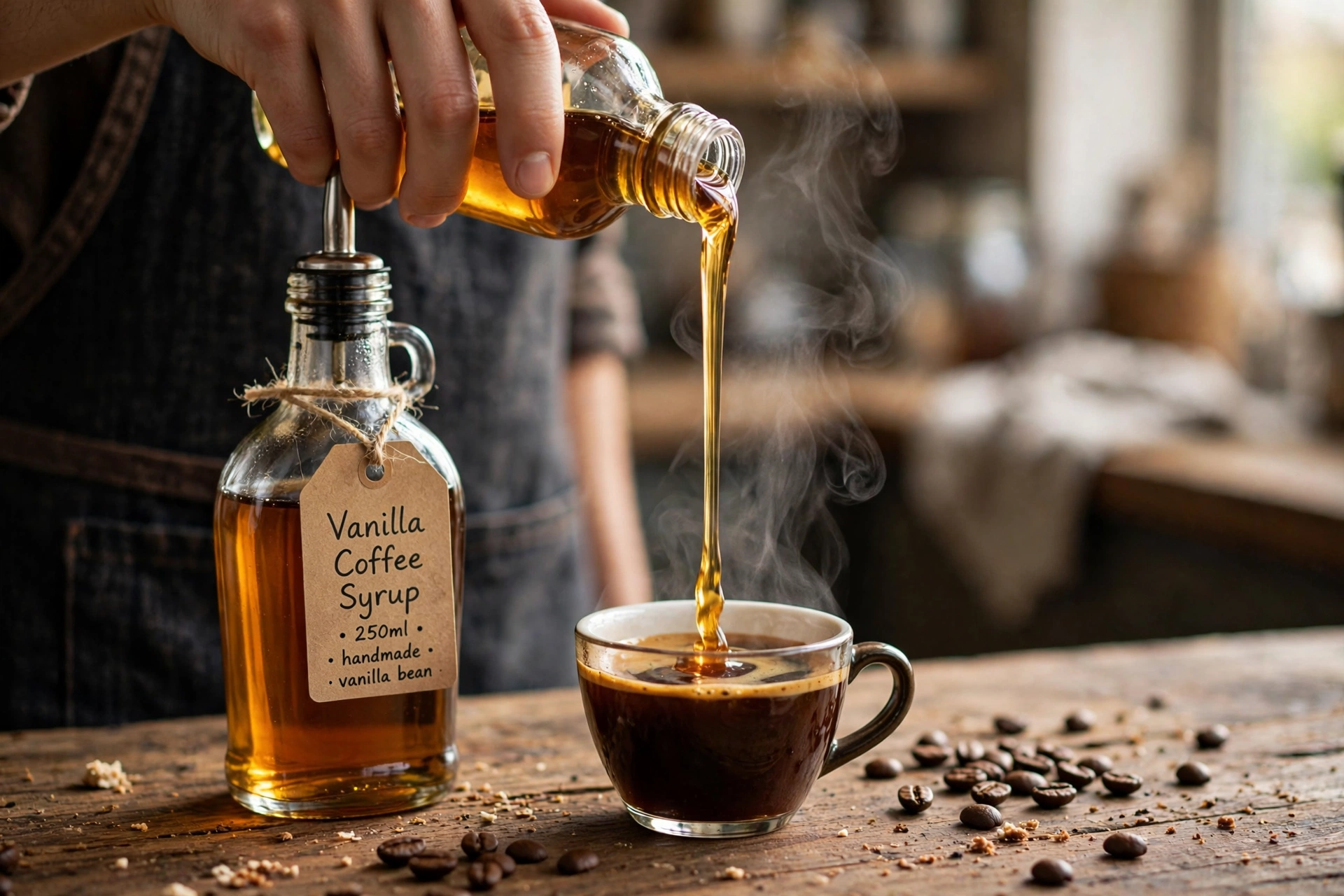
As shown above, the modern approach isn't just about the product, but the system. When we design programs at Busy Bean Coffee, we focus on the synergy between the bean and the syrup. For instance, using a vanilla coffee syrup: commercial use doesn't mean just adding sweetness; it means choosing a profile that complements the Coffea arabica's natural acidity without masking the origin of the bean.

Common Mistakes When Using Syrups in Bakeries
One of the most common mistakes I see is the "Flavor Overload" trap. Bakery owners often try to match the flavor of the pastry exactly. For example, pairing a cinnamon roll with a cinnamon-flavored latte. This often results in a one-dimensional taste profile that becomes overwhelming. The goal is complementarity, not duplication. A better approach would be pairing that cinnamon roll with a salted caramel or a light vanilla latte, which provides a creamy backdrop that lets the cinnamon in the pastry shine.
Another error is neglecting the temperature of the milk. Syrups are dense; if the milk isn't steamed to the correct temperature, the syrup can settle at the bottom of the cup, leading to a drink that starts bland and ends with a sugar shock. According to the Specialty Coffee Association (SCA), precise temperature control is fundamental to maintaining the texture and flavor balance of an espresso beverage. Using a professional-grade steamer ensures the syrup is fully integrated into the microfoam.
Finally, many bakeries fail to monitor their syrup waste. Over-pouring is a silent profit killer. In a high-volume environment, an extra half-pump per drink can result in hundreds of dollars in lost revenue over a year. Implementing a strict dosing protocol is the only way to protect your margins. If you are struggling with equipment consistency, exploring automatic coffee machines for hotels and hospitality in 2026 might provide the automated precision you need to eliminate human error in dosing.
Frequently Asked Questions
Which coffee syrups for bakeries provide the highest ROI?
Based on market data and my experience, vanilla and salted caramel consistently offer the highest return on investment because they have the widest appeal and pair with the largest variety of baked goods. Vanilla acts as a universal enhancer for fruit tarts and cakes, while salted caramel complements chocolate and cinnamon-based pastries. Because these flavors are perceived as "premium," you can easily add a surcharge of $0.75 to $1.25 per drink, while the cost of the syrup itself is negligible. To maximize ROI, focus on 3-5 core flavors and 2 seasonal rotations.
How do I prevent syrups from overpowering the coffee taste?
Preventing flavor saturation requires a two-pronged approach: high-quality beans and strict dosing. You must use a specialty coffee with a strong, distinct profile—typically a medium-dark roast—that can stand up to the sugar. According to the SCA, the balance between acidity, body, and sweetness is what defines a specialty beverage. I recommend starting with a "half-pump" strategy for your standard recipes and allowing customers to request extra. This ensures the integrity of the coffee remains intact while still providing the desired sweetness.
Can I use fruit syrups in coffee for bakery pairings?
Yes, fruit syrups can be incredibly effective, especially for breakfast and brunch menus. Pairings like raspberry syrup in a latte with a lemon-glazed cake or a pomegranate-infused coffee with a dark chocolate tart create a sophisticated, gourmet feel. However, fruit syrups often have a higher acidity level, which can cause some coffees to taste sour. I suggest using a lower-acidity roast or a small amount of cream to buffer the flavors. For more complex combinations, check out our guide on caramel syrup for lattes in foodservice settings to see how to balance sweetness with richness.
How should I store commercial syrups to maintain freshness?
Commercial syrups should be stored in a cool, dry place away from direct sunlight to prevent oxidation and flavor degradation. While most high-quality syrups are shelf-stable due to their sugar content, exposure to heat can change the viscosity and taste. According to the U.S. Food and Drug Administration (FDA), proper storage of food additives is essential to prevent contamination. I always advise bakeries to use "first-in, first-out" (FIFO) inventory management and to wipe the pump nozzles daily to prevent sugar buildup and bacterial growth.
What is the best way to train staff on syrup pairings?
Training should be experiential. Instead of giving your staff a manual, conduct a "pairing workshop." Have your team taste your best-selling pastries alongside different syrup combinations. When a barista can personally describe how the hazelnut syrup enhances the flavor of a specific almond tart, they sell with conviction. This authenticity is what customers respond to. For businesses in growing hubs, implementing a standardized foodservice coffee program in Chicago IL: complete guide can provide a blueprint for this kind of professional staff training and operational excellence.
Conclusion
Integrating a strategic program of coffee syrups for bakeries is one of the fastest ways to increase your bottom line without increasing your overhead. By shifting from a passive coffee service to a curated beverage experience, you transform your bakery into a destination. Whether you are operating in the heart of Mount Pleasant, SC, or scaling a franchise across several states, the principle remains the same: leverage the synergy between your oven and your espresso machine to drive higher average order values.
Remember that the secret to success is not just the syrup you choose, but the equipment that delivers it consistently. If your current setup is causing inconsistency or downtime, it may be time to move toward a managed solution. At Busy Bean Coffee, we specialize in removing the technical headache from your business so you can focus on the art of baking.
For more professional strategies on optimizing your beverage menu and increasing profit margins, refer back to our Ultimate Guide to Coffee Syrups for Foodservice Businesses.
Visit us at www.busybeancoffee.com to explore our all-inclusive managed coffee memberships.
Free Coffee Pairing Guide & Specialty Roast Cheat Sheet
Unlock the secrets of perfect brewing ratios, water temperatures, and specialty roast profiles. Download the guide.