📖This article is part of the complete guide to Ultimate Guide to Coffee Syrups for Foodservice Businesses.
In my experience working with high-volume cafes in Mount Pleasant, SC, the difference between a profitable beverage program and a failing one often comes down to a few milliliters of syrup. I have seen owners lose thousands of dollars annually simply because their staff was 'eyeballing' the pumps, leading to inconsistent flavor profiles and eroding profit margins. When you scale a drink recipe across ten thousand servings a year, a 10ml variance per cup becomes a significant financial leak.
For a comprehensive overview of selecting the right products, explore our Ultimate Guide to Coffee Syrups for Foodservice Businesses.
What Are Standard Coffee Syrup Ratios?
📚
Definition
Coffee syrup ratios refer to the precise volumetric proportion of flavored syrup relative to the volume of the coffee base (espresso or brew) and milk in a commercial beverage.
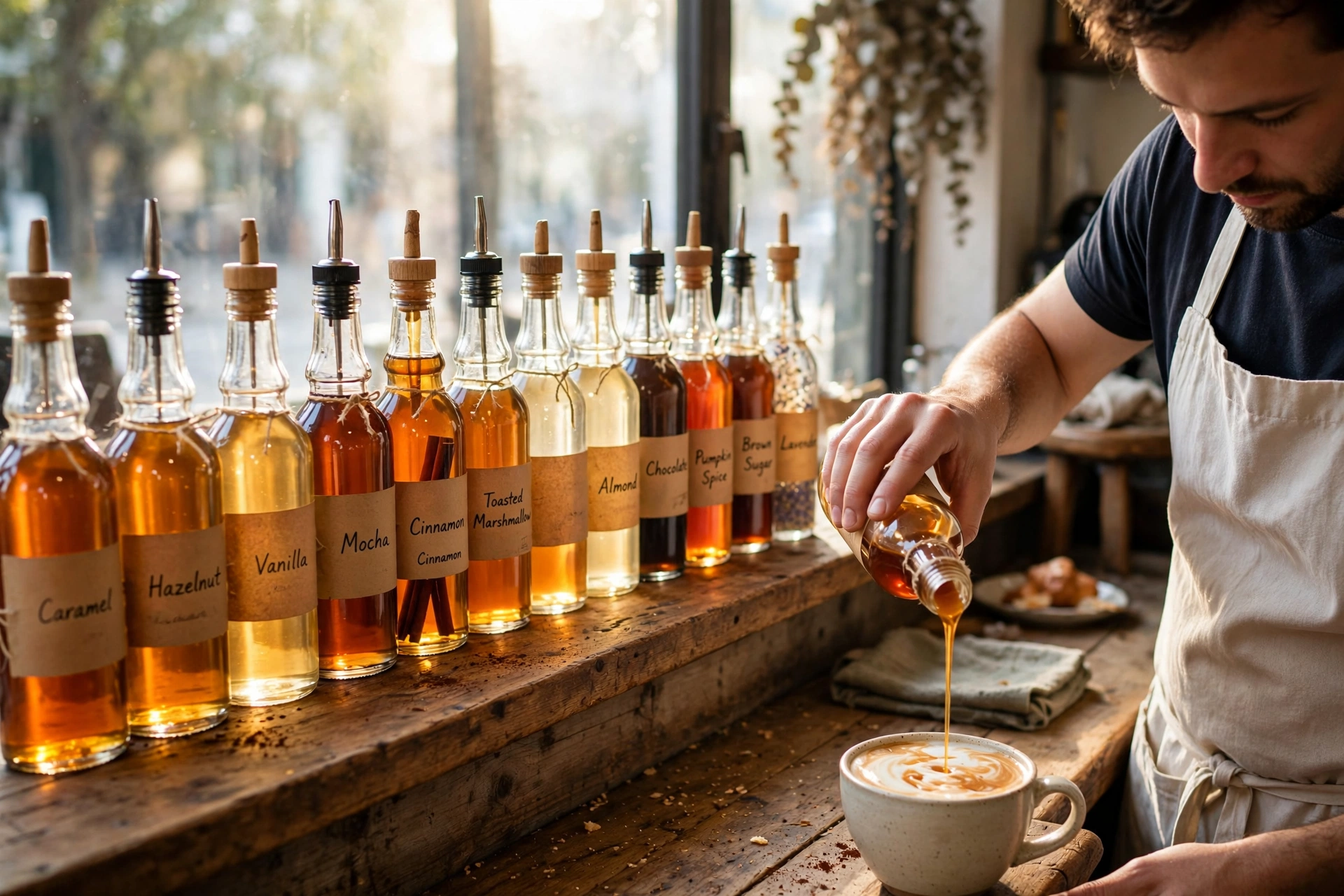
Coffee syrup ratios are the standardized measurements used to ensure that every drink served tastes identical, regardless of which barista is behind the machine. In a professional foodservice environment, the industry standard typically follows a 1:4 or 1:5 ratio of syrup to the total liquid volume for a medium-strength sweetness. This means for a 12oz latte, you are typically looking at 0.75 to 1.5 ounces of syrup, depending on the concentration of the product used.
Maintaining these ratios is not just about taste; it is about operational efficiency. When a business implements a strict ratio system, they can predict exactly how many bottles of syrup they will consume per 100 drinks. This allows for tighter inventory management and prevents the common problem of over-pouring, which is a primary cause of waste in the hospitality sector. In the world of specialty coffee, where the nuance of the Coffea arabica bean is paramount, the ratio must be calibrated so the syrup complements rather than masks the origin notes of the coffee.

Why Do Precise Ratios Matter for Your Business ROI?
Precision in coffee syrup ratios directly impacts your bottom line by controlling Cost of Goods Sold (COGS) and ensuring customer retention through consistency. When a customer visits your establishment in Mount Pleasant, SC, and orders a vanilla latte, they expect the exact same sweetness level they experienced last Tuesday. If the ratio fluctuates, the perceived quality of the brand drops, even if the coffee beans themselves are world-class.
According to the Specialty Coffee Association (SCA), technical precision in beverage preparation is a hallmark of specialty coffee service, ensuring that the chemical balance of the drink remains stable. From a financial perspective, using a calibrated pump system instead of free-pour bottles can reduce syrup waste by up to 15% per month. When you analyze the data across a full fiscal year, this represents a significant increase in net profit.
Furthermore, precise ratios allow you to accurately price your menu. If your recipe calls for 30ml of syrup but your staff is actually using 45ml, your actual cost per cup is higher than your theoretical cost. This discrepancy leads to "phantom losses" that are difficult to track without strict ratio enforcement. By utilizing wholesale coffee syrups: bulk buying for businesses, you reduce the unit cost, but that benefit is neutralized if the syrup is wasted through poor ratio management.
💡
Key Takeaway
Consistency in syrup ratios prevents "flavor drift," where drinks become progressively sweeter over time as staff lose track of measurements, leading to customer dissatisfaction and increased COGS.
How to Implement Perfect Syrup Ratios Step-by-Step
Implementing a ratio system requires a shift from "intuitive pouring" to "standardized production." The first step is to establish your baseline. I always recommend starting with a 1:4 ratio for standard lattes and adjusting based on the Brix level (sugar content) of your specific syrup brand.
- Calibrate Your Hardware: Ensure every pump on every bottle delivers the exact same volume. Use a graduated cylinder to verify that one full pump equals exactly 7.5ml or 15ml, depending on your equipment. If the pumps vary, your ratios will never be consistent.
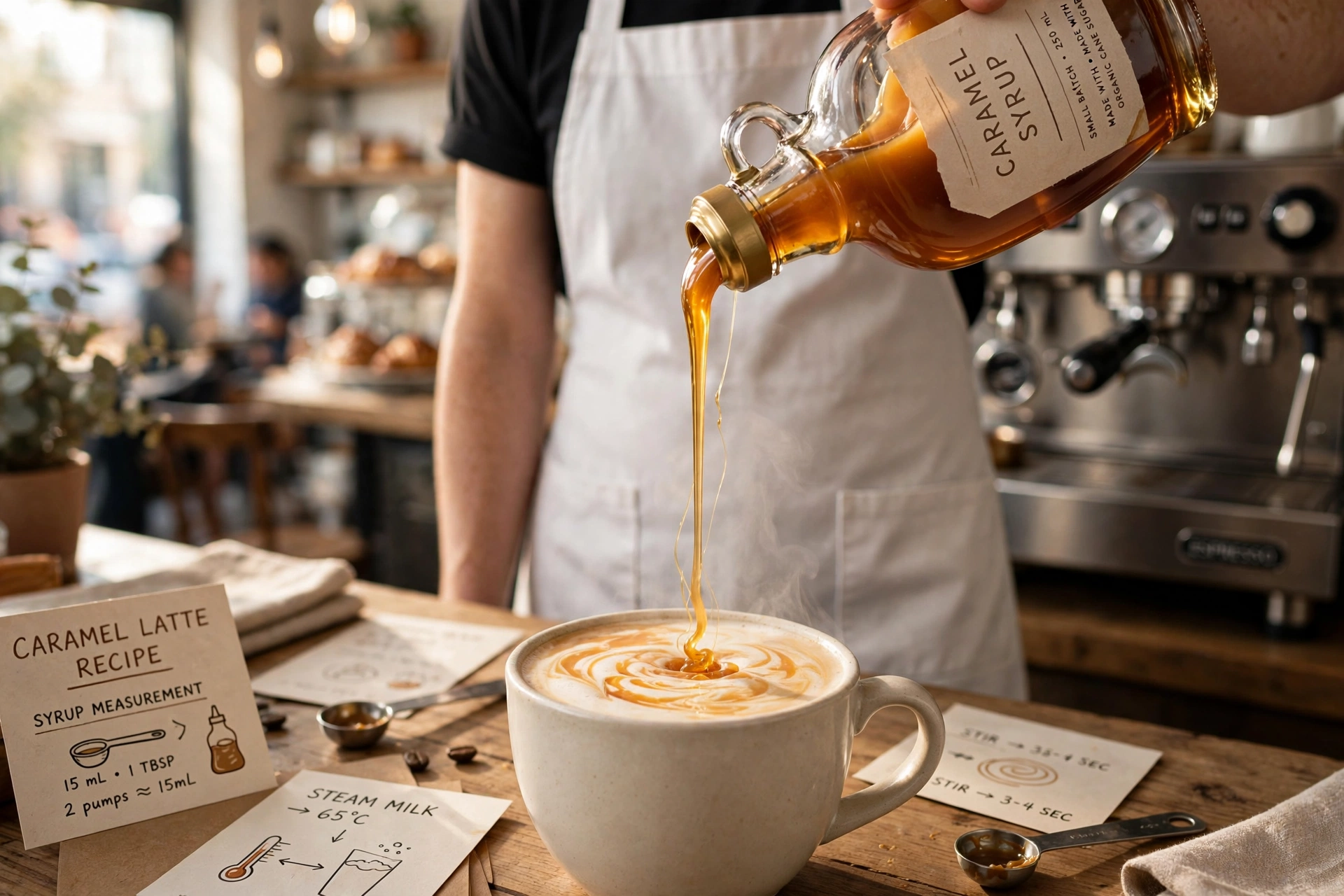
- Create a Ratio Matrix: Develop a chart for different drink sizes. For example, a 8oz small might require 1 pump (15ml), a 12oz medium 2 pumps (30ml), and a 16oz large 3 pumps (45ml). This keeps the ratio constant as the volume increases.
- Train the Team on "The Sequence": The order of operations matters. Syrup should always be added to the cup first, followed by the espresso shot. Stirring the syrup into the hot espresso ensures full integration before milk is added, preventing "syrup pooling" at the bottom of the cup.
- Audit the Output: Once a week, weigh a finished drink. If your target weight for a medium latte is 350g but you are consistently hitting 370g, it is a sign that the syrup or milk ratio is drifting.
For those integrating these recipes into larger operations, considering a Sensa Coffee Service in Mount Pleasant SC: Complete Guide can help streamline the equipment side of this precision. When the espresso machine is calibrated to deliver a consistent shot volume, the syrup ratio becomes much easier to manage because the base variable is controlled.
Coffee Syrup Ratios vs. Alternative Sweeteners
Many businesses struggle to choose between traditional syrups, sauces, and powders. Each requires a different ratio because their viscosity and sugar concentration differ significantly. Syrups are generally thinner and more fluid, while sauces (like chocolate or caramel) are denser and require more effort to incorporate into the espresso.
| Feature | Traditional Syrups | Dense Sauces | Powdered Mixes | Professional Managed Service |
|---|---|---|---|---|
| Mixing Speed | Fast/Instant | Slow (clumps) | Medium | Optimized/Automatic |
| Flavor Profile | Clean/Bright | Heavy/Rich | Muted/Artificial | Premium/Consistent |
| Waste Risk | High (pouring) | Medium (residue) | Low | Minimal |
| Ratio Control | Pump-dependent | Spoon-dependent | Scoop-dependent | System-calibrated |
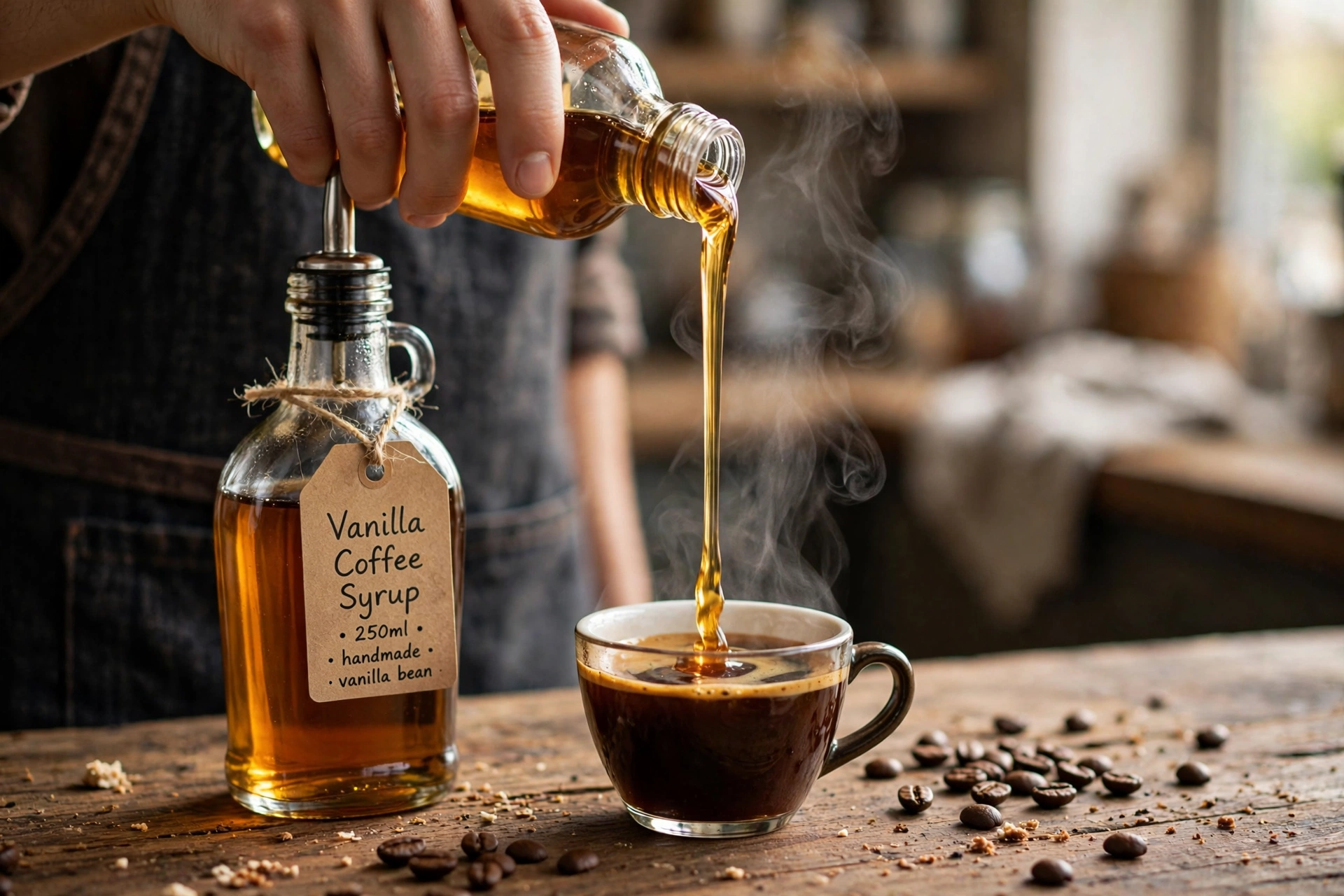
In my experience, switching from a powder-based system to a high-quality syrup improves the mouthfeel of the beverage and allows for more precise ratio control. Powdered mixers often require more volume to achieve the same sweetness, which can dilute the flavor of the specialty coffee. Using a vanilla coffee syrup: commercial use strategy allows you to maintain the integrity of the Arabica coffee while adding a controlled layer of sweetness.
Common Ratio Mistakes to Avoid
One of the most frequent errors I see is the "Size Jump Fallacy." This happens when a business increases the syrup amount linearly with the cup size, but fails to account for the fact that the amount of espresso does not always increase linearly. If you move from a 12oz to a 16oz drink but keep the same double shot of espresso, adding another pump of syrup can make the drink taste like candy rather than coffee. The syrup ratio must be balanced against the coffee strength, not just the total volume.
Another critical mistake is ignoring the temperature of the milk. If you are using a high-end espresso machine, the milk is textured to a specific temperature. If the syrup is added too late or not integrated, the heat of the milk can actually alter the perceived sweetness of the syrup. This is why the "syrup first" rule is non-negotiable in professional settings.
Avoid the temptation to offer "extra syrup" for free. While it seems like a small gesture, it completely destroys your ratio data and your margins. If a customer wants more sweetness, charge for a "flavor shot." This not only protects your profit but also alerts the barista to deviate from the standard ratio intentionally rather than accidentally.

Implementation Guide for Scale
When you are scaling these recipes across multiple locations, such as different sites in Mount Pleasant or surrounding areas, you need a Digital Recipe Book. Stop using handwritten notes taped to the wall. Use a cloud-based system where every barista can access the exact gram-weight for every syrup ratio.
For a high-volume environment, I recommend the following precision workflow:
- Weight-Based Dosing: Instead of pumps, use a digital scale to dose syrup into the cup. While slower, this is the only way to achieve 100% accuracy. This is often how the most elite baristas handle caramel syrup lattes in foodservice settings to ensure the caramel doesn't overpower the roast.
- Pre-Mixed Batches: For extremely high volume (like hotel breakfast rushes), some businesses pre-mix their syrup and milk. However, I caution against this as it reduces the freshness of the milk foam. Instead, use automated dispensers that are calibrated to the milliliter.
- Seasonal Adjustments: Remember that temperature affects viscosity. In the humid summers of South Carolina, syrups can behave differently than in the winter. Periodically re-verify your pump calibrations to ensure a 15ml pump is still delivering 15ml.
If you are managing a hotel environment, the ratios change slightly. Guests often prefer a slightly sweeter profile for "comfort" drinks. When choosing coffee syrups to elevate hotel guest experiences, you may want to increase the ratio by 10% to cater to a broader, less specialized palate while still maintaining a baseline of quality.
Frequently Asked Questions
What is the ideal syrup to coffee ratio for a standard latte?
For a standard 12oz latte, the ideal ratio is typically 30ml (2 pumps) of syrup to 60ml (2 shots) of espresso. This creates a balanced profile where the sweetness enhances the coffee without drowning the flavor of the beans. If you are using a very strong roast, you can increase the syrup slightly; if using a light roast specialty coffee, reduce it to 15-20ml to avoid masking the delicate floral notes.
How do I calculate the cost per pump of syrup?
To calculate this, take the total cost of the syrup bottle and divide it by the total volume in milliliters. Then, multiply that number by the volume of a single pump. For example, if a 750ml bottle costs $12.00, the cost per ml is $0.016. If your pump delivers 15ml, your cost per pump is $0.24. Knowing this number is essential for setting your menu prices and understanding how ratio drift affects your monthly profit.
Does the type of coffee bean affect the syrup ratio?
Yes, significantly. High-acidity coffees, such as those from Ethiopia or Kenya, often require a lower syrup ratio because the sweetness of the syrup can clash with the bright acidity of the bean. Conversely, chocolatey, low-acidity beans from Brazil or Colombia pair beautifully with higher ratios of caramel or vanilla, as the flavors complement each other. Always taste-test your ratios whenever you change your coffee roast profile.
Why does my syrup settle at the bottom of the cup?
Syrup pooling happens when the syrup is added after the milk or is not properly integrated with the espresso. Because syrup is denser than coffee and milk, it will sink. To prevent this, always add the syrup to the empty cup first, pull the espresso shot directly onto the syrup, and stir vigorously with a bar spoon before steaming and adding milk. This creates a homogenous mixture throughout the drink.
How often should I calibrate my syrup pumps?
I recommend a full calibration check every 30 days. Over time, the internal springs of the pumps can wear down, or sugar buildup can partially clog the nozzle, leading to inconsistent dosages. A simple test involves pumping 10 times into a graduated cylinder and dividing the total volume by 10. If the average is off by more than 5%, it is time to replace the pump or deep-clean the equipment.
Conclusion
Mastering coffee syrup ratios is the bridge between running a "hobby cafe" and operating a professional, scalable beverage business. By moving away from guesswork and embracing the precision of calibrated pumps, ratio matrices, and strict training, you protect your margins and guarantee that every customer receives a premium experience. Whether you are serving a morning rush in Mount Pleasant, SC, or managing a multi-unit hotel chain, the math remains the same: precision equals profit.
If you want to move beyond manual measurements and eliminate the risk of human error, the most effective path is to implement a managed solution. For a deep dive into the equipment and products that make this precision possible, return to our Ultimate Guide to Coffee Syrups for Foodservice Businesses and discover how to optimize your entire program.
For those seeking a truly seamless experience with premium equipment and managed services, visit Busy Bean Coffee to explore our all-inclusive memberships.
Free Coffee Pairing Guide & Specialty Roast Cheat Sheet
Unlock the secrets of perfect brewing ratios, water temperatures, and specialty roast profiles. Download the guide.