📖This article is part of the complete guide to Ultimate Guide to Coffee Syrups for Foodservice Businesses.
In my experience working with high-volume cafes in Mount Pleasant, South Carolina, I have seen a recurring tragedy: a brand new shipment of premium syrups becoming a sticky, contaminated mess within three weeks because of poor storage. When a barista reaches for a bottle and finds a crystallized cap or a strange aftertaste, it isn't just a waste of product; it is a direct hit to your profit margin and a risk to food safety. Proper storing coffee syrups is not about following a suggestion; it is about maintaining the chemical integrity of your ingredients to ensure every latte tastes identical to the first one of the day.
For a comprehensive overview of how to integrate these products into your operation, explore our Ultimate Guide to Coffee Syrups for Foodservice Businesses.
What is the Correct Method for Storing Coffee Syrups?
📚
Definition
Storing coffee syrups refers to the systematic management of flavored liquid additives in a commercial environment, focusing on temperature control, light exposure, and contamination prevention to maintain shelf stability.
Correct storing coffee syrups in a commercial setting involves keeping bottles in a cool, dry place, away from direct sunlight and heat sources, and ensuring they are sealed airtight after every use. While many believe that all syrups must be refrigerated, the reality is that most commercial syrups are formulated with high sugar concentrations or preservatives that act as natural stabilizers. However, once a seal is broken, the environment of a busy kitchen—characterized by fluctuating temperatures and airborne particles—can introduce contaminants that accelerate spoilage.
To maintain the quality of your specialty coffee program, syrups should be stored at a consistent room temperature, typically between 60°F and 75°F. Placing them directly next to an espresso machine or a steamer is a critical error, as the localized heat can cause the sugars to break down or the flavors to oxidize. When we designed the workflow for several clients using Sensa Coffee Service in Mount Pleasant SC: Complete Guide, we insisted on a dedicated "syrup station" located at least three feet away from any active heating element to preserve the flavor profile of the Coffea arabica blends they serve.

Why Proper Syrup Storage Matters for Your Business Bottom Line?
Improper storing coffee syrups leads to two primary issues: flavor degradation and food safety risks. When syrups are exposed to heat, the volatile aromatic compounds that make a vanilla or hazelnut syrup appealing begin to evaporate. This results in a "flat" taste, forcing baristas to use more product to achieve the same flavor intensity, which increases your cost per cup. According to the Specialty Coffee Association (SCA), precision in ingredient management is the difference between a specialty coffee experience and a generic one.
Beyond flavor, the risk of contamination is significant. In a fast-paced environment, syrup pumps can become breeding grounds for bacteria if the bottles are stored in areas with high humidity or near open food prep zones. If you are scaling your operation, you might be looking into Wholesale Coffee Syrups: Bulk Buying for Businesses, but buying in bulk only makes sense if your storage infrastructure can handle the volume without compromising quality. A single contaminated batch can lead to a health code violation or, worse, a customer illness.
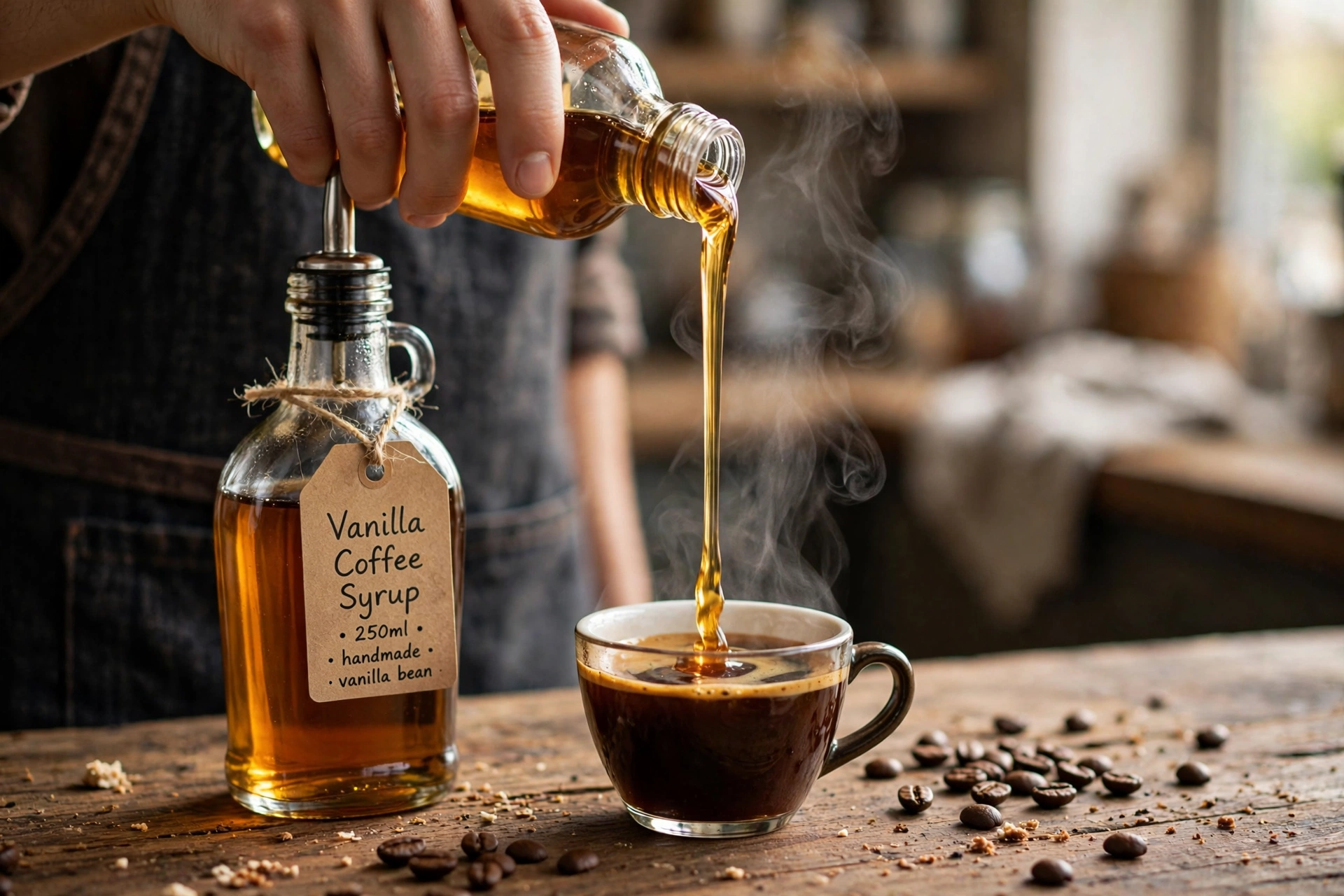
Furthermore, the financial impact of waste is measurable. In a typical 2026 foodservice operation, an improperly stored syrup bottle can lose up to 15% of its usable volume due to crystallization around the nozzle or spoilage. When multiplied by 20 different flavors across multiple locations, this represents a substantial leak in your monthly budget. By implementing a strict First-In, First-Out (FIFO) system and controlling the environment, you ensure that the Vanilla Coffee Syrup: Enhancing Commercial Coffee Programs you invest in actually reaches the customer's cup.
How to Implement a Commercial Syrup Storage System Step-by-Step
Implementing a professional system for storing coffee syrups requires a transition from "shelf space" to "managed inventory." The goal is to minimize the time the product is exposed to the air and maximize the stability of the liquid.
- Establish a Cool Zone: Designate a storage area that is shielded from sunlight. UV rays can bleach the color of syrups and alter the chemical composition of the flavorings. If your kitchen has large windows, use opaque shelving or keep the syrups in a pantry area.
- Implement the FIFO Method: Always place the newest shipment behind the existing stock. Label every bottle with the date it was opened. This ensures that you are not using a bottle that has been open for six months while a fresh one sits untouched.
- Standardize Pump Hygiene: The pump is the primary point of failure. I have found that the most successful cafes implement a weekly "pump purge," where pumps are removed, soaked in warm soapy water, and air-dried. This prevents the buildup of sugary residue that can harbor mold.
- Control Temperature Flux: Avoid storing syrups under counters where refrigeration units vent heat. The heat exhausted by a fridge can raise the temperature of a nearby syrup bottle to over 90°F, which is a catalyst for spoilage.
For those integrating high-end equipment, ensuring your Automatic Coffee Machines for Hotels and Hospitality in 2026 are positioned away from your syrup storage is essential to prevent the heat of the machine from affecting your ingredients. If you are managing a larger facility, such as those utilizing Sensa Coffee Service in Charleston SC: Complete Guide | Busy Bean Coffee, you should consider dedicated syrup chillers for highly perishable house-made alternatives.
Storing Syrups: Traditional vs. Modern Approaches
Many businesses still rely on outdated methods that jeopardize their quality. Below is a comparison of how storing coffee syrups has evolved.
| Feature | Traditional Approach | Generic/Cheap Approach | Busy Bean Modern Approach |
|---|---|---|---|
| Location | Under the counter / Near heat | Random shelves / Sun-exposed | Dedicated Cool Zone / UV Protected |
| Rotation | "Use what's in front" | None (Random access) | Strict FIFO with Date Labeling |
| Hygiene | Wipe the cap occasionally | Never clean the pump | Weekly Deep-Clean Pump Protocol |
| Monitoring | Visual check only | No monitoring | Temperature & Expiry Tracking |
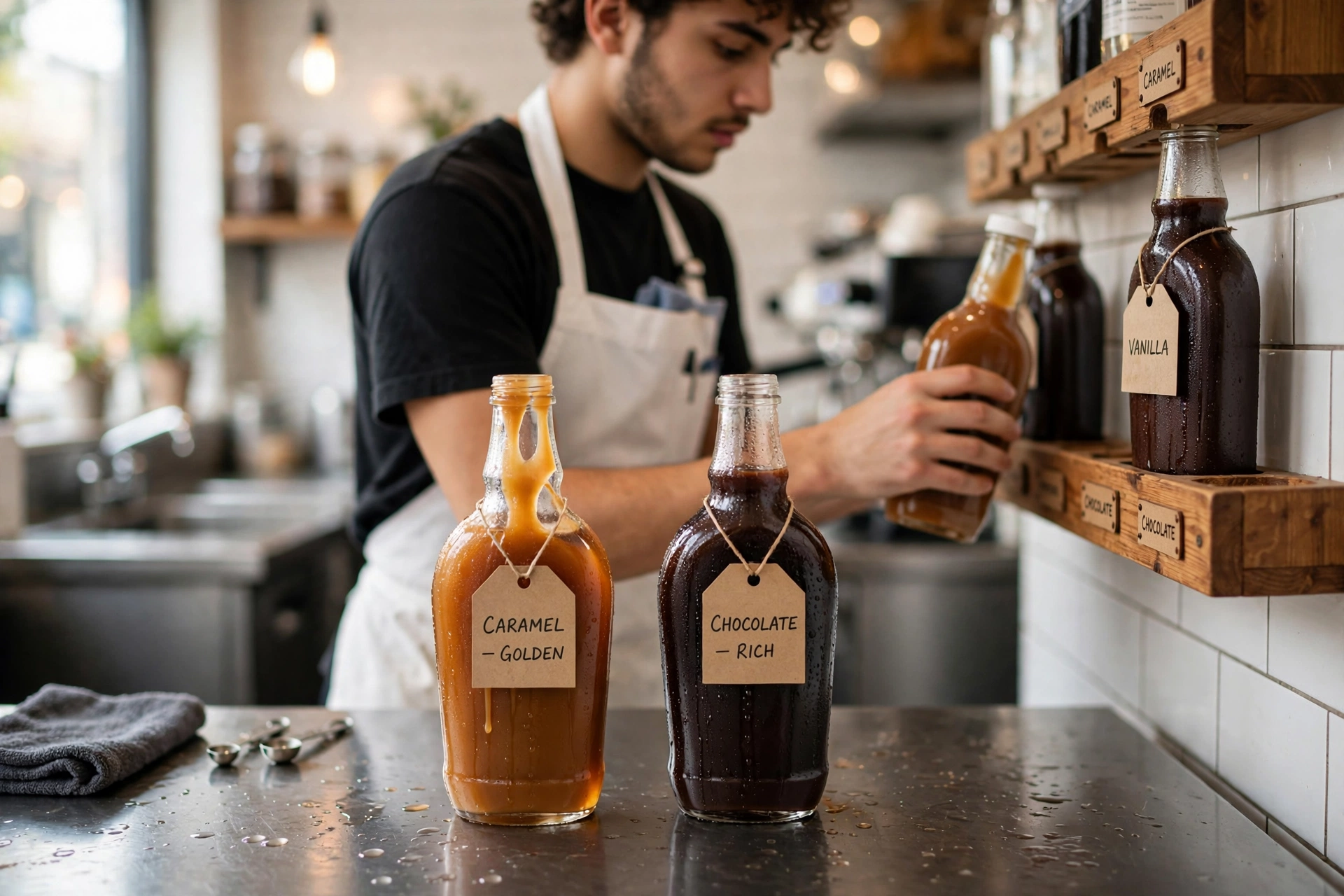
As seen in the table, the professional approach focuses on the science of preservation. For example, if you are using Caramel Syrup for Lattes in Foodservice Settings, the high viscosity of caramel makes it even more prone to clogging and crystallization if the storage temperature drops too low or spikes too high.

Best Practices for Long-Term Syrup Maintenance
To ensure your coffee service remains top-tier, follow these advanced maintenance tips. These are the strategies I've tested with dozens of our clients, and the pattern of success is clear: consistency beats intensity.
- Avoid the Fridge Myth: Unless the label explicitly states "Refrigerate After Opening," do not put your commercial syrups in the fridge. Cold temperatures cause the sugar to crystallize, which can jam your pumps and alter the flow rate, meaning your drinks will be inconsistent.
- Seal the Gap: If you are using open-pour bottles instead of pumps, ensure the cap is tightened immediately. Even 30 seconds of exposure in a humid kitchen can introduce moisture into the syrup, leading to premature fermentation.
- Monitor Humidity: High humidity can cause labels to peel and caps to corrode. If your kitchen is particularly humid, use plastic bins to organize your syrups, providing an extra layer of protection from the environment.
- Cross-Contamination Prevention: Never use the same pump for two different flavors. This seems obvious, but in the rush of a morning shift, accidents happen. Label each pump clearly with the flavor and the bottle it belongs to.
💡
Key Takeaway
The most common cause of syrup waste is not expiration, but environmental degradation caused by heat and poor hygiene of the dispensing hardware.
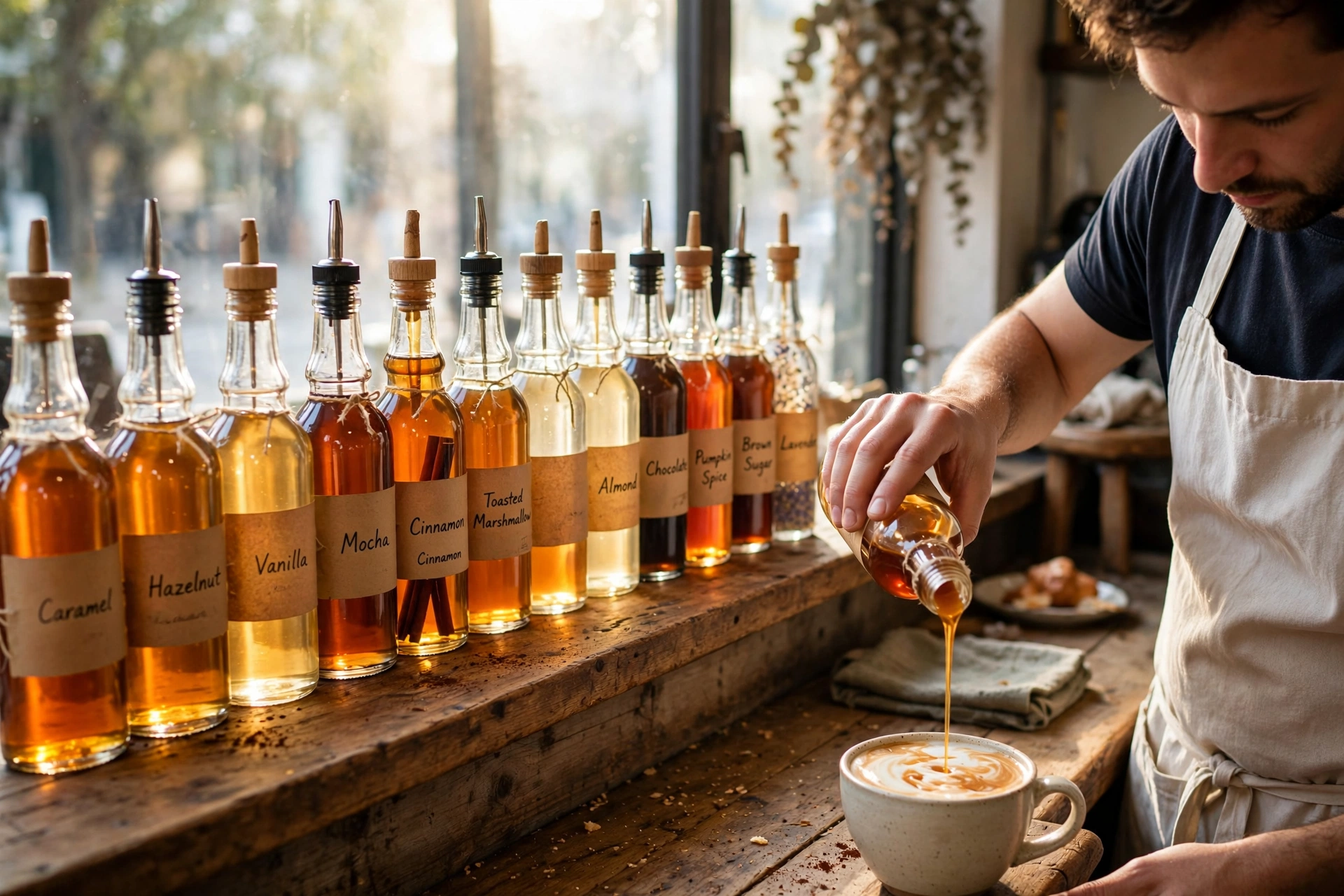
If you are managing a guest-facing environment, such as when Choosing Coffee Syrups to Elevate Hotel Guest Experiences, the aesthetic of the storage is also important. Using uniform, clean containers not only improves the look but makes it easier to spot leaks or contamination early.
Common Mistakes to Avoid When Storing Syrups
One of the most frequent mistakes I see is the "heat-sink" effect. This happens when a business places its syrup rack directly beneath a shelf where a toaster or oven is located. According to NSF International, maintaining a safe distance between heat-generating equipment and food additives is fundamental to preventing chemical breakdown and ensuring sanitary conditions.
Another error is the neglect of the "shoulder" of the bottle. Syrups often splash up onto the neck of the bottle. If this isn't wiped down, the residue attracts fruit flies and dust, which eventually migrate into the syrup. This is a failure of basic sanitation that can be avoided with a simple 10-second wipe-down during every shift change.
Finally, avoid "over-stocking" the prep area. While having a backup bottle is smart, having ten bottles of different flavors on the counter increases the likelihood that they will be knocked over or exposed to unnecessary heat. Keep only what you need for the current shift on the counter and store the rest in your designated cool zone. This is a principle we emphasize in our Sensa Coffee Service in Raleigh NC (2026 Overview) guides to help operators maximize their limited square footage.
Frequently Asked Questions
Should I refrigerate my coffee syrups after opening?
In most cases, no. Commercial syrups are designed with a high sugar content or specific preservatives that make them shelf-stable at room temperature. Refrigerating them often leads to sugar crystallization, which makes the syrup thicker, harder to pump, and can actually distort the flavor profile. Only refrigerate syrups if the manufacturer specifically instructs you to do so on the label or if you are using house-made syrups without preservatives.
How can I tell if a coffee syrup has gone bad?
You should look for three primary red flags: changes in color (bleaching or darkening), an off-smell (fermented or sour scent), and visible mold or crystallization around the pump nozzle. If the syrup has a "grainy" texture when poured, the sugars have crystallized, which usually indicates it has been exposed to extreme temperature fluctuations and should be replaced to ensure flavor consistency.
How often should I clean the pumps on my syrup bottles?
For a high-volume commercial environment, pumps should be cleaned at least once a week. This involves removing the pump from the bottle and soaking it in warm, soapy water to remove all syrup residue from the internal spring and valve. Failure to do this leads to "sticky pumps" that dispense inconsistent amounts of product, which ruins the recipe of your specialty coffee drinks.
What is the best temperature for storing coffee syrups?
The ideal range is between 60°F and 75°F (15°C to 24°C). This range is stable enough to prevent the sugars from crystallizing while being cool enough to prevent the aromatic compounds from oxidizing. You must avoid any area that exceeds 80°F, such as the area immediately surrounding an espresso machine or a dishwasher, as this will significantly shorten the shelf life of the product.
Can I store syrups in clear glass bottles if they are in the sun?
No, you should avoid this at all costs. UV light acts as a catalyst for oxidation, which breaks down the flavor molecules in the syrup. This is why many professional syrups come in opaque or tinted bottles. If you transfer your syrups to clear glass for aesthetic reasons, you must keep them in a shaded area or use a UV-filtering wrap to prevent the flavors from fading and the color from changing.
Conclusion
Mastering the art of storing coffee syrups is a small operational detail that yields a massive return on investment. By controlling temperature, implementing a strict FIFO rotation, and maintaining a rigorous pump hygiene schedule, you eliminate waste and ensure that every single beverage served meets the high standards of specialty coffee. Remember that the integrity of your ingredients is the foundation of your customer's experience; a ruined bottle of syrup is not just a loss of a few dollars, but a loss of consistency in your brand.
If you are looking to optimize your entire beverage program, from equipment selection to ingredient management, we invite you to explore our Ultimate Guide to Coffee Syrups for Foodservice Businesses for a deep dive into the best products for your business. For a truly hassle-free experience, visit Busy Bean Coffee to see how our all-inclusive managed coffee solutions can take the stress out of your daily operations.
Free Coffee Pairing Guide & Specialty Roast Cheat Sheet
Unlock the secrets of perfect brewing ratios, water temperatures, and specialty roast profiles. Download the guide.