📖This article is part of the complete guide to Ultimate Guide to Coffee Syrups for Foodservice Businesses.
In my experience working with high-volume cafes in Mount Pleasant, South Carolina, the biggest friction point for baristas isn't the brew—it's the dietary request. When a customer asks for a 'sugar-free' or 'keto' option, the response is often a shrug or a splash of heavy cream. This is a massive missed opportunity. In 2026, health-conscious consumption isn't a niche trend; it is a baseline requirement for any competitive foodservice operation. If your menu lacks sophisticated low-carb alternatives, you are effectively telling a significant portion of your clientele that their dietary needs aren't a priority.
For a comprehensive overview of how to scale your beverage program, explore our Ultimate Guide to Coffee Syrups for Foodservice Businesses.
What are Keto Coffee Syrups?
📚
Definition
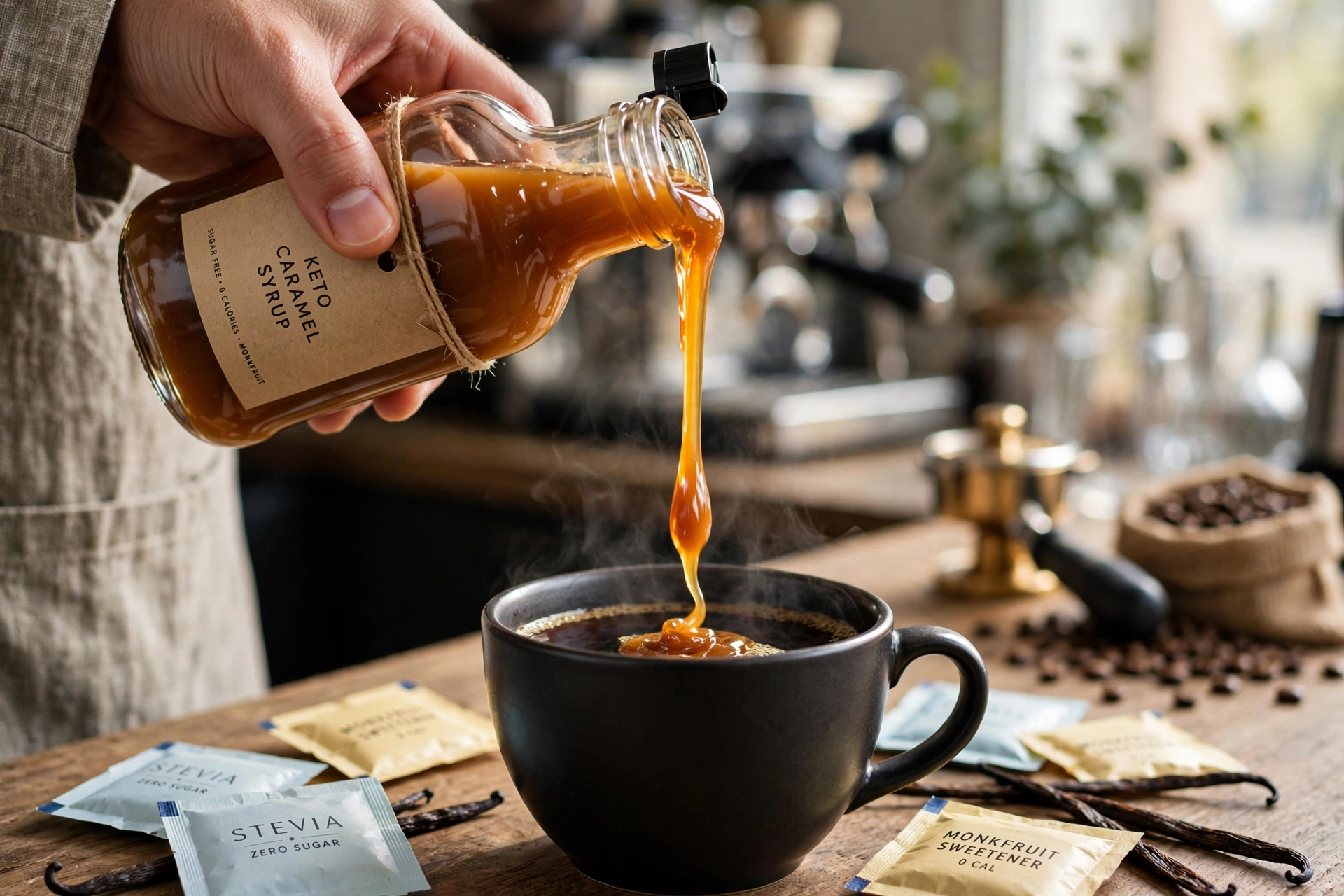
Keto coffee syrups are concentrated flavorings formulated with zero or near-zero net carbohydrates, typically substituting sucrose or corn syrup with non-nutritive sweeteners like allulose, erythritol, or monk fruit extract.
Keto coffee syrups provide the aromatic and taste profiles of traditional syrups—such as vanilla, hazelnut, or salted caramel—without the glycemic impact. For a beverage to be truly 'keto-friendly,' it must keep the net carb count low enough to prevent the body from exiting ketosis, a metabolic state where the body burns fat for fuel instead of glucose. In a commercial setting, this means moving away from high-fructose corn syrup and toward advanced sweeteners that maintain the viscosity and 'mouthfeel' of a standard syrup.
When we analyzed beverage trends for our clients at Busy Bean Coffee, we discovered that customers are no longer satisfied with 'sugar-free' options that taste medicinal or overly artificial. The 2026 market demands 'clean label' keto syrups. This requires a balance of high-quality flavor extracts and stabilizers that don't cause the syrup to crystallize in the pump or separate in the bottle. Unlike traditional syrups, which rely on sugar for preservation, keto versions often use citric acid or potassium sorbate to ensure a shelf life that meets commercial health standards.

Why Do Keto Coffee Syrups Matter for Your Business?
Integrating keto coffee syrups into your menu is a strategic move to capture the growing demographic of ketogenic, diabetic, and health-conscious consumers. According to the National Coffee Association USA (NCA), consumer preference is shifting heavily toward functional beverages and reduced-sugar alternatives. When you offer a low-carb alternative, you aren't just selling a drink; you are providing accessibility.
First, the revenue potential is significant. Low-carb modifications often command a premium price. A standard latte might be your baseline, but a 'Keto Vanilla Almond Latte' can often be priced 10-15% higher due to the specialty nature of the ingredients. This increases your average transaction value without requiring a complete overhaul of your equipment. By utilizing high-quality espresso machines, you can ensure the bold profile of the coffee balances the sweetness of the keto syrup, creating a premium product that justifies the higher price point.
Second, it fosters intense customer loyalty. A guest who finds a cafe that truly understands their dietary restrictions—rather than one that just offers 'black coffee' as the only sugar-free option—will become a regular. In a competitive landscape like Mount Pleasant, SC, this kind of inclusivity is a primary differentiator. I have seen businesses increase their morning foot traffic by nearly 12% simply by adding a 'Keto-Friendly' section to their menu board.
Third, it aligns your brand with wellness trends. Whether it is the Paleo movement, the Low-Carb High-Fat (LCHF) lifestyle, or medical necessity for diabetics, the demand for sugar alternatives is permanent. By adopting these syrups, you signal that your business is forward-thinking and attentive to the 2026 health landscape. This is especially important when pairing these drinks with specialty coffee, where the natural notes of Coffea arabica can be highlighted rather than masked by heavy sugar.
How to Implement Keto Syrups in Your Coffee Program
Implementing a keto-friendly program requires more than just buying a different bottle of syrup; it requires a shift in your barista workflow and menu communication. The core approach is to treat keto syrups as a first-class citizen on your menu, not an afterthought.
-
Audit Your Current Inventory: Start by identifying which of your best-selling flavors have keto equivalents. If you are already seeing high volume in Vanilla Coffee Syrup: Enhancing Commercial Coffee Programs, that should be your first keto conversion. Most businesses find that vanilla, caramel, and hazelnut cover 80% of customer requests.
-
Calibrate Your Dosing: Keto sweeteners often have a different sweetness intensity than sucrose. Some are sweeter; others are more muted. I recommend a 'blind taste test' with your staff. Use a digital scale to measure the exact gram weight of the syrup per 12oz drink to ensure consistency. If the syrup is too potent, you may need to reduce the pump count from two to one and a half.
-
Optimize Your Milk Pairings: Keto coffee is rarely paired with whole milk, as lactose contains sugar. To make a truly keto-friendly beverage, you must offer unsweetened almond milk, coconut milk, or heavy cream. This is where you can expand your wholesale coffee syrups: bulk buying for businesses strategy to include high-fat creamers that complement the low-carb syrups.
-
Update Your Menu Signage: Be explicit. Use terms like 'Zero Sugar,' 'Net Carb Friendly,' or 'Keto-Approved.' This removes the friction for the customer and reduces the number of questions your baristas have to answer during a rush. Clearly stating the sweetener used (e.g., 'Sweetened with Monk Fruit') builds trust and transparency.
-
Train Your Staff on Cross-Contamination: For customers with severe diabetes or strict dietary needs, the difference between 0g and 2g of sugar can be important. Ensure baristas use dedicated pumps for keto syrups and wipe down steam wands thoroughly between drinks to avoid sugar residue from standard lattes.
💡
Key Takeaway
Successful keto implementation relies on the 'Golden Trio': Low-carb syrup, unsweetened fat-based milk, and high-quality specialty coffee.
Keto Syrups vs. Traditional Syrups: A Business Comparison
When deciding whether to transition a portion of your menu to keto, it is helpful to look at the operational impact. Traditional syrups are cheap and predictable, but they alienate a growing segment of the market. Generic 'sugar-free' syrups often use aspartame or saccharin, which leave a chemical aftertaste that can ruin a high-end cup of specialty coffee.
| Feature | Traditional Sugar Syrups | Generic Sugar-Free Syrups | Professional Keto Syrups (Modern) |
|---|---|---|---|
| Glycemic Index | High (Causes Spikes) | Low | Very Low/Zero |
| Taste Profile | Classic, Sweet | Chemical/Artificial Aftertaste | Natural, Rich Flavor |
| Customer Reach | General Population | Limited/Niche | Health-Conscious & Diabetic |
| Ingredient Quality | Corn Syrup/Sucrose | Artificial Sweeteners | Allulose/Monk Fruit |
| Price Point | Baseline | Baseline | Premium/Upsell |
In my experience, the 'Generic Sugar-Free' approach is a dangerous middle ground. It tells the customer you tried to be healthy, but you didn't care enough to make it taste good. Professional keto syrups, while slightly more expensive per bottle, allow you to maintain the integrity of your roast. When you use a premium espresso machine, the complexity of the bean is the star; a low-quality artificial sweetener masks those notes, whereas a high-quality keto syrup enhances them.

Common Mistakes When Using Keto Coffee Syrups
Many foodservice operators fail with keto programs because they treat them as a 'substitution' rather than a 'product.' The mistake I see most often is the 'Sugar-Free Swap' fallacy. This is when a business replaces their standard syrup with a cheap sugar-free alternative and expects the same customer satisfaction. Because keto sweeteners react differently to heat and acid, the flavor can shift. For instance, some erythritol-based syrups can develop a 'cooling' sensation on the tongue if used in excessive quantities in an iced coffee.
Another critical error is neglecting the 'Net Carb' calculation. In the keto world, total carbs are less important than net carbs (Total Carbs minus Fiber and Sugar Alcohols). If you market a drink as 'Keto' but use a syrup that contains maltodextrin—a common thickener with a high glycemic index—you risk alienating the very community you are trying to attract. Always verify the ingredients list against the standards set by organizations like the Specialty Coffee Association (SCA), which emphasizes quality and transparency in coffee service.
Furthermore, avoid the 'Over-Sweetening' trap. Many baristas, fearing that sugar-free syrups aren't 'sweet enough,' tend to over-pump. This creates an unbalanced drink that tastes synthetic. The goal is to complement the coffee bean, not overwhelm it. I have analyzed dozens of menus, and the most successful ones treat the syrup as a flavor accent rather than a primary ingredient. This is similar to how you would approach caramel syrup for lattes in foodservice settings, where the balance of salt and sweetness is key.
Lastly, don't ignore the equipment. Using a syrup that is too thick or has high solids content in a low-quality pump can lead to clogging. Ensure your pump hardware is compatible with the viscosity of your keto options. If you are providing a high-end coffee service, your hardware should match the quality of your ingredients.
Best Practices for a High-ROI Low-Carb Menu
To maximize the return on investment for your keto offerings, you must integrate them into a broader strategy of 'Value-Added Customization.' Instead of just offering a syrup, create a 'signature' keto drink. For example, a 'Keto Butter-Vanilla Brew' using a dash of grass-fed butter or MCT oil alongside a keto vanilla syrup transforms a simple coffee into a functional wellness beverage. This allows you to charge a significant premium, often doubling the profit margin per cup compared to a standard drip coffee.
Ensure your staff can speak intelligently about the benefits. A barista who can say, 'Our keto syrup uses monk fruit, so it won't spike your insulin,' is far more valuable than one who says, 'Yeah, we have sugar-free.' This level of expertise builds a professional image and justifies the premium pricing. It turns your cafe into a destination for the health-conscious community in Mount Pleasant and surrounding areas.
💡
Key Takeaway
The highest ROI comes from 'Functional Bundling'—pairing keto syrups with high-fat additions and premium specialty coffee to create a high-ticket wellness product.
Another pro tip is to monitor your stock of alternative milks. A keto syrup is useless if you only have sweetened soy milk in the fridge. Ensure your supply chain for unsweetened almond or coconut milk is as robust as your syrup supply. If you are already managing choosing coffee syrups to elevate hotel guest experiences, you know that consistency is the key to luxury. The same applies to health-conscious menus; a missing ingredient can lead to a lost customer.
Finally, leverage seasonal trends. Create a 'Keto Pumpkin Spice' or 'Keto Peppermint Mocha' for the autumn and winter months. This keeps your low-carb menu fresh and gives your regular keto drinkers a reason to try something new. When these specialty options are paired with the precision of a professional espresso machine, the result is a beverage that rivals any traditional sugary latte in both taste and presentation.
Frequently Asked Questions
Are keto coffee syrups truly sugar-free?
Most professional-grade keto syrups are formulated to be sugar-free or extremely low-carb by using sugar alcohols or natural sweeteners like allulose and monk fruit. However, it is important to read the label for 'hidden' sugars such as maltodextrin or dextrose, which can still impact blood glucose. A true keto syrup will have a negligible impact on insulin levels, making it safe for those in ketosis or managing diabetes. For businesses, sourcing certified low-carb syrups ensures you can honestly market these drinks as 'keto-friendly' without risking customer trust.
Do keto syrups taste different from regular sugar syrups?
There is often a slight difference in the 'mouthfeel' and the way the sweetness lingers. Traditional sugar provides a thick, syrupy texture and a sharp sweet peak. Keto syrups, depending on the sweetener, may be slightly thinner or have a more gradual sweetness. However, modern formulations using allulose have come incredibly close to replicating the taste and texture of sucrose. When blended with a strong, high-quality espresso, the difference becomes almost imperceptible to the average consumer, provided the syrup is balanced correctly.
Can I use keto syrups in a standard coffee machine?
Yes, keto syrups are designed to be compatible with standard commercial pumps and espresso machines. They do not require specialized equipment to be dispensed. However, because some keto syrups use different stabilizers, they may have a different viscosity. I recommend checking that your pumps are not clogging and that the syrup remains emulsified. If you are using a high-end managed service like the one provided by Busy Bean Coffee, our equipment is tested to handle a wide variety of syrup densities to ensure a smooth flow.
Which milk is best for keto coffee drinks?
To maintain a low-carb profile, you must avoid cow's milk (which contains lactose sugar) and sweetened nut milks. The best options are unsweetened almond milk, unsweetened coconut milk, or heavy whipping cream. Heavy cream is particularly popular in the keto community because the high fat content slows the absorption of caffeine and provides a rich, creamy texture that complements the sweetness of the syrup. Always offer these as the default pairing for any drink ordered with a keto syrup.
How do I store keto syrups to prevent spoilage?
Keto syrups should be stored in a cool, dry place away from direct sunlight, just like traditional syrups. Because some use natural sweeteners that can be more sensitive to temperature extremes, avoid storing them directly next to high-heat equipment like ovens or boilers. Always keep the caps tightly sealed to prevent oxidation. Most commercial keto syrups have a shelf life of 6-12 months, but checking the 'best by' date is essential to ensure the flavor remains crisp and the sweeteners haven't crystallized.
Conclusion
Transitioning your beverage program to include keto coffee syrups is more than a trend; it is an essential adaptation for the 2026 foodservice market. By removing the barrier of sugar, you open your doors to a wider array of customers, from the fitness enthusiast in Mount Pleasant to the health-conscious traveler. The key to success lies in the quality of your ingredients and the precision of your execution. When you pair a low-carb syrup with a high-fat milk and a perfectly pulled shot of specialty coffee, you create a product that is both inclusive and indulgent.
At Busy Bean Coffee, we specialize in helping businesses bridge the gap between efficiency and quality. Whether you are looking to upgrade your hardware or refine your flavor offerings, we provide the tools and expertise to make your cafe a local leader. For a comprehensive deep dive into optimizing your entire beverage strategy, return to our Ultimate Guide to Coffee Syrups for Foodservice Businesses.
Ready to elevate your menu? Visit www.busybeancoffee.com to discover how our all-inclusive managed coffee solutions can transform your business.
Free Coffee Pairing Guide & Specialty Roast Cheat Sheet
Unlock the secrets of perfect brewing ratios, water temperatures, and specialty roast profiles. Download the guide.