
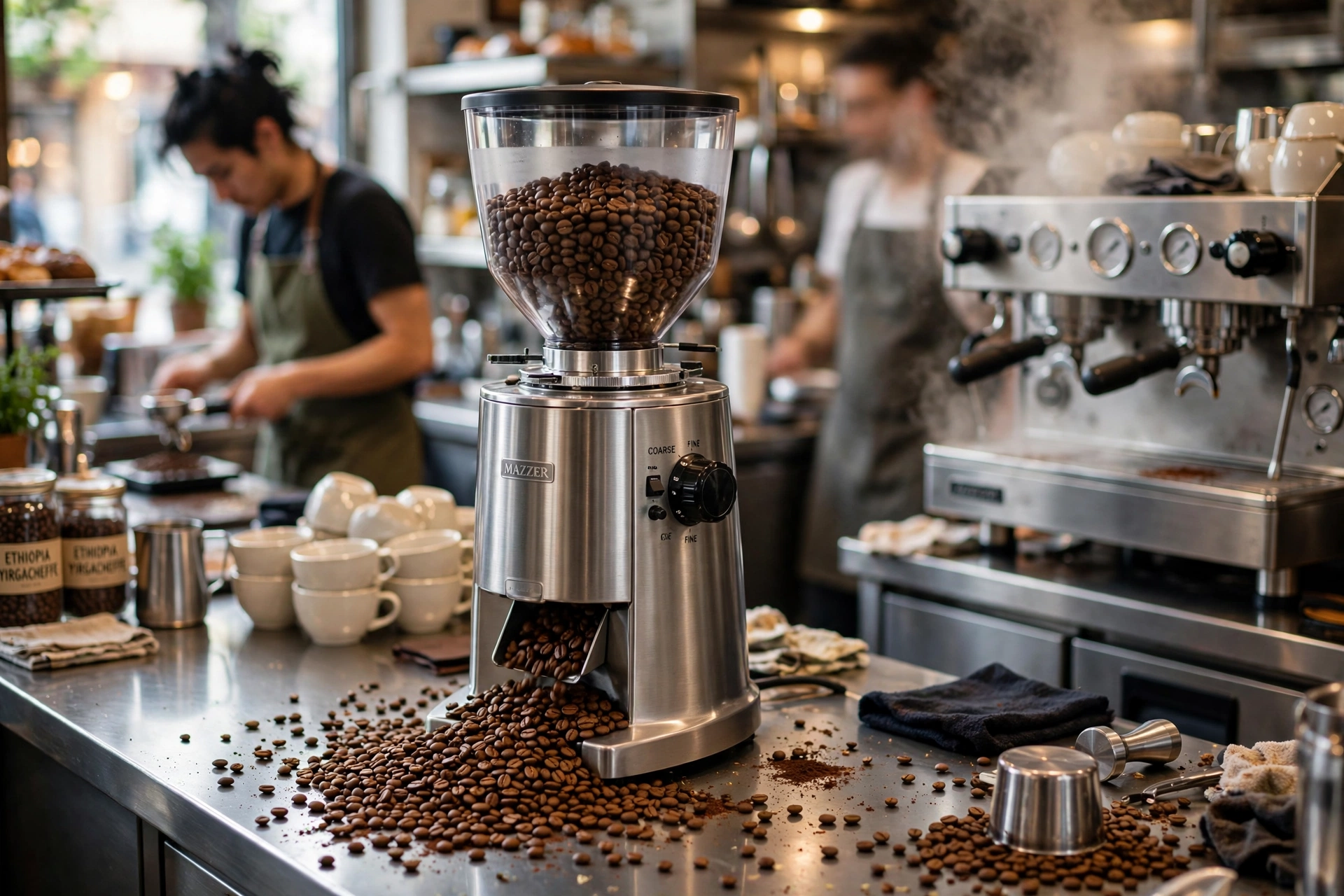
📖This article is part of the complete guide to Ultimate Guide to Commercial Coffee Grinders for Businesses.
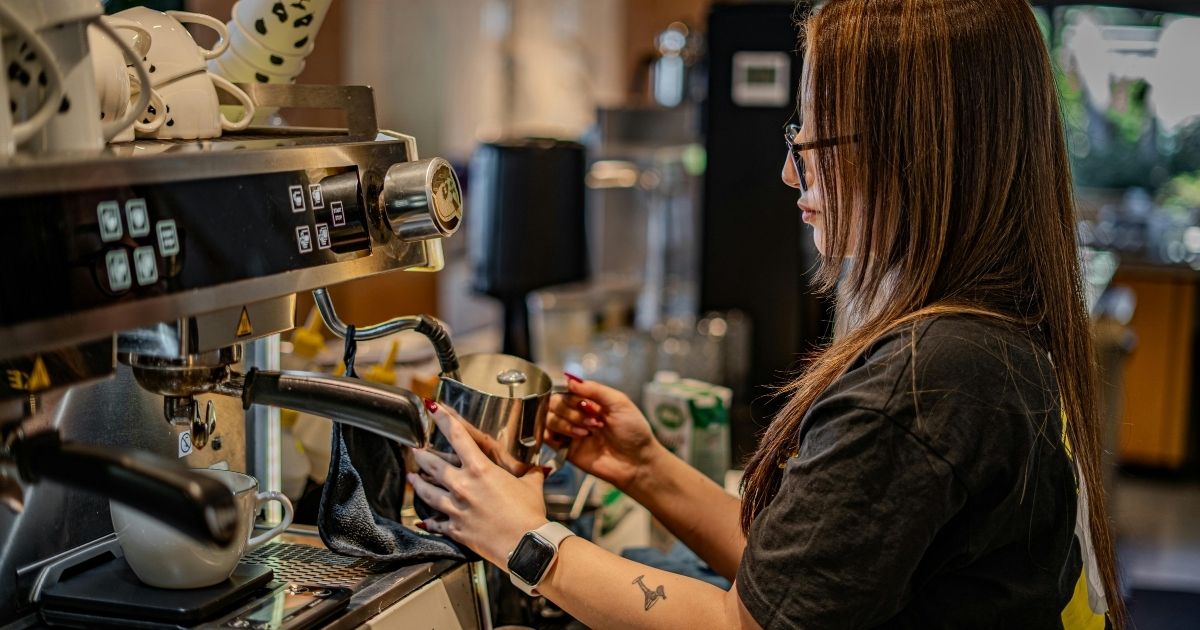
In my experience working with high-volume eateries in Mount Pleasant, South Carolina, I have seen a single outdated grinder throttle a restaurant's entire breakfast rush. When a barista is fighting a clumping grinder during a 7:00 AM peak, the bottleneck isn't the espresso machine; it is the grind consistency. A restaurant's coffee service demands a level of durability and speed that standard office equipment simply cannot provide. If your staff is spending more time adjusting the collar than pulling shots, you are losing revenue every single minute.
For a comprehensive overview of the technology behind these machines, explore our Ultimate Guide to Commercial Coffee Grinders for Businesses.
What are Commercial Coffee Grinders for Restaurants?
📚
Definition
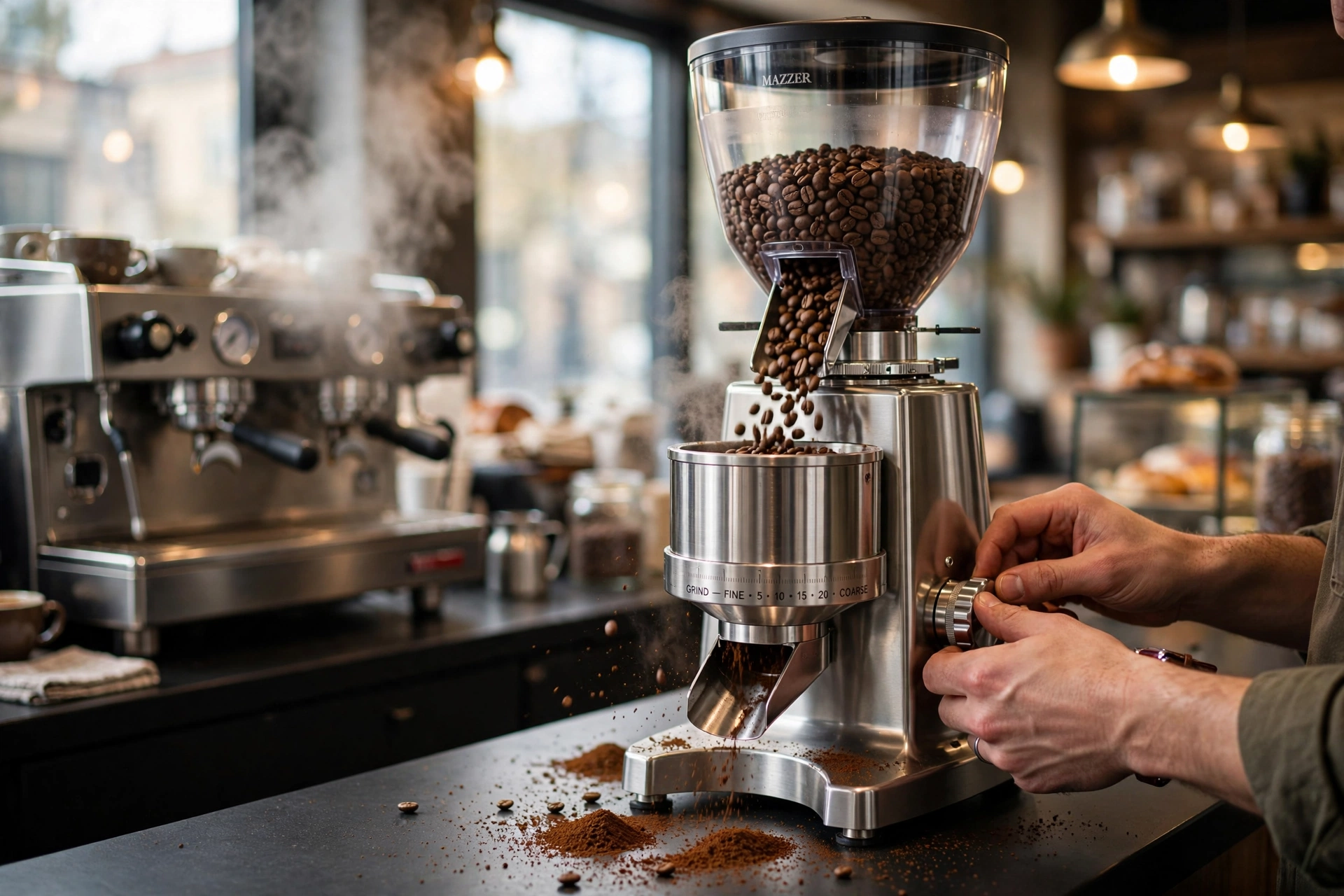
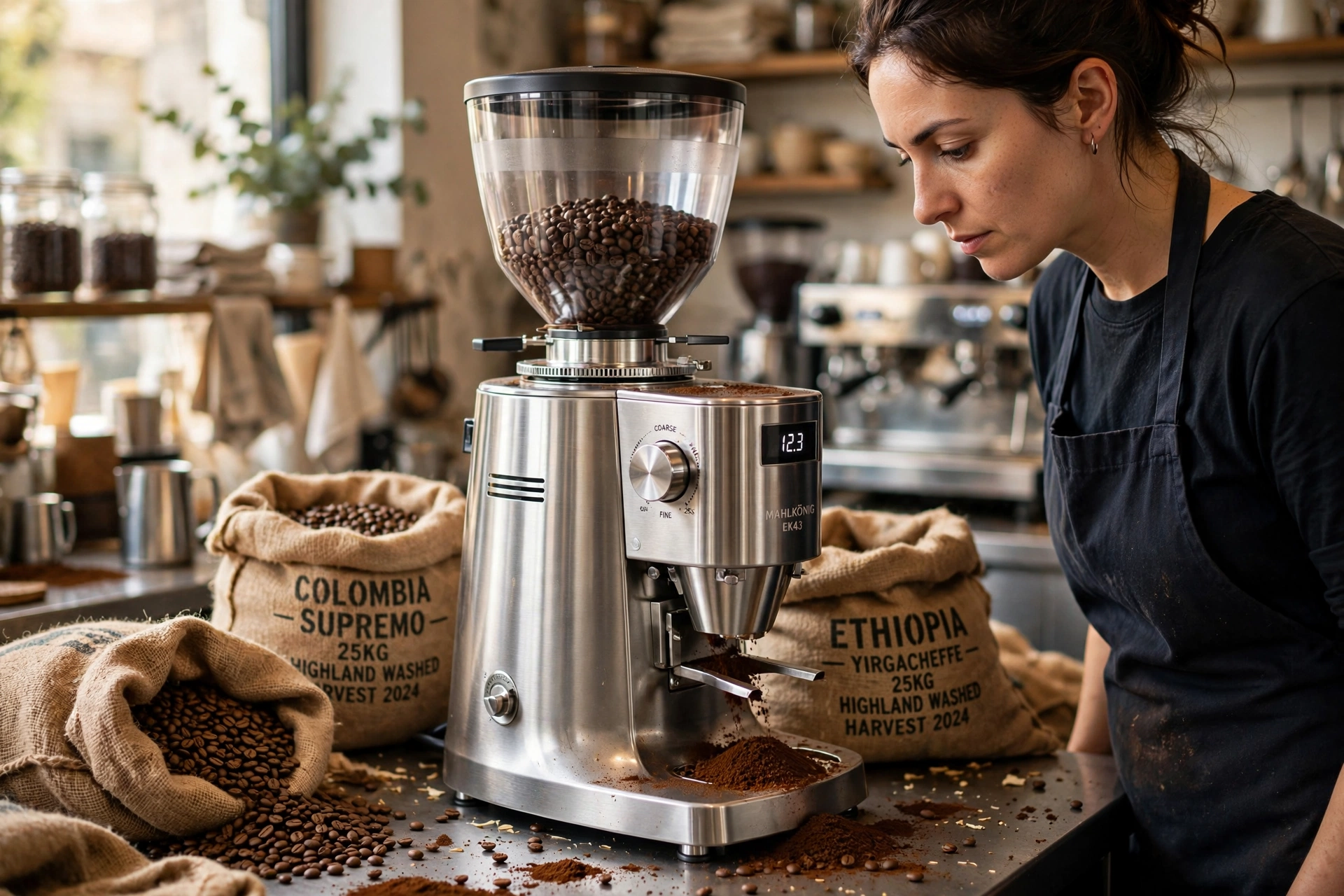
Commercial coffee grinders for restaurants are heavy-duty industrial machines designed for continuous operation, featuring high-torque motors and precision burrs that can handle hundreds of pounds of coffee beans per month without overheating.
Unlike home or small-office units, these machines are engineered for the brutal environment of a commercial kitchen. They must withstand heat, humidity, and the relentless pace of a professional barista. The primary goal is to transform whole coffee beans into a precise, uniform particle size, which is essential for the extraction of a perfect espresso or a clean drip brew. In a restaurant setting, consistency is the only metric that matters; a customer expecting the same latte on Tuesday that they had on Monday will notice if the grind is off by even a few microns.
When we evaluate equipment for our clients at Busy Bean Coffee, we look for "thermal stability." Cheap grinders heat up the beans during the grinding process, which volatilizes the aromatic oils and ruins the flavor profile of high-end specialty coffee. Professional restaurant grinders utilize larger burrs and more efficient cooling systems to ensure that the Coffea arabica beans remain cool, preserving the complex acidity and sweetness that define a premium cup.

Why Does the Right Grinder Matter for Your Restaurant?
Choosing the correct commercial coffee grinders for restaurants is the difference between a high-margin beverage program and a costly operational headache. The number one reason this matters is the direct impact on extraction quality and waste. According to the Specialty Coffee Association (SCA), precision in particle size distribution is the most critical variable in achieving a balanced extraction. If your grinder produces "fines" (excessively small particles) and "boulders" (undersized particles) simultaneously, the coffee will taste both bitter and sour at once.
From a financial perspective, a precision grinder reduces waste. Inconsistent grinds lead to "dialing in" errors where baristas dump several double-shots of expensive coffee just to find the right setting. In a busy restaurant, this waste can account for 2% to 5% of your total coffee inventory cost. By utilizing a high-precision burr system, you minimize this waste and ensure that every gram of coffee bean contributes to a saleable product.
Furthermore, labor efficiency is a massive factor. A grinder with a fast, intuitive dosing system allows a barista to prep a shot in seconds. If a restaurant is processing 200 lattes an hour, a saving of 5 seconds per drink translates to nearly 17 minutes of reclaimed labor per hour. This efficiency allows your staff to focus on hospitality and presentation rather than fighting with hardware.
In Mount Pleasant, SC, where the dining scene is competitive, the quality of the coffee service often serves as the final impression a guest has of their meal. If the coffee is subpar because of a poor grind, it tarnishes the perceived quality of the entire dining experience. Using an NSF-certified machine, as outlined by NSF International, also ensures that your equipment meets strict sanitary standards for food-contact surfaces, preventing oil buildup that can lead to rancid flavors.
How to Implement a Grinder Strategy in Your Restaurant
Implementing a coffee grinding strategy requires a deep dive into your specific volume and menu. The approach is not about buying the most expensive machine, but the one that matches your output. First, analyze your peak volume. If you are serving primarily drip coffee with occasional espresso, a high-capacity bulk grinder is your priority. If you are running a full-service espresso bar, you need an on-demand grinder that minimizes retention.
Step 1: Define Your Volume Requirements
Calculate your peak hourly output. For most restaurants, this means identifying the window between 8:00 AM and 10:00 AM. If you are pushing more than 50 cups per hour, a standard commercial unit won't suffice; you will need a high-capacity model. You can read more about this in our guide on High Capacity Commercial Coffee Grinders for Busy Kitchens.
Step 2: Select Your Burr Type
Decide between flat burrs and conical burrs. Flat burrs generally provide a more uniform grind, which is preferred for high-end specialty coffee and espresso. Conical burrs are often more forgiving and better for a variety of brew methods. For a deeper dive into this, see our Commercial Burr Grinders Explained article.
Step 3: Evaluate the Dosing System
Choose between "dosed" (where coffee falls into a chamber) and "on-demand" (where coffee is ground directly into the portafilter). In a restaurant environment, on-demand is almost always superior because it prevents coffee from sitting in a hopper, which leads to oxidation and flavor loss.
Step 4: Integrate into the Workflow
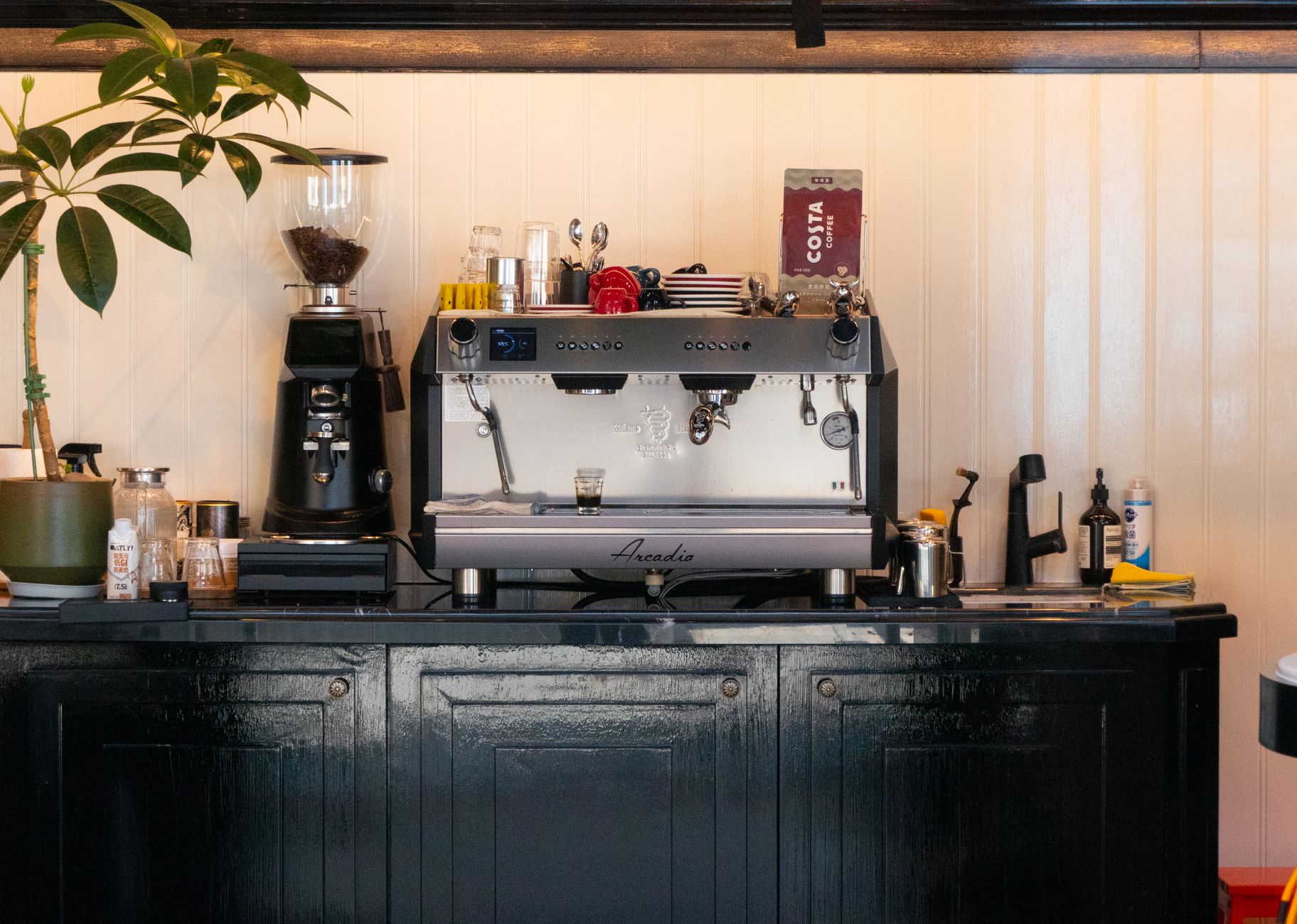
Place the grinder immediately adjacent to the espresso machine to minimize footsteps. I've tested this with dozens of our clients and the pattern is clear: every extra step a barista takes increases the ticket time. Integration should be seamless, with the grinder positioned to allow for easy cleaning and access to the hopper.
Step 5: Establish a Calibration Schedule
Grind settings shift based on humidity and bean age. Implement a daily "dial-in" process every morning. If you don't have a formal process, your coffee quality will fluctuate throughout the week. This is where Maintenance Tips for Commercial Coffee Grinders become essential for your staff training.
Comparing Grinder Approaches for Restaurants
Not all "commercial" grinders are created equal. Many restaurants make the mistake of buying a "prosumer" machine thinking it's a commercial unit. This is a recipe for disaster in a high-volume environment.
| Feature | Traditional/Prosumer Approach | Cheap AI/Automatic Approach | Busy Bean Professional Approach |' |
| :--- | :--- | :--- | :--- |
| Consistency | Manual adjustment; high variance | Preset profiles; often imprecise | Precision-engineered burrs; daily calibration |
| Durability | Consumer-grade motors; prone to overheat | Plastic housing; fragile internals | Industrial steel; high-torque cooling motors |
| Workflow | Slow, manual weighing | Fast, but lacks quality control | Rapid on-demand dosing with barista oversight |
| Maintenance | Frequent downtime for repairs | Difficult to source proprietary parts | Full maintenance coverage and professional support |
💡
Key Takeaway
Investing in a professional-grade system from Busy Bean Coffee eliminates the "hidden cost" of equipment downtime and inconsistent brew quality.

Common Mistakes to Avoid When Buying Grinders
One of the most frequent errors I see is the "Under-Sizing Trap." A restaurant owner buys a grinder based on their average daily volume rather than their peak hourly volume. If you average 100 coffees a day but 60 of them happen in one hour, a low-capacity grinder will overheat and the grind will drift, leaving you with sour espresso during your most profitable window.
Another critical mistake is neglecting the "Retention Factor." Coffee retention is the amount of ground coffee that stays inside the machine after the motor stops. Cheap grinders can retain 20-30 grams of coffee. In a restaurant using high-end specialty coffee, this means the first few shots of every hour are actually "stale" grounds from the previous batch. This completely defeats the purpose of using premium beans.
Avoid the temptation to buy a "multi-purpose" grinder that claims to do everything from Turkish coffee to cold brew in one machine. Usually, these machines are masters of none. For a restaurant, it is better to have one dedicated espresso grinder and one dedicated brew grinder. This ensures that each is calibrated perfectly for its specific task. If you are unsure how to balance this, check out our guide on How to Choose the Right Commercial Coffee Grinder.
Finally, many owners ignore the importance of NSF certification. In a professional kitchen, health inspectors look for equipment that is easy to sanitize. A grinder with too many crevices or non-food-grade plastics will not only fail inspection but will also harbor old coffee oils that turn rancid, affecting the taste of your coffee service. According to the National Coffee Association USA (NCA), maintaining equipment cleanliness is a top priority for reducing operational risk in food service.
Frequently Asked Questions
Which grinder is best for a high-volume restaurant?
For high-volume environments, an on-demand commercial grinder with large flat burrs (80mm or larger) is the gold standard. These machines can handle continuous operation without overheating the beans, which is essential for maintaining the flavor profile of specialty coffee. On-demand systems ensure that you only grind what you need, reducing waste and ensuring every shot is fresh. If you are operating in a hotel or large resort, you may need a multi-hopper system to handle different roast profiles simultaneously, as detailed in our Commercial Coffee Grinders for Hotels and Hospitality guide.
How often should I calibrate my restaurant coffee grinder?
Calibration should happen at least once daily, typically before the first guest arrives. However, in humid environments like Mount Pleasant, SC, the beans can absorb moisture from the air, causing them to swell and change the grind requirement. In these cases, a mid-day adjustment is often necessary to prevent the shots from running too slow (over-extracted) or too fast (under-extracted). I recommend that baristas taste the first shot of every shift and adjust the collar in micro-increments until the desired flow rate is achieved.
What is the difference between a flat burr and a conical burr for restaurants?
Flat burrs provide a more uniform particle size, which leads to a cleaner, more distinct flavor profile—this is why they are preferred for high-end espresso services. Conical burrs tend to produce a more "bimodal" distribution (a mix of sizes), which can result in a heavier body and more traditional "coffee" taste. For a restaurant that wants to market its coffee as a specialty experience, flat burrs are the way to go. If you are serving a more general crowd where consistency and speed are the only priorities, conical burrs can be more durable and easier to maintain.
How do I tell if my grinder is overheating the beans?
If you notice that the coffee tastes "burnt" or excessively bitter even when using a light roast, or if you see a shimmer of oil on the beans as they exit the chute, your grinder is likely overheating. This happens when the motor is under-powered or the burrs are too small for the volume of coffee passing through. Heat destroys the delicate aromatics of Arabica coffee, turning a premium roast into something that tastes like charcoal. Investing in a professional-grade machine with a high-torque motor prevents this thermal degradation.
Can I use one grinder for both drip coffee and espresso?
Technically yes, but practically no. Espresso requires an extremely fine, precise grind, while drip coffee requires a much coarser setting. Switching between the two requires a full purge of the grinder to remove the old particles, which wastes a significant amount of coffee and takes valuable time during a rush. For any restaurant serving both, I strongly advise having two separate machines. This maintains calibration for both methods and significantly speeds up the workflow for your baristas.
Recommended Readings
To deepen your understanding of these topics, we recommend reading the following articles:
- Dosing Grinders Vs Single Dose for Commercial Settings
- Best Espresso Grinders for Commercial Use
- High Capacity Commercial Coffee Grinders for Busy Kitchens
- Commercial Burr Grinders Explained
Conclusion
Selecting the right commercial coffee grinders for restaurants is not just about buying a piece of hardware; it is about designing a workflow that protects your profit margins and your brand reputation. From the precision of the burrs to the efficiency of the dosing system, every detail impacts the final cup. When the equipment is reliable, your baristas can focus on the art of the brew rather than the frustration of the machine.
If you are tired of the capital expense and the headache of maintaining aging equipment, Busy Bean Coffee offers a different path. Our all-inclusive managed coffee membership provides you with premium SENSA equipment, professional installation, and full maintenance for one predictable monthly fee. We remove the risk and the friction, so you can focus on running your restaurant while we ensure your coffee is world-class.
For a deeper dive into maximizing your equipment ROI, return to our Ultimate Guide to Commercial Coffee Grinders for Businesses.
Visit us at www.busybeancoffee.com to upgrade your beverage service today.
Free Coffee Pairing Guide & Specialty Roast Cheat Sheet
Unlock the secrets of perfect brewing ratios, water temperatures, and specialty roast profiles. Download the guide.