
📖This article is part of the complete guide to Ultimate Guide to Commercial Coffee Grinders for Businesses.
A single bottleneck in the morning rush—specifically a grinder that overheats or slows down—can cost a high-volume cafe up to 15% of its peak hour revenue in lost customers. In my experience working with high-traffic foodservice operators, the most common failure point isn't the espresso machine, but the grinder's inability to maintain temperature stability under heavy load. When the burrs heat up, the grind consistency drifts, and suddenly your specialty coffee tastes bitter and over-extracted.
For a comprehensive overview of equipment standards, explore our Ultimate Guide to Commercial Coffee Grinders for Businesses.
What are High Capacity Commercial Coffee Grinders?
📚
Definition
High capacity commercial coffee grinders are industrial-grade milling machines designed to process large volumes of coffee beans—typically exceeding 5 to 10 kilograms per hour—without compromising grind uniformity or risking motor burnout due to thermal stress.
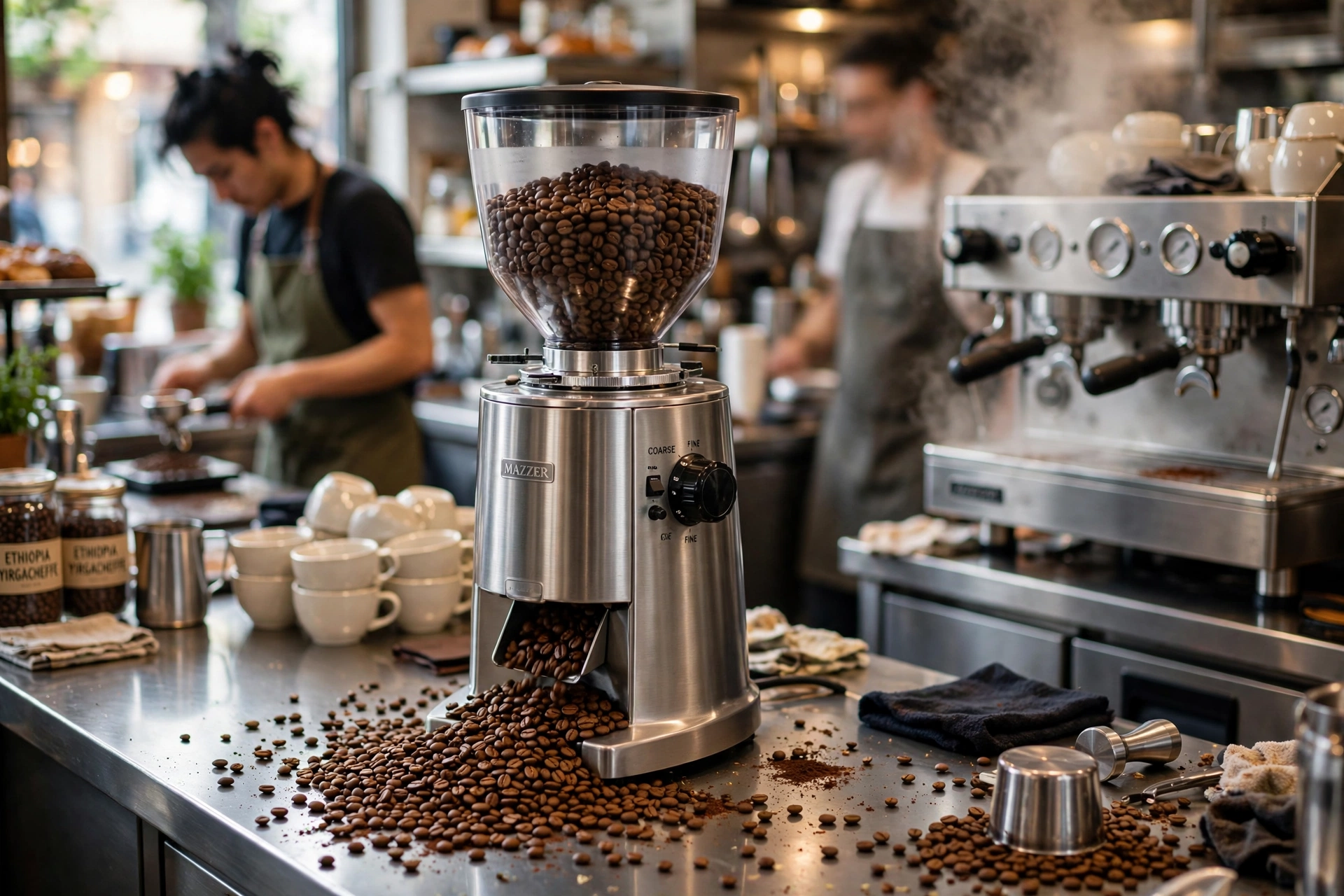
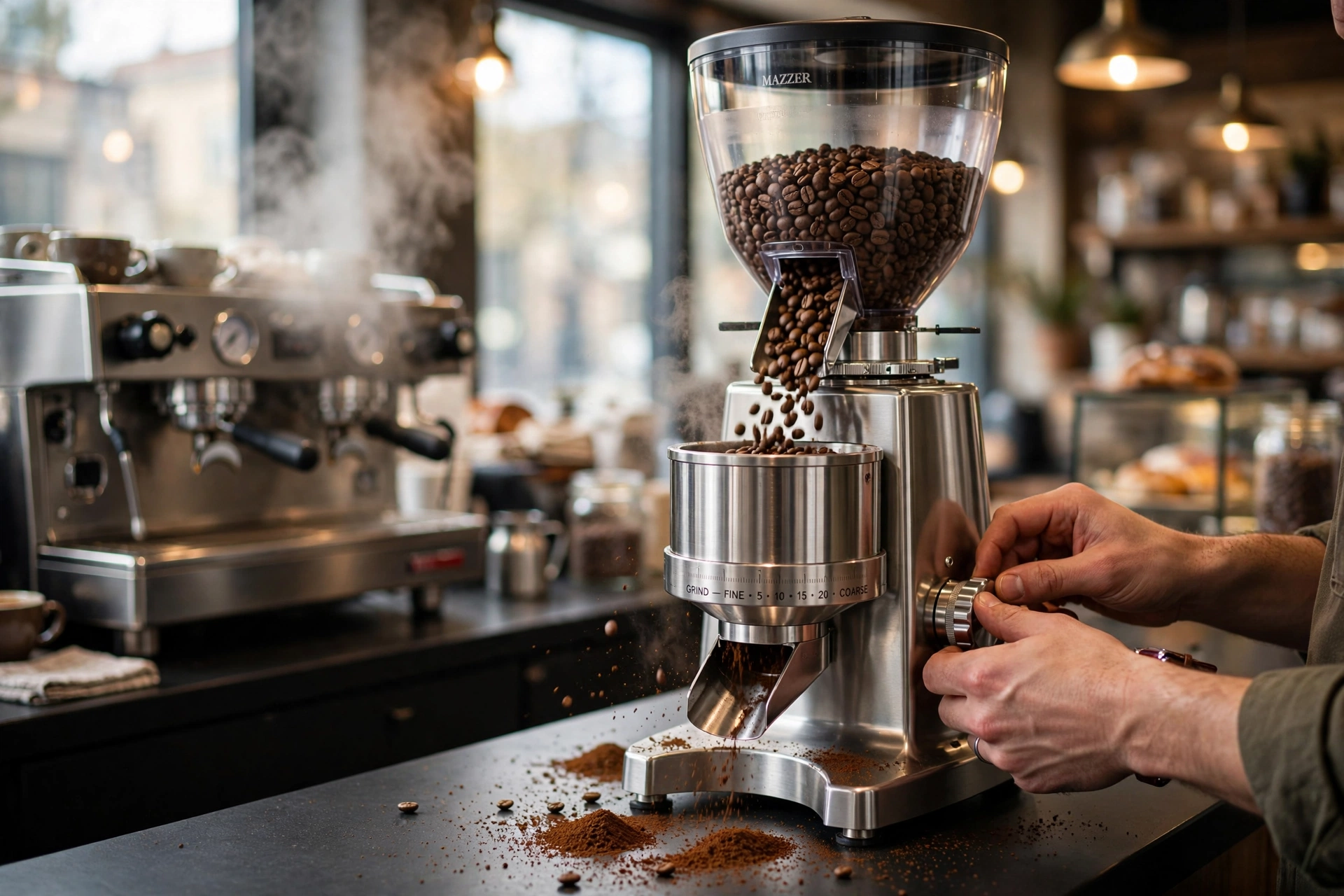
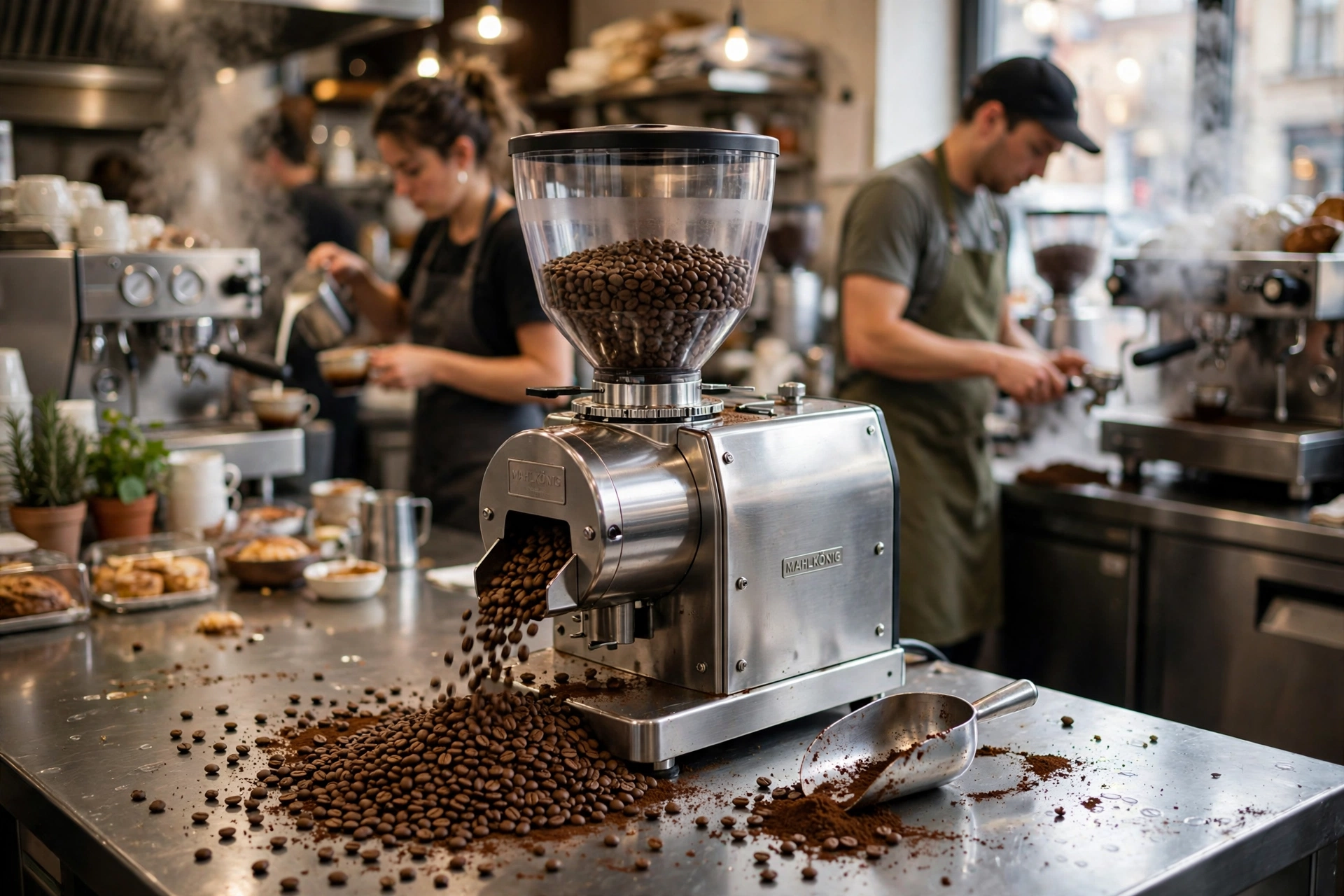
High capacity commercial coffee grinders differ from standard commercial units primarily in their motor torque, cooling systems, and hopper size. While a standard prosumer or small-cafe grinder might handle 20-30 cups an hour, a high-capacity unit is engineered for the relentless pace of a hotel breakfast buffet or a busy downtown bistro. These machines utilize larger diameter burrs, often 80mm or larger, which allow them to grind more coffee per rotation and dissipate heat more effectively than smaller 58mm or 64mm sets.
From a technical perspective, the critical metric here is "grind speed versus heat retention." In the world of specialty coffee, heat is the enemy. When coffee beans are subjected to excessive heat during the grinding process, the volatile oils—which provide the complex flavors of Coffea arabica—begin to evaporate. High-capacity grinders solve this by utilizing high-torque, low-RPM motors or integrated active cooling fans that keep the burrs at a stable temperature even during a three-hour rush.

In my experience, the most successful high-volume operations don't just buy the biggest machine; they invest in grinders with "on-demand" precision and large-capacity hoppers that reduce the frequency of refills, which in turn reduces the risk of bean oxidation. If you are managing a site with high foot traffic, such as those utilizing a Sensa Coffee Service in Charlotte, NC, the throughput of your grinding station determines your overall service speed.
Why High Throughput Matters for Your Business Growth
High capacity commercial coffee grinders are fundamental to maintaining a consistent Quality of Service (QoS) when scaling. According to the Specialty Coffee Association (SCA), consistency in particle size distribution is the single most important factor in achieving a balanced extraction. When a grinder is pushed beyond its rated capacity, the burrs warp slightly due to heat, leading to a "drift" in grind size that requires constant manual recalibration by the barista.
For a business, this translates to wasted product and labor. If a barista has to spend 30 seconds every ten minutes adjusting the dial, that is lost productivity. Furthermore, according to the National Coffee Association USA (NCA), consumer expectations for "premium" coffee have risen, meaning a high-volume kitchen can no longer hide behind a "fast but mediocre" cup. You need industrial speed with artisanal precision.
Consider the operational impact: a high-capacity system allows for seamless integration into a foodservice coffee program in Chicago IL: Complete Guide, where the volume of morning commuters demands a machine that can produce 100+ double shots per hour without a dip in quality. When you remove the grinding bottleneck, you increase your Table Turn Rate (TTR) and maximize your revenue per square foot.
Beyond the numbers, there is the issue of equipment longevity. Using a mid-range grinder for high-volume work is like using a sedan to tow a trailer; eventually, the motor will burn out. High-capacity units are built with heavy-duty components that meet NSF International standards for durability and sanitation, ensuring that your investment lasts for years rather than months.
How to Implement High-Capacity Grinding in Your Workflow
Implementing a high-volume grinding strategy requires more than just plugging in a machine; it requires a systemic approach to bean management and barista training. The first step is determining your Peak Hourly Volume (PHV). If you are serving 200 customers between 7:00 AM and 9:00 AM, you need a system capable of processing at least 15-20kg of coffee per day with a high burst capacity.
Step 1: Hopper and Bean Management
To prevent oxidation and maintain the integrity of the coffee bean, avoid filling a massive hopper to the brim if the turnover isn't fast enough. Instead, use a high-capacity grinder with a precision dosing system. This ensures that the beans stay fresh while the machine remains ready to deliver. If you are operating a Sensa Coffee Service in Raleigh NC, managing your inventory through a managed service ensures you always have the right roast profile for your high-volume equipment.
Free Coffee Pairing Guide & Specialty Roast Cheat Sheet
Unlock the secrets of perfect brewing ratios, water temperatures, and specialty roast profiles. Download the guide.