📖This article is part of the complete guide to Ultimate Guide to Commercial Coffee Grinders for Businesses.
The difference between a mediocre cup of coffee and a signature beverage often comes down to a few microns of particle size. In my experience working with high-volume cafes in Mount Pleasant, SC, the most common failure point isn't the espresso machine or the bean quality, but the inconsistency of the grind. When a business uses a blade grinder or a low-grade mill, they aren't just losing flavor; they are losing money through wasted product and inconsistent extraction times.
For a comprehensive overview, explore our Ultimate Guide to Commercial Coffee Grinders for Businesses.
What are Commercial Burr Grinders and How Do They Work?
📚
Definition
Commercial burr grinders are professional-grade milling machines that use two abrasive surfaces—the burrs—to crush coffee beans into uniform particles, rather than chopping them into irregular pieces.
Commercial burr grinders operate on the principle of consistent shearing and crushing. Unlike blade grinders, which act like a blender and create a mix of huge chunks and fine powder (creating a 'bimodal' distribution that ruins extraction), burr grinders utilize a calibrated gap between two rotating discs. As the coffee bean enters the grinding chamber, the burrs force the bean through a precise opening, ensuring that every single particle of coffee is nearly identical in size.
In the context of 2026 specialty coffee standards, this precision is non-negotiable. When you achieve a uniform grind, the water flows through the coffee bed evenly. This prevents 'channeling,' where water finds the path of least resistance through larger gaps, leaving other areas under-extracted and the final result tasting both sour and bitter. This technical precision is why the Specialty Coffee Association (SCA) emphasizes the importance of grind uniformity in their brewing standards to ensure quality control across different beverage formats.
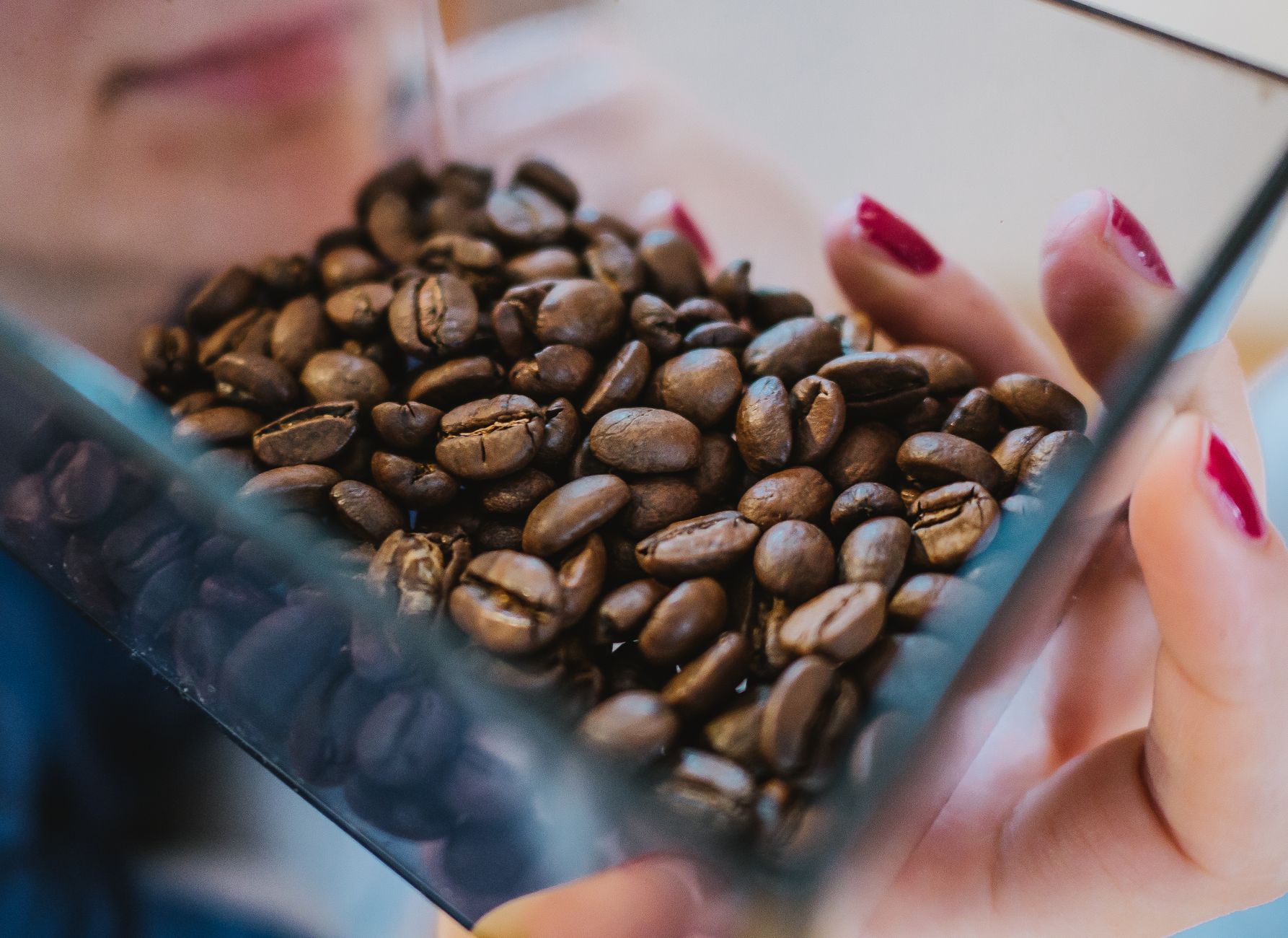
There are two primary types of burrs used in these machines: flat burrs and conical burrs. Flat burrs provide a more uniform particle distribution, which is often preferred for high-end espresso where clarity of flavor is paramount. Conical burrs, on the other hand, tend to produce a slightly more textured mouthfeel and are often more forgiving across a wider range of brew methods. Regardless of the geometry, the commercial nature of these grinders means they are built with hardened steel or titanium coatings to withstand the friction and heat of grinding hundreds of pounds of coffee per month without losing their edge.
Why Does the Burr Mechanism Matter for Your Business ROI?
Precision grinding directly impacts the bottom line through three primary vectors: waste reduction, labor efficiency, and customer retention. When you use a high-quality burr system, you minimize 'coffee waste' caused by dialing in the grind. In a professional setting, a grinder that drifts or produces inconsistent sizes requires the barista to purge more coffee to reach the desired setting, which can cost a business thousands of dollars annually in wasted specialty coffee beans.
According to the National Coffee Association USA (NCA), the consumer demand for specialty coffee continues to grow, with an increasing number of drinkers seeking specific flavor profiles. To meet this demand, businesses must provide consistency. If a customer has a perfect latte on Monday but a watery, sour one on Tuesday because the grind was inconsistent, you lose the lifetime value of that customer. Consistency is the foundation of scalability in the foodservice industry.
From an operational standpoint, commercial burr grinders integrated into an automated workflow reduce the training time for new baristas. When the equipment is reliable and the grind is stable, the staff spends less time troubleshooting the machine and more time engaging with guests. For those operating in high-traffic areas, such as those utilizing Sensa Coffee Service in Mount Pleasant SC: Complete Guide, this efficiency is the difference between a 2-minute wait time and a 5-minute wait time during the morning rush.
Furthermore, the durability of commercial burrs ensures that the equipment doesn't need to be replaced every year. Industrial-grade burrs are designed for longevity, meaning the depreciation of the asset is spread over a longer period. When we analyze the cost-per-cup, a professional burr grinder actually lowers the overhead by reducing the frequency of equipment failure and the cost of emergency repairs.
How to Implement Commercial Burr Grinders in Your Workflow
Integrating a commercial burr grinder requires more than just plugging it into a wall; it requires a strategic approach to placement, calibration, and maintenance. First, the grinder should be positioned immediately adjacent to the espresso machine or brewer to minimize the distance the ground coffee travels. Because coffee begins to oxidize and lose volatile aromatics the moment it is ground, a 'grind-on-demand' setup is the gold standard for 2026 operations.
Step-by-step implementation follows this professional trajectory:
- Calibration (Dialing In): Start by selecting a baseline setting based on the roast level of your Coffea arabica beans. Lighter roasts generally require a finer grind to extract sweetness, while darker roasts may need a slightly coarser setting to avoid bitterness.
- Weight Validation: Use a digital scale to ensure the dose is exact. A variation of even 0.5 grams can change the flavor profile of an espresso shot.
- Temperature Monitoring: In high-volume environments, burrs can heat up. When burrs get too hot, they can 'scorch' the coffee beans before they even hit the water. Ensure your workspace has adequate ventilation or use grinders with active cooling systems.
- Integration with Service: For businesses looking to scale without adding labor costs, pairing these grinders with an all-inclusive Sensa Coffee Service in Charleston SC: Complete Guide | Busy Bean Coffee ensures that the equipment is maintained by experts, preventing the dreaded 'drift' in grind size.
For those managing hospitality settings, such as those reading about Automatic Coffee Machines for Hotels and Hospitality in 2026, the focus should be on repeatability. The goal is for the 100th cup of the day to taste exactly like the first. This is achieved by locking in the burr settings and using a consistent bean roast profile.
Comparing Grinding Approaches in 2026
To understand the value proposition of professional burr systems, we must compare them to the alternatives commonly found in lower-tier foodservice operations.
| Feature | Traditional Blade/Cheap Mill | Generic/Budget AI Grinder | Modern Professional Burr System |
|---|---|---|---|
| Particle Uniformity | Very Low (Bimodal) | Moderate (Inconsistent) | Extremely High (Uniform) |
| Heat Management | Poor (Scorch risk) | Moderate | Advanced (Cooling systems) |
| Waste Level | High (Due to inconsistency) | Medium | Low (Precise dosing) |
| Longevity | Low (Dulls quickly) | Medium (Cheap parts) | High (Hardened Steel/Titanium) |
| Flavor Profile | Bitter/Sour mix | Flat/Generic | Vibrant/Nuanced |
As the table demonstrates, the professional approach isn't just about the 'taste'—it's about the systemic reduction of waste and the increase in equipment lifespan. A generic grinder may seem like a cost-saver initially, but the increased waste of expensive specialty coffee beans often offsets the initial savings within the first six months of operation.

Common Mistakes to Avoid with Commercial Burr Grinders
One of the most frequent mistakes I see in the field is the failure to clean the burr chamber. Coffee beans contain natural oils that, over time, build up as a sticky residue on the burrs. This residue not only goes rancid, adding a 'stale' taste to fresh coffee, but it also traps small particles of coffee, leading to inconsistent grind sizes. Regular cleaning with a vacuum or specialized grinder cleaning tablets is essential.
Another critical error is 'adjusting on the fly' without purging. When a barista changes the grind setting from coarse to fine, there is still a small amount of coffee from the previous setting trapped in the chute. If they don't purge a small amount of coffee (about 1-2 grams), the first shot of the new setting will be a mixture of two different grind sizes, leading to a failed extraction and a wasted shot.
Furthermore, many businesses ignore the impact of humidity on their burr settings. In coastal areas like those served by Sensa Coffee Service in Savannah GA: Complete Guide | Busy Bean Coffee, the high humidity can cause coffee beans to swell slightly. This means that a setting that worked yesterday might produce a 'too-fine' grind today. Professional baristas must 'dial in' their grinders every morning to account for these atmospheric changes.
Finally, avoid overloading the hopper. While it's tempting to fill the grinder to the brim to save time, coffee beans degrade when exposed to air. Keeping a smaller amount of beans in the hopper and refilling more frequently ensures that the oils remain fresh, which is the only way to truly showcase the quality of a high-end coffee bean.
Frequently Asked Questions
Do all commercial burr grinders use the same material?
No, materials vary significantly based on the intended volume and price point. Entry-level commercial grinders may use hardened steel, which is durable but can dull over several years. High-end professional models often utilize ceramic burrs or titanium-coated steel. Ceramic burrs are prized for their ability to stay sharp longer and produce less heat during the grinding process, which is essential for preserving the volatile aromatics of specialty coffee. Titanium coatings are used in ultra-high-volume settings to prevent wear and tear, ensuring the grind remains consistent even after processing thousands of kilograms of coffee.
How often should the burrs be replaced in a commercial setting?
Replacement frequency depends entirely on the volume of coffee processed and the type of burrs used. For a typical cafe processing 5-10kg of coffee per day, steel burrs may need replacement every 12 to 24 months. Ceramic burrs can often last longer but are more prone to chipping if a foreign object (like a small stone) enters the hopper. The key indicator that it is time for replacement is when you can no longer 'dial in' the grind—meaning that even at the finest setting, the coffee flows through the machine too quickly. This indicates the edges of the burrs have rounded off and can no longer cut the beans precisely.
Can one burr grinder handle both espresso and drip coffee?
While technically possible, it is highly inefficient in a professional environment. Espresso requires an extremely fine, powdery grind, while drip or pour-over requires a coarse, salt-like consistency. Switching between these two settings on a single grinder requires a significant amount of 'purging' to clear the old particles. For any business aiming for efficiency, we recommend separate grinders for each method. This is why we suggest looking into Sensa Coffee Service in Raleigh NC (2026 Overview), where integrated systems are designed to handle multiple beverage profiles without compromising on speed or quality.
Does the size of the burr affect the quality of the coffee?
Yes, larger burrs generally result in a more consistent grind and better heat management. Because a larger surface area is cutting the bean, the beans spend less time in the grinding chamber, which reduces the amount of friction-induced heat transferred to the coffee. This is particularly important for light roasts, which are more sensitive to heat. While smaller burrs are fine for low-volume offices, any business utilizing a foodservice coffee program in Chicago IL: Complete Guide should prioritize larger diameter burrs to maintain flavor integrity during peak hours.
What is the 'popcorning' effect in burr grinders?
'Popcorning' occurs when the beans are not pushed effectively into the burrs, causing them to bounce around in the chamber. This creates an inconsistent grind because the beans aren't being fed into the cutting edge at a steady rate. This is usually caused by either using beans that are too small or using a hopper that doesn't have a proper agitation system. Modern commercial grinders solve this with 'anti-clumping' technology or weighted hopper systems that ensure a constant, steady flow of beans into the burrs, eliminating the air gaps that cause popcorning.
Conclusion
Investing in professional commercial burr grinders is not just a choice for the 'coffee purist'; it is a strategic business decision. By ensuring particle uniformity, you reduce waste, increase the speed of your service, and guarantee that every customer receives a high-quality product regardless of who is behind the machine. In the competitive landscape of 2026, consistency is your strongest marketing tool.
Whether you are running a boutique cafe in Mount Pleasant, SC, or a large-scale hotel operation, the technical precision of your grind defines the quality of your brand. To ensure your equipment is always performing at its peak without the stress of manual maintenance, consider a managed membership that covers installation and professional upkeep.
For a deeper dive into how to select the perfect equipment for your specific volume and budget, return to our Ultimate Guide to Commercial Coffee Grinders for Businesses. If you are ready to upgrade your beverage program with a predictable monthly fee, visit Busy Bean Coffee today.
Free Coffee Pairing Guide & Specialty Roast Cheat Sheet
Unlock the secrets of perfect brewing ratios, water temperatures, and specialty roast profiles. Download the guide.