📖This article is part of the complete guide to Ultimate Guide to Coffee Syrups for Foodservice Businesses.
In my experience working with high-end boutiques and luxury hotels in Mount Pleasant, SC, the difference between a 'generic' coffee station and a 'branded experience' often comes down to the smallest visual details. I once saw a mid-sized hotel replace standard industrial syrup bottles with custom-labeled versions of their own signature house blend syrups; within one quarter, their guest satisfaction scores regarding the breakfast experience rose noticeably. When you remove the distracting commercial logos of third-party brands and replace them with your own identity, you stop selling a commodity and start selling a curated brand.
For a comprehensive overview of how to integrate these elements into your operation, explore our Ultimate Guide to Coffee Syrups for Foodservice Businesses.
What are Custom Coffee Syrups and Branded Labeling?
📚
Definition
Custom coffee syrups refer to the practice of using high-quality, professional-grade syrups that are rebranded with a business's own labels (white-labeling) or formulated with specific flavor profiles unique to that establishment to create a proprietary beverage experience.
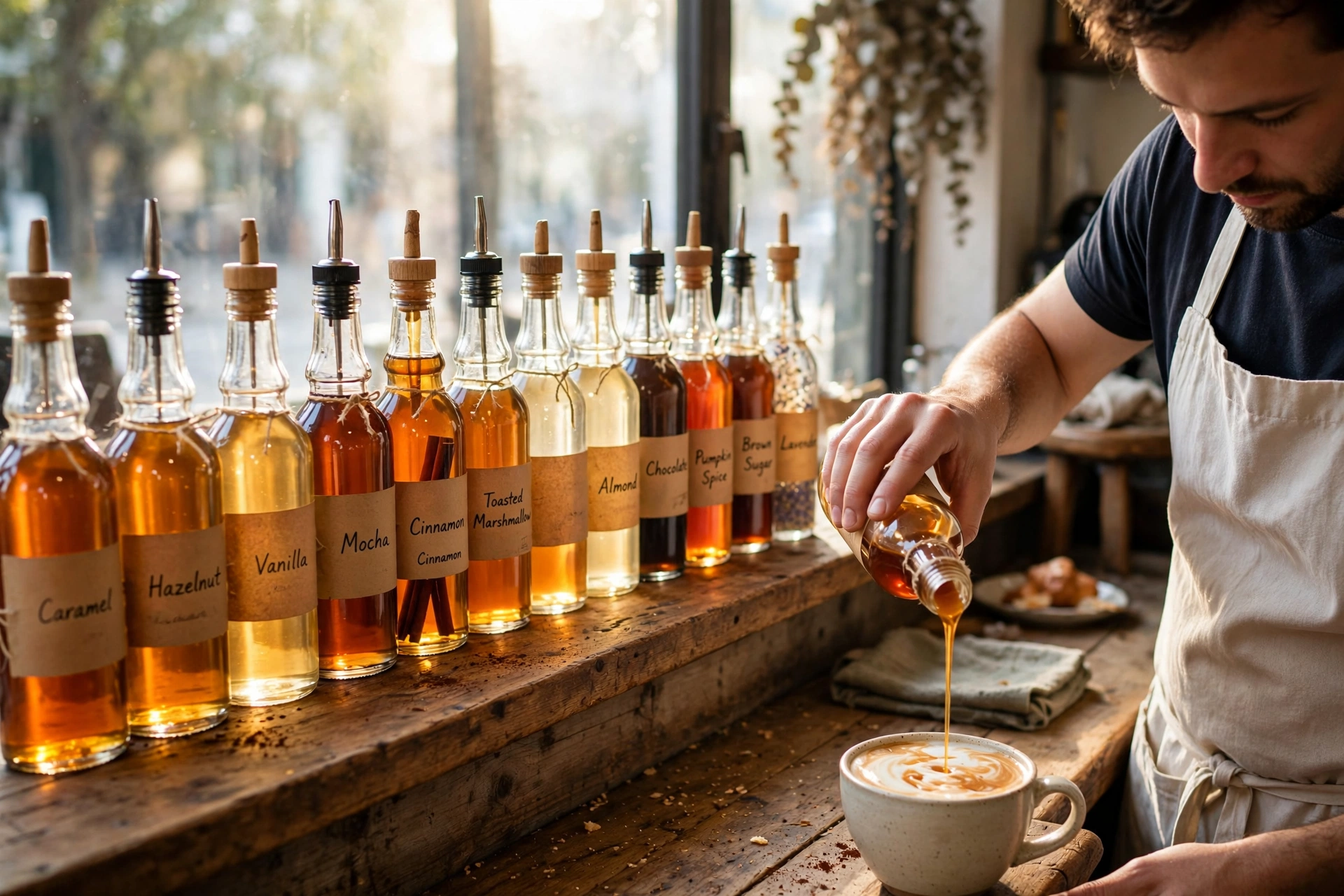
Custom coffee syrups are not just about the liquid inside the bottle; they are about the psychological signal sent to the customer. When a guest sees a bottle that bears the logo of the establishment they are visiting, it creates a perception of exclusivity and ownership. In the specialty coffee world, this is similar to how a roastery creates a 'House Blend' rather than serving a generic regional coffee. By controlling the visual presentation of the syrups used in your espresso machine drinks, you align the sensory experience of the taste with the visual identity of your brand.
From a technical standpoint, this usually involves partnering with a wholesale supplier who provides unbranded or 'white label' options. Instead of the customer seeing a mass-market brand they can buy at any grocery store, they see a curated product that feels like it was crafted specifically for that location. This is particularly effective for businesses in Mount Pleasant, SC, where the competitive luxury market demands a high level of attention to detail in every guest touchpoint.

Why Does Branded Syrup Labeling Matter for Your Business?
Branding your coffee additives matters because it removes the 'commodity' feel from your beverage program. When you use a generic bottle, you are essentially advertising another company's brand while the customer is consuming your product. By switching to custom coffee syrups, you reclaim that real estate and reinforce your own value proposition. According to the National Coffee Association USA (NCA), consumer preferences are increasingly shifting toward 'experiential' consumption, meaning the environment and brand story are almost as important as the caffeine content itself. NCA USA reports that personalized experiences drive higher customer loyalty and willingness to pay a premium price.
There are three primary reasons why this strategy is fundamental for growth in 2026:
- Increased Perceived Value: A drink made with a 'Signature Velvet Vanilla' syrup branded to your hotel feels more expensive than one made with a generic brand. This allows you to justify a higher price point per cup.
- Brand Cohesion: Every touchpoint, from the napkins to the syrup bottles, should tell the same story. When your labeling is consistent, it signals professional maturity and attention to detail.
- Customer Curiosity and Engagement: Custom labels invite questions. "What is this flavor?" becomes a conversation starter between the barista and the customer, allowing your staff to explain the curated nature of your coffee service.
In my experience, businesses that invest in custom labeling see a significant drop in 'price shopping.' When the product is unique to your establishment, the customer cannot compare the price of your latte to the one down the street because the ingredients (perceived or actual) are different. This is a key strategy for those implementing a Sensa Coffee Service in Mount Pleasant SC: Complete Guide to ensure the hardware and the consumables both reflect a premium standard.
How to Implement Custom Coffee Syrups in Your Workflow
Implementing a custom labeling system doesn't require you to build a chemical plant; it requires a strategic partnership with a supplier and a keen eye for design. The core approach is to source a high-performance base syrup and apply a professional, water-resistant label that survives the humid environment of a coffee bar.
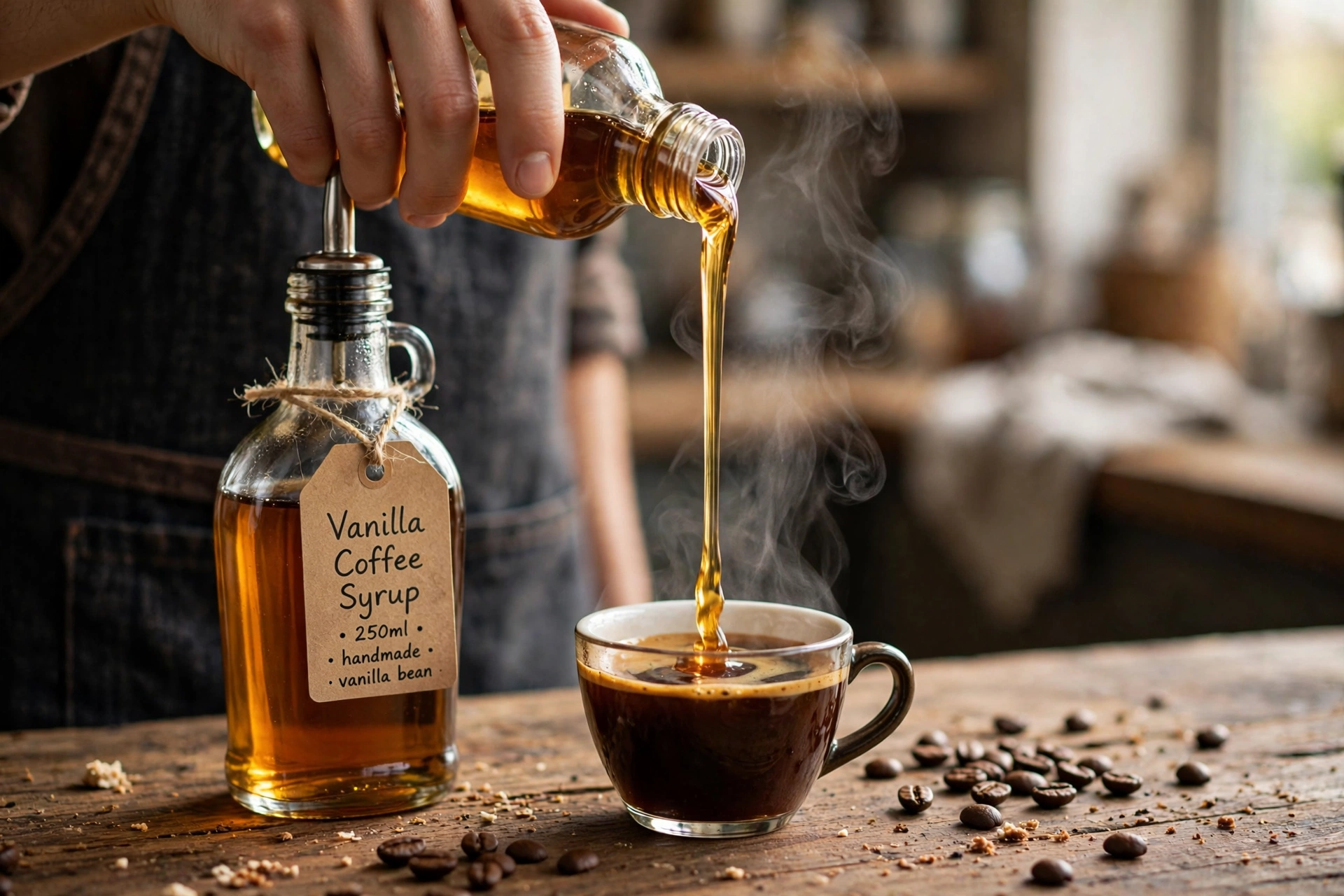
First, identify your 'hero' flavors. You don't need to custom-label every single option. Start with the most popular choices, such as those discussed in our guide on Vanilla Coffee Syrup: Enhancing Commercial Coffee Programs. Once you have your core list, work with a graphic designer to create labels that match your brand's color palette and typography. It is essential to use vinyl or BOPP (Biaxially Oriented Polypropylene) materials, as standard paper labels will peel and smudge when they come into contact with sticky syrup drips.
Second, decide on your bottling strategy. Some businesses prefer to buy bulk containers and bottle the syrups themselves into smaller, branded glass bottles. Others prefer to buy pre-filled white-label bottles. For those managing large-scale operations, such as those using Automatic Coffee Machines for Hotels and Hospitality in 2026, the pre-filled option is significantly more efficient and reduces the risk of contamination.
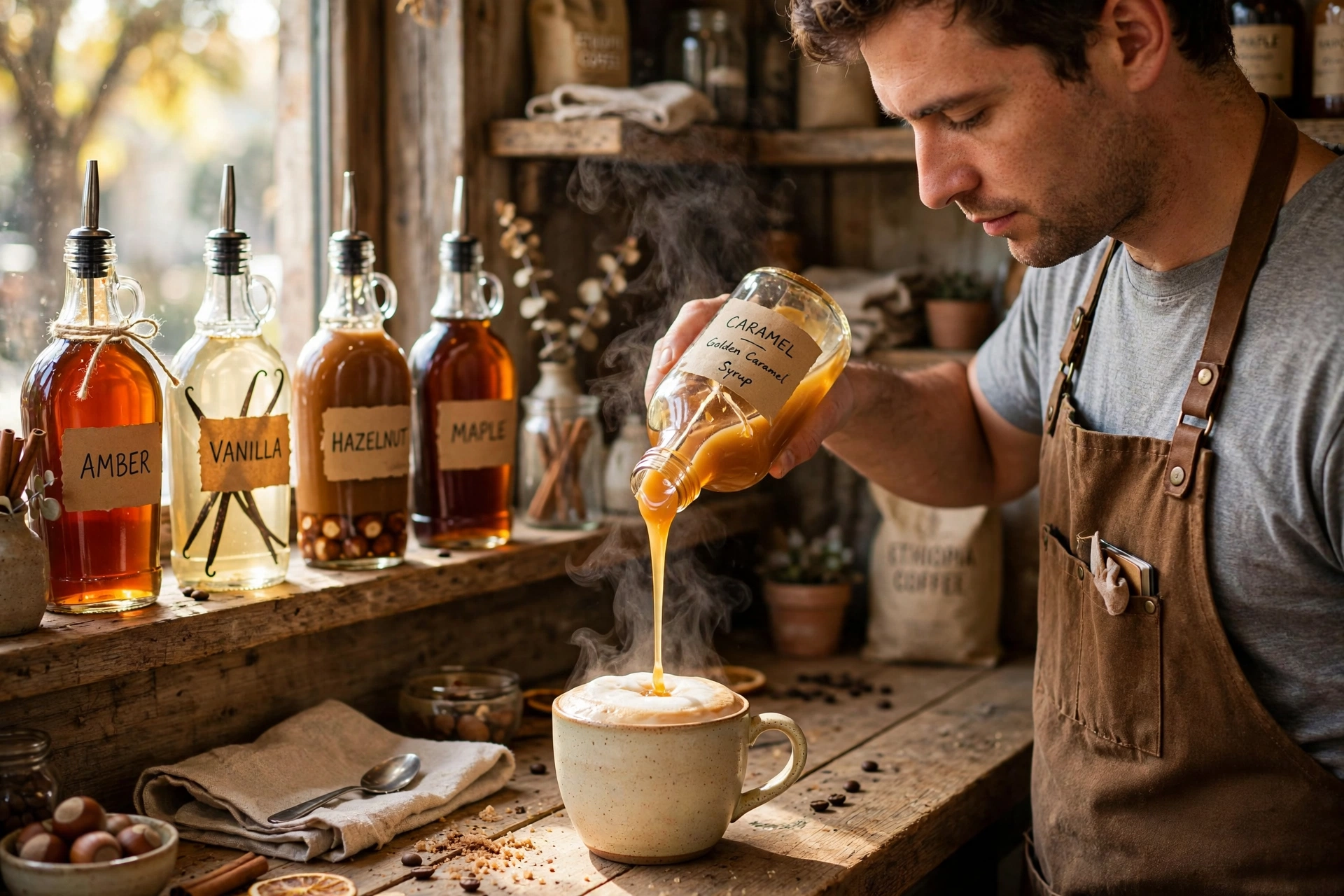
Third, train your baristas on the 'story' of the custom syrup. The label is the hook, but the explanation is the sale. When a barista can say, "This is our signature toasted caramel, curated specifically for our morning roast," it elevates the entire transaction. If you are looking to scale this across multiple locations, consider how you would integrate this with a Sensa Coffee Service in Charleston SC: Complete Guide | Busy Bean Coffee to maintain consistency in both equipment and consumables across the region.
Custom Branding vs. Generic Sourcing
When deciding between a custom-branded approach and generic sourcing, you must weigh the initial effort against the long-term brand equity. Generic sourcing is faster and cheaper up front, but it offers zero brand growth.
| Feature | Traditional/Generic Approach | Generic AI/Cheap Labeling | Modern Branded Approach |
|---|---|---|---|
| Guest Perception | Commodity / Standard | Unprofessional / DIY | Premium / Curated |
| Brand Equity | Zero (Promotes other brands) | Low (Looks 'cheap') | High (Builds own identity) |
| Setup Effort | None | Low | Medium (Design + Sourcing) |
| Price Power | Market Average | Low to Average | Premium Pricing |
As the table shows, the 'Generic AI/Cheap' approach—where businesses simply print labels on a home printer—often does more harm than good. It looks amateur and can actually lower the perceived quality of the coffee. The Modern Branded Approach requires a professional commitment to design and material quality, but it is the only path that leads to a sustainable premium image.
Common Mistakes to Avoid with Custom Labeling
I've seen many businesses attempt to customize their syrup station only to fail because they overlooked the operational realities of a busy cafe. The most common mistake is ignoring the 'stickiness factor.' Using paper labels in a coffee environment is a recipe for disaster; within a week, the labels will be peeling and stained. Always insist on waterproof, industrial-grade adhesives.
Another frequent error is over-complicating the menu. When you introduce custom coffee syrups, there is a temptation to create 20 different unique flavors. This creates operational friction for the barista and decision paralysis for the customer. Stick to 4-6 high-impact, branded flavors and supplement the rest with standard options. For more on picking the right variety, see our list of Best Coffee Syrup Flavors for Restaurants and Cafes.
Finally, avoid neglecting the regulatory requirements. While you are changing the label, you must ensure that you are still complying with food safety standards. According to the U.S. Food and Drug Administration (FDA), any repacked food or beverage must maintain clear ingredient lists and allergen warnings. FDA.gov guidelines specify that transparency in ingredients is non-negotiable, even for branded luxury products. If you move a syrup from a bulk container to a branded bottle, you must ensure the allergen information (like dairy or soy) is accurately transcribed onto the new label.

Deep Dive: The Psychology of 'Signature' Products
Why does a custom label actually change the way a customer tastes the coffee? It is a phenomenon known as 'expectancy theory' in sensory science. When a consumer believes a product is unique or crafted specifically for them (or the venue), their brain primes itself to perceive higher quality. This is why specialty coffee—which focuses on the specific origin of the Coffea arabica bean—can command a price 5x higher than commodity coffee. By branding your syrups, you are applying the same logic to your additives.
When you utilize a high-end Coffee Service like Busy Bean Coffee, you aren't just buying a machine; you are buying an ecosystem. A branded syrup program is the final layer of that ecosystem. For instance, if you are running a Foodservice Coffee Program in Rock Hill SC: Complete Guide, combining a high-end Sensa machine with a signature branded syrup line creates a 'moat' around your business. Competitors can buy the same machine, but they cannot replicate your signature flavor profile and brand identity.
💡
Key Takeaway
Custom labeling shifts the customer's focus from the price of the ingredient to the value of the experience, allowing for higher margins and stronger brand loyalty.
Frequently Asked Questions
How do I find a white-label syrup supplier?
Finding a white-label supplier typically involves contacting wholesale coffee distributors and asking for 'unbranded' or 'private label' options. Many premium syrup manufacturers offer this service to foodservice businesses to help them build brand equity. Ensure the supplier can provide the technical data sheets for the syrups so you can accurately list ingredients on your custom labels. If you are scaling across multiple sites, such as those utilizing Sensa Coffee Service in Raleigh NC (2026 Overview), look for a supplier with a robust distribution network to avoid shipping delays.
Do custom labels affect the shelf life of the syrup?
No, the label itself does not affect the chemical stability of the syrup. However, if you are bottling the syrup yourself from bulk containers, you must follow strict sanitary protocols to avoid introducing contaminants. We recommend using NSF-certified equipment and sanitized glass or PET bottles. NSF International provides the gold standard for food equipment safety, and ensuring your bottling area meets these standards is essential to prevent spoilage and ensure guest safety.
What is the most cost-effective way to start custom branding?
The most cost-effective entry point is 'Partial Branding.' Instead of a full wrap-around label, start with a high-quality, branded neck-tag or a small, professional logo sticker placed over the original brand's logo. This allows you to test the guest response without investing in thousands of custom-printed bottles. As you grow and move toward a more comprehensive Business Coffee Membership in Boston MA: Complete Guide style of operation, you can transition to full custom labeling for your top three selling flavors.
Can I create my own syrup flavors from scratch?
While possible, creating commercial-grade syrups from scratch is labor-intensive and difficult to scale. Most successful foodservice businesses use a 'Base + Infusion' strategy. They start with a professional wholesale base—like those found in Wholesale Coffee Syrups: Bulk Buying for Businesses—and then add a unique botanical or house-made extract. This ensures a consistent viscosity and shelf life while still allowing the business to claim a 'unique house recipe.'
How do I handle allergen labeling on custom bottles?
This is the most critical part of the process. You must list all allergens (e.g., milk, soy, nuts) clearly on the label. The best practice is to maintain a master ingredient list from your supplier and use a professional label template that includes an 'Ingredients' section. Failure to do this not only risks guest safety but also puts your business at risk of regulatory fines. Always cross-reference your labels with the most recent FDA guidelines on food labeling.
Conclusion
Custom labeling your coffee syrups is one of the most efficient ways to transition your beverage program from a utility to a branded experience. By removing the logos of mass-market brands and replacing them with your own identity, you increase the perceived value of every cup served. Whether you are managing a boutique hotel in Mount Pleasant or a high-traffic cafe in a metropolitan hub, the psychology remains the same: guests value curation over commodities.
Remember that the visual presentation must be matched by the quality of the coffee itself. A beautiful label on a mediocre drink will only highlight the lack of quality. For the best results, pair your branded syrups with a professional-grade equipment setup and premium beans. For a comprehensive deep dive into how to select and manage these ingredients, refer back to our Ultimate Guide to Coffee Syrups for Foodservice Businesses.
Ready to elevate your business's coffee experience with premium equipment and managed solutions? Visit Busy Bean Coffee to explore our all-inclusive memberships.
Free Coffee Pairing Guide & Specialty Roast Cheat Sheet
Unlock the secrets of perfect brewing ratios, water temperatures, and specialty roast profiles. Download the guide.