📖This article is part of the complete guide to Ultimate Guide to Outfitting a Coffee Shop with Equipment.
In my experience working with high-volume cafes, the most expensive mistake a founder can make is purchasing a 'prosumer' machine thinking it can handle a commercial rush. I have seen businesses lose thousands in revenue during a morning peak simply because their boiler couldn't keep up with the demand for steamed milk and back-to-back shots. If your machine cannot maintain thermal stability for 50 consecutive drinks, you don't have a professional tool; you have a bottleneck.
For a comprehensive overview of how these machines fit into your broader strategy, explore our Ultimate Guide to Outfitting a Coffee Shop with Equipment.
What are Commercial Espresso Machines?
📚
Definition
Commercial espresso machines are high-capacity brewing systems engineered to produce multiple shots of espresso consistently under high pressure and temperature, featuring industrial-grade boilers and heavy-duty pumps to support continuous operation.
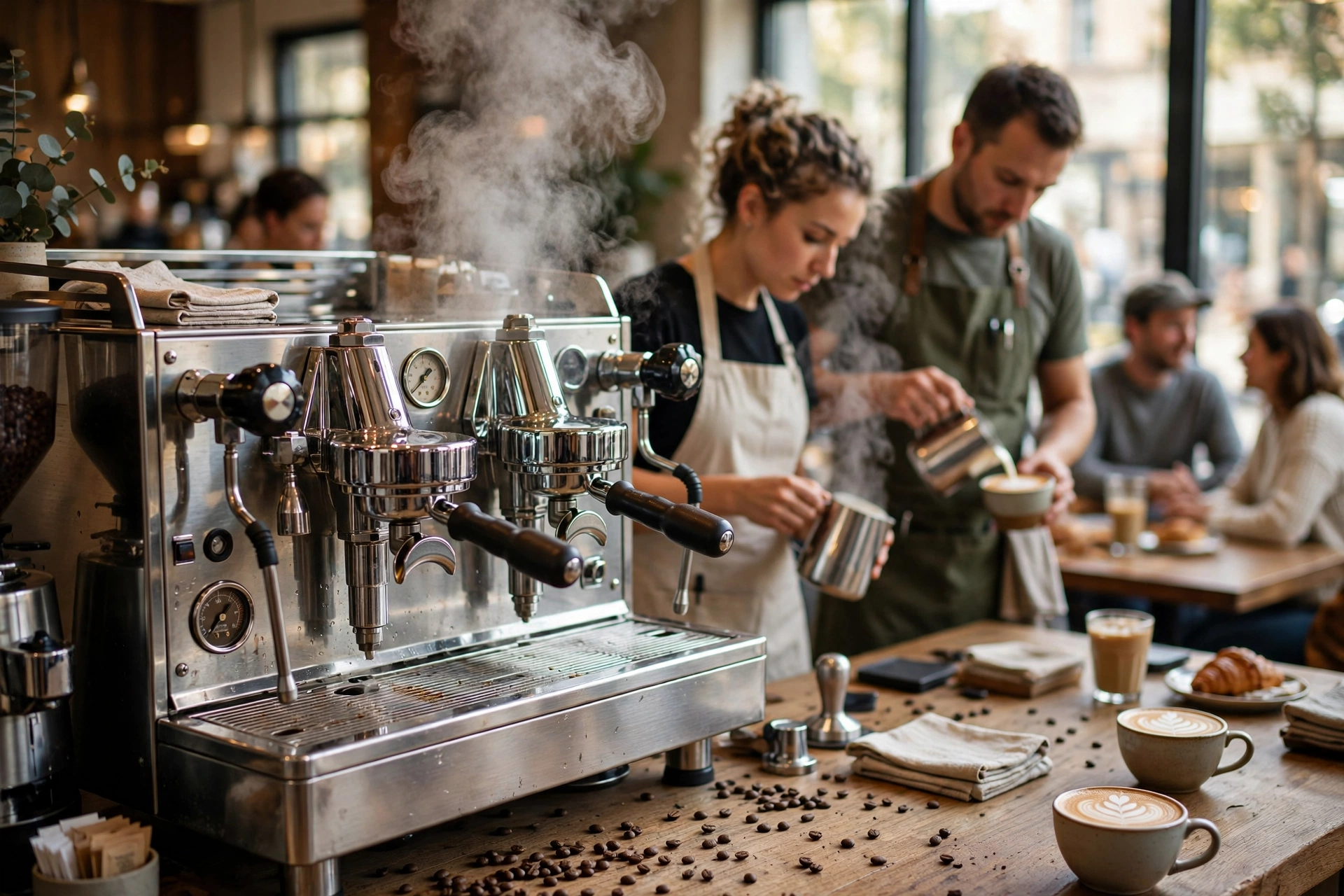
Commercial espresso machines are the operational heart of any specialty coffee establishment. Unlike home machines, these units are built to withstand 10 to 18 hours of daily use without overheating or losing pressure. They typically utilize larger group heads and powerful steam wands to allow baristas to multitask, such as pulling a shot while simultaneously frothing milk for a latte. The primary goal of these machines is repeatability; whether it is the first drink of 6:00 AM or the last drink at 6:00 PM, the extraction must be identical.
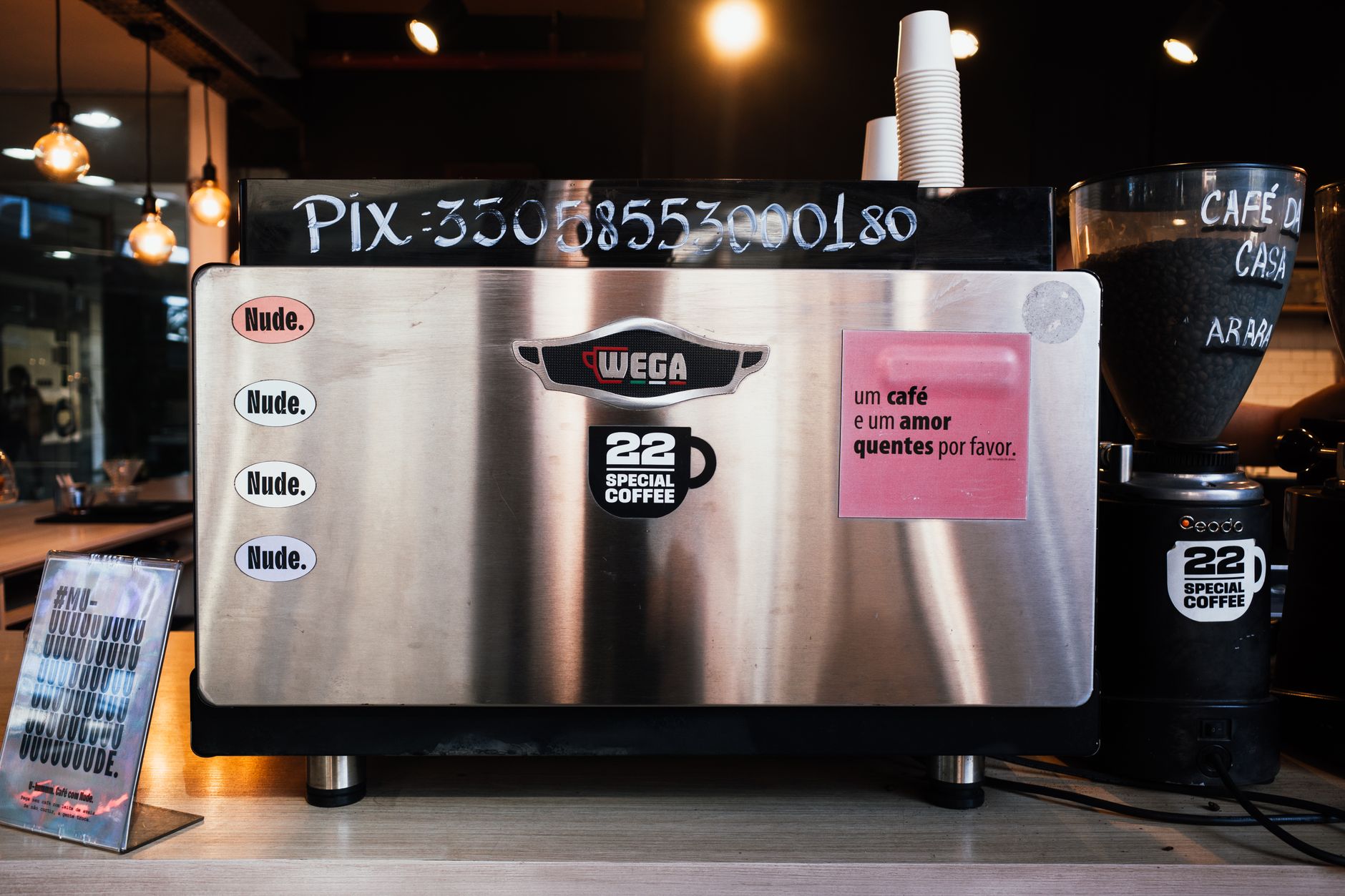
When selecting these machines, the focus shifts from simple aesthetics to thermal stability and volumetric control. Modern units often employ PID (Proportional-Integral-Derivative) controllers to manage temperature within a fraction of a degree. This precision is essential when working with Coffea arabica, where a slight temperature swing can shift a shot from sweet and balanced to unpleasantly sour or burnt. In the context of a professional beverage program, these machines are often paired with specific coffee grinders for shops to ensure the grind size matches the machine's pressure profile.
Why the Right Machine Matters for Your Business ROI
Choosing the correct commercial espresso machine directly impacts your labor costs and customer retention. The primary reason this matters is throughput speed. A machine with a small boiler requires "recovery time" between shots; in a busy environment, a 30-second delay per drink can lead to a queue that stretches out the door, causing potential customers to leave. According to the National Coffee Association USA (NCA), consumer demand for specialty coffee continues to rise, meaning the expectation for speed and quality is higher than ever in 2026.
Beyond speed, consistency is the driver of brand loyalty. If a customer's cappuccino tastes different every time they visit, they will stop returning. High-end commercial machines utilize saturated groups or multi-boiler systems to ensure that the water temperature remains constant regardless of how many drinks are being made. This technical reliability reduces the need for constant barista intervention and adjustment, which lowers the stress on your staff and minimizes waste from "dialing in" a machine that refuses to hold its temperature.
Furthermore, the sanitary requirements for these machines are rigorous. To meet industry standards, professional equipment must be easy to disassemble and clean. As noted by NSF International, equipment that adheres to NSF/ANSI 4 standards ensures that the materials used are non-toxic and that the machine can be properly sanitized to prevent biofilm buildup in the boilers. This protects your business from health code violations and ensures the purity of the specialty coffee you serve.
How to Select the Right Espresso Machine for Your Workflow
Selecting a machine requires a clinical analysis of your projected volume and your staff's skill level. The first step is determining the number of group heads you need. A single-group machine is suitable for low-volume offices or tiny kiosks, but for a standard coffee shop, a two-group or three-group machine is the baseline. This allows two baristas to work side-by-side or one barista to pull double shots while maintaining a steady flow of drinks.
Once the size is determined, you must choose between manual, semi-automatic, and super-automatic systems. In my experience, semi-automatic machines are the gold standard for specialty shops because they allow the barista to control the tamping and timing while the machine handles the water volume. For those looking for maximum consistency with minimal training, bean-to-cup machines provide an alternative, though they often lack the nuanced flavor control required for high-end coffee roasting profiles.
Step-by-Step Selection Process:
- Analyze Peak Volume: Calculate your "drinks per hour" during the morning rush. If you exceed 60 drinks per hour, you need a multi-boiler system.
- Evaluate Staff Skill: Do you have certified baristas or general employees? High-end manual machines require significant training; automated systems reduce this barrier.
- Check Utility Requirements: Professional machines require dedicated 220V power and direct water lines. Ensure your coffee shop layout and design planning guide accounts for these plumbing needs.
- Verify Water Quality: You cannot put tap water into a commercial machine without filtration. Mineral buildup will destroy a heating element in months. Always pair your machine with a high-grade filtration system.
At Busy Bean Coffee, we've seen operators overlook the synergy between equipment. For example, pairing a high-end espresso machine with an inadequate steaming system leads to bottlenecks. This is why we often suggest integrating automatic milk frothers for coffee shops to handle the milk volume while the barista focuses on the extraction. This division of labor increases efficiency by nearly 30% in high-traffic environments.
Commercial Espresso Machines vs. Generic Alternatives
Many new owners are tempted by "prosumer" machines or cheap imports. However, the difference lies in the internal components. Prosumer machines use thinner copper or aluminum that cannot maintain heat under load. Professional machines use heavy brass or stainless steel, often with dual boilers—one dedicated to brewing and one to steaming—so that you never have to choose between a hot shot and a frothy latte.
| Feature | Prosumer/Home Approach | Generic/Cheap AI-Driven | Professional Commercial Approach |
|---|---|---|---|
| Thermal Stability | Fluctuates during peak use | Unpredictable/Low | PID-Controlled / Rock Solid |
| Durability | 2-3 years of light use | High failure rate/Poor parts | 10+ years with maintenance |
| Throughput | 1-2 drinks per 5 mins | Inconsistent volume | 20+ drinks per hour/group |
| Support | Consumer warranty | Limited/Non-existent | Specialized technician networks |

Using a non-commercial machine in a commercial setting is a recipe for disaster. I once consulted for a cafe in Mount Pleasant, SC, where the owner bought a high-end home machine. Within three months, the pump failed because it wasn't designed for the duty cycle of a business. The resulting downtime cost them approximately $1,200 in lost sales over a single weekend. Investing in professional gear is not just about quality; it is about risk mitigation.
Common Mistakes to Avoid When Buying Equipment
One of the most frequent errors I see is over-buying. A shop that only serves 40 people a day does not need a $20,000 four-group machine. Over-investing in hardware leaves you with less capital for marketing and high-quality coffee beans. Match the machine to your actual projected volume, not your
Recommended Readings
To deepen your understanding of these topics, we recommend reading the following articles:
- Ultimate Guide to Outfitting a Coffee Shop with Equipment
- Essential Commercial Drip Coffee Brewers
- Instant Coffee Dispensers for Busy Cafes
- Best POS Systems for Coffee Shops
Free Coffee Pairing Guide & Specialty Roast Cheat Sheet
Unlock the secrets of perfect brewing ratios, water temperatures, and specialty roast profiles. Download the guide.