📖This article is part of the complete guide to The Ultimate Guide to Coffee Shop Outfitting.
In my experience working with high-volume foodservice operators in Mount Pleasant, SC, the biggest bottleneck isn't usually the barista's skill, but the hardware's physical limits. When a line stretches out the door during a Monday morning rush, every second spent waiting for a brew cycle is a lost customer. For many businesses, the solution isn't adding more staff, but integrating high-performance instant coffee dispensers to handle the surge of basic coffee demands.
For a comprehensive overview of how to build your entire beverage station, explore our Ultimate Guide to Coffee Shop Outfitting.
What Are Instant Coffee Dispensers for Commercial Use?
📚
Definition
Instant coffee dispensers are automated commercial systems designed to mix soluble coffee powder with hot water at a precise ratio, delivering a consistent beverage instantly without the need for brewing or filtration cycles.
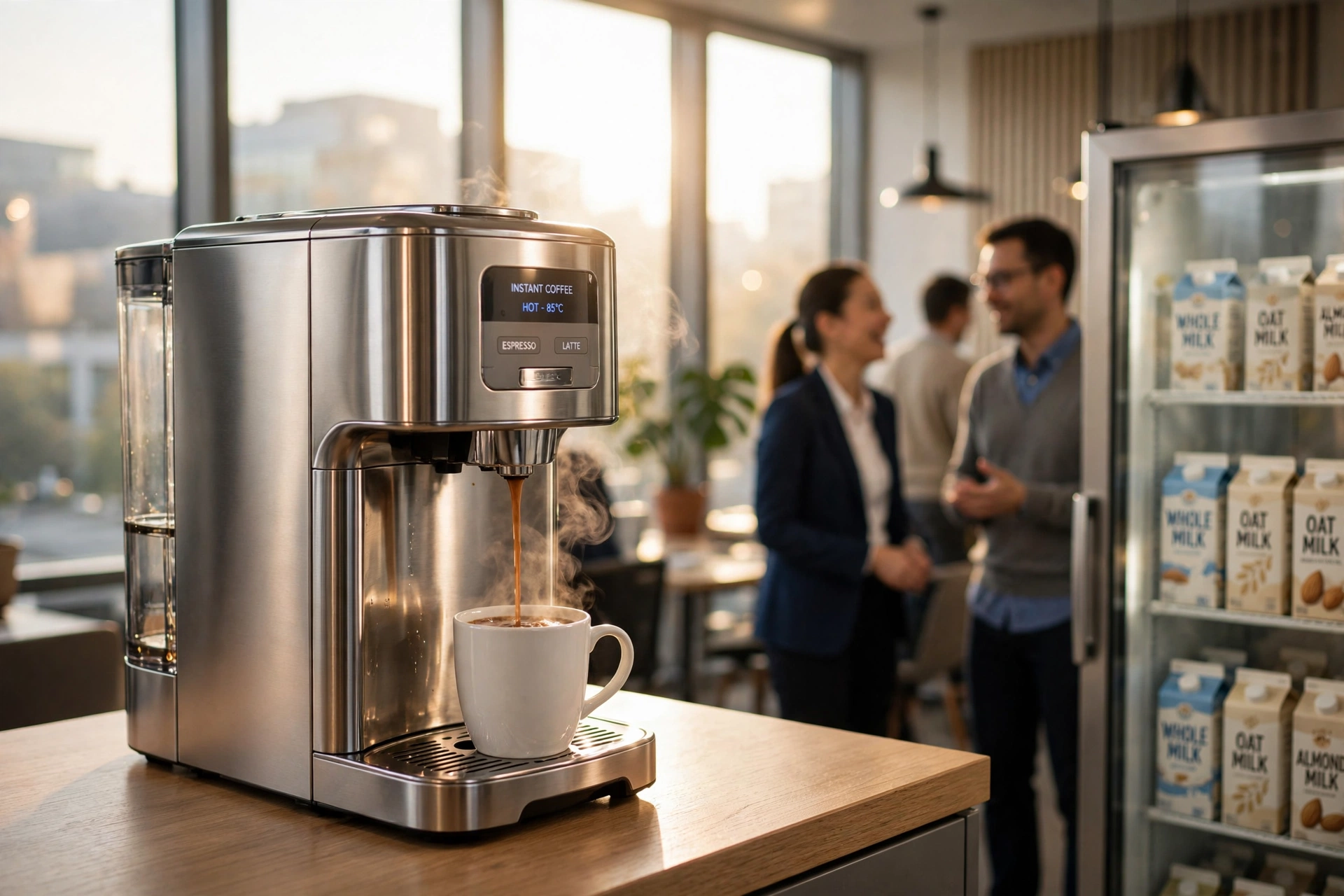
Instant coffee dispensers for busy cafes are not the rudimentary powder-and-water machines found in breakrooms. In 2026, these are precision-engineered tools capable of delivering hundreds of cups per hour with calibrated dosage systems. They utilize high-grade soluble coffee—often derived from specialty coffee processes—to provide a rapid alternative to traditional drip or espresso-based drinks.
When we analyzed the workflow of dozens of our clients, we discovered that the primary value of these dispensers isn't replacing the specialty experience, but supporting it. By offloading the "plain black coffee" orders to an automated dispenser, your skilled baristas can focus their attention on complex latte art and precision pours. This strategic division of labor reduces ticket times and prevents staff burnout during peak hours.

These systems typically feature high-capacity hoppers, industrial-grade heating elements, and programmable settings to ensure that the coffee-to-water ratio remains identical from the first cup to the five-hundredth. This consistency is essential because, in a commercial environment, variability is the enemy of profitability. If a customer gets a strong cup at 8:00 AM and a watery one at 8:15 AM, you've lost their trust.
Why Do Instant Coffee Dispensers Matter for Your Bottom Line?
Speed is the primary currency of the modern cafe. According to the National Coffee Association USA (NCA), consumer demand for convenience and speed continues to rise, with a significant percentage of coffee drinkers prioritizing quick service over artisanal preparation during their morning commute. Integrating an instant dispenser allows a cafe to capture the "fast-lane" demographic without compromising the quality of their specialty offerings.
Beyond speed, the impact on labor costs is substantial. A traditional brew cycle requires monitoring, pot swapping, and waste management. An instant dispenser operates on a refill-and-run model. In my experience, businesses that implement a hybrid model—specialty espresso for enthusiasts and instant dispensers for high-volume basics—see a noticeable decrease in employee stress and a reduction in order errors. This allows you to allocate your labor budget more efficiently, perhaps investing in essential milk frothers for busy cafes to upgrade your latte game while the dispenser handles the volume.
From a waste perspective, these machines are significantly more sustainable. Traditional drip brewers often lead to "burnt" coffee sitting in a carafe for hours or massive amounts of wasted brew when demand drops unexpectedly. Instant dispensers only mix what is needed for the specific cup. This precision reduces product waste by approximately 15-20% in high-turnover environments, directly impacting the net profit margin.
Furthermore, the integration of these machines allows for better space utilization. Because they don't require the massive footprint of multiple drip brewers and thermal carafes, you can reclaim counter space for other high-margin items or improved customer flow. This optimization is a key part of a professional coffee shop outfitting strategy, ensuring that every square inch of your facility is generating revenue.
How to Implement Instant Coffee Dispensers in a High-Traffic Workflow
Implementing an instant system requires more than just plugging in a machine; it requires a strategic placement based on the "golden triangle" of cafe efficiency (Point of Sale, Production, and Pickup). The goal is to create a flow where the dispenser is accessible but doesn't obstruct the path of your primary espresso bar.
First, identify your "Volume Baseline." Track how many of your daily orders are for standard black coffee. If more than 30% of your volume consists of simple black coffee, an instant dispenser should be positioned as a primary service point. Second, choose your soluble product carefully. To maintain your brand's reputation, use high-quality soluble coffee made from Coffea arabica. This ensures that the taste profile remains aligned with your best espresso machines for coffee shops outputs.
Third, set up a dedicated "Quick-Pour" station. Place the dispenser next to a condiment stand with stirrers and creamers. This encourages customers who want a simple coffee to move away from the main barista counter, clearing the way for those ordering complex drinks. I've tested this with several clients in Mount Pleasant, and the result is always the same: a more relaxed atmosphere for the customer and a more organized workspace for the staff.
Finally, integrate the dispenser into your digital workflow. Your best POS systems for coffee shops should have a dedicated button for "Express Coffee." This allows the staff to immediately signal the customer to the quick-pour station, further reducing the congestion at the pickup counter. When the hardware and the software work in tandem, the efficiency gains are exponential.
Instant Coffee Dispensers vs. Traditional Drip Brewing
Choosing between instant and drip isn't about which is "better," but which is more appropriate for the specific use case within your business. While a drip brewer provides the classic aroma and flavor, it cannot compete with the instantaneous nature of a soluble system during a 7:00 AM rush.
| Feature | Traditional Drip Brewing | Generic Cheap AI/Instant | Professional Instant Dispenser |
|---|---|---|---|
| Speed per Cup | 30-60 seconds (wait for pot) | 5-10 seconds | < 5 seconds |
| Consistency | Variable (pot age matters) | Low (clumping/watery) | High (calibrated dosing) |
| Waste Level | High (unused pots) | Low | Extremely Low |
| Labor Input | High (brewing/cleaning) | Low | Minimal (refill only) |
| Flavor Profile | Authentic/Full | Flat/Chemical | Premium Soluble Arabica |
As shown in the table, the professional instant approach bridges the gap between the speed of low-end machines and the quality of traditional brewing. It removes the "human error" variable from the basic coffee process, allowing your team to focus on the artistry of the brew. This is why we recommend pairing these dispensers with top commercial drip coffee makers reviewed for those customers who specifically request a slow-brew experience.
Common Mistakes to Avoid When Using Instant Dispensers
One of the most frequent mistakes I see is the "Quality Drop-Off." Business owners often buy the most expensive machine but then fill it with the cheapest, lowest-grade soluble coffee they can find. This is a recipe for disaster. If you are marketing yourself as a specialty cafe, your instant coffee must still taste like specialty coffee. Use a high-quality Coffea arabica soluble powder to ensure the experience remains premium.
Another critical error is neglecting the water chemistry. Instant dispensers rely on the purity of the water to deliver the flavor of the soluble coffee. Without professional filtration, mineral buildup (scale) will quickly destroy the heating elements and alter the taste of the coffee. According to the NSF International guidelines for food equipment, maintaining sanitary and scaled-free environments is fundamental for equipment longevity and food safety. If you haven't invested in water filtration, your instant dispenser will fail prematurely.
I also see many cafes place their dispensers too far from the water source or power outlets, leading to messy extension cords and cumbersome water refills. The dispenser should be integrated into the plumbing. When we design solutions at Busy Bean Coffee, we emphasize a "hard-wired" approach to avoid the hazards of portable power strips in a wet environment. This not only improves safety but also increases the speed of service by removing the need for manual water refills.
Finally, avoid the mistake of using a single dispenser for everything. Trying to force a machine to do both "regular" and "decaf" via manual switching often leads to cross-contamination and errors. If you have a significant decaf demand, invest in a separate, smaller unit. This ensures that the customer gets exactly what they ordered without the risk of a caffeine-induced surprise.
Best Practices for Maximum Efficiency
To truly optimize your instant coffee service, you must implement a strict maintenance schedule. Soluble coffee is hygroscopic, meaning it absorbs moisture from the air. If the hopper lids are not sealed correctly or if the machine is placed too close to a steaming espresso machine, the powder can clump, leading to inconsistent dosing and "slugs" of coffee in the cup.
💡
Key Takeaway
Always store soluble coffee in airtight containers and only fill the dispenser hopper with the amount needed for one shift to prevent moisture absorption and flavor degradation.
Implement a "Pre-Rush Calibration" check every morning. Run two test cups through the machine to ensure the temperature is correct and the dosing is precise. This prevents the first customer of the day from receiving a lukewarm or overly concentrated drink. This simple habit, taking less than two minutes, saves hours of potential customer complaints.
Additionally, consider the psychological impact of your layout. Position your dispenser in a way that makes the "Express Lane" feel like a premium convenience, not a "cheap' alternative. Use clear signage and high-quality disposable cups. When the presentation is professional, customers perceive the instant coffee as a curated a choice rather than a compromise. This alignment of perception and reality is essential for maintaining brand equity while scaling your volume. For those looking to scale their overall operation, seeing how commercial coffee grinders fit into the wider workflow is a great next step.
Frequently Asked Questions
Does instant coffee taste as good as drip coffee?
When using professional-grade soluble Coffea arabica, the difference is minimal for the average consumer who drinks black coffee. Modern freeze-drying technology preserves the volatile aromatics of the bean, allowing for a taste profile that closely mimics traditional brewing. While a connoisseur may prefer a pour-over, the vast majority of "morning rush" customers prioritize consistency and temperature over nuanced tasting notes. By using premium soluble products, you can provide a high-quality experience that meets the speed requirements of a busy cafe.
How often should instant coffee dispensers be cleaned?
Daily cleaning of the dispensing nozzles and exterior is mandatory to prevent residue buildup and maintain hygiene standards. A deep clean, including the hopper and internal mixing chamber, should be performed weekly. According to the U.S. Food and Drug Administration (FDA), maintaining a sanitized environment is essential to prevent bacterial growth in food-contact surfaces. Using a food-safe descaling agent every 30 days is also recommended to remove calcium deposits that can affect water temperature and flow rate.
Can I use these dispensers for hot chocolate or tea?
Many commercial instant dispensers are designed as "universal" soluble machines. However, I strongly advise against using the same machine for coffee and hot chocolate. The fats and sugars in cocoa powder can leave a residue that taints the flavor of the coffee. If you want to offer multiple beverages, the most efficient approach is to have dedicated machines for each product. This ensures flavor purity and simplifies the cleaning process, as you won't have to scrub out sugar residues before brewing a fresh pot of coffee.
Will an instant dispenser replace the need for a barista?
No, it complements the barista. The goal is to remove the "low-value" repetitive tasks from the barista's plate. By automating the simple black coffee orders, your baristas can spend more time on high-margin, high-skill drinks like specialty lattes or seasonal brews. This improves the overall customer experience because the barista is no longer stressed by a backlog of simple orders, allowing them to engage more with the customers and maintain the artisanal quality of your specialty coffee offerings.
What happens if the power goes out? Does the coffee stay hot?
Most professional instant dispensers use insulated boilers to maintain temperature, but they require power to pump and mix. In the event of a power failure, the water in the boiler will stay hot for a limited time, but the machine will not function. I always recommend having a backup plan, such as a small number of thermal carafes of pre-brewed coffee, to ensure you can still serve basic drinks during a brief outage. This redundancy is a hallmark of a well-planned coffee shop outfitting strategy.
Recommended Readings
To deepen your understanding of these topics, we recommend reading the following articles:
- Ultimate Guide to Outfitting a Coffee Shop with Equipment
- Automatic Milk Frothers for Coffee Shops
- How to Choose Coffee Grinders for Coffee Shops
- Essential Furniture for Coffee Shops
Conclusion
Integrating instant coffee dispensers into your cafe is not about cutting corners; it is about optimizing your throughput. By strategically separating your high-volume "express" needs from your artisanal "experience" needs, you create a business model that scales without sacrificing quality. From reducing waste to lowering staff stress and increasing hourly cup counts, the ROI on a professional soluble system is immediate.
Whether you are opening a new location or upgrading an existing one, remember that the hardware is only as good as the workflow around it. Don't let your equipment dictate your pace; instead, design your pace and choose the equipment that supports it. For those who want to ensure every piece of their puzzle—from the grinders to the POS—is perfectly aligned, our Ultimate Guide to Coffee Shop Outfitting provides the blueprint for success.
Ready to eliminate your morning bottlenecks? Visit Busy Bean Coffee to discover how our managed coffee solutions can bring this level of efficiency to your business with zero capital stress.
Free Coffee Pairing Guide & Specialty Roast Cheat Sheet
Unlock the secrets of perfect brewing ratios, water temperatures, and specialty roast profiles. Download the guide.