📖This article is part of the complete guide to Ultimate Guide to Outfitting a Coffee Shop with Equipment.
In my experience working with high-volume cafes in Mount Pleasant, SC, the biggest bottleneck isn't the espresso extraction; it's the milk steaming. I've watched baristas struggle to maintain consistent microfoam during a morning rush, leading to wasted gallons of milk and frustrated customers. When we integrated automatic milk frothers into the workflow at Busy Bean Coffee, we discovered that removing the manual variability from steaming didn't just speed up the line—it fundamentally stabilized the drink quality across different shifts.
For a comprehensive overview of how this fits into your broader setup, explore our Ultimate Guide to Outfitting a Coffee Shop with Equipment.
What Are Automatic Milk Frothers and How Do They Work?
📚
Definition
Automatic milk frothers are commercial-grade devices that use precise temperature probes and air-injection technology to steam and texture milk to a specific consistency without requiring constant manual adjustment by a barista.
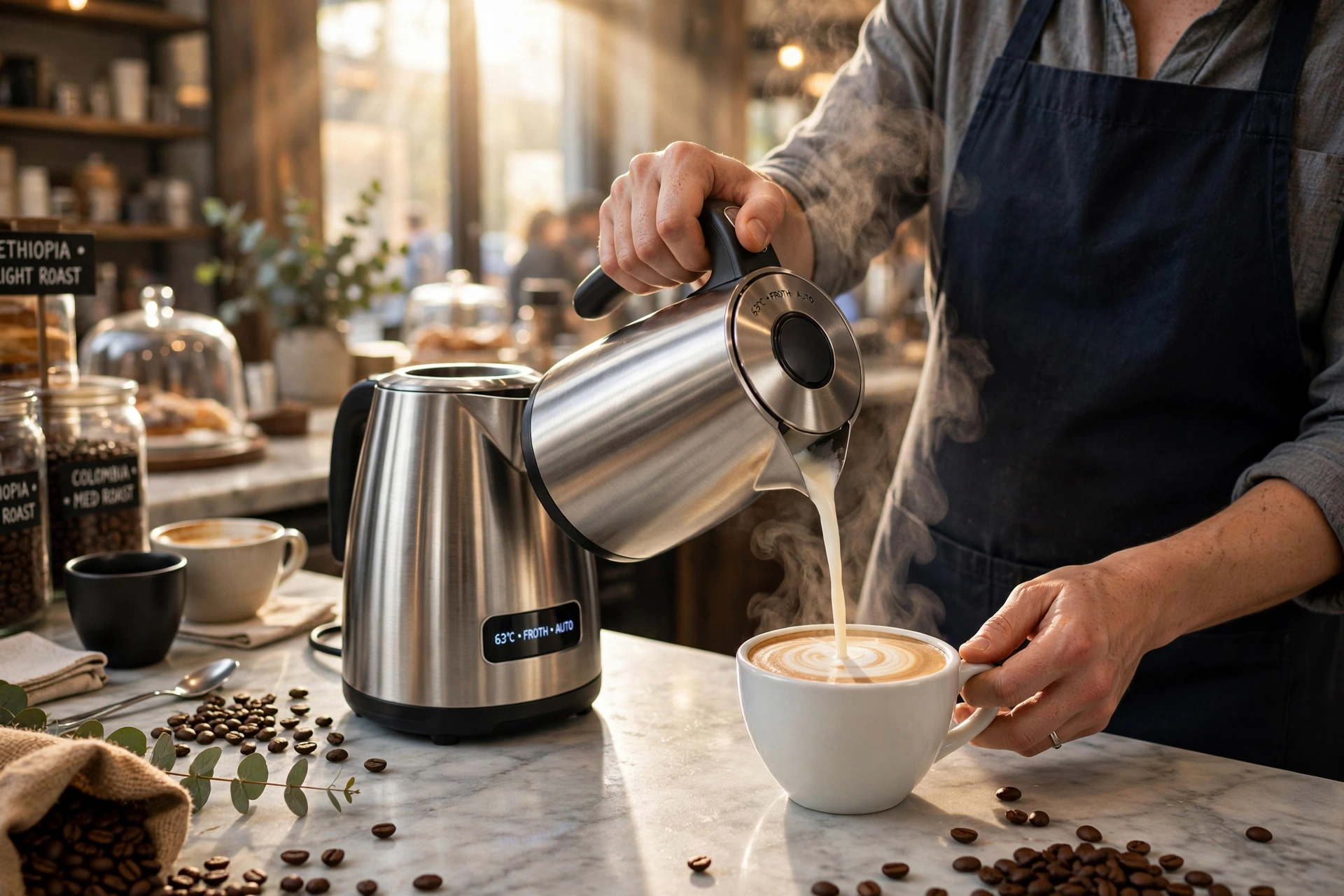
Automatic milk frothers provide a standardized solution to one of the most difficult skills in specialty coffee: creating the perfect microfoam. Unlike traditional steam wands where the barista must manually tilt the pitcher and judge the temperature by touch or a thermometer, these systems automate the process. They typically utilize a combination of induction heating or high-pressure steam injection combined with a precise sensor that shuts off the machine the moment the target temperature is reached.
In a professional environment, these devices often come as standalone units or as integrated modules within high-end espresso machines. They allow a business to program specific textures—such as a light foam for a latte or a denser foam for a cappuccino—ensuring that a drink tastes the same whether it is made by a seasoned pro or a new hire. According to the Specialty Coffee Association (SCA), maintaining precise temperature control is essential because overheating milk destroys the proteins and sugars, leading to a burnt taste and a loss of sweetness.
By automating this, shops can ensure that milk never exceeds the critical 65-70°C threshold. This consistency is what separates a mediocre cafe from a destination shop. When you combine these frothers with the right Best Commercial Espresso Machines for Coffee Shops, you create a production line that is virtually immune to human error.

Why Do Automatic Milk Frothers Matter for Your Business ROI?
The primary reason automatic milk frothers matter is the drastic reduction in milk waste. In a manual setup, baristas frequently over-steam milk or pour too much into the pitcher, only to discard the excess because it cannot be reused for the next drink. Research from the National Coffee Association USA (NCA) indicates that beverage quality consistency is a top driver for customer retention in the specialty coffee sector. When you remove the "human variable," you ensure that every customer receives the same premium experience.
From a labor perspective, the impact is immediate. Training a new barista to steam perfect microfoam can take weeks of practice and hundreds of wasted pitchers of milk. An automatic system reduces this training period to minutes. This is particularly vital in 2026, where labor costs are rising and staff turnover in the hospitality industry remains a challenge. By lowering the technical barrier to entry, you can employ a wider range of staff without compromising the quality of your Coffea arabica-based beverages.
Furthermore, automatic frothers improve throughput. While a barista is waiting for the milk to reach the correct temperature, they can focus on other tasks: prepping the next cup, taking an order, or managing the Coffee Shop Layout and Design Planning Guide to ensure better flow. This parallel processing can increase your drinks-per-hour capacity by 20% to 30% during peak periods.
💡
Key Takeaway
Automating milk texture reduces operational waste and lowers the technical skill floor required for staff, directly increasing the bottom line through efficiency and consistency.
How to Integrate Automatic Frothers into Your Workflow
Integrating these devices requires a strategic approach to your counter layout. The goal is to minimize the physical distance the barista has to move between the espresso machine and the frothing station. In my experience, placing the frother directly adjacent to the espresso machine's group head minimizes "dead steps" and keeps the workflow fluid.
Step 1: Define Your Texture Profiles
Begin by programming your specific needs. Most commercial frothers allow you to save presets. I recommend creating three distinct profiles: "Flat White" (minimal foam), "Latte" (medium foam), and "Cappuccino" (thick foam). This ensures that no matter who is on shift, the visual and textural presentation of the drink remains identical.
Step 2: Implement a Strict Cleaning Cycle
Because milk proteins build up quickly, automatic frothers must be cleaned rigorously. To comply with NSF International standards for food equipment safety, ensure your staff follows a "purge and wipe" routine after every single use. Many modern systems include an automated cleaning cycle that uses a specialized detergent to break down lipids and proteins inside the steam nozzle.
Step 3: Pair with High-Efficiency Grinding
Texture is only half the battle. To make the most of your automated foam, you need a consistent extraction. This is why we always suggest pairing these systems with the right How to Choose Coffee Grinders for Coffee Shops to ensure the espresso base is balanced enough to cut through the sweetness of the steamed milk.
Step 4: Monitor Milk Temperatures
Even with automation, it is a best practice to periodically verify the output with a digital thermometer. Ensuring the machine is calibrated to the 60-65°C range preserves the natural sweetness of the milk and prevents the "sulfury" smell associated with over-steamed dairy.
Automatic Frothers vs. Manual Steaming
For many shop owners, the debate is between the "craft" of manual steaming and the "efficiency" of automation. While traditionalists argue that manual steaming is an art, the reality of a high-volume business is that consistency beats art every time. A customer who visits your shop three times a week expects the same drink every time. A manual process is prone to variance; an automated process is not.
| Feature | Traditional Manual Steaming | Cheap Consumer Frothers | Professional Automatic Frothers |
|---|---|---|---|
| Consistency | Variable (depends on skill) | Low (often burns milk) | Absolute (programmable) |
| Waste | High (over-pouring) | Moderate | Very Low (precise volume) |
| Training Time | Weeks/Months | Minutes | Minutes |
| Speed | Slower per drink | Slow/Batch based | Ultra-fast/Parallel |
| Durability | High (if maintained) | Low (plastic parts) | Industrial (stainless steel) |
When using Top Bean-to-Cup Coffee Machines for Businesses, the automation is often built-in, which is ideal for offices or low-staff environments. However, for a dedicated coffee shop, a standalone professional frother allows the barista to maintain a level of control over the milk choice (oat, almond, soy) while still benefiting from automated temperature control.

Common Mistakes and What to Avoid
One of the most frequent errors I see is the failure to adjust settings for alternative milks. Oat milk and almond milk have different protein structures than cow's milk; they foam at different temperatures and textures. If you use a "dairy" setting for oat milk, you will likely end up with a beverage that is either too thin or excessively bubbly. Always create dedicated profiles for each milk type you offer.
Another critical mistake is neglecting the water quality. Automatic frothers are highly sensitive to scale buildup. If you are using hard water in your city, the sensors that detect temperature and foam height can become coated in calcium, leading to inaccurate readings and premature machine failure. This is why a robust filtration system is non-negotiable for any coffee shop equipment.
Avoid the temptation to buy "prosumer" or home-grade frothers for a commercial environment. These machines are not designed for the heat cycles of a 10-hour workday. They lack the thermal mass required to steam multiple pitchers in rapid succession and often fail within six months of heavy use. Stick to NSF-certified equipment that can handle the throughput of a professional beverage program.
Finally, do not let the automation make your staff complacent. The "human touch" is still needed for the final pour. An automatic frother creates the foam, but the barista still needs to execute the pour to ensure the espresso and milk are properly integrated. If the barista simply dumps the foam on top, the drink will be layered and unpleasant. The automation handles the chemistry; the human handles the presentation.
Frequently Asked Questions
Do automatic milk frothers affect the taste of the coffee?
No, they do not negatively affect the taste as long as the temperature is correctly calibrated. In fact, they often improve the taste by preventing the milk from overheating. When milk is scorched (above 70°C), the proteins break down and create a bitter, cooked flavor. Automatic frothers prevent this by shutting off precisely at the optimal temperature, preserving the natural sweetness and creamy texture of the milk, which complements the complex notes of specialty coffee beans.
How do I clean an automatic frother to ensure food safety?
Cleaning must be a two-step process: immediate and deep. After every use, the steam wand or nozzle must be purged with steam and wiped with a clean, damp cloth to remove residue. Daily, the machine should undergo a chemical clean using a manufacturer-approved milk system cleaner. This dissolves the proteins and fats that cling to the internal components. Following these guidelines ensures compliance with FDA food safety standards and prevents bacterial growth.
Can automatic frothers handle non-dairy milk alternatives?
Yes, but they require different settings. Non-dairy milks like oat or soy have different boiling points and foaming properties. Most professional automatic frothers allow you to create separate profiles for "Dairy" and "Non-Dairy." Using a dedicated profile ensures that the air injection and temperature are optimized for the specific protein structure of the alternative milk, preventing the foam from collapsing or becoming too dry.
Is there a significant cost difference between manual and automatic systems?
Automatic systems have a higher initial capital expenditure (CapEx) compared to a simple manual steam wand. However, the Return on Investment (ROI) is realized through the reduction in milk waste and labor costs. By decreasing the amount of milk thrown away and shortening the training time for new staff, most shops recover the cost difference within the first year of operation. It shifts the cost from a variable operational expense (waste/training) to a fixed asset investment.
How often should I calibrate my automatic frother?
I recommend a weekly calibration check. Even the best sensors can drift over time due to mineral buildup or wear. Use a high-accuracy digital thermometer to verify that the machine is stopping at the programmed temperature. If you notice a discrepancy of more than 2°C, it is time to descale the machine or recalibrate the sensors. This ensures that your microfoam remains consistent and your drinks stay within the quality standards of the industry.
Conclusion
Investing in automatic milk frothers is a strategic move for any coffee shop looking to scale without sacrificing quality. By removing the variability of manual steaming, you protect your brand from the inconsistency that often plagues growing businesses. Whether you are managing a small boutique cafe or a high-volume foodservice operation, the ability to produce perfect microfoam every time—regardless of who is behind the counter—is a massive competitive advantage.
At Busy Bean Coffee, we've seen how the right balance of automation and craft can transform a business. When you pair these frothers with a professional beverage program, you move from simply "selling coffee" to providing a consistent, premium experience that keeps customers returning.
To see how these tools integrate with the rest of your setup, return to our Ultimate Guide to Outfitting a Coffee Shop with Equipment for a complete blueprint of a successful 2026 coffee operation.
For personalized guidance on selecting the right equipment for your specific volume, visit us at www.busybeancoffee.com.
Free Coffee Pairing Guide & Specialty Roast Cheat Sheet
Unlock the secrets of perfect brewing ratios, water temperatures, and specialty roast profiles. Download the guide.