📖This article is part of the complete guide to Ultimate Guide to Coffee Syrups for Foodservice Businesses.
I have spent years as a Q-Grader tasting thousands of espresso extractions, and I can tell you that the difference between a mediocre mocha and a signature beverage is entirely dependent on the viscosity and cocoa percentage of your chocolate coffee syrup. In the high-pressure environment of a commercial cafe, a syrup that separates or tastes overly synthetic doesn't just ruin a drink; it erodes customer trust and wastes expensive specialty coffee beans. For a comprehensive overview of the broader category, explore our Ultimate Guide to Coffee Syrups for Foodservice Businesses.
What is Chocolate Coffee Syrup in a Professional Context?
📚
Definition
Chocolate coffee syrup is a concentrated, sweetened cocoa-based liquid formulated specifically to emulsify with espresso and steamed milk without separating or curdling under high heat.
Chocolate coffee syrup is far more than just 'chocolate sauce.' In a professional foodservice setting, these syrups are engineered for stability and consistency. Unlike homemade chocolate syrups, which often rely on butter or heavy creams that can break down when hit with 200°F steamed milk, commercial-grade syrups use stabilized emulsifiers and high-quality cocoa solids to ensure the flavor remains consistent from the first pump to the last.
When we analyze the chemistry of a premium chocolate coffee syrup, we look for a balance between the bitterness of the cocoa and the sweetness of the sugar. This balance is essential because it must complement the acidity of the Coffea arabica beans without overpowering them. A poor-quality syrup masks the nuances of a high-end espresso, while a professional-grade syrup enhances the chocolatey notes already present in many Brazilian or Colombian roasts.
In my experience working with high-volume cafes in Mount Pleasant, South Carolina, the most successful operators treat their chocolate syrup as an ingredient of equal importance to the bean itself. If you are using a specialty coffee roast but a cheap, corn-syrup-heavy chocolate additive, you are effectively neutralizing the investment you made in your beans. The goal is a symbiotic relationship where the syrup lifts the espresso's profile, not buries it.

Why Does Chocolate Coffee Syrup Matter for Your Business Margins?
Integrating a high-quality chocolate coffee syrup is one of the fastest ways to increase the average transaction value (ATV) of a coffee program. According to the National Coffee Association USA (NCA), flavored espresso drinks continue to drive significant revenue growth in the specialty segment, as consumers are increasingly willing to pay a premium for 'dessert-style' coffee beverages.
From a profitability standpoint, the cost per ounce of chocolate syrup is minimal compared to the price increase a business can justify for a 'Signature Belgian Mocha' versus a standard Caffe Mocha. When you move from a generic syrup to a premium, high-cocoa content version, you can often reposition the drink as a luxury item, increasing the margin per cup by 15% to 25%.
Furthermore, the operational efficiency of using a standardized syrup cannot be overstated. In a fast-paced environment, consistency is the primary driver of customer retention. If a customer visits your establishment in Mount Pleasant and receives a perfectly balanced mocha, but the next visit produces a drink that is too sweet or too thin, they perceive a lack of quality control. Standardized syrups, when paired with calibrated pumps, ensure that every drink tastes exactly the same regardless of which barista is on shift.
Beyond the numbers, chocolate is a 'bridge flavor.' It appeals to the widest possible demographic, from children ordering a babyccino with a drizzle to connoisseurs seeking a rich, dark chocolate pairing with a ristretto. By mastering the application of chocolate coffee syrup, you create a low-risk, high-reward entry point for customers to explore your more complex specialty coffee offerings. If you're looking to expand your flavor palette further, you might consider how vanilla coffee syrup can create complementary layered drinks.
How to Implement Chocolate Coffee Syrup in Your Beverage Program
Implementing a chocolate coffee syrup program requires more than just putting a bottle on the counter; it requires a technical approach to dosing and layering. The most common mistake I see is adding the syrup to the cup after the espresso has already begun to cool, which results in clumps of syrup at the bottom of the glass.
The Professional Layering Process
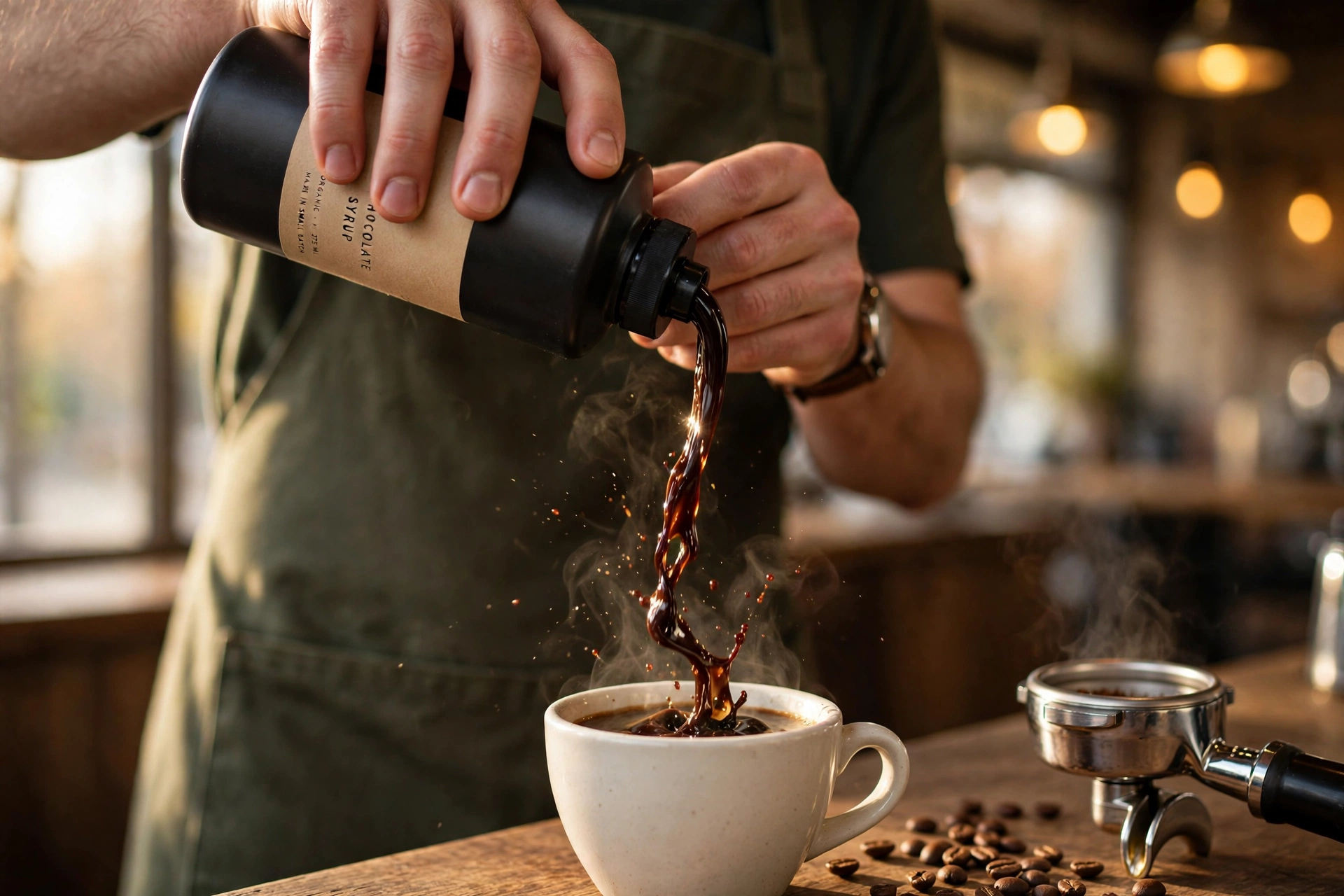
- Syrup First: Dispense the required amount of chocolate coffee syrup directly into the bottom of the cup. For a standard 12oz mocha, this is typically 30ml to 45ml depending on the syrup's intensity.
- The Espresso Pull: Extract your espresso shots directly on top of the syrup. The heat and pressure of the espresso flow create a natural agitation that mixes the syrup into the coffee, creating a rich, homogeneous base.
- The Emulsion Phase: Use a stir bar or a small whisk to ensure the syrup and espresso are fully integrated before adding milk. This prevents the 'syrup slug' effect where the customer gets a burst of pure sugar at the end of the drink.
- Milk Integration: Steam your milk to the industry standard of 140-155°F. Pour the microfoam over the chocolate-espresso base. The aeration in the milk helps suspend the cocoa solids, giving the drink a creamy, velvet-like texture.
For businesses scaling their operations, integrating these syrups into an automated system is the only way to maintain speed. This is why we recommend using automatic coffee machines for hotels and hospitality in 2026, which can be programmed to dispense the exact milliliter of syrup before the espresso extraction begins. This removes human error and ensures that your cost of goods sold (COGS) remains predictable.
Advanced Use Cases for Specialty Menus
- The Dark Chocolate Ristretto: Use a high-percentage dark cocoa syrup with a concentrated ristretto shot. The intensity of the short pull cuts through the richness of the dark chocolate, creating a sophisticated, less-sweet beverage.
- Chocolate-Mint Infusions: Combine chocolate coffee syrup with a small amount of peppermint syrup. This is a high-margin seasonal winner that relies on the chocolate providing the 'body' and the mint providing the 'top note.'
- The Mocha Cold Brew: Instead of stirring syrup into cold brew (which often leads to separation), create a 'chocolate foam' by whisking the syrup into a small amount of warm milk before topping the cold brew with it. This creates a visually stunning gradient effect.
If you are managing a larger scale operation, you can find more efficiency by exploring wholesale coffee syrups: bulk buying for businesses to reduce your per-unit cost while maintaining this level of quality.
Chocolate Coffee Syrup vs. Alternatives
Many business owners struggle to choose between a liquid syrup, a powder, or a traditional sauce. The choice impacts everything from your labor costs to the final mouthfeel of the drink.
| Feature | Chocolate Powder | Generic Chocolate Sauce | Professional Coffee Syrup |
|---|---|---|---|
| Integration | Clumps easily, requires whisking | Heavy, sinks to bottom | Rapid emulsification |
| Speed of Service | Slow (mixing time) | Medium (thick pour) | Fast (pump system) |
| Taste Profile | Chalky/Dry | Overly Sweet/Artificial | Balanced/Cocoa-forward |
| Waste Level | High (powder spills) | Medium (bottle residue) | Low (closed pump system) |
| Consistency | Variable | Moderate | High |
As the table demonstrates, the professional syrup is the only option that balances speed with a premium sensory experience. Powders are an operational nightmare in a high-volume cafe, and sauces often contain too many stabilizers that leave a waxy film on the palate. A high-quality syrup, designed specifically for espresso, provides the cleanest flavor profile while supporting the fastest possible workflow.

Common Mistakes and How to Avoid Them
In my years as a Q-Grader, I have seen many businesses sabotage their beverage quality through simple operational errors. Avoiding these will keep your quality high and your waste low.
1. Neglecting Temperature Control
Using a syrup that is too cold when it hits the espresso can drop the temperature of the drink too quickly, leading to a flat taste. While you don't need to heat the syrup, keeping your storage area at a consistent room temperature ensures the viscosity remains stable. If the syrup becomes too thick in a cold warehouse, it will not emulsify correctly with the espresso.
2. Over-Syruping the Cup
There is a temptation to add more syrup to 'mask' low-quality coffee. However, according to the Specialty Coffee Association (SCA), the hallmark of a specialty beverage is the ability to taste the origin of the bean. If you use 60ml of syrup in a 12oz cup, you aren't selling coffee; you're selling a chocolate milkshake. I recommend a maximum of 30-45ml to ensure the Coffea arabica notes remain present.
3. Ignoring the Pump Calibration
If your baristas are 'eyeballing' the syrup amount, your margins are leaking. One over-poured drink per hour can cost a business hundreds of dollars in lost profit per year. Use calibrated pumps and perform a weekly audit by weighing the output of a single pump on a digital scale. This is a fundamental part of any professional foodservice coffee program in Rock Hill SC or any other region.
4. Failing to Clean Pump Nozzles
Chocolate syrup is high in sugar and cocoa solids, making it a magnet for bacteria and crystallization. If the nozzles aren't cleaned daily, the syrup can crystallize, causing the pump to stick or, worse, introducing old, oxidized syrup into a fresh drink. Implement a strict 'end-of-day' wipe-down protocol for all syrup stations.
5. Pairing with the Wrong Roast
Not every roast works with chocolate. A very light-roast, fruity Ethiopian coffee can clash with a heavy chocolate syrup, creating a metallic or sour taste. For chocolate-based drinks, I always recommend a medium to dark roast with notes of nuts or caramel. This creates a harmonious flavor bridge that feels natural to the customer.
Frequently Asked Questions
Does chocolate coffee syrup cause milk to curdle?
No, professional-grade chocolate coffee syrups are formulated with stabilizers and pH buffers specifically to prevent the acidity of the cocoa from curdling the milk proteins. However, if you use an artisanal, non-stabilized chocolate sauce, the interaction between the cocoa's acidity and the heat of the steamed milk can occasionally cause micro-curdling. Using a syrup certified for commercial use eliminates this risk and ensures a smooth texture every time.
How should I store chocolate syrup to maintain freshness?
Chocolate coffee syrup should be stored in a cool, dry place away from direct sunlight. While most commercial syrups are shelf-stable, exposure to extreme heat can cause the cocoa solids to separate or the sugars to crystallize. Once a bottle is opened, it is best to keep it in a dedicated syrup station and ensure the pump is kept clean. Avoid refrigerating the syrup unless explicitly instructed by the manufacturer, as this significantly increases the viscosity and makes pumping difficult.
What is the ideal ratio of chocolate syrup to espresso?
For a standard 12oz mocha, the ideal ratio is generally 1 part syrup to 2 parts espresso, topped with steamed milk. This typically translates to 30ml of syrup and 60ml of espresso (a double shot). This ratio ensures the chocolate provides a rich base without masking the complex acidity and bitterness of the coffee. If your customers prefer a sweeter drink, increase the syrup by 10ml rather than adding more sugar, to maintain the cocoa intensity.
Can I use chocolate coffee syrup in iced drinks?
Yes, but the method must change. Because cold liquids do not dissolve syrup as easily as hot ones, you should never simply pour syrup into cold brew or iced milk. Instead, mix the chocolate syrup with the hot espresso first to create a warm concentrate, then pour that mixture over ice and add your cold milk. This prevents the syrup from settling in a thick layer at the bottom of the glass, which is a common complaint in iced mocha beverages.
Is there a difference between 'chocolate' and 'mocha' syrup?
In the commercial world, 'mocha' is essentially a chocolate syrup specifically optimized for coffee. While a general chocolate syrup might be designed for pancakes or desserts, a mocha syrup has a different sugar-to-cocoa ratio and often includes flavor enhancers that interact specifically with the chemical compounds in coffee. Always choose a product labeled for coffee service to ensure the flavor doesn't become cloying when mixed with espresso.
Conclusion
Mastering the use of chocolate coffee syrup is a strategic move for any business looking to elevate its beverage menu while protecting its bottom line. By focusing on the technical aspects of emulsification, precise dosing, and roast pairing, you can transform a simple mocha into a high-margin signature drink that keeps customers returning to your establishment. Whether you are operating a boutique cafe in Mount Pleasant or a large-scale hotel program, the quality of your additives must match the quality of your beans.
To ensure your entire beverage program is optimized for growth and efficiency, we recommend reviewing our Ultimate Guide to Coffee Syrups for Foodservice Businesses. From selecting the right equipment to scaling your flavor offerings, having a cohesive strategy is the only way to compete in the 2026 specialty coffee market.
If you want to eliminate the hassle of equipment maintenance and product sourcing, Busy Bean Coffee offers all-inclusive managed coffee memberships. We provide the premium SENSA equipment, the professional installation, and the exclusive product pricing you need to run a world-class coffee program without the capital expense. Visit www.busybeancoffee.com today to see how we can streamline your business.
Free Coffee Pairing Guide & Specialty Roast Cheat Sheet
Unlock the secrets of perfect brewing ratios, water temperatures, and specialty roast profiles. Download the guide.