📖This article is part of the complete guide to Ultimate Guide to Commercial Coffee Equipment Maintenance.
In my experience working with high-volume cafes in Mount Pleasant, SC, I have seen a $15,000 espresso machine rendered useless by a simple lack of descaling. When calcium and magnesium deposits build up inside a boiler, they don't just affect the taste; they create thermal insulation that forces the machine to work harder, eventually leading to heating element failure. If you notice your brew time increasing or the temperature fluctuating, you aren't dealing with a settings issue; you are dealing with scale.
For a comprehensive overview of keeping your gear in top shape, explore our Ultimate Guide to Commercial Coffee Equipment Maintenance.
What Does it Mean to Descale Coffee Equipment?
📚
Definition
Descaling is the chemical process of removing mineral deposits—primarily calcium and magnesium—that accumulate inside the heating elements and plumbing of a coffee machine.
To descale coffee equipment means to use a specialized acidic solution to dissolve the "scale" that forms when hard water is heated. Unlike daily cleaning, which focuses on removing coffee oils and residue from the group head or portafilter, descaling targets the internal "arteries" of the machine. When water is heated, dissolved minerals precipitate out of the liquid and bond to the metal surfaces of the boiler and heat exchanger. Over time, this creates a hard, rock-like crust.
In my tenure as a Q-Grader, I've seen businesses mistake a "dirty" machine for a "scaled" machine. You can have a pristine exterior and perfectly clean baskets, but if the internal pipes are constricted by minerals, your water flow will be inconsistent. This is particularly critical for those using high-end espresso machines where precision temperature is the difference between a balanced shot and a sour, under-extracted mess. For those focusing on the chemistry of the brew, remember that Coffea arabica requires a specific water-to-mineral ratio to shine; if your machine's internal plumbing is compromised, the chemical interaction during extraction is ruined.
💡
Key Takeaway
Descaling is an internal chemical treatment, whereas cleaning is an external removal of organic oils. You cannot substitute one for the other.

Why Does Descaling Matter for Your Business ROI?
Mineral buildup is the silent killer of commercial coffee equipment. When scale accumulates, it acts as an insulator. According to the NSF International standards regarding food equipment safety and efficiency, maintaining clear fluid pathways is essential for both performance and sanitary operation. When the heating element is coated in scale, it must run longer and hotter to reach the target temperature, which consumes more electricity and accelerates the degradation of the metal.
From a business perspective, the impact is three-fold: flavor degradation, increased downtime, and higher energy costs. I've analyzed several cafe operations where the owner ignored descaling for six months; the result was a 15% increase in energy consumption and a sudden boiler failure during a Saturday morning rush. When minerals block the narrow orifices of a flow meter or a solenoid valve, the machine may stop pulling water entirely, leading to an emergency service call that costs hundreds of dollars in labor.
Furthermore, the quality of your specialty coffee is directly tied to the purity of the water passing through the machine. If scale is flaking off inside the boiler, these micro-particles can end up in your cup, altering the mouthfeel and clarity of the brew. In the competitive landscape of Mount Pleasant, SC, customers can taste the difference between a machine that is meticulously maintained and one that is struggling through mineral blockages.
According to data from the National Coffee Association USA (NCA), consistency is the primary driver of customer retention in specialty coffee. If your machine is scaled, you lose that consistency. A shot that takes 25 seconds today might take 32 seconds tomorrow simply because a mineral flake shifted in the plumbing.
How to Descale Coffee Equipment Step-by-Step
Descaling is not a "one size fits all" process, but the professional approach follows a strict sequence to ensure no chemical residue remains. If you are managing a professional environment, avoid using vinegar—which is too weak for commercial buildup and leaves a lingering scent—and instead use a professional-grade citric acid or lactic acid-based descaler.
Step 1: Preparation and Water Analysis
Before starting, check your water hardness. I always recommend using a TDS (Total Dissolved Solids) meter. If your water is extremely hard, you may need a double-strength solution. Ensure all group heads are clear and the drip tray is empty. Link this step to your Daily Coffee Machine Cleaning Checklist for Businesses to ensure you aren't trying to descale a machine that is still coated in old oils.
Step 2: Solution Integration
Depending on your machine, you will either fill the reservoir with a descaling solution or connect the machine to a descaling tank. For high-end espresso machines, this often involves bypassing the main water filter to allow the solution to enter the boiler. Be careful here; if you use a solution that is too aggressive, you risk pitting the aluminum or copper components of the boiler.
Step 3: The Cycle and Soak
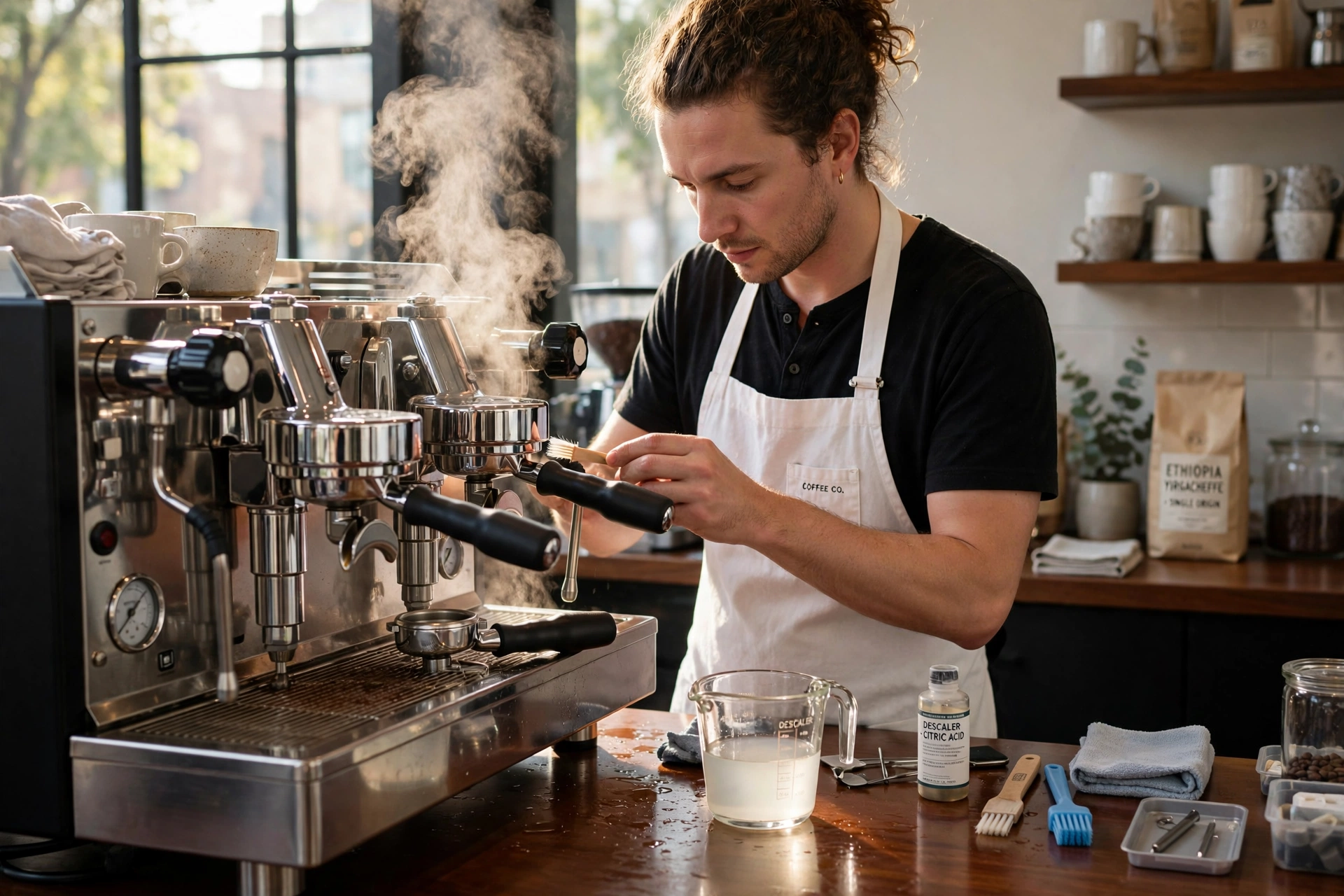
Run the solution through the machine in stages. Do not simply run the pump until the tank is empty. Instead, run the solution through the group heads and steam wands for 2-3 minutes, then turn the machine off and let it soak for 30 to 60 minutes. This "soak phase" is where the chemical reaction actually happens, breaking the bond between the mineral crust and the metal surface.
Step 4: The Flush Phase
This is the most critical step. Once the soak is complete, flush the system with fresh, filtered water. Use at least three full reservoirs of water to ensure every trace of the acidic solution is gone. If residue remains, it can react with the coffee beans, creating a metallic or sour taste. If you are unsure if the machine is clean, check the pH of the output water using a simple test strip.
Step 5: Verification and Calibration
After descaling, perform a test pull. Check the flow rate and the temperature stability. If you notice that the machine is still struggling, you may have "severe scale," which requires a manual teardown and chemical bath. For a deeper dive into these technical failures, see our guide on Troubleshooting Common Coffee Equipment Issues.
Descaling vs. Backflushing vs. Water Filtration
Many business owners confuse these three processes, but they address entirely different problems. To put it simply: backflushing removes organic oils, descaling removes minerals, and filtration prevents the minerals from entering the machine in the first place.
| Feature | Backflushing (Cleaning) | Descaling | Water Filtration |
|---|---|---|---|
| Target | Coffee oils and residue | Calcium and Magnesium | Impurities and minerals |
| Frequency | Daily / Every shift | Monthly / Quarterly | Filter change every 3-6 months |
| Method | Detergent + Blind filter | Acidic solution soak | Ion exchange or Carbon |
| Impact | Taste and Aroma | Machine Life and Temp | Water Quality and Scale Prev. |
If you rely solely on descaling without a filtration system, you are essentially fighting a losing battle. A high-quality filtration setup is the first line of defense. I've seen cafes that descale every two weeks because they refuse to invest in a proper water softener. This is a waste of labor and chemicals. For more details, read our analysis on Water Filters and Coffee Machine Maintenance.

Common Descaling Mistakes and How to Avoid Them
In my years as a consultant, I've seen the same five mistakes repeated across almost every business. Avoiding these will save you thousands in equipment repairs.
Mistake 1: Using Vinegar (Acetic Acid)
Vinegar is a home remedy, not a professional solution. It lacks the concentration needed to penetrate thick commercial scale and, more importantly, it leaves a pungent smell that persists in the steam wand. This can contaminate your milk foams and ruin the sensory profile of your specialty coffee.
Mistake 2: Skipping the Rinse Cycle
I once visited a cafe where the coffee tasted like lemons for three days. The cause? They didn't flush the descaling solution long enough. Citric acid is powerful and will cling to the walls of the boiler. Always flush until the water is clear and the pH is neutral.
Mistake 3: Descaling Too Often
While it seems intuitive that more is better, over-descaling can actually be harmful. Acidic solutions, if used too frequently or left too long, can corrode the gaskets and erode the metal of the boiler. Follow the manufacturer's guidelines or base your schedule on your specific water hardness readings.
Mistake 4: Ignoring the Steam Wand
Many operators only run the solution through the brew group. However, steam wands are where the most intense heating occurs, making them prime locations for scale buildup. Always purge the steam wands during the descaling process to ensure the narrow nozzles remain clear.
Mistake 5: Failing to Document the Process
In a busy environment, it's easy to forget when the last descale happened. I recommend a physical logbook or a digital maintenance tracker. When you can prove a machine was descaled on a specific date, it's much easier to diagnose problems during Espresso Machine Maintenance Best Practices.
Professional Implementation Guide for Cafes
To implement a foolproof descaling program, you need to move from a "reactive" mindset to a "preventative" one. In my experience, the most successful cafes in Mount Pleasant, SC, treat descaling as a scheduled event, not a response to a failure.
The 2026 Maintenance Protocol:
- Quarterly Water Testing: Every 90 days, test the hardness of your incoming water. If the hardness has increased (which can happen due to municipal water changes), increase the frequency of your descaling cycles.
- The "Off-Peak" Schedule: Schedule descaling for a Monday morning or a slow Tuesday. Because the process requires a 60-minute soak and multiple flush cycles, it can take 3-4 hours of total downtime. Never attempt to descale during a rush.
- Chemical Rotation: Use high-quality, NSF-certified descaling agents. Ensure the chemicals are stored in a cool, dry place and are not expired, as the active acids can degrade over time.
- Staff Training: Your baristas should know the early warning signs of scale: sluggish steam pressure, inconsistent brew times, or "spitting" from the group head. When these are reported, the descaling process should be triggered immediately.
💡
Key Takeaway
The most cost-effective way to manage descaling is to combine it with a high-performance water filtration system, reducing the chemical load on your machine.
Frequently Asked Questions
How often should I descale my commercial coffee machine?
For most businesses, descaling should occur every 3 to 6 months. However, this depends entirely on your local water hardness. If you are in an area with very hard water and lack a sophisticated filtration system, you may need to descale monthly. I always recommend using a water hardness test kit; if your water exceeds 120 ppm (parts per million) of calcium carbonate, you should be on a more aggressive schedule to prevent boiler failure.
Can I use a descaling solution every day?
Absolutely not. Descaling solutions are acidic. If used daily, the acid will begin to eat away at the copper, brass, and stainless steel components of your machine. It will also degrade the rubber O-rings and gaskets, leading to leaks. Daily maintenance should focus on backflushing with a coffee-specific detergent, which is alkaline and designed to remove oils, not minerals. Keep these two processes strictly separate.
Why does my machine still have flow issues after descaling?
If you've completed a full descale and the water flow is still restricted, you likely have "calcified blockage." This happens when the scale is so thick that the chemical solution cannot penetrate the core of the blockage. In this case, the scale essentially becomes a rock that only a manual mechanical cleaning or a professional technician can remove. This is why regular preventative descaling is so important; once a blockage becomes calcified, chemicals alone rarely work.
Is it safe to use citric acid powder from a grocery store?
While citric acid is the active ingredient in many professional descalers, I strongly advise against using raw grocery store powder for commercial equipment. Professional solutions are buffered to maintain a specific pH level that is effective but not corrosive. Raw powder can create "hot spots" of high acidity that can pit your boiler's surface. For a business, the risk of damaging a $10,000 machine to save $10 on chemicals is a poor investment.
Does descaling affect the taste of the coffee?
Indirectly, yes. Scale buildup causes temperature instability. Because scale acts as an insulator, the heating element may overshoot the target temperature or fail to reach it, leading to over-extraction (bitter) or under-extraction (sour). By removing the scale, you restore the machine's ability to maintain a precise 200°F (approx.) brewing temperature, which is essential for the complex flavor profiles of specialty coffee.
Recommended Readings
To deepen your understanding of these topics, we recommend reading the following articles:
- Coffee Grinder Maintenance and Cleaning Guide
- Espresso Machine Maintenance Best Practices
- Monthly Coffee Machine Maintenance Schedule
- Water Filters and Coffee Machine Maintenance
Conclusion
Descaling your coffee equipment is not just a chore; it is an insurance policy for your business. By removing the mineral deposits that choke your boilers and clog your plumbing, you ensure that every cup of coffee meets the high standards of your brand. Whether you are running a boutique shop in Mount Pleasant or a high-volume foodservice operation, the commitment to internal cleanliness is what separates a professional operation from an amateur one.
Remember that descaling is only one piece of the puzzle. To truly maximize the lifespan of your equipment, you need a holistic approach that includes daily cleaning, professional filtration, and regular technical audits. For a comprehensive strategy on how to integrate these steps into your business model, revisit our Ultimate Guide to Commercial Coffee Equipment Maintenance.
If you're tired of the hassle of managing these schedules and worrying about boiler failure, Busy Bean Coffee offers all-inclusive managed coffee solutions. We provide the equipment, the maintenance, and the expertise, so you can focus on your customers while we handle the chemistry. Visit www.busybeancoffee.com to learn more about our managed memberships.
Free Coffee Pairing Guide & Specialty Roast Cheat Sheet
Unlock the secrets of perfect brewing ratios, water temperatures, and specialty roast profiles. Download the guide.