📖This article is part of the complete guide to Ultimate Guide to Outfitting a Coffee Shop with Equipment.
A single failed group head on a Monday morning can cost a medium-sized cafe upwards of $500 in lost revenue before the first technician even arrives. In my experience working with high-volume operators, the difference between a profitable shop and one struggling with overhead is rarely the beans; it is the uptime of their hardware. When equipment fails, you don't just lose a machine; you lose customer trust and staff morale.
For a comprehensive overview of the hardware required to start your business, explore our Ultimate Guide to Outfitting a Coffee Shop with Equipment.
What is Coffee Equipment Maintenance?
📚
Definition
Coffee equipment maintenance is the systematic process of cleaning, calibrating, and repairing brewing hardware to ensure flavor consistency, food safety compliance, and mechanical longevity.
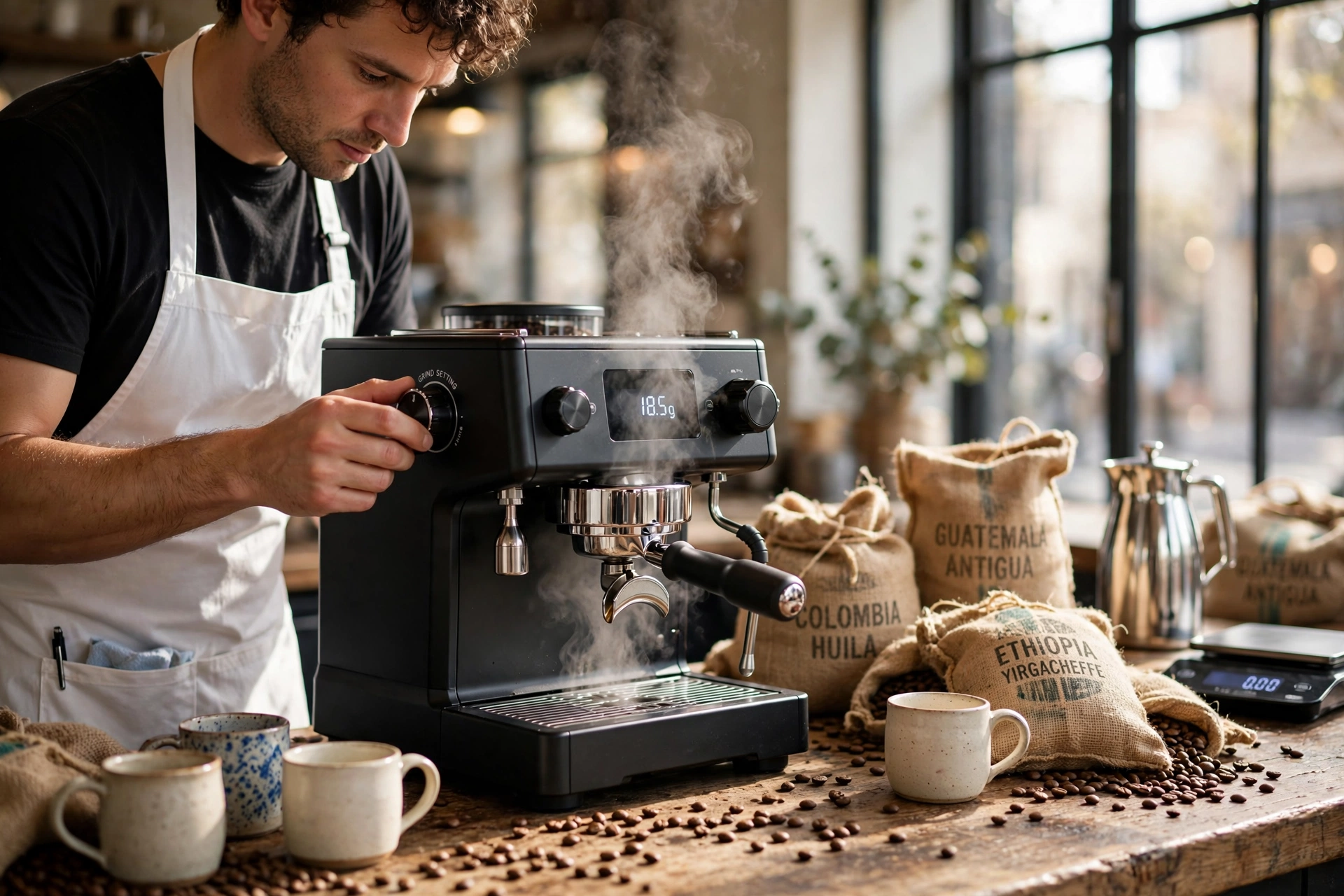
Coffee equipment maintenance is not simply wiping down a steam wand at the end of a shift; it is a tiered strategy involving daily, weekly, monthly, and annual interventions. At its core, it involves the removal of organic buildup—primarily coffee oils and mineral deposits—and the replacement of wear-and-tear components before they cause a catastrophic system failure. In a professional environment, this means managing the delicate balance between heat, pressure, and water chemistry.
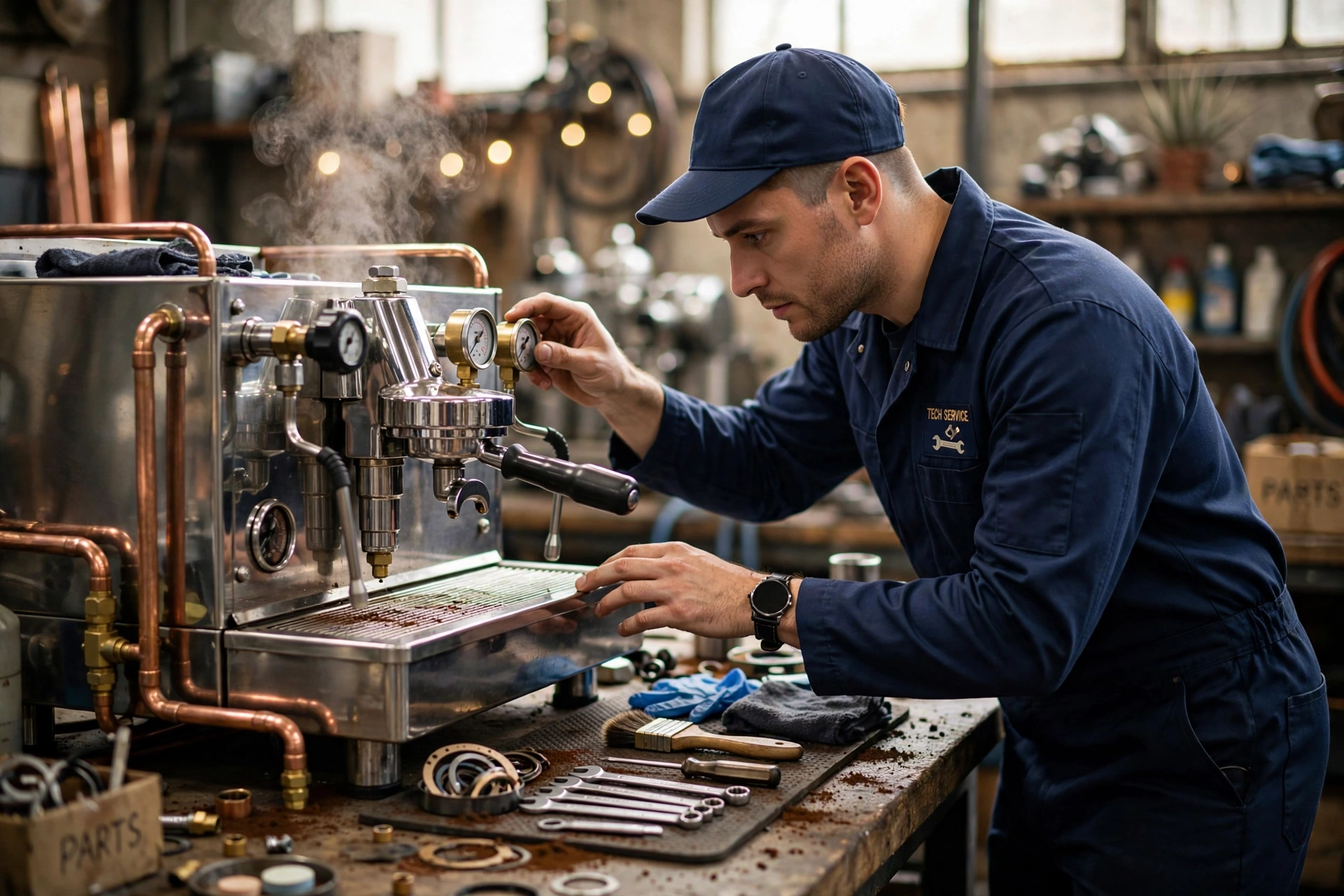
Maintaining a high-end espresso machine or a commercial brewer requires a deep understanding of how heat exchangers and boilers operate. For instance, the buildup of calcium carbonate from hard water can create an insulating layer inside a boiler, forcing the heating element to work harder and eventually burn out. By implementing a rigorous maintenance schedule, businesses shift from reactive repairs (fixing things when they break) to preventative maintenance (fixing things so they don't break).

Why Does Regular Maintenance Matter for Your Business?
Preventative care is the only way to guarantee that the cup of coffee served at 7:00 AM tastes identical to the one served at 4:00 PM. When coffee oils accumulate in the group heads or grinders, they undergo oxidation, producing rancid, bitter flavors that no amount of high-quality Arabica coffee can mask. This directly impacts your brand reputation and customer retention rates.
According to the Specialty Coffee Association (SCA), precision in temperature and extraction is fundamental to the definition of specialty coffee. Even a 2-degree variance in water temperature caused by scale buildup in the boiler can shift a shot from perfectly balanced to sour or overly bitter. When you neglect maintenance, you are essentially gambling with your product quality.
Beyond taste, there is the critical issue of health and safety. The FDA provides strict guidelines on food-contact surfaces. Milk residue in steam wands or mold in drip trays are not just hygiene issues; they are regulatory liabilities. A failure in sanitation can lead to health department fines or, worse, foodborne illness outbreaks. Furthermore, certifications from NSF International ensure that equipment is built for sanitization, but these standards only work if the operator actually performs the cleaning.
From a financial perspective, the ROI of maintenance is staggering. Replacing a gasket every six months costs a few dollars and takes five minutes. Replacing a blown boiler because of scale buildup costs thousands of dollars and takes your shop offline for days. I've seen operators save nearly 30% on annual equipment expenses simply by switching to a strict preventative calendar.
How to Implement a Maintenance Schedule for Your Shop
Effective coffee equipment maintenance requires a divided approach based on frequency. You cannot treat a weekly deep-clean the same way you treat a daily rinse. The goal is to create a checklist that any employee can follow without supervision.
Daily Maintenance: The Front-Line Defense
Daily tasks focus on the removal of surface debris and organic residues. For espresso machines, this means backflushing with a detergent every single night. This process pushes a cleaning agent backward through the group head to clear out coffee oils trapped in the three-way solenoid valve. Similarly, steam wands must be purged and wiped after every single use to prevent milk proteins from baking onto the stainless steel. For those using Automatic Milk Frothers for Coffee Shops, the internal tubing must be flushed to avoid bacterial growth.
Weekly Maintenance: The Deep Clean
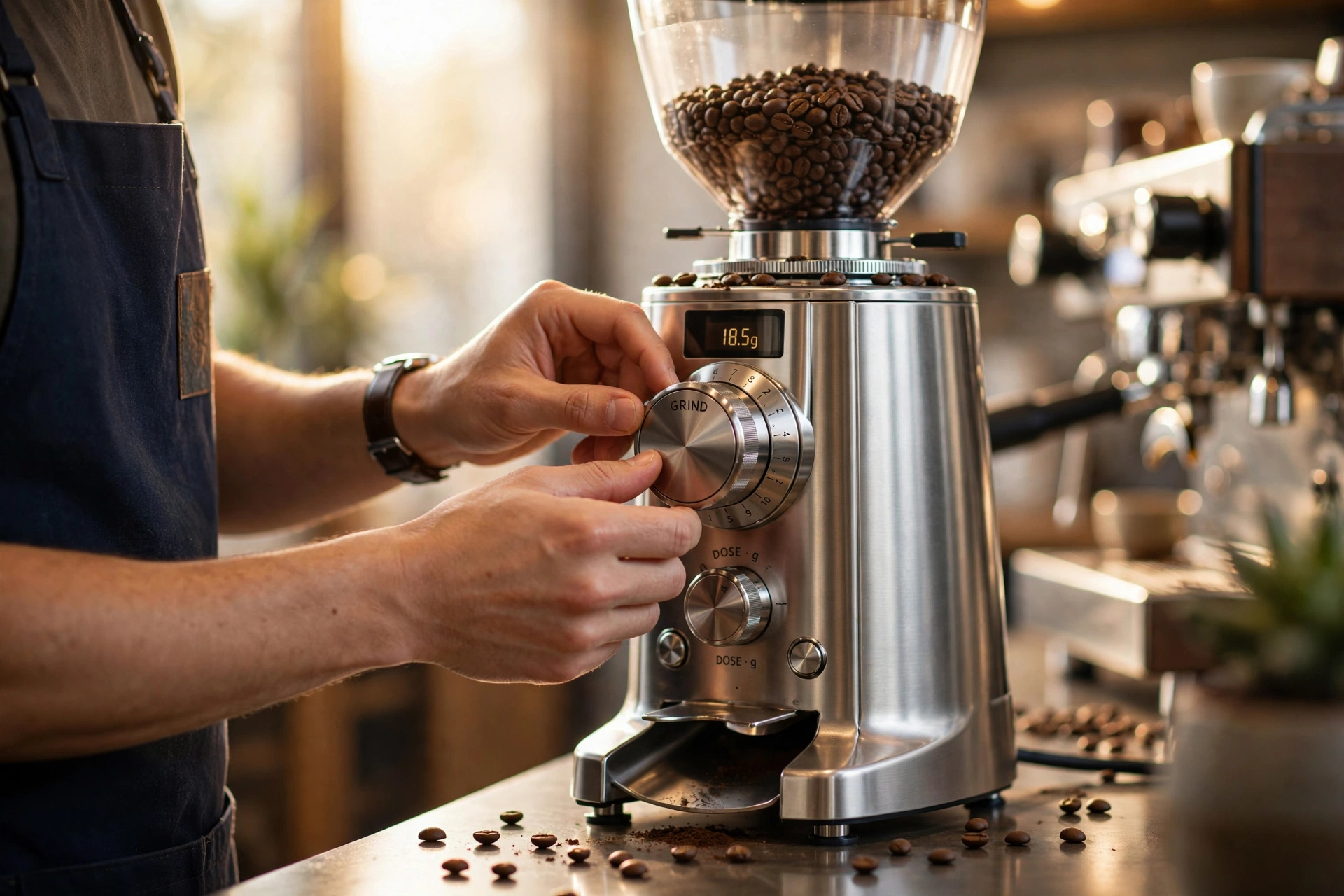
Once a week, the focus shifts to components that don't clog overnight. This includes soaking portafilters and baskets in a specialized cleaning solution to remove the "invisible" oils that cause bitterness. Grinder hoppers should be emptied and wiped with a dry cloth to remove residual oils that can go rancid. If you are using Coffee Grinders for Coffee Shops, you should also check the burr gap and ensure there is no bean buildup in the chute, which can cause uneven dosing.
Monthly and Quarterly Maintenance: Systemic Health
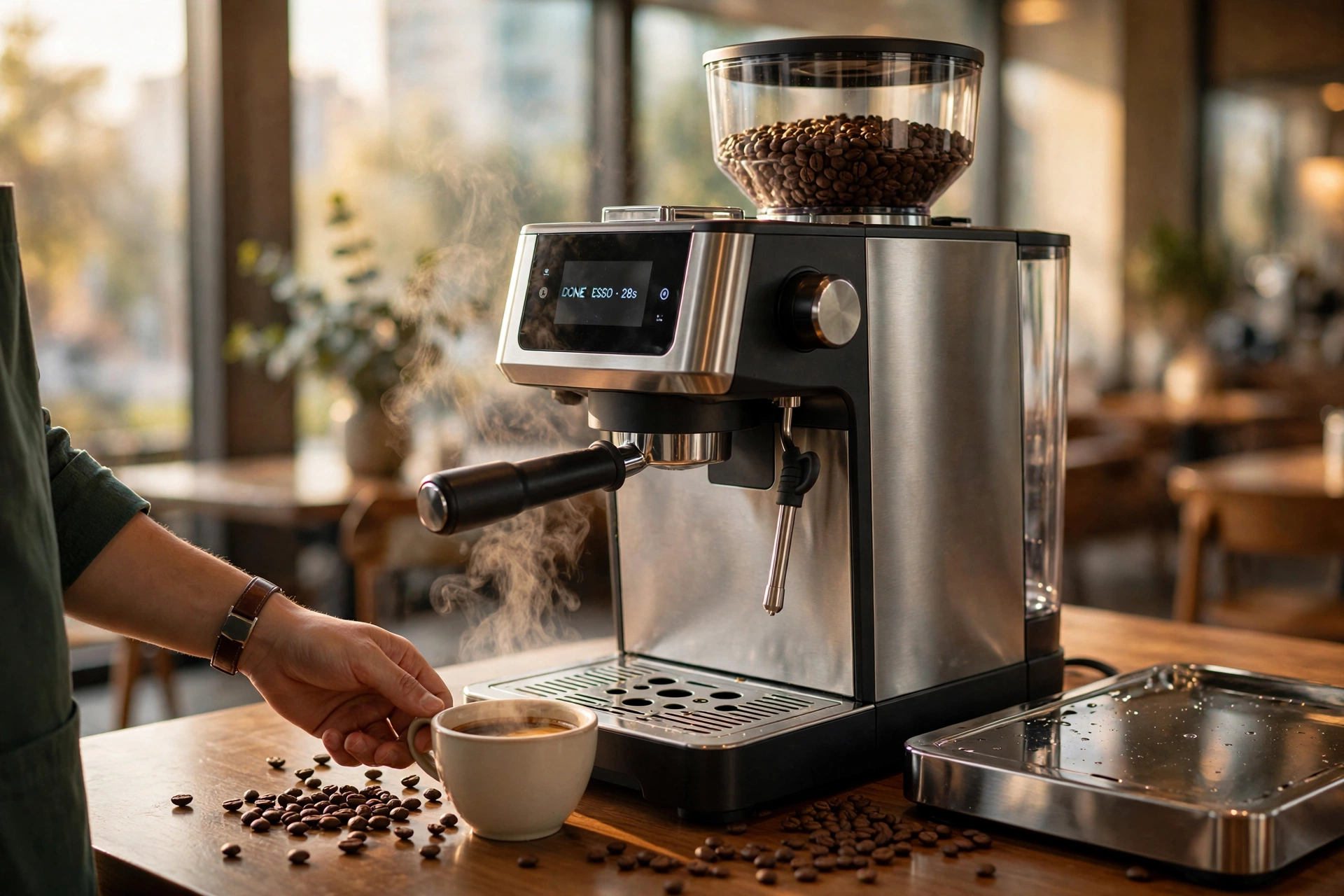
Every month, you should inspect your water filtration system. Water is the primary ingredient in coffee, and if your filters are saturated, your machines are essentially drinking liquid rock. Change filters according to the manufacturer's schedule or your specific water hardness levels. Every quarter, check the rubber gaskets and screens in your espresso machines. If the gaskets feel hard or brittle, replace them immediately to prevent leaks and pressure loss. This is also the time to calibrate your Best Commercial Espresso Machines for Coffee Shops to ensure the pump pressure is exactly where it needs to be for optimal extraction.

Common Maintenance Mistakes and How to Avoid Them
One of the most frequent errors I encounter is the "over-cleaning" fallacy. Using too much caustic detergent during backflushing can actually strip the lubricants from the internal valves or leave a chemical residue that tastes like soap in the coffee. Always rinse the group head for at least 5-10 cycles after using a cleaning powder.
Another critical mistake is neglecting the grinder. Many owners focus solely on the espresso machine and ignore the grinder. However, a dirty grinder is the leading cause of "channeling" in an espresso puck. When old coffee fragments build up in the burrs, they create air pockets, causing water to rush through the puck unevenly. This results in a shot that is simultaneously sour and bitter.
Finally, there is the danger of using the wrong cleaning agents. Using vinegar for descaling a professional machine is a recipe for disaster. While it works for home machines, the acetic acid in vinegar can be too aggressive for certain professional alloys and seals, potentially causing leaks. Only use professional-grade descalers approved by the manufacturer.
| Maintenance Type | Traditional Approach | Cheap AI/Generic Approach | Professional Busy Bean Approach |
|---|---|---|---|
| Scheduling | Done when something breaks | Randomly following a blog list | Data-driven preventative calendar |
| Cleaning | Surface wipe down | Over-reliance on chemicals | Tiered daily/weekly/monthly protocols |
| Water Care | Changing filters every year | Ignoring water chemistry | Custom filtration based on local ppm |
| Technical | Calling a tech for everything | Attempting DIY repairs via YouTube | Managed membership with pro oversight |
💡
Key Takeaway
The most expensive way to maintain equipment is to wait for it to break. A managed maintenance plan is an investment in uptime, not a cost center.
Pro Tip: The "Golden Hour" of Maintenance
In my experience, the best shops designate a "Golden Hour"—the first hour after closing or before opening—where maintenance is the only priority. When maintenance is treated as a secondary task to be done "when there's time," it never gets done. By dedicating a specific block of time, you ensure that tasks like cleaning Essential Commercial Drip Coffee Brewers or calibrating Top Bean-to-Cup Coffee Machines for Businesses are completed thoroughly rather than rushed.
Frequently Asked Questions
How often should I replace the group head gaskets?
In a high-volume environment, gaskets should be replaced every 3 to 6 months. Rubber degrades over time due to constant exposure to high heat and pressure. When a gasket begins to leak or becomes brittle, it allows water to bypass the coffee puck, leading to uneven extraction and potential steam leaks that can burn a barista. Replacing them proactively prevents emergency shutdowns during peak hours.
Why does my espresso machine taste metallic after cleaning?
This is almost always a sign of insufficient rinsing. Professional cleaning powders are highly alkaline. If you do not run enough water through the group head after a backflush, residue remains in the solenoid valve. I recommend running at least five full cycles of water without the portafilter attached to ensure all chemical agents are completely flushed from the internal plumbing before the first shot is pulled.
Can I use tap water if I have a filter?
A filter is a necessity, but not all filters are equal. Depending on your location, tap water can contain varying levels of magnesium, calcium, and chlorine. If your filter is only a carbon filter, it removes taste and odor but doesn't stop scale buildup. You need a system that manages mineral content (like an ion-exchange or reverse osmosis system) to prevent the boilers from scaling, which is the number one killer of commercial machines.
How do I know when my grinder burrs need replacing?
Monitor your dosing consistency. If you find that you are constantly adjusting the grind setting to achieve the same shot time, or if the coffee begins to taste "flat" despite using fresh beans, your burrs may be dull. In a busy shop, burrs typically need replacing every 500 to 1,000 kg of coffee, depending on the material. Dull burrs produce more "fines," which clog the puck and cause over-extraction.
Is it safe to leave my bean-to-cup machine on all night?
While most modern machines have standby modes, leaving them on 24/7 can lead to unnecessary wear on the heating elements and pump. However, the bigger risk is the coffee beans in the hopper. Oils in the beans can oxidize faster when exposed to the heat of the machine's internal components. It is better to empty the hopper and power down the machine's heating elements at the end of the day.
Conclusion
Mastering coffee equipment maintenance is the bridge between being a hobbyist and running a professional beverage operation. By focusing on the removal of organic oils and the control of mineral buildup, you protect your most valuable assets and ensure a consistent product for your customers. Remember that the cost of a few cleaning tablets and a quarterly technician visit is a fraction of the cost of a total system failure during your busiest shift of the year.
If you are still in the planning stages of your shop or looking to upgrade your current setup, we recommend revisiting our Ultimate Guide to Outfitting a Coffee Shop with Equipment to ensure you have the right hardware that is built for longevity.
For those who want to eliminate the stress of maintenance entirely, Busy Bean Coffee offers all-inclusive managed coffee solutions. We handle the installation, the maintenance, and the equipment updates, so you can focus on your customers instead of your boilers. Visit www.busybeancoffee.com to see how our membership can stabilize your operations.
Free Coffee Pairing Guide & Specialty Roast Cheat Sheet
Unlock the secrets of perfect brewing ratios, water temperatures, and specialty roast profiles. Download the guide.