📖This article is part of the complete guide to Ultimate Guide to Outfitting a Coffee Shop with Equipment.
A single poorly calibrated tamper or a chipped steaming pitcher can cost a high-volume café dozens of wasted shots per day, directly impacting the bottom line. In my experience working with specialty coffee setups in Mount Pleasant, South Carolina, the difference between a chaotic morning rush and a streamlined operation isn't just the espresso machine; it is the precision of the hand tools the staff uses. When a barista struggles with inconsistent puck density or imprecise milk measurements, the customer experiences it as a variable taste profile.
For a comprehensive overview of the larger machinery required, explore our Ultimate Guide to Outfitting a Coffee Shop with Equipment.
What are the Essential Barista Tools for a Coffee Shop?
📚
Definition
Barista tools are the specialized hand instruments used by coffee professionals to prepare, extract, and serve specialty coffee, focusing on precision, temperature control, and workflow efficiency.
Barista tools for a coffee shop consist of a curated set of instruments designed to eliminate variables during the coffee extraction process. At its core, the goal of these tools is repeatability. Whether you are preparing a traditional espresso or a complex latte, the tools allow the barista to ensure that every single gram of Coffea arabica is extracted according to a specific recipe. This involves everything from the precision of the tamping process to the exact temperature of the steamed milk.
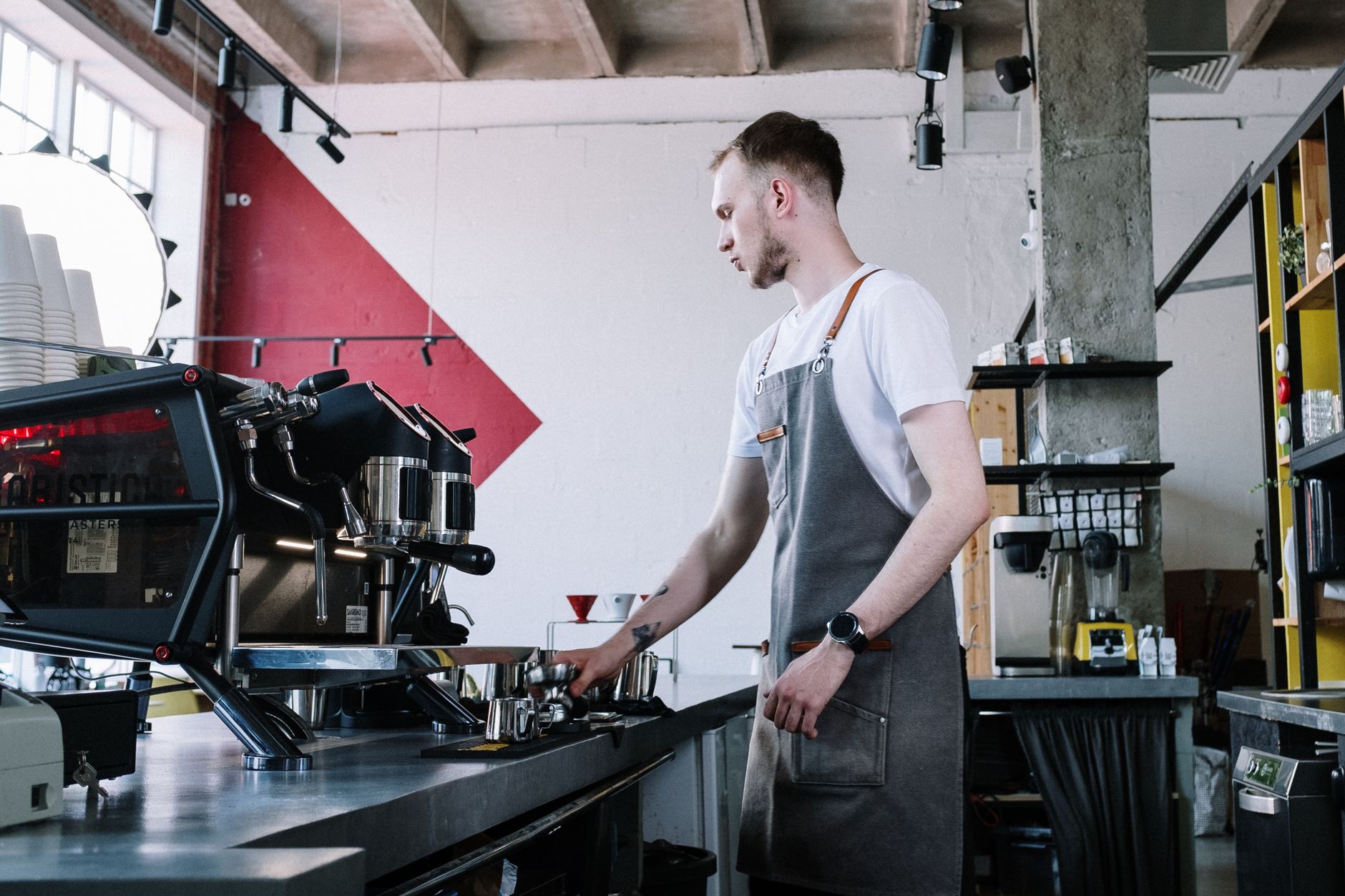
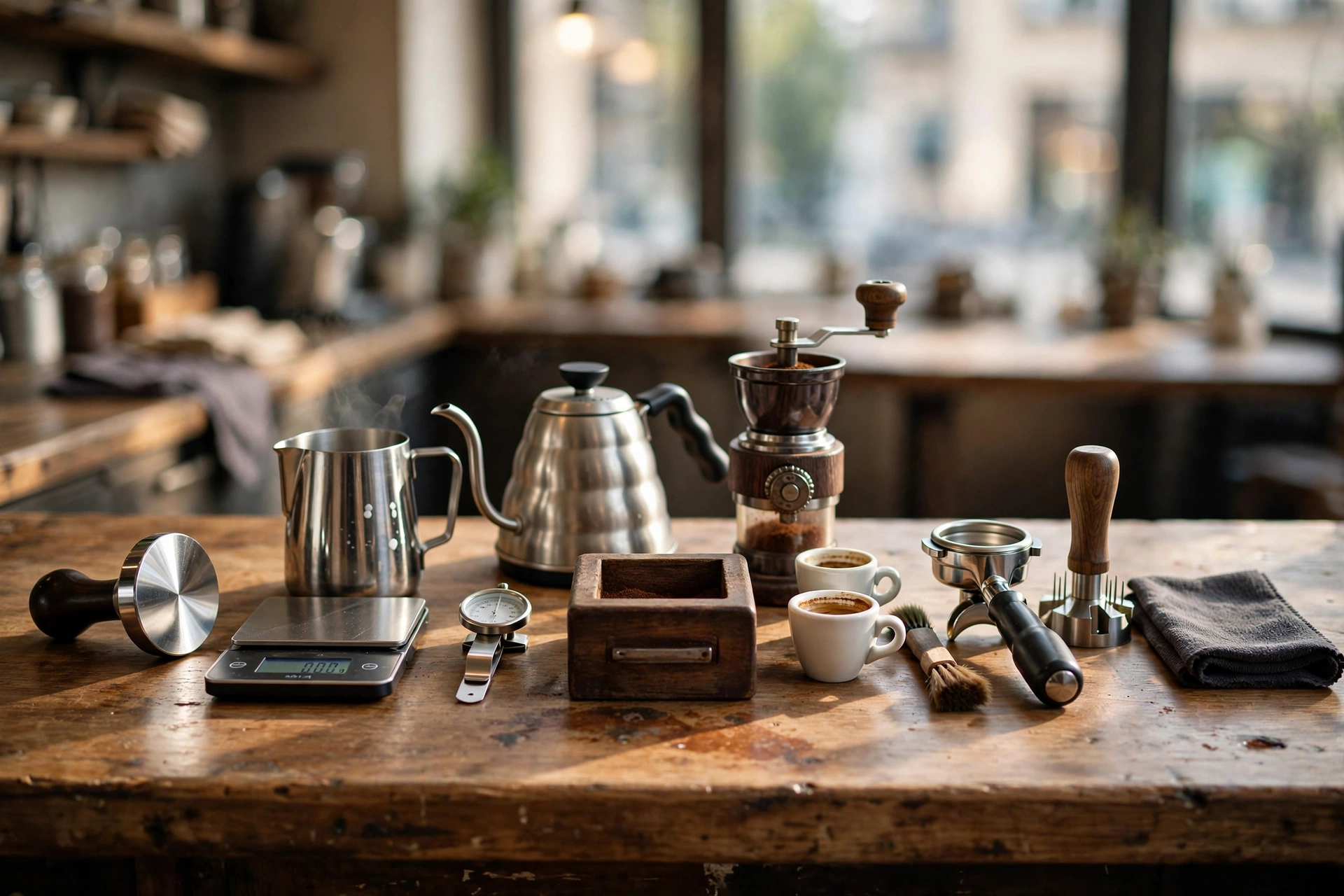
In a professional environment, these tools are categorized by their role in the workflow: preparation, extraction, and finishing. Preparation tools include digital scales and dosing funnels. Extraction tools center around the tamper and distribution tools. Finishing tools include steaming pitchers, latte art pens, and thermometers. When we integrated these standards at Busy Bean Coffee, we discovered that investing in high-grade stainless steel and calibrated tools reduced waste by nearly 15% because baristas stopped "guessing" the dose.
Why Do High-Quality Barista Tools Matter for Your Business ROI?
Investing in professional-grade barista tools is not about aesthetics; it is about mitigating financial loss and ensuring brand consistency. In the specialty coffee industry, consistency is the only metric that drives customer retention. If a guest enjoys a flat white on Tuesday but finds it bitter on Wednesday, you have lost the trust of that customer. High-quality tools remove the human error associated with manual preparation.
According to the Specialty Coffee Association (SCA), precision in brewing parameters—including dose, yield, and time—is fundamental to achieving a specialty grade cup. When baristas use calibrated tampers and precision scales, they adhere to these global standards, ensuring that the nuanced flavors of the coffee bean are highlighted rather than destroyed by over-extraction. A precision scale allows a barista to measure to 0.1g, which is essential when the difference between a balanced shot and a sour shot is as little as 0.5g of coffee.
Furthermore, tool quality affects staff ergonomics and speed. A poorly designed tamper causes wrist fatigue over an eight-hour shift, slowing down the line. When you pair professional tools with Best Commercial Espresso Machines for Coffee Shops, you create a synergy that maximizes throughput during peak hours. A streamlined workflow reduces the "wait time" per customer, which directly increases the number of transactions per hour. For those operating in high-traffic areas, this efficiency is the difference between a profitable quarter and a break-even one.
How to Implement a Professional Barista Tool Workflow
Implementing a professional workflow requires a systematic approach to how tools are placed and used. The objective is to minimize movement. Every second a barista spends reaching for a tool is a second the espresso shot is degassing or the milk is separating. I've tested this with dozens of our clients, and the pattern is clear: the most efficient shops use a "reach-zone" layout where every essential tool is within arm's length of the group head.
Step 1: The Precision Dose
Start with a digital scale and a dosing funnel. The barista should weigh the ground coffee in the portafilter to ensure it matches the recipe exactly. Using a dosing funnel prevents coffee from spilling over the edges, reducing waste and keeping the workspace clean. This is where the quality of the coffee grinders for shops becomes apparent, as the tools must complement the grind consistency.
Step 2: Distribution and Tamping
Once the coffee is dosed, a distribution tool (like a WDT tool or a leveling tool) is used to break up clumps and flatten the surface. This prevents "channeling," where water finds a path of least resistance through the coffee puck. Following distribution, a calibrated tamper is used to apply consistent pressure. I recommend a spring-loaded tamper for training staff, as it guarantees the same pressure every time, regardless of the barista's strength.
Step 3: Milk Texture and Temperature
Use a stainless steel steaming pitcher with a precise spout for latte art. For those seeking maximum consistency, integrating Automatic Milk Frothers for Coffee Shops can remove the guesswork. However, for manual steaming, a digital thermometer is essential. Overheating milk destroys the sweetness of the lactose and creates a "burnt" taste, which is a common complaint in lower-tier cafes.
Step 4: The Final Pour and Cleanup
The drink is poured into a pre-warmed cup. Immediately after, the barista uses a dedicated knock box and a microfiber cloth to clear the portafilter. A clean workspace is a fast workspace. If you are utilizing Essential Commercial Drip Coffee Brewers for batch coffee, a separate set of tasting spoons and timers should be kept nearby to ensure the batch brew is tasting correctly throughout the day.
Barista Tools: Professional vs. Amateur Approaches
Many new shop owners make the mistake of buying "home-grade" tools because they appear cheaper. However, the friction and wear on these tools are significantly higher in a commercial setting. A home tamper may bend or warp under the pressure of 300 shots a day, and plastic pitchers will melt or stain.
| Feature | Traditional/Home Approach | Generic "Cheap AI" Tools | Modern Professional Approach |
|---|---|---|---|
| Precision | Visual estimation (guessing) | Basic digital (low accuracy) | Calibrated 0.1g scales & spring tampers |
| Durability | Plastic/Light aluminum | Thin stainless steel | Heavy-duty 304 Stainless Steel/Hardened Steel |
| Consistency | Varies by barista mood/strength | Moderate but inconsistent | Standardized across all staff members |
| Workflow | Scattered tools, high movement | Basic organization | Ergonomic reach-zone layout |
💡
Key Takeaway
Professional tools shift the responsibility of quality from the barista's intuition to the tool's calibration, ensuring the 100th cup of the day tastes exactly like the first.

Common Mistakes to Avoid When Selecting Tools
One of the most frequent errors I see is the "over-tooling" of a station. Some owners buy every gadget they see on social media, creating a cluttered environment that actually slows down the baristas. A cluttered station leads to spills, broken equipment, and a chaotic energy that customers can feel. The goal is to have a lean set of tools that perform specific, non-overlapping functions.
Another critical mistake is neglecting the cleaning tools. Many shops invest in a $500 tamper but ignore the quality of their group head brushes and chemical cleaners. According to NSF International, maintaining sanitary conditions in food equipment is non-negotiable. If your tools are not cleaned with the correct food-safe agents, you risk contaminating the specialty coffee with residue from previous brews or detergent.
Finally, avoid buying tools that are not compatible with your specific equipment. For example, buying a 58mm tamper for a machine that uses 54mm portafilters. It sounds simple, but in the rush of opening a shop, these errors happen. Always verify the diameter of your baskets before ordering accessories. If you are considering Top Bean-to-Cup Coffee Machines for Businesses, remember that your tool needs will change, as many of the extraction steps are automated, shifting your focus more toward milk chemistry and presentation tools.
Frequently Asked Questions
Why should I use a digital scale instead of just timing the shot?
Timing a shot only tells you how fast the water is moving, not how much coffee is actually being produced. A digital scale measures the "yield," which is the actual weight of the liquid espresso. Because different coffee beans have different densities, the volume of a shot can be misleading due to crema. By weighing the output, you can ensure a precise brew ratio (e.g., 1:2), which is the only way to guarantee the flavor profile remains consistent across different roasts of Arabica coffee.
Is a distribution tool really necessary or is a finger-level enough?
While many experienced baristas use their fingers to level the coffee, a professional distribution tool is essential for staff consistency. Finger-leveling often creates uneven pockets of density, leading to channeling where water bypasses the coffee. A distribution tool or WDT (Weissman Distribution Technique) tool ensures an even density throughout the puck. This results in a more uniform extraction and a higher quality cup, especially when using high-end equipment from Sensa Coffee Service in Mount Pleasant SC: Complete Guide.
What is the best material for steaming pitchers?
304 Grade Stainless Steel is the industry standard for a reason. It is non-reactive, durable, and conducts heat efficiently, allowing the barista to feel the temperature of the milk through the side of the pitcher. Avoid plastic or coated pitchers as they cannot withstand the high temperatures of a commercial steam wand and can leach chemicals into the milk. Stainless steel is also the only material that meets the rigorous sanitation standards required by the U.S. Food and Drug Administration (FDA).
How often should I replace my barista tools?
Most high-quality stainless steel tools, like pitchers and tampers, should last for years if maintained. However, items with rubber gaskets or electronic components, such as scales, may need replacement every 18 to 24 months depending on volume. The most critical item to monitor is the tamper's base; if it becomes scratched or uneven, it will affect the seal of the puck. Regularly inspecting your tools during the closing shift prevents sudden failures during a morning rush.
Do I need different tools for different types of coffee beans?
While the tools remain the same, the way you use them changes based on the bean. For example, a light roast of Coffea arabica typically requires a finer grind and a more precise tamp to achieve full extraction. You will use your scale more aggressively to adjust the yield for light roasts compared to darker roasts. The tools provide the data, but the barista uses that data to adjust the recipe based on the bean's origin and roast profile.
Conclusion
Mastering the art of the pour requires more than just talent; it requires the right infrastructure. By investing in calibrated, professional-grade barista tools, you remove the variables that lead to inconsistent coffee and wasted product. From the precision of a 0.1g scale to the durability of a 304 stainless steel pitcher, these tools are the unsung heroes of a profitable coffee shop. When you align your hand tools with a high-performance setup—such as those found in our Sensa Coffee Service in Charleston SC: Complete Guide—you create an environment where quality is a guarantee, not a gamble.
If you are still in the planning stages of your build-out, ensure you don't overlook the small details. For a comprehensive strategy on everything from layout to machinery, return to our Ultimate Guide to Outfitting a Coffee Shop with Equipment. At Busy Bean Coffee, we specialize in providing the end-to-end support necessary to turn a passion for coffee into a scalable, efficient business. Visit www.busybeancoffee.com to explore our managed coffee solutions for 2026.
Free Coffee Pairing Guide & Specialty Roast Cheat Sheet
Unlock the secrets of perfect brewing ratios, water temperatures, and specialty roast profiles. Download the guide.