

📖This article is part of the complete guide to Bean to Cup Coffee Machines.
In my experience working with hospitality managers across the Southeast, the most common frustration isn't the cost of the machine, but the downtime caused by choosing a brand that wasn't built for commercial volume. I've seen businesses invest thousands in a 'prosumer' machine only to have it fail during a Monday morning rush because the internal grinder couldn't handle the heat. Choosing from the top bean to cup coffee machine brands requires looking past the shiny exterior and analyzing the brew group durability and the availability of certified technicians in your specific region.
For a comprehensive overview of how these systems function, explore our guide on bean to cup coffee machines.
What Are the Top Bean to Cup Coffee Machine Brands for Business?
📚
Definition
Top bean to cup coffee machine brands are manufacturers specializing in fully automated systems that grind fresh coffee beans, tamp the puck, and extract the espresso in a single integrated process, specifically designed for high-traffic commercial environments.
When evaluating the top bean to cup coffee machine brands, you must distinguish between consumer-grade 'super-automatics' and true commercial-grade beverage centers. The industry leaders in 2026 focus on consistency, modularity, and integration. A brand like SENSA, which we prioritize at Busy Bean Coffee, focuses on the managed experience—where the machine is an asset and the service is the product. Other global leaders emphasize precision engineering, utilizing PID controllers and high-pressure pumps to ensure every shot of espresso meets the rigorous standards of a professional barista.
Selecting a brand isn't just about the menu of drinks; it is about the engineering of the brew group. In the commercial space, brands are judged by their 'cycles per day' rating. While a home machine might be rated for 5-10 cups, a commercial leader is designed for 100 to 500 cups daily without a drop in temperature or pressure. This is why we steer our clients toward equipment that adheres to strict safety and sanitation standards. According to NSF International, equipment used in food service must meet specific sanitary design requirements to prevent bacterial growth in the internal milk lines and brew chambers.
Why Does Brand Choice Matter for Your Business ROI?
Choosing from the top bean to cup coffee machine brands matters because the wrong choice creates a 'hidden tax' on your operations. This tax manifests as wasted coffee beans, constant technician call-outs, and employee dissatisfaction. When you invest in a brand known for reliability, you aren't just buying a machine; you are buying uptime. In a corporate or hotel setting, if the coffee machine is down, the productivity of the entire office or the guest satisfaction score of the lobby drops immediately.
From a financial perspective, the ROI of a premium brand is found in the reduction of waste. High-end brands utilize precision dosing, ensuring that the exact amount of coffee bean is used for every shot. Cheaper brands often over-dose or produce inconsistent pucks, leading to 'channeling' where water bypasses the coffee, resulting in a sour, weak brew. This waste adds up to thousands of dollars over the lifespan of the equipment. Furthermore, the quality of the roast is preserved when using machines that maintain an optimal temperature for specialty coffee, preventing the oils from scorching during the extraction process.
Moreover, the integration of Coffea arabica requires specific temperature profiles. According to the Specialty Coffee Association (SCA), the precise control of water temperature and pressure is what separates a standard cup of coffee from a specialty beverage. Top-tier brands implement digital temperature control that allows the machine to recover heat instantly between cups, which is essential for maintaining the flavor profile of high-altitude Arabica beans in a high-volume environment.
How to Evaluate and Implement a Brand Strategy for Your Office?
Implementing a brand strategy starts with a volume audit. You cannot choose the right brand if you don't know your 'peak hour' demand. I've tested this with dozens of our clients and the pattern is clear: businesses that underestimate their peak volume by even 20% end up with machines that overheat or require frequent manual resets.
To implement the right solution, follow these technical steps:
- Volume Mapping: Calculate the maximum number of cups served between 8:00 AM and 10:00 AM. If you are serving more than 30 people per hour, you must move from 'small office' brands to 'commercial' brands.
- Technical Support Mapping: Identify where the nearest certified technician for that brand is located. A machine from a famous global brand is useless if the only technician capable of fixing the motherboard is three states away. This is why we emphasize local managed services in Mount Pleasant, SC.
- Maintenance Audit: Review the cleaning cycle. Does the brand require a manual deep-clean every 50 cups, or is there an automated CIP (Clean-In-Place) system? For most business owners, an automated system is the only way to ensure the machine remains compliant with health codes.
If you are weighing the financial options, we suggest looking at our Bean to Cup Machine Cost: Purchase vs. Rental guide. For many, the managed membership model is superior because it eliminates the risk of brand obsolescence; you always have the most current technology without the capital expenditure of buying a new machine every four years.
Which Approach is Best for Your Beverage Program?
When choosing a brand or a service provider, you will generally encounter three different paths. The table below compares the traditional purchase model against generic AI-driven 'budget' machines and the professional managed approach we provide at Busy Bean Coffee.
| Feature | Traditional Purchase | Budget/Generic Brand | Busy Bean Managed Approach |
|---|---|---|---|
| Initial Cost | High Upfront Capital | Low to Moderate | Predictable Monthly Fee |
| Reliability | Variable (Brand Dependent) | Low (Consumer Grade) | High (SENS A Commercial) |
| Maintenance | Owner's Responsibility | Self-Service/Limited | Fully Managed White-Glove |
| Coffee Quality | Varies by User Skill | Inconsistent | Professional Specialty Grade |
| Technical Support | Per-Visit Charge | Mail-in Repair | Proactive Maintenance |

As you can see, the 'budget' approach often results in a higher total cost of ownership due to frequent replacements and poor quality. When you use a professional coffee service, the focus shifts from owning a piece of hardware to guaranteeing a beverage experience. This is particularly important when you are trying to attract top talent back to the office or impress clients in a lobby; a broken, cheap machine sends a message of neglect, whereas a high-end, well-maintained system suggests quality and attention to detail.
Common Brand Mistakes to Avoid
One of the most frequent mistakes I see is the "Prosumer Trap." Business owners see a machine marketed as "Prosumer" and assume it is suitable for a 50-person office. It is not. Prosumer machines are designed for enthusiasts who enjoy the process of cleaning and calibrating. In a business environment, you need a machine that is "idiot-proof." If the process requires a specialized barista to calibrate the grinder every morning, your staff will either do it wrong or simply stop using the machine.
Another critical error is ignoring the milk system. Many brands use a simple steam wand that requires manual purging. In a busy office, this is a sanitation nightmare. According to the U.S. Food and Drug Administration (FDA), improper cleaning of milk delivery systems can lead to significant contamination. You should prioritize brands that offer integrated, automated milk rinsing cycles that run after every beverage.
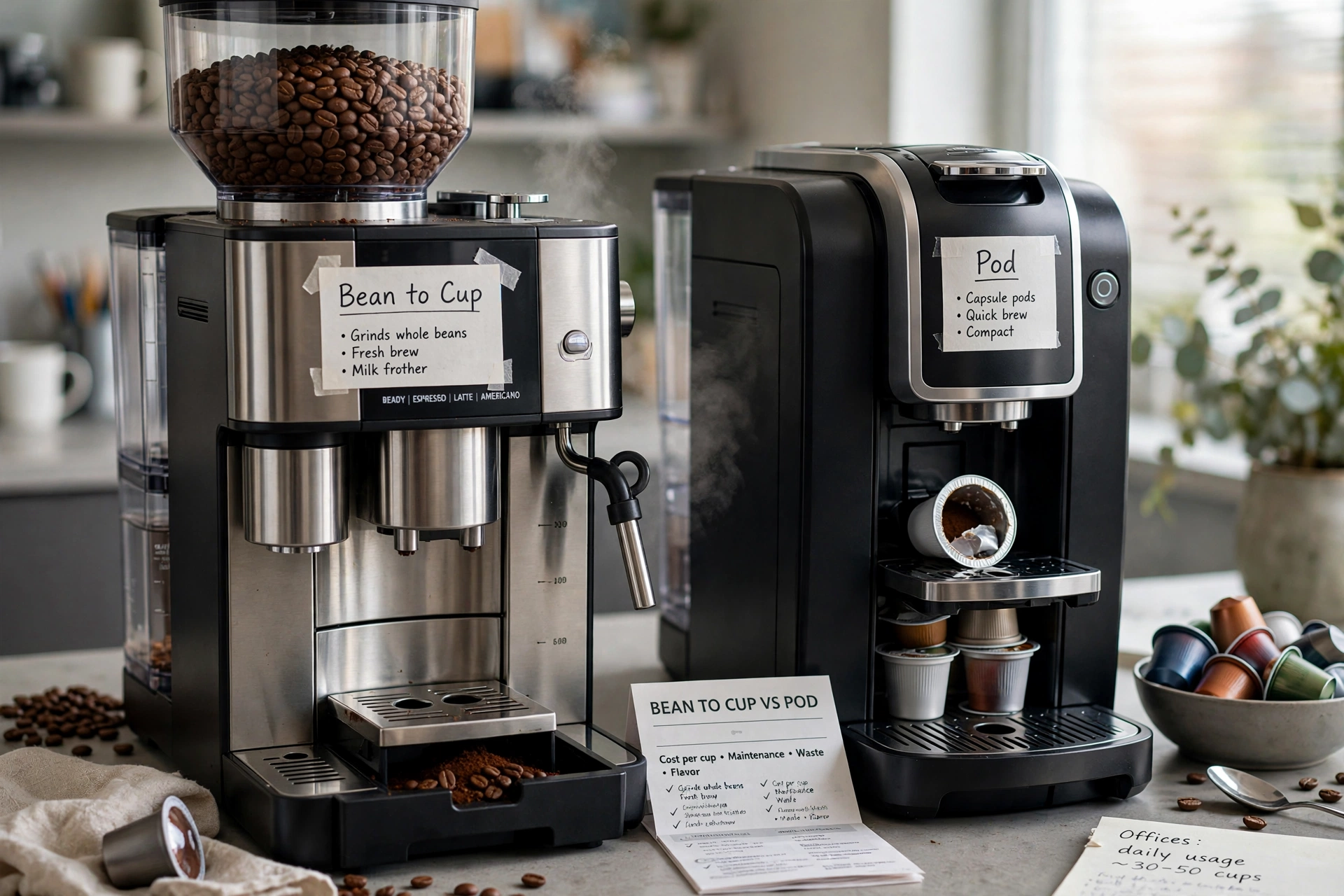
Finally, avoid brands that lock you into proprietary pods under the guise of being "bean to cup." If a machine requires a specific, branded pod to function, it isn't a true bean to cup machine; it's a pod machine with a marketing rebrand. For a deeper dive into this distinction, see our analysis of Bean to Cup vs. Pod Coffee Machines for Offices.
Professional Tips for Maximizing Your Machine's Life
Regardless of the brand you choose, the longevity of your espresso machine is determined by two things: water quality and bean quality. Using hard water will create calcium buildup (scale) that will eventually choke the heating element, regardless of how expensive the brand is. I always recommend a high-grade filtration system that removes minerals while leaving enough for taste.
Furthermore, the type of coffee roasting you use impacts the machine's wear and tear. Extremely oily beans (often found in very dark, French roasts) can clog the grinders of certain brands. Using a medium-roast specialty bean not only tastes better but keeps the internal components cleaner for longer. If you're unsure about which equipment fits your specific team size, check out our list of the Best Office Espresso Machines for Small Teams in 2026.
For those managing larger facilities, the logistics of bean delivery become a bottleneck. Implementing a coffee delivery service in Charlotte NC or similar professional logistics ensures that your machines are never running on empty, which can actually damage some grinders if they run dry for too long.
Frequently Asked Questions
Which bean to cup brand is most reliable for high-volume offices?
Commercial-grade brands like SENSA and other high-end European manufacturers are designed specifically for high-volume throughput. Reliability in these brands comes from the use of metal brew groups instead of plastic, and heavy-duty grinders that can run for hours without overheating. When choosing, look for a brand that offers a "Managed Service" option, as this ensures the machine is maintained by professionals who can predict failures before they happen, rather than reacting after the machine has already broken down during a busy morning.
How do I know if a brand is truly "commercial" or just a fancy home machine?
Check the "Daily Cup Capacity" in the technical specifications. A home or prosumer machine is typically rated for 10-20 cups. A true commercial machine will be rated for 50-500+ cups. Additionally, look for NSF certification. If a machine is NSF certified, it means it has been vetted for sanitation and safety in a commercial food environment. If the brand lacks these certifications, it is likely a home machine being sold to businesses, which will lead to rapid mechanical failure and potential health code violations.
Does the brand of machine affect the taste of the coffee?
Absolutely. The brand determines the quality of the PID (Proportional-Integral-Derivative) controller, which manages water temperature. If the temperature fluctuates even by a few degrees, the specialty coffee will taste bitter or sour. Top brands ensure a stable temperature and a consistent grind size, which is essential for a balanced extraction. When combined with high-quality Arabica coffee, a premium brand can produce a cafe-quality latte that is indistinguishable from one made by a professional barista.
What is the most expensive mistake when choosing a coffee machine brand?
The most expensive mistake is prioritizing the lowest upfront cost over the total cost of ownership (TCO). A cheap machine often requires more frequent repairs, uses more electricity, and wastes more coffee beans through inconsistent dosing. Over three years, a "cheap" machine can cost double the amount of a premium managed service due to downtime and repair bills. This is why we recommend analyzing the Bean to Cup Coffee Machine Buying Guide for Businesses to understand the long-term financial implications of your choice.
How often should commercial brands be serviced?
While every brand differs, a professional standard is a comprehensive technical audit every quarter. This includes descaling the internals, replacing gaskets and O-rings, and calibrating the grinder. If you are using a managed service like Busy Bean Coffee, this is handled proactively. If you are managing it yourself, failing to perform these checks can lead to catastrophic pump failure. For a detailed breakdown of what these service calls should entail, refer to our Bean to Cup Coffee Machine Maintenance Guide.
Conclusion
Choosing from the top bean to cup coffee machine brands is not about finding the most famous name, but about finding the right engineering match for your business volume and a support system that ensures zero downtime. Whether you are looking for a sleek addition to a corporate boardroom or a heavy-duty solution for a hotel lobby, the priority should always be reliability, sanitation, and the quality of the final brew.
In my years of building Busy Bean Coffee, I've learned that the best machine in the world is useless if it isn't maintained. That is why we don't just provide equipment; we provide a managed coffee membership that takes the guesswork out of the equation. You get the premium hardware, the expert installation, and the best roasts, all for one predictable fee.
Stop worrying about technical manuals and repair bills. If you're ready to elevate your office culture with a professional beverage program, explore our complete guide to Bean to Cup Coffee Machines and see how we can transform your workspace.
Visit us at www.busybeancoffee.com to start your journey toward better coffee today.
Free Coffee Pairing Guide & Specialty Roast Cheat Sheet
Unlock the secrets of perfect brewing ratios, water temperatures, and specialty roast profiles. Download the guide.