📖This article is part of the complete guide to Bean to Cup Coffee Machines.
I remember a client in Mount Pleasant who spent five figures on a high-end espresso machine that looked stunning in their lobby but required a certified barista to operate. Within three months, the machine was gathering dust because the staff found it too intimidating to use. This is the classic 'feature trap'—buying for specs rather than for the actual workflow of your business. Choosing a system that balances quality with autonomy is the only way to ensure your investment actually delivers value.
For a comprehensive overview of the technology and options available, explore our guide on bean to cup coffee machines.
What Is a Business-Grade Bean to Cup Machine?
📚
Definition
A bean to cup coffee machine is an automated system that grinds fresh coffee beans, tamps the grounds, and extracts the espresso in a single integrated process, usually at the touch of a button.
When we talk about a "business-grade" machine, we aren't just talking about a larger version of a home brewer. A professional system is engineered for duty cycles that would burn out a consumer motor in a week. These machines are built to handle 50, 100, or even 500 cups per day without a drop in temperature or pressure stability. The core difference lies in the boiler capacity and the quality of the grinder, which must remain consistent even as the hopper empties.
In my experience working with foodservice operators and office managers, the biggest misconception is that "automatic" means "low quality." In 2026, the technology has evolved. Modern sensors can now adjust grind size in real-time to compensate for humidity, ensuring that a cup of specialty coffee tastes the same at 8:00 AM as it does at 4:00 PM. This consistency is what separates a professional installation from a kitchen appliance.

Why Choosing the Right Machine Matters for Your Business
Selecting the wrong equipment isn't just a matter of bad taste; it's a direct hit to your bottom line through wasted labor and lost productivity. A machine that is too complex leads to user error and downtime, while a machine that is too simple fails to attract the quality-conscious employees or customers who value a true espresso experience.
According to the National Coffee Association USA (NCA), coffee consumption patterns in the workplace have shifted toward specialty preferences, meaning the "standard office pot" is no longer sufficient for talent retention and employee satisfaction. When you provide a high-quality beverage, you aren't just serving coffee; you are creating a hub for spontaneous collaboration.
From a financial perspective, the wrong choice leads to "hidden costs." I've seen businesses buy cheap machines only to spend thousands on emergency repairs because the units weren't rated for the volume. Furthermore, if you aren't using a system that meets safety standards, you risk health code violations. This is why we always emphasize the importance of NSF International certifications, specifically the NSF/ANSI 4 standards, which ensure that the equipment is designed for easy cleaning and prevents bacterial growth in the internal brew group.
Beyond the hardware, the choice of coffee bean is essential. Using a low-grade bean in a high-end machine is like putting budget tires on a Ferrari. To truly elevate the experience, you need a roast that complements the machine's extraction profile, typically focusing on Coffea arabica for its superior flavor notes and lower bitterness.
How to Implement a Buying Strategy for Your Office
Buying a coffee system should be a data-driven decision, not an aesthetic one. You need to map your "peak hour" demand to determine the necessary boiler size and water tank capacity. If you have 50 employees who all want coffee between 8:30 AM and 9:00 AM, a machine with a small reservoir will create a bottleneck that frustrates your team.
Step 1: Define Your Daily Volume
Calculate your peak demand. If your average user drinks 2 cups a day, and you have 30 users, you need a machine rated for at least 60 cups. However, you should always over-spec by 20% to account for guests and high-growth periods. If the machine is rated for exactly your volume, it will run constantly, increasing wear and tear and shortening its lifespan.
Step 2: Evaluate the User Interface
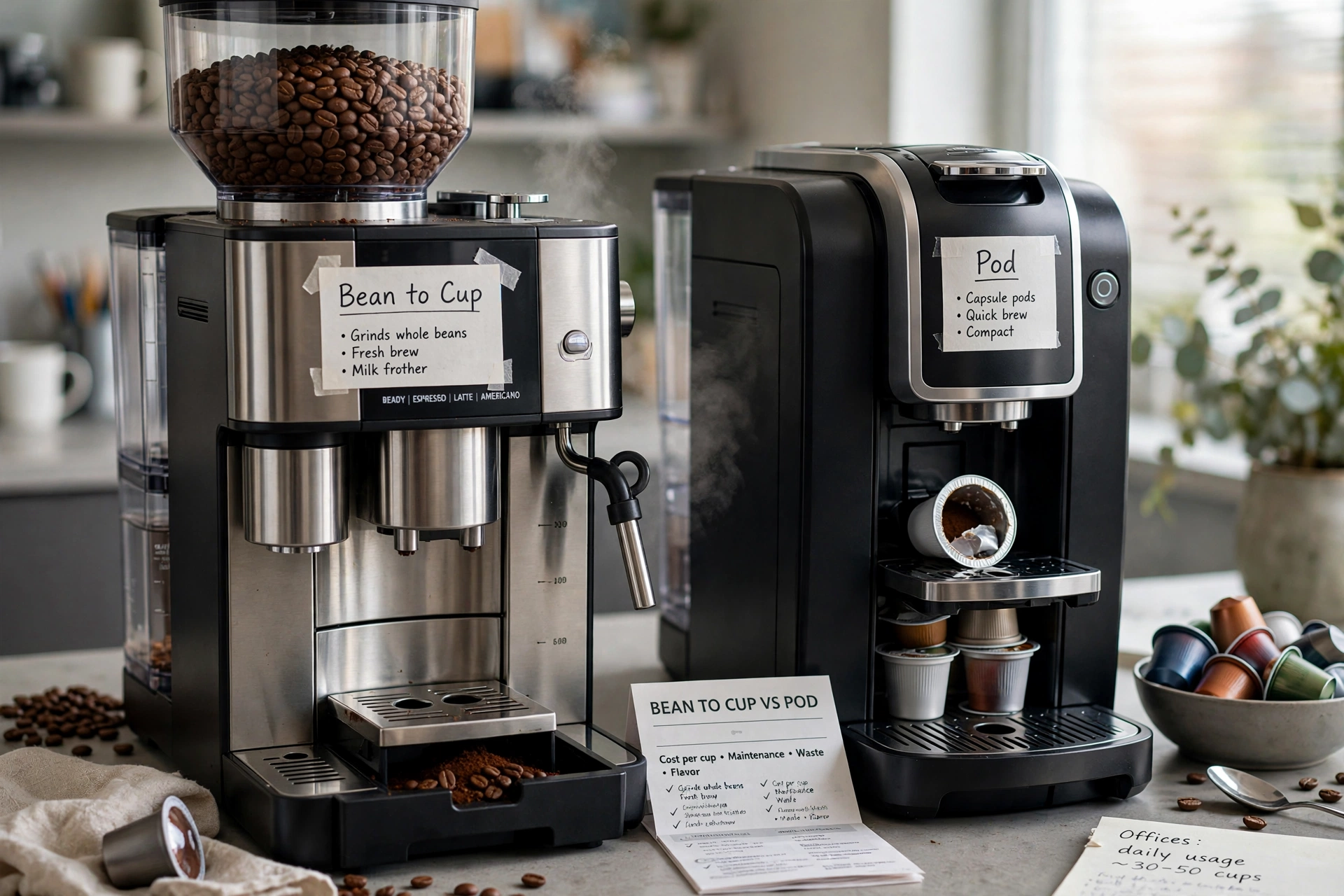
In a business setting, simplicity is king. The best machines use a "one-touch" interface. If a user has to navigate three menus to get a latte, they will stop using it. I always recommend looking for machines with customizable profiles where users can save their preferred strength and temperature. For more on comparing different styles of delivery, check out our analysis of bean to cup vs pod coffee machines for offices.
Step 3: Assess Maintenance Requirements
This is where most businesses fail. A bean to cup machine is a precision instrument that requires regular descaling and cleaning. You must decide if your staff has the bandwidth to handle daily cleaning or if you need a managed service. When we designed the membership at Busy Bean Coffee, we focused on removing this friction entirely by providing full maintenance coverage.
Step 4: Integration and Infrastructure
Do you have a dedicated water line, or do you need a tank-based system? A plumbed-in machine is vastly superior for businesses because it eliminates the manual labor of refilling water. It also allows for the installation of professional filtration systems, which is critical for removing minerals that cause scale buildup and ruin the taste of the espresso machine's output.
Bean to Cup vs. Other Business Solutions
To help you visualize where a professional bean to cup system fits, consider this comparison against the common alternatives available in 2026.
| Feature | Traditional Drip/Pod | Generic Low-Cost AI Auto | Busy Bean Coffee Professional |
|---|---|---|---|
| Quality | Low to Medium | Inconsistent | High (Specialty Grade) |
| Labor | High (Manual cleanup) | Medium (Frequent errors) | Low (Managed Service) |
| Consistency | Variable | Poor (Hallucinations in temp) | Precise (SCA Standards) |
| Upfront Cost | Low | Medium | Zero (Membership Model) |
As you can see, the "cheap" route often costs more in the long run due to waste and labor. For those wondering about the financial impact, we have a detailed breakdown of bean to cup machine cost purchase vs rental.
Common Mistakes to Avoid When Buying
After years of consulting for businesses in South Carolina and beyond, I see the same five mistakes repeated. Avoiding these will save you thousands of dollars and countless headaches.
1. Overestimating Staff Willingness to Maintain
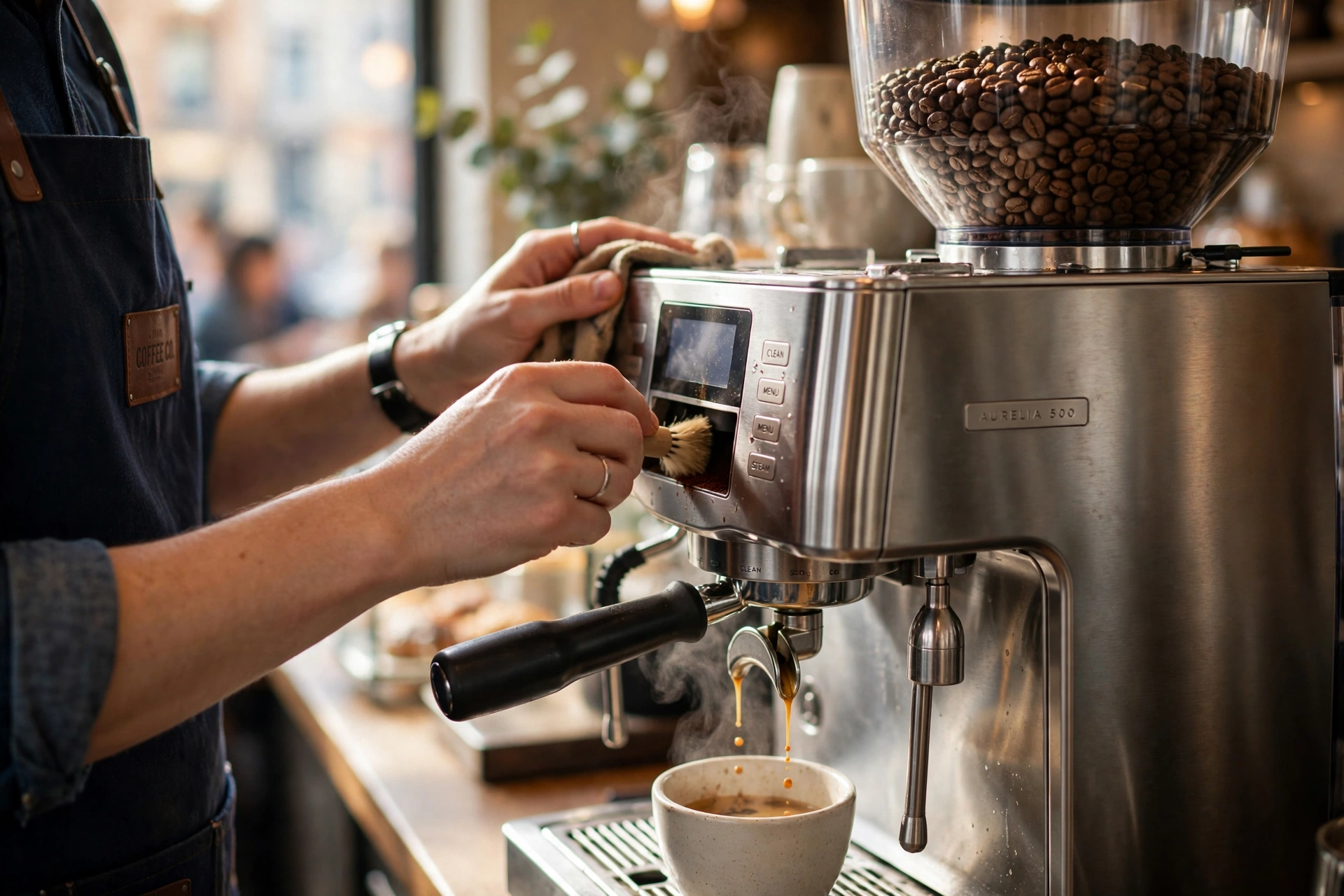
Many managers assume that because a machine is "automatic," it requires no work. In reality, the brew group needs regular rinsing, and the drip tray needs constant emptying. If you don't have a designated person for this, the machine will fail within months. I've seen high-end units become unusable simply because the user ignored the "Clean Me" light for two weeks.
2. Ignoring Water Quality
Water is 98% of your coffee. If you use hard tap water without a professional filtration system, you are essentially inviting limestone to grow inside your boiler. This doesn't just affect the taste; it physically blocks the flow of water and causes the heating element to burn out. Always invest in a high-grade filtration system or a managed service that handles this for you.
**3. Buying for the "Now" Rather Than the "Next"
A machine that fits 10 people today will be a liability when you grow to 20. Always buy a machine that can handle your projected growth for the next 24 months. Scaling your coffee service is much easier when you have a partner like Busy Bean Coffee who can swap out equipment as your needs evolve.
4. Neglecting the Bean Quality
Buying a $10,000 machine and filling it with stale, commodity-grade beans is a waste of money. To get the most out of your equipment, you need beans that meet the Specialty Coffee Association (SCA) standards for quality and roasting. This ensures the oil content and density are optimal for the machine's grinder, preventing clogs and ensuring a rich crema.
5. Overpaying for Unused Features
Do you really need a machine with a 15-inch touch screen and integrated WiFi for telemetry? For most offices, a reliable, intuitive interface is better than a flashy one. Focus on the quality of the brew and the reliability of the motor rather than the digital bells and whistles.
💡
Key Takeaway
The best business coffee machine isn't the one with the most features, but the one that integrates most seamlessly into your existing daily workflow with the least amount of friction.
Implementation Guide: Transitioning to a Professional Setup
If you are moving from a basic coffee pot or a pod system to a professional bean to cup setup, the transition requires a bit of planning. Don't just plug it in and hope for the best. To ensure a smooth rollout, follow this protocol.
First, designate a "Coffee Zone." This area should have ample ventilation and a nearby power outlet that can handle the voltage requirements of a commercial boiler. Ensure there is enough space for a small waste bin for used coffee pucks and a water source for quick refills if you aren't plumbed in.
Second, educate your users. Even the most intuitive machine can be misused. I recommend a quick 5-minute demonstration for the staff, showing them how to select their drink and, more importantly, how to alert the manager when the beans are low or the machine needs attention. This prevents the "I thought someone else did it" syndrome that leads to neglected equipment.
Third, establish a bean rotation. Coffee beans are a fresh product. Once they are roasted and opened, the clock starts ticking. Store your beans in a cool, dark place in airtight containers. For the best results, use a local roaster who can provide fresh beans on a weekly schedule, ensuring that the specialty coffee experience remains consistent.
Finally, set up a maintenance calendar. If you aren't using a managed service, mark your calendar for weekly deep cleans and monthly descaling. If you find this overwhelming, that's exactly why we offer all-inclusive memberships at Busy Bean Coffee—we handle the technical burden so you can focus on your business.

Frequently Asked Questions
How do I determine the right size machine for my office?
To determine the right size, you must calculate your maximum hourly demand, not your daily average. For example, if 20 people want a coffee within the same 30-minute window, you need a machine with a high-capacity boiler and a fast brew cycle. I recommend estimating your total daily cups and adding a 20% buffer to account for growth and guests. If your volume exceeds 100 cups per day, you should look specifically at commercial-grade machines rather than "prosumer" models to avoid premature motor failure.
Which is better: a plumbed-in machine or one with a water tank?
Plumbed-in machines are significantly better for business environments. They eliminate the manual labor of refilling tanks, which is often the most neglected part of coffee machine maintenance. More importantly, plumbed systems allow for the installation of professional-grade water filtration, which protects the internal components from mineral buildup. Tank-based machines are only suitable for very small offices (under 10 people) or locations where plumbing modifications are physically impossible. For any scaling business, plumbing is the professional choice.
How often does a business bean to cup machine need maintenance?
Daily maintenance includes emptying the drip tray, rinsing the milk system (if applicable), and emptying the waste puck container. Weekly maintenance should involve a more thorough cleaning of the brew group and checking the water filter. Every 3 to 6 months, depending on water hardness, the machine must be descaled. If these steps are ignored, the machine will suffer from decreased pressure and potential heating element failure. This is why many businesses prefer a managed service that includes professional maintenance.
Can I use any coffee beans in a professional bean to cup machine?
While you can physically use any bean, using low-quality, oily, or improperly roasted beans can damage your machine. Very oily beans can clog the grinder or cause the brew group to stick. To maximize the lifespan of your equipment and the quality of the drink, use specialty coffee beans that meet SCA standards. These beans are roasted more consistently and have a moisture content that is ideal for the automated tamping and extraction processes found in high-end machines.
What is the average ROI for installing a high-quality coffee machine in an office?
ROI for office coffee is measured in employee productivity and talent retention. According to various workplace wellness studies, providing high-quality amenities reduces the time employees spend leaving the building to visit external cafes, which can save 15-30 minutes of productivity per person per day. Additionally, it fosters a "collision culture" where employees from different departments interact, leading to faster problem-solving. When compared to the cost of individual pod machines or low-end brewers, a professional system reduces long-term waste and cost-per-cup.
Recommended Readings
To deepen your understanding of these topics, we recommend reading the following articles:
- Benefits of Bean to Cup Machines in the Workplace
- Best Bean to Cup Coffee Machines for Offices
- Bean to Cup Machine Troubleshooting Guide
- Bean to Cup vs. Pod Coffee Machines for Offices
Conclusion
Choosing the right equipment is the difference between a valued office amenity and a frustrating piece of expensive scrap metal. When you prioritize duty cycle, user simplicity, and water quality, you create an environment that your team actually enjoys. The goal isn't just to provide caffeine; it's to provide a moment of quality in a busy workday.
If you're tired of managing the headaches of equipment failure and manual cleaning, it might be time to move away from ownership and toward a managed solution. At Busy Bean Coffee, we provide the equipment, the beans, and the maintenance for one predictable fee, so you never have to worry about a "Clean Me" light again. For more information on how to upgrade your workspace, see our comprehensive guide on bean to cup coffee machines.
Ready to elevate your office coffee experience? Visit us at www.busybeancoffee.com and let's find the perfect fit for your team.
Free Coffee Pairing Guide & Specialty Roast Cheat Sheet
Unlock the secrets of perfect brewing ratios, water temperatures, and specialty roast profiles. Download the guide.