What Exactly Are Industrial Coffee Roasters?
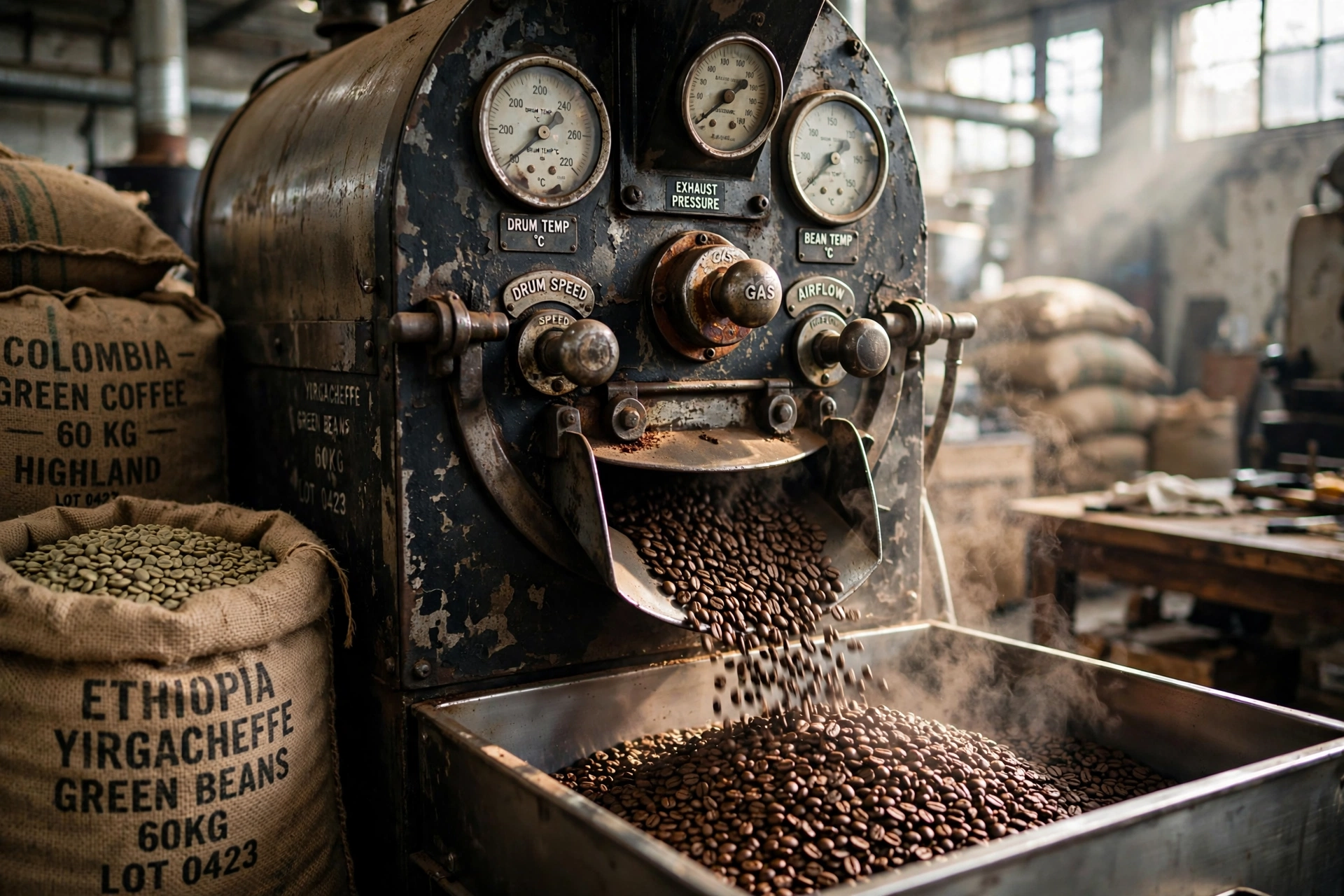
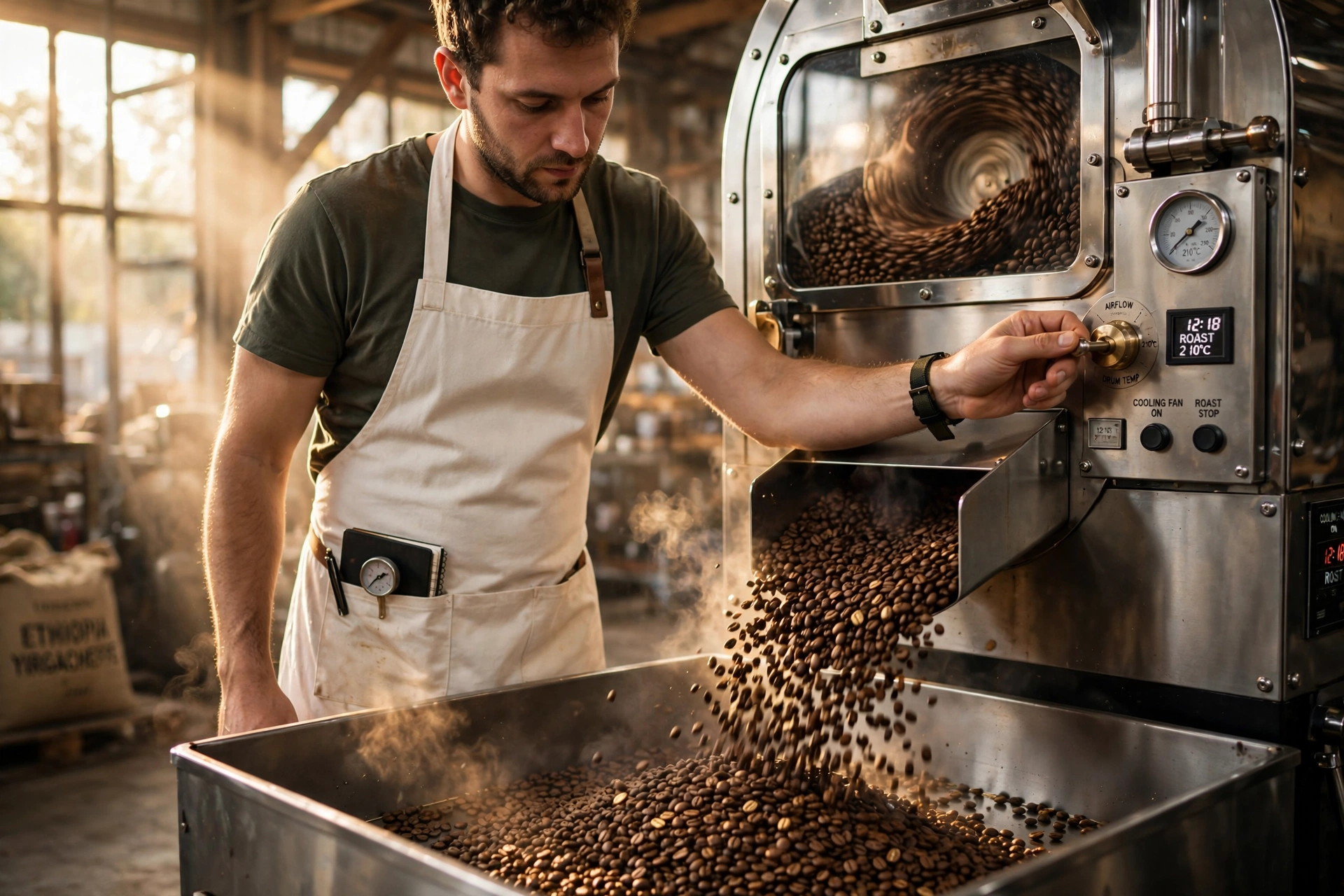
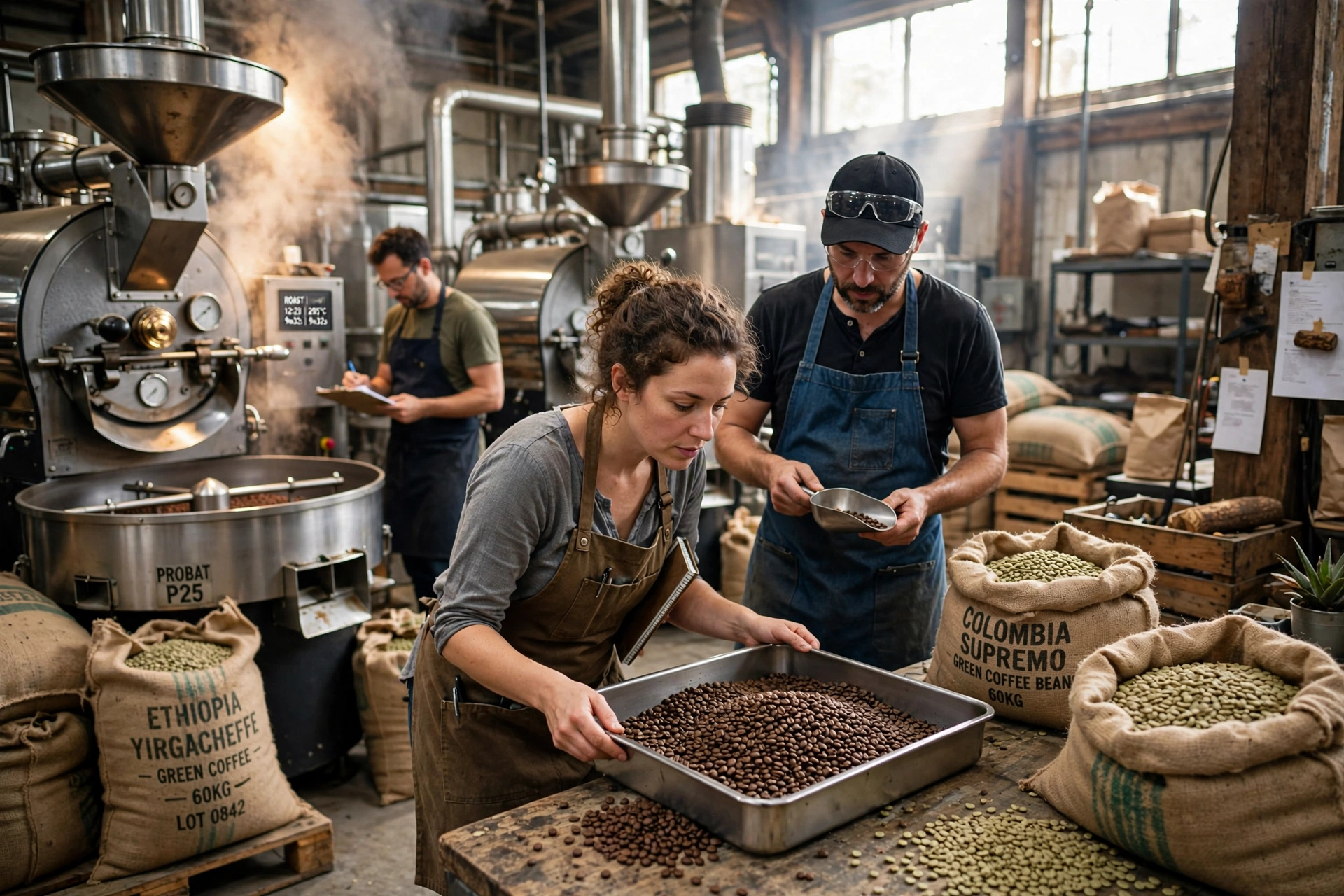
Scaling a coffee business requires a fundamental shift in how you handle heat and volume. When a boutique operation moves beyond small-batch sampling and enters the realm of commercial distribution, they transition to using industrial coffee roasters. These are high-capacity, engineered machines designed to process large quantities of green coffee beans—ranging from 30kg to several hundred kilograms per batch—while maintaining a level of consistency that manual or home-scale roasting simply cannot achieve.
The core objective of an industrial roasting system is the precise control of thermodynamics. Unlike small roasters, these machines utilize advanced airflow management, heavy-duty drums, and sophisticated software to ensure that the 1,000th bean in a batch experiences the exact same heat profile as the first. For businesses scaling their operations, this transition is essential for maintaining a predictable flavor profile across thousands of pounds of product. For those who prefer to avoid the massive capital expenditure of owning and operating such machinery, integrating a Sensa Coffee Service in Charlotte, NC can provide the same high-quality roast without the operational headache.
The Mechanics and Engineering of Industrial Coffee Roasting
To understand how these machines function, we have to look at the physics of heat transfer. At its heart, an industrial roaster is a precision oven that manages three types of heat: conduction (direct contact with the hot drum), convection (hot air moving through the beans), and radiation (heat from the surrounding walls).
📚
Definition
Industrial coffee roasting is the process of applying controlled thermal energy to green Coffea arabica or Robusta beans on a commercial scale to trigger chemical reactions—specifically the Maillard reaction and caramelization—that develop the coffee's flavor and aroma.
In my experience working with high-volume foodservice providers, the most common failure point in roasting isn't the heat itself, but the airflow. Industrial machines use powerful fans to pull air through the bean bed. This removes "chaff" (the silver skin of the bean) and prevents the coffee from scorching. If the airflow is off by even a small percentage, you end up with a "baked" roast that tastes like bread rather than specialty coffee.
According to the Specialty Coffee Association (SCA), the precision of temperature control is what separates commercial-grade coffee from specialty coffee. Industrial roasters achieve this through PID controllers and digital probes that track the "Rate of Rise" (RoR). This allows a master roaster to replicate a specific "roast curve" across multiple batches, ensuring that the coffee served in a hotel in Atlanta tastes exactly the same as the coffee served in a clinic in Florida.
The scale of these machines also necessitates specialized cooling trays. Once the beans hit the target temperature (often called "drop"), they must be cooled in under three minutes to stop the internal cooking process. Industrial roasters utilize perforated trays with high-velocity suction fans to crash the temperature, preserving the volatile aromatic compounds that define the bean's origin.
Why Industrial Scale Roasting is Essential for Business Growth
The move to industrial roasting is rarely about "wanting a bigger machine" and almost always about the brutal reality of margins and consistency. When you move from roasting 5lbs to 500lbs, the energy cost per pound drops significantly, provided the equipment is efficient.
Data from the National Coffee Association USA (NCA) indicates that the demand for specialty coffee continues to grow, with consumers expecting a "cafe-quality" experience regardless of the venue. For a hotel or a large corporate office, this means the coffee cannot vary from day to day. An industrial roaster eliminates the human error associated with manual batching.
The business impact is seen in three primary areas:
- Throughput Velocity: An industrial system can process in one hour what a small-batch roaster does in a week. This allows for "just-in-time" roasting, meaning the beans are fresher when they reach the customer.
- Quality Standardization: By using software to log every roast, businesses can identify exactly where a batch went wrong. This reduces waste and ensures that a foodservice coffee program in Chicago IL: Complete Guide remains profitable by minimizing spoiled inventory.
- Regulatory Compliance: Industrial machines are built to meet strict safety and sanitary standards. Many are certified under NSF International guidelines, ensuring that the equipment doesn't contaminate the product and is safe for operators in a commercial environment.
The risk of avoiding this scale is "flavor drift." When a business tries to scale using multiple small machines, they often find that Batch A is slightly lighter than Batch B. In the world of high-end hospitality, this inconsistency is a brand killer. This is why many medical facilities choose automated coffee machines for clinics and medical offices paired with a professionally roasted, industrial-scale supply—it removes the variability entirely.
Practical Application: Implementing a Large-Scale Roasting Strategy
If you are transitioning your business toward industrial-scale coffee, you don't simply buy a machine and turn it on. There is a rigorous process to ensure the equipment integrates with your workflow and doesn't become a bottleneck.
Step 1: Volume Forecasting
Calculate your peak daily demand. If you need 2,000 lbs of coffee per week, you cannot rely on a machine that only handles 30kg per batch without running it 24/7, which leads to equipment fatigue and burnout.
Step 2: Infrastructure Audit
Industrial roasters require significant ventilation. You cannot simply put these in a standard kitchen. You need dedicated exhaust systems, gas lines capable of high BTU output, and often reinforced flooring to handle the weight of the drum and the beans.
Step 3: Profile Development
This is where the "art" meets the "industrial." You must develop a roast profile for each bean origin. For example, a light-roast Ethiopian bean requires a different heat application than a dark-roast Sumatran.
Step 4: Quality Control (QC) Loop
Every single batch must be cupped. Using a Q-Grader's standards, the roast is evaluated for acidity, body, and balance. If the industrial machine drifts, the PID settings are adjusted.
💡
Key Takeaway
The goal of industrial roasting is not just "more coffee," but "consistent quality at scale." The transition is successful only when the software-driven precision matches the sensory goals of the roastmaster.
For many businesses, the complexity of this process is why they opt for a managed solution. Instead of spending six figures on equipment and hiring a full-time roastmaster, they use the all-inclusive membership model provided by Busy Bean Coffee. By leveraging our industrial roasting expertise, clients get the benefits of a precision-roasted product without the capital risk or the technical burden of maintaining the hardware. This is particularly effective for those implementing a Sensa Coffee Service in Raleigh NC (2026 Overview), where the focus should be on customer experience, not machine maintenance.
Comparing Roasting Approaches: Manual vs. AI-Assisted vs. Industrial
There is a common misconception that "industrial" means "low quality." In reality, modern industrial roasting is often more precise than manual roasting because it removes the guesswork.
| Feature | Manual/Small Batch | Cheap/Generic AI | Modern Industrial (Busy Bean) |
|---|---|---|---|
| Consistency | Variable (Human Error) | High (but lacks nuance) | Absolute (Data-Driven) |
| Throughput | Very Low | Medium | Very High |
| Flavor Control | Intuitive/Sensed | Algorithm-based | Expert-led + Data-backed |
| Capital Cost | Low to Medium | Medium | High (unless managed) |
| Best For | Home hobbyists | Low-end commercial | High-end hospitality & Foodservice |
The "Cheap AI" approach often fails because it follows a rigid timer regardless of the bean's moisture content or the ambient temperature of the room. A professional industrial approach, like the one we use at Busy Bean Coffee, combines the intuition of a Q-Grader with the precision of industrial hardware. This ensures that the coffee retains its unique origin characteristics while remaining consistent across thousands of cups.
Common Questions and Misconceptions about Industrial Roasting
Most guides will tell you that industrial roasting is just "scaling up." That is fundamentally wrong. Scaling up changes the physics of the roast.
Myth 1: "Industrial roasting kills the flavor."
This is a remnant of the 1970s. Modern industrial roasters use "low and slow" convection profiles that can preserve the delicate floral notes of a Geisha coffee just as well as a 1kg sample roaster. The difference is that the industrial machine does it for 500kg at a time.
Myth 2: "You need to be a chemist to run these machines."
While the thermodynamics are complex, the interface is now highly intuitive. However, the mistake I see constantly is operators relying entirely on the software. They stop "listening" to the beans (the first crack) and start looking only at the screen. Great industrial roasting requires a partnership between the sensor and the human.
Myth 3: "Industrial roasters are too loud for urban areas."
Modern units are designed with acoustic dampening and high-efficiency afterburners that reduce both noise and smoke. Many can be installed in urban centers, provided the local zoning laws for emissions are followed. This allows for localized roasting, which is a key component of a Sensa Coffee Service in Jacksonville, FL.
Frequently Asked Questions
How does an industrial coffee roaster differ from a commercial one?
While the terms are often used interchangeably, "industrial" typically refers to the scale of production and the level of automation. A commercial roaster might be a 5kg or 12kg machine used in a local cafe to roast for a few neighboring shops. An industrial roaster is usually a 30kg+ machine designed for continuous operation, often featuring automated loading and unloading systems. Industrial units focus on "throughput" and "replication," meaning the goal is to produce 100 identical batches per day. Commercial units often focus more on "flexibility" and "small-lot experimentation."
Does industrial roasting affect the caffeine content of the beans?
Caffeine is a very stable molecule and is not significantly impacted by the scale of the roasting equipment. Whether you use a hand-cranked drum or a massive industrial roaster, the caffeine remains largely intact. However, the perception of strength changes based on the roast level. Darker roasts, which are common in some industrial settings for consistency, can sometimes taste "stronger" due to the development of carbonized flavors, but the actual caffeine percentage remains nearly identical to a light roast of the same bean.
What is the "First Crack" and why is it important in industrial roasting?
The first crack is the audible popping sound that occurs when water vapor builds up inside the bean and breaks the cell wall. In industrial roasting, detecting the exact second the first crack begins is critical because it signals the transition from the "drying phase" to the "development phase." Industrial roasters use sensitive probes to detect the temperature spike associated with this event. If a roastmaster misses the timing by even 30 seconds in a large batch, the entire batch can over-develop, leading to a bitter, burnt taste.
How do industrial roasters handle "chaff" and smoke?
Industrial roasters produce a significant amount of chaff—the papery skin of the coffee bean—and smoke from the roasting process. To handle this, they use a combination of cyclone separators and afterburners. The cyclone spins the air at high speeds, forcing the heavy chaff to fall into a collection bin while the air continues upward. The afterburner then incinerates the volatile organic compounds (smoke) using a secondary flame, ensuring the facility doesn't smell like a campfire and remains compliant with environmental regulations.
Can you roast different types of beans in the same industrial machine?
Yes, but it requires a complete "reset" of the thermal profile. For example, roasting a high-altitude Arabica bean requires a different heat application than roasting a low-altitude Robusta. Because industrial machines have massive thermal mass (the drum stays hot), the roastmaster must account for "carry-over heat" from the previous batch. This is why industrial operations often group their roasts by bean type and roast level throughout the day to maintain efficiency and avoid contaminating flavors.
Final Thoughts on Industrial Coffee Roasting
The transition to industrial coffee roasters is the defining moment for any coffee business moving from a passion project to a professional enterprise. The ability to guarantee that every cup of coffee tastes exactly as intended—regardless of whether it's served in a boutique hotel or a medical office—is the only way to build a sustainable brand in the specialty coffee market.
Whether you are looking to build your own roasting facility or you prefer the streamlined efficiency of a managed service, the goal remains the same: precision. For businesses that want the quality of industrial roasting without the operational nightmare of managing heavy machinery, Busy Bean Coffee provides the perfect bridge. From professional installation of SENSA equipment to the delivery of precision-roasted beans, we handle the industrial complexity so you can focus on your guests.
To optimize your beverage program and remove the stress of equipment management, explore our Sensa Coffee Service in Mount Pleasant SC: Complete Guide or visit us at www.busybeancoffee.com.
Free Coffee Pairing Guide & Specialty Roast Cheat Sheet
Unlock the secrets of perfect brewing ratios, water temperatures, and specialty roast profiles. Download the guide.