
Introduction
Imagine walking into your office breakroom, pressing a single button, and pulling a perfectly balanced espresso shot made from freshly ground beans—without any barista skills required. That’s the reality with a bean to cup office espresso machine. These all-in-one machines grind whole beans, tamp, extract, and even steam milk automatically, delivering café-quality beverages in seconds. In this comprehensive guide, we’ll explore how they work, why they’re a smart investment for your business, and how to choose the right model for your team.
For a complete overview of the technology, refer to our Bean to Cup Coffee Machines guide.

What Is a Bean to Cup Office Espresso Machine?
📚
Definition
A bean to cup office espresso machine is an automated coffee brewing system that grinds fresh coffee beans immediately before extraction, then brews espresso or other coffee beverages with minimal manual intervention. Unlike pod machines, which use pre-ground and pre-portioned capsules, bean to cup machines use whole beans stored in an internal hopper, ensuring peak freshness and flavor.
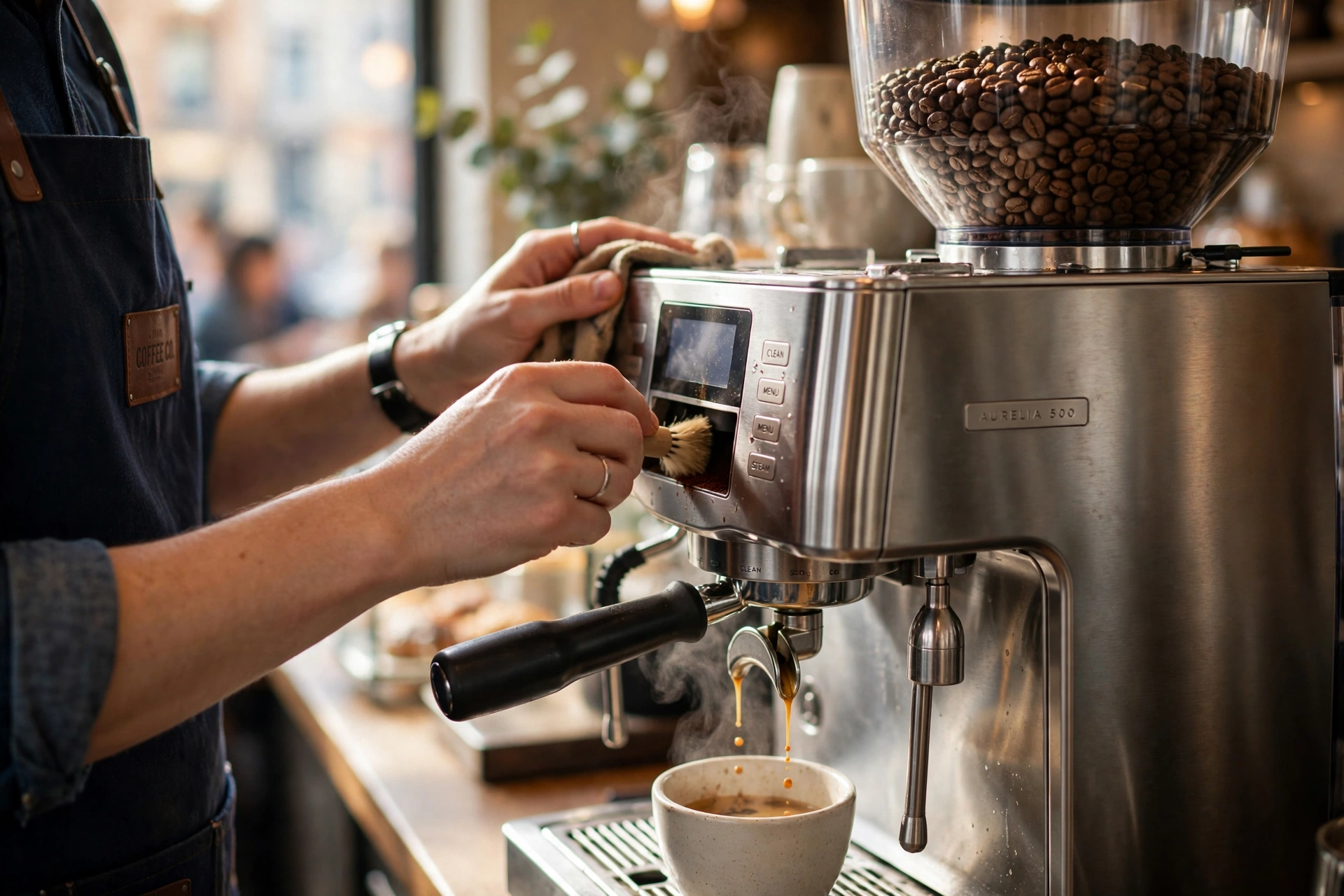
The core mechanism integrates a burr grinder, a brewing unit, a water pump (usually 15–19 bars of pressure), and often an automatic milk frother. When you select a drink, the machine grinds the precise amount of beans, tamps them, extracts the espresso, and—if selected—steams milk, all in under a minute. Many models also include a by-pass doser for pre-ground coffee if needed.
💡
Key Takeaway
Bean to cup machines deliver the freshest possible espresso without requiring operator skill, making them ideal for high-volume office environments where convenience and quality are both priorities.
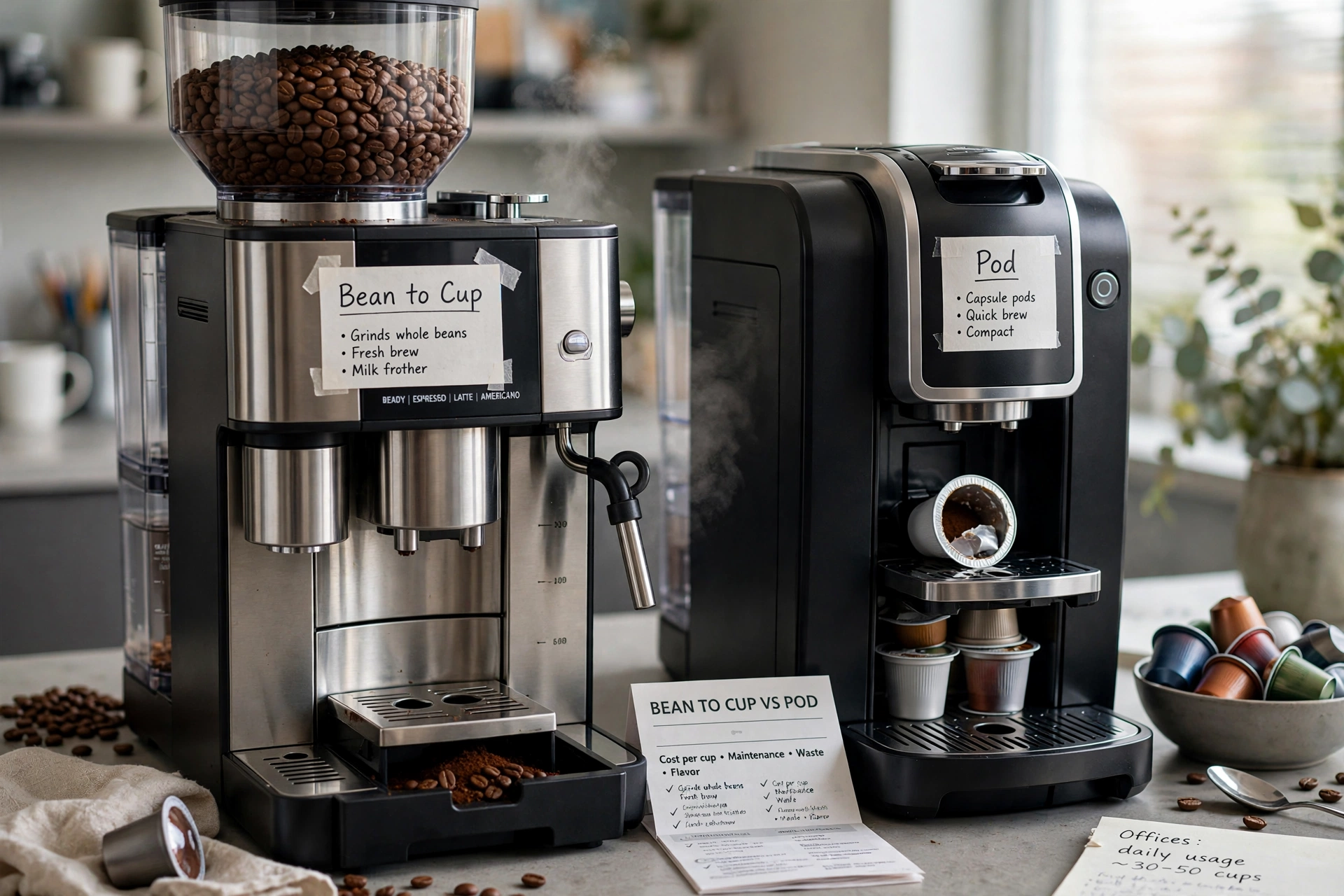
These machines are different from traditional semi-automatic espresso machines, which require an operator to grind, tamp, and monitor extraction. They also differ from pod machines, which sacrifice freshness for convenience. For a deeper comparison, see our article on Bean to Cup vs. Pod Coffee Machines for Offices.
Why Bean to Cup Matters for Your Office
Investing in a bean to cup office espresso machine isn’t just about better coffee—it directly impacts workplace culture, productivity, and even employee retention. According to a study by the Society for Human Resource Management (SHRM), 86% of employees say that workplace amenities like quality coffee improve their job satisfaction. Moreover, a Harvard Business Review report found that employees who take short coffee breaks are 14% more productive and report higher collaboration levels.
The freshness advantage is scientifically backed: coffee beans begin to lose volatile aromatic compounds within 15 minutes of grinding. Bean to cup machines grind just before brewing, capturing that peak flavor. In contrast, pre-ground coffee loses up to 60% of its flavor profile within a week, according to the Specialty Coffee Association. This means your team gets consistently better-tasting coffee, reducing the temptation to buy expensive drinks outside the office.
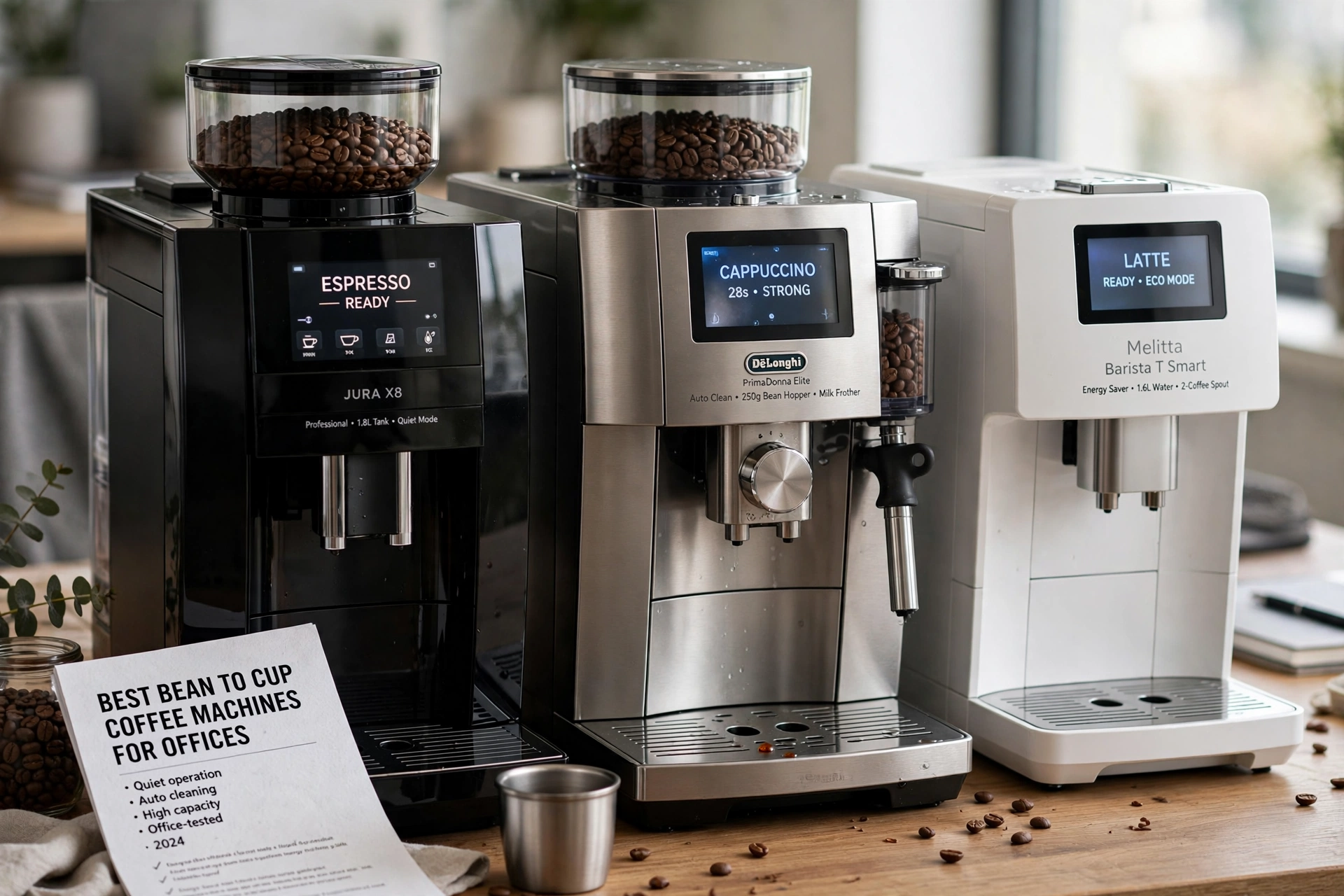
Financially, bean to cup machines also outperform pods. A typical office pod machine might cost $0.50–$0.80 per cup (pod only), while bean to cup coffee costs roughly $0.20–$0.35 per cup (beans + milk) when purchased in bulk. Over a year for a 50-person office consuming 20 cups per day, that’s a savings of $2,000–$3,000 annually. For more on selection, check out Best Bean to Cup Coffee Machines for Offices and How Bean to Cup Coffee Machines Work.
How to Choose the Right Machine for Your Business
Selecting the ideal bean to cup office espresso machine depends on your office size, consumption habits, and desired features. Here’s a step-by-step guide:
-
Assess Daily Volume: Estimate the number of cups your office consumes per day. A small office (10–20 people) may need a machine with a 1–2 liter boiler and 250g bean hopper, while a larger office (50+ people) benefits from a dual-boiler system and 500g+ hopper. Machines like the Jura GIGA W3 Professional can produce 200+ cups per day.
-
Consider Milk Preferences: Does your team prefer lattes and cappuccinos? Choose a model with an integrated milk frother or automatic carafe. Some machines have a steam wand for manual frothing, but auto-frothers are more consistent and easier to clean.
-
Evaluate Maintenance Needs: Look for machines with easy-access brew groups, self-cleaning cycles, and removable milk systems. Weekly cleaning and descaling every 3–6 months are standard. Our Bean to Cup Coffee Machine Maintenance Guide covers this in detail.
-
Check Water Connection: Many office machines require a direct plumbed water line (3/8” tubing) to avoid manual refilling. For offices without plumbing, there are models with large water tanks (2–3 liters).
-
Warranty and Support: Choose a supplier that offers on-site installation, training, and responsive service. At Busy Bean Coffee, we provide all-inclusive managed coffee memberships that cover equipment, installation, maintenance, and coffee supply for one predictable monthly fee—eliminating capital expense and hassle.
For a detailed purchasing framework, see our Bean to Cup Coffee Machine Buying Guide for Businesses.

Bean to Cup vs. Pod Machines: Which Wins?
To help you decide, here’s a side-by-side comparison:
| Feature | Bean to Cup Machine | Pod Machine |
|---|---|---|
| Freshness | Grinds whole beans on demand; peak flavor | Pre-ground; flavor degrades over time |
| Cost per cup | $0.20–$0.35 | $0.50–$0.80 |
| Variety | Any whole bean coffee; multiple origins | Limited to pod brands and flavors |
| Environmental impact | Minimal waste (compostable grounds) | Plastic/aluminum pods create landfill waste |
| Ease of use | One-button operation; automatic cleaning | One-button; no grinding |
| Initial investment | $800–$5,000 | $100–$500 |
| Maintenance | Regular cleaning/de-scaling; sometimes professional service | Low; descaling only |
| Beverage quality | Espresso-grade 15–19 bar pressure | Often lower pressure; less crema |
For a deeper dive, read Bean to Cup vs. Pod Coffee Machines for Offices.
Common Mistakes to Avoid
Even with a great machine, offices often make these errors:
-
Choosing the wrong capacity: A machine that’s too small leads to long wait times and frustrated employees. A machine too large wastes energy. Match capacity to your peak usage.
-
Skipping water quality: Hard water causes scale buildup, reducing machine lifespan and altering taste. Always use filtered water, and consider a water softener if your area has high mineral content.
-
Neglecting daily cleaning: Milk residue and coffee oils can turn rancid, leading to bad-tasting coffee and clogs. Most machines have automatic rinse cycles—run them daily. Deep clean the brew group weekly.
-
Using stale or poor-quality beans: Bean to cup machines work best with fresh, specialty-grade beans. Avoid beans that are darker than medium roast (they produce more oil and cause clogs) and buy from a roaster that provides roast dates.
-
Not training staff: Even automatic machines have nuances. Show employees how to change beans, refill water, and perform basic troubleshooting. Post a simple guide near the machine.
For maintenance best practices, see the Bean to Cup Coffee Machine Maintenance Guide.
Frequently Asked Questions
What is a bean to cup office espresso machine?
A bean to cup office espresso machine is an automated coffee brewer that grinds whole beans immediately before extraction, then brews espresso or other beverages with one-touch simplicity. It integrates a burr grinder, brewing unit, water pump, and often an automatic milk frother. The machine handles the entire process from bean to cup, requiring no manual grinding, tamping, or monitoring. This makes it ideal for office environments where a high volume of consistent, quality coffee is needed without a trained barista.
How much does a bean to cup office espresso machine cost?
Prices range from $800 for entry-level models suitable for small offices to $5,000 for high-capacity, dual-boiler machines with advanced features. Commercial-grade machines used in larger offices can cost $6,000 or more. However, many suppliers—including Busy Bean Coffee—offer all-inclusive managed memberships that bundle equipment, installation, maintenance, and coffee supply for a predictable monthly fee, eliminating the upfront capital expense.
How do I maintain a bean to cup machine?
Daily: run the automatic rinse cycle, empty drip tray, and clean milk frother. Weekly: remove and wash the brew group, refill bean hopper, and wipe down exterior. Monthly: descale the machine using manufacturer-approved solution (frequency depends on water hardness). Every 6–12 months: replace water filters and have a professional service check seals, gaskets, and burrs. Most office models have indicator lights or app alerts for maintenance tasks.
Can bean to cup machines use different types of beans?
Yes, you can use any whole bean coffee, but darker roasts (especially oily beans) can clog the grinder and brew group. Lighter to medium roasts are ideal. Many machines allow you to adjust grind size and dose to suit different beans. For example, a light roast may require a finer grind and higher dose. Some models have multiple hoppers so you can offer both regular and decaf beans.
How many cups can a typical office machine produce?
Entry-level machines (e.g., Jura ENA 4) can produce 40–50 cups per day. Mid-range models (Jura WE6) handle 80–120 cups daily. High-capacity machines (Jura GIGA W3, WMF 5000) can produce 200+ cups per day. For larger offices, consider plumbed models with larger bean hoppers (500g+) and water tanks (2–3 liters). Always factor in peak usage during breaks.
What is the difference between bean to cup and pod machines?
Bean to cup machines grind fresh beans for each cup, delivering superior flavor and lower per-cup cost ($0.20–$0.35 vs $0.50–$0.80). They produce genuine espresso with crema. Pod machines use pre-ground coffee in sealed capsules, which is convenient but offers stale taste and less control over strength. Pods generate more plastic waste. Bean to cup machines have higher upfront cost but lower long-term costs and better environmental profile.
Are bean to cup machines noisy?
The grinding phase produces noise similar to a blender (65–75 decibels), which lasts about 5–10 seconds. Brewing is quieter. In open-office environments, the sound may be noticeable but not disruptive—many employees find it pleasant. Quieter models exist (e.g., Miele CM7) with better sound insulation. Some offices place machines in a dedicated breakroom or pantry to minimize noise.
Do I need a plumbed water line?
Plumbed models offer unlimited water supply and automatic refilling, ideal for high-volume offices. They require a 3/8” water line and drainage. Tank models (1.5–3 liters) need manual refilling every 20–50 cups, which is fine for smaller teams. Some plumbed machines also connect to waste drains, eliminating drip tray emptying. If your office doesn’t have nearby plumbing, a tank model with a water filter is a good alternative.
Conclusion
Bean to cup office espresso machines represent the perfect intersection of convenience, quality, and cost savings. By providing fresh, café-quality coffee at the push of a button, they enhance workplace satisfaction, boost productivity, and eliminate the daily line at the local coffee shop. When selecting a machine, consider your office size, beverage preferences, and maintenance capabilities. Avoid common pitfalls like choosing the wrong capacity or neglecting water quality.
To explore how a bean to cup machine can transform your office, revisit our comprehensive Bean to Cup Coffee Machines guide for more insights. And if you’re ready to simplify coffee management entirely, discover how Busy Bean Coffee’s all-inclusive managed membership delivers premium equipment, professional installation, full maintenance, and fresh coffee—all for one predictable monthly fee. No capital expense. No hassle. Just great coffee.
Visit Busy Bean Coffee to learn more.
Recommended Readings
To deepen your understanding of these topics, we recommend reading the following articles:
- Best Office Espresso Machines for Small Teams
- Lease vs Buy
- Super Automatic Office Espresso Machines Guide
- Office Espresso Maintenance Tips and Best Practices
About the Author
Travis Estes is the Founder of Busy Bean Coffee. With over a decade of experience in specialty coffee equipment and managed coffee services, Travis has helped hundreds of businesses—from small offices to large corporations—implement cost-effective, high-quality coffee programs. He is passionate about helping organizations improve workplace culture through better coffee.
Free Coffee Pairing Guide & Specialty Roast Cheat Sheet
Unlock the secrets of perfect brewing ratios, water temperatures, and specialty roast profiles. Download the guide.