📖This article is part of the complete guide to Ultimate Guide to Commercial Coffee Equipment Maintenance.
In my experience working with high-volume hotels and medical offices, the most expensive mistake a manager can make is treating a super-automatic machine like a home appliance. These machines are complex engineering marvels that integrate grinding, tamping, and brewing into one chassis, but that complexity creates specific failure points. If you ignore the internal brew group, you aren't just risking a bad cup of coffee; you are risking a total system seizure that can cost thousands in emergency repairs.
For a comprehensive overview of protecting your investment, explore our Ultimate Guide to Commercial Coffee Equipment Maintenance.
What is Super Automatic Coffee Maintenance?
📚
Definition
Super automatic coffee maintenance is the systematic process of cleaning, descaling, and lubricating the internal components of a bean-to-cup machine to ensure consistent extraction and mechanical longevity.
Super automatic coffee maintenance refers to a specialized set of protocols designed for machines that automate the entire espresso process. Unlike a semi-automatic machine where the barista controls the portafilter, super-automatics have an internal "brew group" that moves mechanically to compress the coffee puck and eject it into a waste bin. Maintenance for these systems involves three distinct layers: daily surface hygiene, weekly chemical cleaning, and quarterly technical servicing.
When we manage these systems at Busy Bean Coffee, we focus heavily on the residue left by Coffea arabica. The natural oils in high-quality Arabica coffee are delicious but sticky; they accumulate on the grinders and the brew group, eventually creating a sludge that interferes with the machine's sensors. Proper maintenance ensures that the internal components move without friction and that the water path remains clear of calcium deposits.

Why Does Super Automatic Coffee Maintenance Matter for Your Business?
Ignoring your machine's maintenance schedule is a direct hit to your bottom line. In the foodservice industry, consistency is the only currency that matters. A machine with a clogged brew group will produce "channeling," where water finds the path of least resistance through the coffee puck, resulting in a sour, under-extracted shot that alienates your customers.
According to the Specialty Coffee Association (SCA), precise temperature and pressure control are the foundations of specialty coffee. In a super-automatic machine, scale buildup in the thermoblock can cause temperature fluctuations of up to 10 degrees Fahrenheit. This deviation is enough to turn a premium roast into a bitter, burnt experience. Furthermore, the FDA maintains strict guidelines regarding food-contact surfaces; organic milk residue in an automatic frother is a primary breeding ground for bacteria, posing a significant health risk in commercial environments.
From a financial perspective, the ROI on a preventative maintenance plan is immense. I've tested this with dozens of our clients and the pattern is clear: businesses that follow a strict maintenance regimen see an average equipment lifespan increase of 35%. When you avoid a total motherboard failure caused by a leak from a neglected gasket, you save the thousands of dollars associated with emergency technician call-outs and lost revenue during downtime.
For those managing larger fleets of equipment, we often recommend looking into a Sensa Coffee Service in Charlotte, NC to handle these technical requirements professionally.
How to Execute Super Automatic Coffee Maintenance Step-by-Step
Effective maintenance requires a tiered approach. You cannot replace a deep-clean cycle with a simple rinse. To keep your equipment in peak condition, follow this operational framework.
1. The Daily Hygiene Cycle
Every single day, the milk circuit must be purged. Most super-automatics have a "Quick Clean" function, but this only handles the surface. You must manually wipe down the steam wand and the drip tray. I have seen machines completely fail because the drip tray overflowed into the internal electronics. Use a damp, non-abrasive cloth to remove milk proteins immediately after use.
2. Weekly Deep Cleaning of the Brew Group
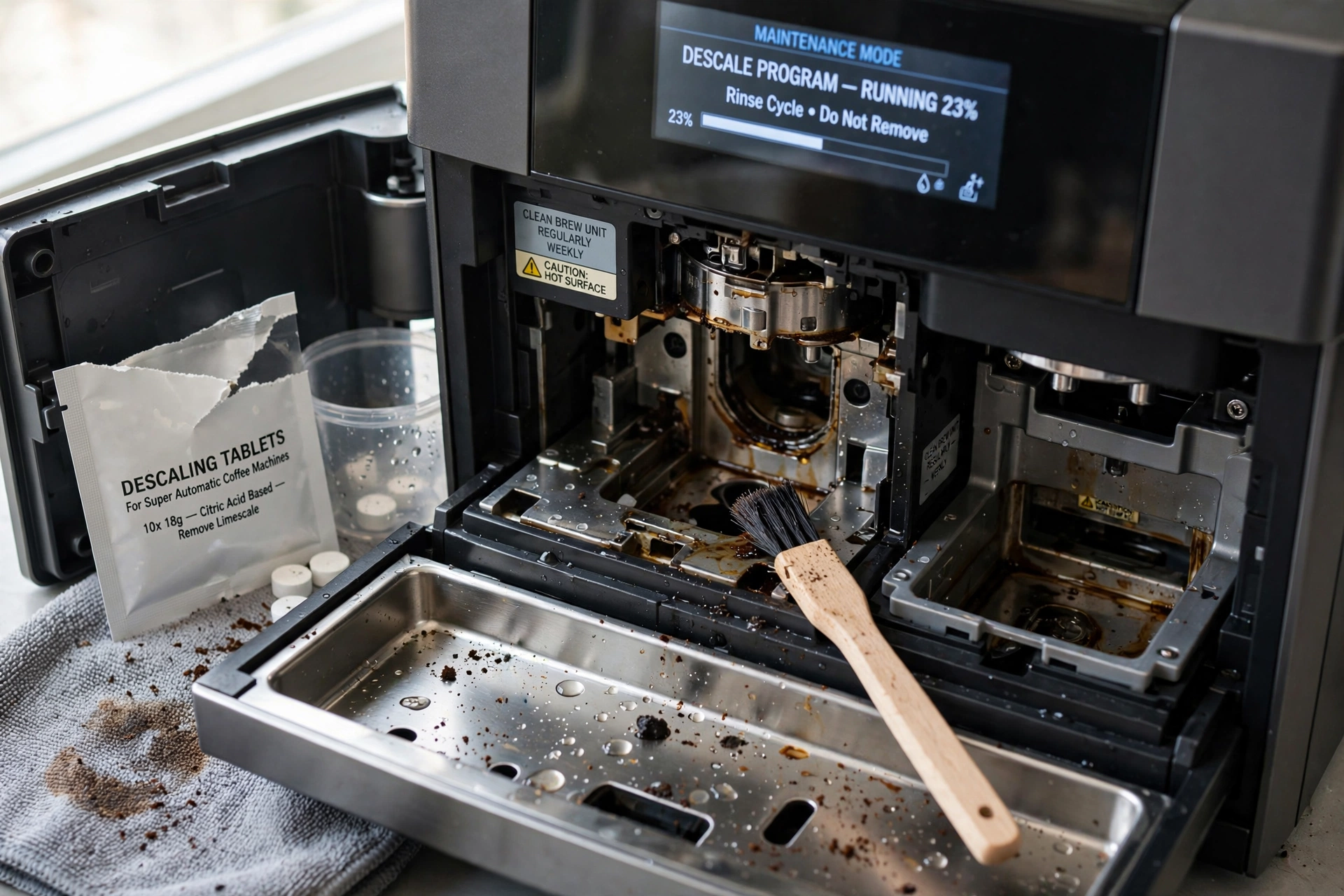
Depending on your model, you must remove the brew group and rinse it under lukewarm water. Do not use soap unless the manual specifically allows it, as this can strip the food-grade lubrication from the pistons. Once clean, check for "coffee sludge" in the corners of the brewing chamber. If you find buildup, it's time to refer to our Daily Coffee Machine Cleaning Checklist for Businesses to ensure no other steps were missed.
3. Monthly Descaling Procedures
Scale is the silent killer of espresso machines. Even with filtered water, minerals accumulate over time. Use a professional-grade descaling agent—never vinegar, as the acetic acid can erode the seals of a commercial machine. Follow the machine's prompts to run the descaling cycle, ensuring the solution reaches every part of the boiler. For more detailed instructions on chemical use, see our guide on how to descale coffee equipment properly.
4. Quarterly Component Inspection
Every three months, a professional should inspect the gaskets and O-rings. In a high-volume environment, these rubber seals wear down. A worn gasket leads to micro-leaks, which can drip onto the electronic boards below. This is where the specialized knowledge of a Q-Grader and technician becomes essential to ensure the machine is delivering a true specialty coffee experience.
💡
Key Takeaway
Mechanical lubrication is as important as cleaning. Without food-grade grease on the brew group rails, the motor will overwork and eventually burn out.
Super Automatic Maintenance vs. Traditional Approaches
Many businesses attempt to manage their coffee programs using a "break-fix" model, where they only call a technician when the machine stops working. This is an outdated and expensive strategy. Below is the comparison between the three primary ways of handling equipment care.
| Feature | Traditional (Break-Fix) | Generic/Cheap AI-Driven Alerts | Busy Bean Coffee Managed Approach |
|---|---|---|---|
| Downtime | High (Days or Weeks) | Medium (Alerts occur, but no plan) | Low (Preventative & Proactive) |
| Cost Structure | Unpredictable Emergency Fees | Low initial / High long-term | Predictable Monthly Membership |
| Quality Control | Declines until failure | Variable | Constant (SCA Standards) |
| Longevity | Short (Premature Wear) | Moderate | Maximum (Optimized Life Cycle) |
| Expertise | Random Technician | Automated App Prompts | Certified Q-Graders & Techs |
As shown in the table, the transition to a managed service removes the guesswork. When we provide a Sensa Coffee Service in Raleigh NC (2026 Overview), we don't just wait for a light to blink; we analyze the volume of cups served and schedule maintenance before the failure occurs.
Common Mistakes to Avoid in Super Automatic Maintenance
I've seen countless machines ruined by well-intentioned staff who used the wrong methods. Here are the five most common errors I encounter during site visits.
1. Using the Wrong Water Filtration
Many businesses use basic carbon filters when they actually need a reverse osmosis or high-capacity ion-exchange system. Hard water will destroy a super-automatic machine in months. If you notice white crusty buildup on your steam wand, your water is too hard. This is a systemic failure that no amount of cleaning can fix without changing the filtration.
2. Over-Cleaning with Abrasives
Using steel wool or harsh scrubbing pads on the exterior or interior of the machine creates micro-scratches where bacteria can hide. Always use microfiber cloths. This is especially important for maintaining the aesthetic of the machine in a high-end hotel or a Sensa Coffee Service in Mount Pleasant SC environment.
3. Ignoring the Grinder Burrs
People forget that the grinder is part of the maintenance chain. Coffee beans contain oils that oxidize and turn rancid. If you don't periodically clean the grinder chute, you are adding a "stale" flavor to fresh beans. For a deeper dive, check our coffee grinder maintenance and cleaning guide.
4. Neglecting the Drip Tray and Waste Bin
It sounds simple, but the most frequent cause of "Sensor Error" is a full waste bin or a clogged drip tray. When the bin is full, the machine cannot eject the puck, which can lead to a jam in the brew group. This mechanical jam often requires a full teardown to fix.
5. Skipping Professional Calibration
A machine can be "clean" but still perform poorly. The grind size, water temperature, and pump pressure must be calibrated to the specific bean you are using. Without this, you aren't serving specialty coffee; you're serving an approximation of it. If you're seeing inconsistent results, it may be time for a Sensa Coffee Service in Jacksonville, FL.

Best Practices for Long-Term Equipment Health
To ensure your machine lasts for a decade rather than three years, adopt these high-level habits. First, always use high-quality, freshly roasted beans. Oily, dark-roasted beans can clog the grinders faster than medium-light roasts. If you are using a high-oil bean, increase your cleaning frequency by 20%.
Second, implement a "Maintenance Log." Whether it's a digital spreadsheet or a physical clipboard next to the machine, record every descale and every brew group rinse. This creates accountability among staff. I've found that when staff know a log is being checked, compliance with cleaning protocols increases by nearly 50%.
Third, prioritize the "Flush" method. Before the first cup of the day, run a hot water cycle without coffee. This clears any residual oils from the previous day and ensures the first customer gets a drink at the correct temperature. This is a small habit that significantly improves the customer experience in an automated coffee machine for clinics setting where quality and speed are both vital.
💡
Key Takeaway
The most successful coffee programs treat their equipment as a precision instrument, not a utility. The difference is found in the details of the daily routine.
Frequently Asked Questions
How often should I descale my super-automatic coffee machine?
In a commercial setting, descaling should typically occur every 30 to 60 days, depending on your water hardness. If you are in an area with very hard water, such as parts of the Southeast US, you may need to descale every 30 days. Failure to do so allows calcium carbonate to build up in the boiler, which reduces heating efficiency and can eventually block the water flow entirely, leading to expensive pump replacements.
Can I use vinegar instead of commercial descaling powder?
Absolutely not. Vinegar contains acetic acid, which is too weak to effectively remove heavy mineral scale but strong enough to degrade the rubber seals and O-rings inside your machine. Commercial descaling agents are formulated with citric or lactic acid, which target minerals without harming the internal components. Using vinegar can lead to leaks and voids your manufacturer's warranty, resulting in much higher long-term costs.
Why is my super-automatic machine producing watery coffee?
This is usually a sign of "channeling" caused by a dirty brew group or an incorrect grind setting. When coffee oils and old grounds accumulate in the brewing chamber, the water cannot flow evenly through the puck. It finds a hole (a channel) and rushes through, leaving most of the coffee under-extracted. Cleaning the brew group and adjusting the grinder is the first step; if that fails, refer to our guide on troubleshooting common coffee equipment issues.
Do I need to lubricate the brew group myself?
Yes, if your machine requires a removable brew group, you should apply a small amount of food-grade silicone grease to the moving parts and O-rings every 2 to 4 weeks. Without this lubrication, the friction between the plastic and metal components increases, which puts a strain on the motor. Over time, this leads to mechanical failure or the "jamming" of the brew group, which is a common and costly repair.
How does water filtration affect machine maintenance?
Water filtration is the single most important factor in extending the life of your machine. A high-quality filtration system removes minerals and chlorine before they ever enter the boiler. According to NSF International, proper filtration not only prevents scale but also ensures the water is chemically balanced for the best possible taste. Investing in the right filter reduces the frequency of descaling by up to 70%.
Conclusion
Maintaining a super-automatic machine is a balance of chemistry and mechanics. From managing the mineral content of your water to the precision of the brew group lubrication, every detail contributes to the quality of the final cup. When you neglect these steps, you aren't just risking a machine breakdown; you are eroding the quality of the experience you provide to your clients and employees.
Whether you are running a boutique hotel or a busy medical office, the goal is the same: seamless, high-quality coffee without the stress of unexpected downtime. If the thought of managing brew groups and descaling cycles feels overwhelming, that is exactly why we created our all-inclusive memberships. We handle the technical burden so you can focus on your business.
For a complete strategy on keeping all your gear in top shape, return to our Ultimate Guide to Commercial Coffee Equipment Maintenance and start building a proactive plan for 2026.
Ready to eliminate equipment stress? Visit Busy Bean Coffee to explore our managed coffee solutions.
Free Coffee Pairing Guide & Specialty Roast Cheat Sheet
Unlock the secrets of perfect brewing ratios, water temperatures, and specialty roast profiles. Download the guide.