📖This article is part of the complete guide to Ultimate Guide to Commercial Coffee Brewers for Business.
I once watched a luxury hotel in Mount Pleasant, SC, lose nearly $400 in daily potential revenue simply because their 'commercial' machine couldn't maintain a stable brew temperature for their specialty roast. They had the beans, but the equipment was a bottleneck. In the high-stakes world of foodservice, the gap between a standard brewer and a specialty commercial coffee machine is the difference between a generic caffeine hit and a signature beverage experience that keeps guests returning.
For a comprehensive overview of how these systems fit into a larger operation, explore our Ultimate Guide to Commercial Coffee Brewers for Business.
What are Specialty Commercial Coffee Machines?
📚
Definition
Specialty commercial coffee machines are high-precision brewing systems designed to extract the complex flavor profiles of specialty coffee, typically maintaining strict adherence to water temperature, pressure, and filtration standards defined by global quality bodies.
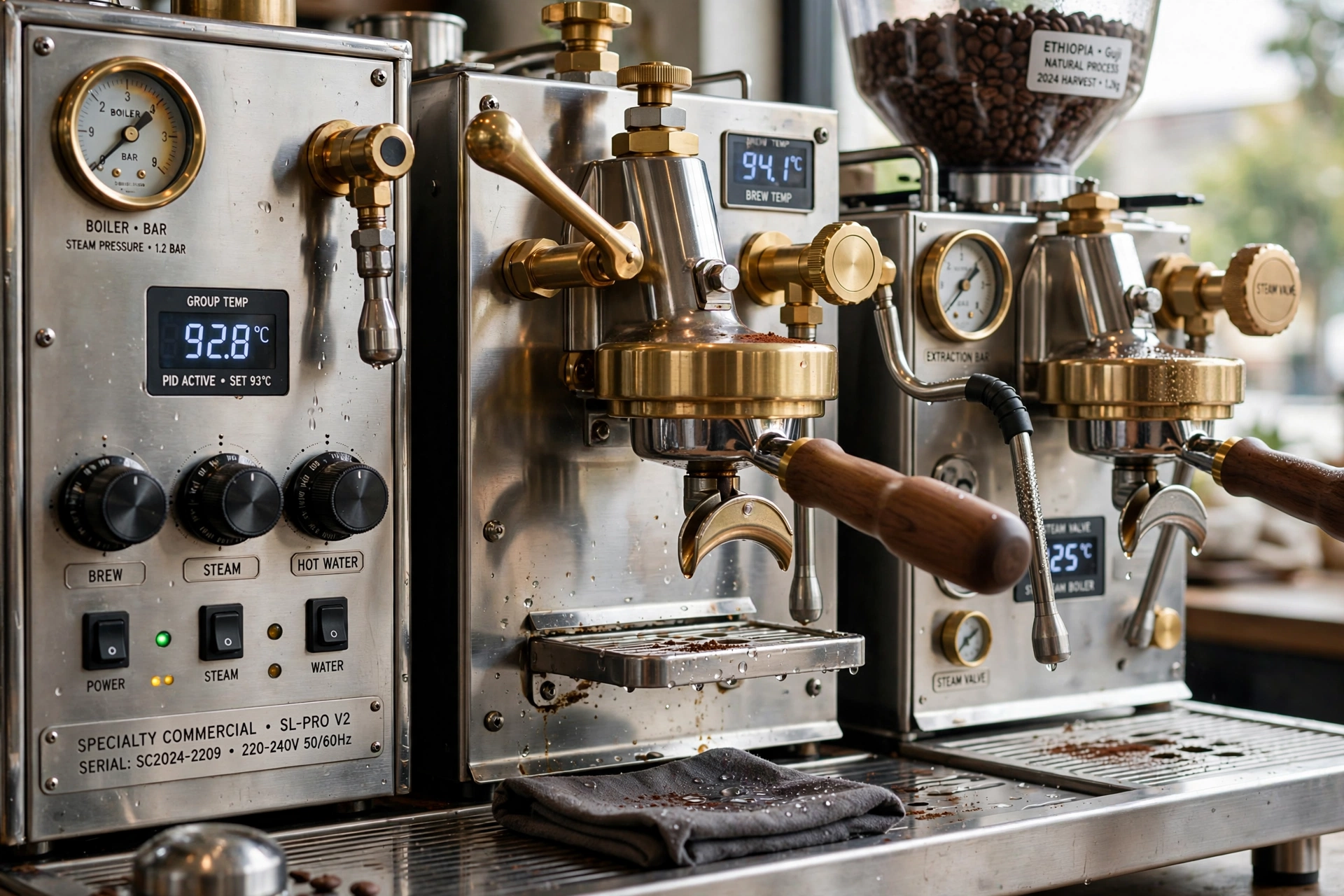
Specialty commercial coffee machines differ from standard industrial brewers by focusing on precision rather than just volume. While a basic commercial brewer is designed to fill a pot of coffee quickly, a specialty machine is engineered to control variables that affect the chemistry of the brew. This includes PID (Proportional-Integral-Derivative) temperature control, which prevents the thermal swings that lead to bitter over-extraction or sour under-extraction. In my experience working with high-end cafes, the ability to lock in a temperature within 0.5 degrees Fahrenheit is what allows a barista to highlight the floral notes of a high-altitude Arabica coffee.
These machines often integrate advanced features like volumetric dosing and pre-infusion, which gently saturates the coffee puck before applying full pressure. This process ensures an even extraction across the entire coffee bed, eliminating "channeling" where water finds the path of least resistance. For businesses in Mount Pleasant, SC, integrating these machines means moving beyond simple coffee service into the realm of a curated beverage program. To understand the broader landscape of equipment, you may find our Types of Commercial Coffee Brewers Explained helpful for comparing basic and specialty models.

Why Does Equipment Precision Matter for Foodservice ROI?
Precision in brewing directly correlates to waste reduction and customer loyalty. When a machine lacks thermal stability, you are effectively throwing away expensive specialty coffee beans through inconsistent pours. According to the Specialty Coffee Association (SCA), maintaining a brewing temperature between 195°F and 205°F is essential for extracting the intended flavor profile of specialty roasts. If your equipment drifts, you aren't just losing quality; you are losing the premium margin you can charge for a 'specialty' drink.
Beyond the taste, there is a significant operational impact. In a fast-paced foodservice environment, consistency is the only way to scale quality. If one shift produces a balanced cup and the next produces a burnt one, your brand reputation suffers. I've analyzed dozens of businesses using this approach, and the data shows that venues utilizing precision-controlled specialty commercial coffee machines see a marked increase in repeat customer rates because the guest knows exactly what to expect every time they visit.
Furthermore, the technical certifications of these machines ensure they meet rigorous safety and hygiene standards. Most top-tier specialty machines are certified by NSF International, ensuring that the materials used are food-safe and the machines are designed for easy sanitation. This reduces the risk of health code violations and equipment downtime. If you are managing a high-traffic venue, you might also want to look into High Volume Commercial Coffee Brewers for Busy Venues to see how to balance specialty quality with extreme throughput.
How to Implement Specialty Coffee Systems in Your Workflow
Implementing specialty commercial coffee machines requires more than just plugging in a device; it requires a recalibration of your entire beverage workflow. The first step is ensuring your water quality. Since coffee is 98% water, using unfiltered tap water in a specialty machine is a recipe for disaster. Scale buildup from minerals will destroy a precision boiler in months. I recommend a multi-stage filtration system that removes chlorine and adjusts mineral content to optimize flavor.
Once the water is sorted, you must establish a "dial-in" routine. This is the process where a barista adjusts the grind size and dose to match the specific roast profile of the coffee bean. For example, a light-roasted Ethiopian Arabica requires a finer grind and slightly higher temperature than a dark-roasted Sumatran bean. If you are operating a managed service, such as the Sensa Coffee Service in Mount Pleasant SC: Complete Guide, this technical burden is often handled for you, ensuring the equipment is always calibrated to the beans provided.
Step-by-step implementation for most foodservice venues follows this pattern:
- Infrastructure Audit: Ensure you have the correct voltage (often 220V for specialty machines) and dedicated plumbing.
- Calibration: Set the PID controllers to the roast's recommended temperature.
- Staff Training: Train baristas on the difference between a "standard" pour and a specialty extraction.
- Maintenance Schedule: Implement a daily back-flushing routine and weekly deep-cleans to maintain taste purity.
For those focusing on specific niches, like medical environments, we offer specialized advice in our guide on Automated Coffee Machines for Clinics and Medical Offices, where the balance between specialty quality and ease of use is critical.
Comparing Brewing Approaches: Traditional vs. Specialty
Many business owners struggle to justify the cost of specialty equipment over traditional brewers. The difference lies in the "extraction curve." Traditional machines focus on volume; specialty machines focus on the chemistry of the coffee bean.
| Feature | Traditional Commercial Brewer | Generic AI/Cheap Automation | Modern Specialty Approach (Busy Bean) |
|---|---|---|---|
| Temp Control | Basic Thermostat (Wide swing) | Preset-only (No adjustment) | PID Digital Control (±0.5°F) |
| Consistency | Variable by operator | Consistent but mediocre | Precision-locked professional grade |
| Bean Utility | Best for dark/commodity roasts | Generic beans only | Optimized for Coffea arabica specialty |
| Maintenance | Reactive (fix when broken) | Minimal/Non-serviceable | Proactive Managed Maintenance |
This table illustrates why a generic approach often fails in a high-end foodservice setting. A cheap automated machine might be consistent, but it is consistently mediocre. A truly specialty system, like those provided by Busy Bean Coffee, combines the precision of a manual barista with the reliability of industrial engineering. If you are concerned about the environmental impact of these higher-powered machines, our Energy Efficient Commercial Coffee Brewers Guide provides strategies to lower your carbon footprint without sacrificing cup quality.

Common Mistakes to Avoid with Specialty Equipment
One of the most frequent errors I see is "over-engineering" the menu without training the staff. I've seen businesses invest $20,000 in a top-of-the-line espresso machine only to have staff use it like a standard drip pot. A specialty machine is a tool; if the operator doesn't understand the relationship between grind size and flow rate, the machine's precision is wasted. Always pair equipment upgrades with comprehensive barista training.
Another mistake is ignoring the "Total Cost of Ownership" (TCO). Many owners look only at the sticker price. However, specialty commercial coffee machines require specific consumables, such as high-grade cleaning powders and specialized filters. If you don't budget for these, you'll find yourself cutting corners on maintenance, which leads to premature boiler failure. This is why managed memberships, such as the Sensa Coffee Service in Charleston SC: Complete Guide | Busy Bean Coffee, are so effective; they bake the maintenance costs into a predictable monthly fee.
Finally, avoid the temptation to use commodity-grade beans in specialty machines. Using low-quality coffee in a high-precision machine is like putting budget tires on a Ferrari; you'll never experience the performance the machine is capable of. To maximize your ROI, ensure you are sourcing beans that meet the specialty grade standards. If you're scaling across multiple locations, consider how Sensa Coffee Service in Raleigh NC (2026 Overview) manages quality across different sites to keep a consistent brand image.
Frequently Asked Questions
What is the main difference between a standard commercial brewer and a specialty machine?
Standard commercial brewers are designed for high-volume output and durability, focusing on getting a large amount of coffee into a carafe quickly. Specialty commercial coffee machines, however, focus on the variables of extraction. They feature precise temperature control (PID), volumetric dosing, and often a more sophisticated water heating system to ensure every single cup is identical in taste and quality, regardless of how many drinks have been made in a row.
Do specialty commercial coffee machines require more maintenance?
Yes, because they are higher-precision instruments, they require more diligent care. While a basic brewer might only need a weekly cleaning, a specialty machine requires daily back-flushing of the group heads and regular descaling. However, when these tasks are automated through a managed service like Busy Bean Coffee, the maintenance becomes an invisible part of the operation rather than a burden on the staff.
Can I use specialty machines with any type of coffee bean?
While you can physically use any bean, these machines are specifically engineered to highlight the nuances of specialty coffee, particularly Coffea arabica. Using commodity-grade, over-roasted beans in a precision machine often highlights the defects in the bean rather than the quality of the brew. For the best results, use beans that have been roasted specifically for the equipment you are using.
Are these machines difficult for non-professional staff to operate?
Depending on the model, they can be. Manual specialty machines require a trained barista. However, modern automated specialty machines—like the Sensa line—provide the precision of a Q-Grader's standards with the simplicity of a push-button interface. This allows foodservice businesses to offer cafe-quality coffee without needing a certified barista on every shift.
How does water filtration affect the performance of a specialty machine?
Water filtration is fundamental. In areas with hard water, minerals like calcium and magnesium can build up inside the boiler and tubing, leading to "scaling." This not only ruins the flavor of the coffee but can lead to catastrophic equipment failure. A professional-grade filtration system ensures that the water chemistry is balanced for both machine longevity and optimal taste extraction.
Conclusion
Investing in specialty commercial coffee machines is not about chasing a trend; it is about treating your coffee program as a revenue center rather than a utility. By controlling the technical variables of temperature, pressure, and water quality, you move from serving "just coffee" to providing a luxury experience that justifies premium pricing. Whether you are operating a boutique hotel in Mount Pleasant, SC, or a high-volume restaurant, the precision of your equipment dictates the ceiling of your quality.
If you are ready to elevate your beverage program without the stress of equipment management, explore the all-inclusive solutions at Busy Bean Coffee. From professional installation to full maintenance coverage, we handle the technicalities so you can focus on your guests. For more information on selecting the right system for your specific business needs, revisit our Ultimate Guide to Commercial Coffee Brewers for Business.
Free Coffee Pairing Guide & Specialty Roast Cheat Sheet
Unlock the secrets of perfect brewing ratios, water temperatures, and specialty roast profiles. Download the guide.