📖This article is part of the complete guide to Ultimate Guide to Outfitting a Coffee Shop with Equipment.
In my experience working with high-traffic hospitality venues, the most expensive mistake a manager can make is underestimating 'peak hour' friction. I once saw a boutique hotel in Mount Pleasant, SC, lose nearly 20% of its breakfast revenue simply because their equipment couldn't keep up with a 30-minute rush. When your queue stretches out the door, the problem isn't your staff speed; it's your hardware's recovery time. For a comprehensive overview of all your needs, explore our Ultimate Guide to Outfitting a Coffee Shop with Equipment.
What are High Volume Coffee Machines?
📚
Definition
High volume coffee machines are industrial-grade beverage systems engineered to maintain thermal stability and consistent extraction quality while producing hundreds of cups per hour without significant downtime or performance degradation.
High volume coffee machines differ from standard commercial units primarily in their boiler capacity, heating elements, and group head stability. While a standard machine might struggle after ten consecutive lattes, a high-volume system is designed to handle a non-stop barrage of orders during the morning rush. These machines typically feature larger steam boilers, multi-boiler systems, and advanced PID controllers to ensure that the 100th cup of the day tastes exactly like the first.
In the professional realm, this often means moving toward machines that can handle the rigorous demands of specialty coffee standards. According to the Specialty Coffee Association (SCA), maintaining a precise water temperature between 195°F and 205°F is essential for extraction; high-volume machines achieve this by using massive heat exchangers or independent boilers for brewing and steaming, preventing the 'temperature drop' that plagues smaller units.
When we integrate these systems at Busy Bean Coffee, we prioritize throughput. A high-volume machine is not just about speed; it is about the ability to maintain a consistent flow of Coffea arabica extraction without the machine needing to 'recover' for several minutes between cycles. This is why we often recommend multi-group espresso machines or high-capacity automated systems for environments like airports or large-scale medical offices.

Why High-Volume Equipment Matters for Your Revenue
The primary reason high-volume equipment is essential is the direct correlation between throughput and revenue capture. In a high-traffic environment, every single second of delay per cup compounds into lost sales. If your machine takes an extra 15 seconds to recover steam pressure, and you serve 200 people an hour, you are effectively losing significant operational capacity and risking customer churn.
Beyond the speed, there is the issue of equipment longevity. When a machine designed for low volume is pushed to high-volume limits, the internal components wear out at an accelerated rate. I have seen boilers fail prematurely and gaskets perish in weeks because the machine was running at 100% capacity for eight hours a day. Investing in a machine built for high volume reduces your long-term maintenance costs and prevents the catastrophic 'mid-rush failure' that can paralyze a business.
Furthermore, consistency is the bedrock of customer loyalty. A customer who receives a burnt or under-extracted shot because the machine's boiler was exhausted will likely not return. By utilizing high-volume systems, you ensure that the quality of your coffee bean extraction remains stable. This is especially important for those integrating Top Bean-to-Cup Coffee Machines for Businesses, where the automation must be backed by industrial-grade internals to handle continuous operation.
According to the National Coffee Association USA (NCA), consumer expectations for specialty coffee quality are rising across all segments. This means you cannot sacrifice quality for speed. High-volume machines allow you to hit the 'sweet spot' of high efficiency and high quality, which is the only way to scale a beverage program in 2026.
How to Implement High-Volume Systems in Your Workflow
Implementing a high-volume coffee system requires more than just buying a large machine; it requires a strategic redesign of your barista workflow. The goal is to eliminate 'dead air'—the time when the barista is waiting for the machine to do something.
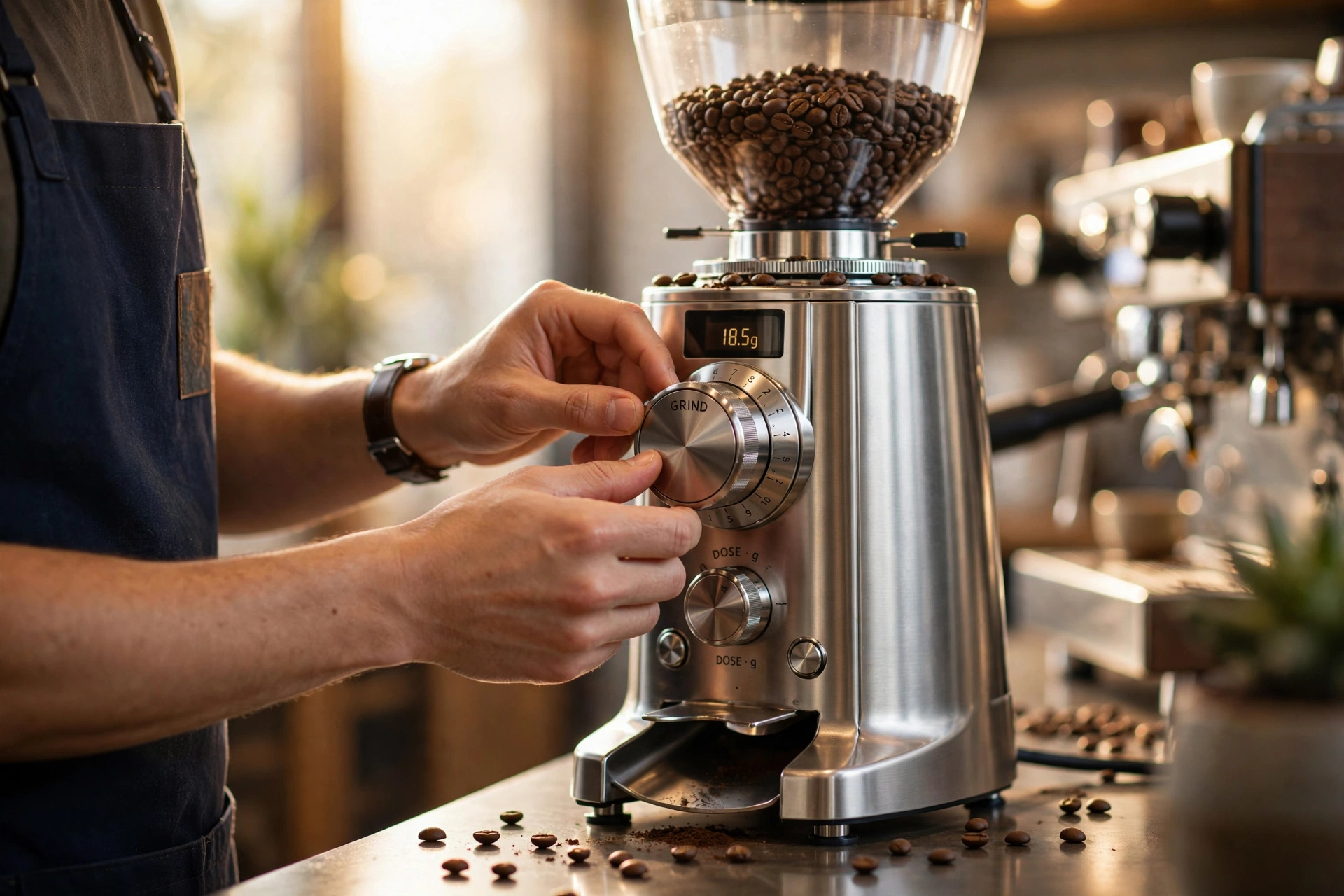
First, prioritize the layout. The distance between the grinder and the machine should be minimal. If you are using How to Choose Coffee Grinders for Coffee Shops as a guide, you'll notice that high-volume setups often require grinders with large hoppers and fast dosing to prevent the barista from becoming the bottleneck.
Second, implement a 'station-based' approach. In a high-volume environment, one person should focus exclusively on milk texturing while another handles the espresso extraction. This is where Automatic Milk Frothers for Coffee Shops become an incredible asset. By automating the steaming process, you remove the most time-consuming part of the latte-making process, allowing your staff to focus on quality control and customer interaction.
Third, focus on water management. High-volume machines consume massive amounts of water. If your filtration system isn't scaled for high volume, you will experience mineral buildup and scale that will choke your machine within months. Ensure your filtration system meets the NSF International standards for commercial food equipment to maintain hygiene and machine longevity.
For those in specific regions, like those looking at Sensa Coffee Service in Mount Pleasant SC: Complete Guide, the local water hardness can be a major factor. I always tell my clients: your machine is only as good as the water going into it. A high-volume machine with poor water filtration is just a very expensive way to create a broken machine.
Comparing High-Volume Approaches
When choosing your path, you must decide between the traditional manual approach, a generic automated approach, and a professional managed service.
| Feature | Traditional Manual | Generic Automated | Busy Bean Modern Approach |
|---|---|---|---|
| Output Speed | Slow (Manual limit) | Fast but inconsistent | Rapid & Consistent |
| Quality Control | High (if skilled) | Low (robotic) | High (Q-Grader calibrated) |
| Reliability | Medium (Human error) | Low (Cheap parts) | Maximum (Managed Maintenance) |
| Training Time | Months of training | Minutes | Minimal (Sensa intuitive) |
| CapEx | Very High | Medium | Zero (Membership model) |
As the table shows, the traditional way requires immense skill and capital, while cheap automation often fails in quality. The modern approach, like the one we provide at Busy Bean Coffee, focuses on industrial reliability paired with professional calibration.

Common Mistakes to Avoid with High-Volume Equipment
One of the most frequent mistakes I see is purchasing a machine based on 'theoretical' output. Manufacturers often list the maximum number of cups a machine can produce, but this is usually based on a simple black coffee extraction, not a complex sequence of lattes and cappuccinos. In my experience, you should always over-spec your equipment by at least 20% of your projected peak volume to account for growth and unexpected surges.
Another critical error is neglecting the 'cooling-down' and cleaning cycles. High-volume machines generate immense heat and accumulate a massive amount of coffee oils and milk residue. If you skip the daily backflushing and chemical cleaning, the residue builds up, altering the taste of the coffee and eventually clogging the group heads. I've seen $20,000 machines rendered useless because a manager thought they could skip cleaning during a busy holiday weekend.
Avoid the temptation to use underpowered grinders. A high-volume espresso machine is only as fast as the grinder feeding it. If you have a 3-group machine but a slow, single-dose grinder, your machine will spend half its time idling. This is why we emphasize a holistic approach in our Essential Commercial Drip Coffee Brewers guides—every piece of equipment must be matched in terms of capacity.
Finally, avoid ignoring the 'human factor.' Even the best machine can't fix a disorganized team. High-volume coffee service is a choreographed dance. If your staff isn't trained in 'mise en place' (everything in its place), the high-volume machine will actually highlight the inefficiency of your staff rather than solving it.
Frequently Asked Questions
How do I know if my business needs a high-volume machine or a standard one?
If your peak hour involves more than 30 customers per hour requiring espresso-based drinks, you are entering the high-volume territory. A standard machine will begin to struggle with thermal stability and steam pressure at this level. If you notice your baristas waiting for the 'ready' light or if the milk foam quality drops during a rush, your equipment is the bottleneck. Upgrading to a high-volume system ensures that your output matches your demand without compromising the quality of the specialty coffee you serve.
Does a high-volume machine require more electricity and plumbing?
Yes, typically they do. High-volume machines often have larger heating elements and boilers that require 220V power and sometimes higher-amperage circuits. From a plumbing perspective, they require a more robust water line and a high-capacity drain system. We always recommend a professional site survey—similar to what we provide for our Sensa Coffee Service in Charlotte, NC clients—to ensure your infrastructure can support the increased load without tripping breakers or causing leaks.
Can a bean-to-cup machine handle high volume as well as a manual machine?
Modern industrial bean-to-cup machines can handle significant volume, often exceeding manual machines in terms of raw speed and consistency. However, the 'volume' they can handle depends on the hopper size and the bean-to-cup mechanism's durability. For extremely high-traffic areas, we recommend high-end automated systems that offer the speed of a vending machine but the quality of a barista. This is the core of our Sensa Coffee Service in Raleigh NC (2026 Overview) where we deploy systems designed for zero-friction output.
How often should high-volume machines be serviced to avoid downtime?
In a high-volume setting, preventive maintenance is not optional. We recommend a comprehensive deep-clean every 24 hours and a professional technical inspection every quarter. This includes checking pump pressure, replacing gaskets, and descaling the boilers. Because these machines operate at such high temperatures and pressures, small leaks can quickly become major failures. A managed service membership, like those at Busy Bean Coffee, eliminates this stress by including full maintenance coverage in the monthly fee.
Will a high-volume machine affect the taste of the coffee?
If chosen correctly, it will actually improve it. Low-volume machines often suffer from 'temperature surfing,' where the water temperature fluctuates between shots. High-volume machines with PID controllers and independent boilers maintain a rock-steady temperature. This means the Coffea arabica beans are extracted perfectly every time, regardless of whether you've served five cups or five hundred. Consistency is the hallmark of professional specialty coffee service.
Conclusion
Operating a high-volume coffee service is a balancing act between speed, quality, and reliability. When you invest in equipment that is truly built for the rush, you aren't just buying a machine; you are buying the ability to scale your business without the fear of equipment failure or quality degradation. From the precision of a multi-boiler espresso system to the efficiency of automated milk frothers, every component must work in harmony to turn a morning rush into a profit center.
At Busy Bean Coffee, we specialize in removing the friction from this process. Our managed coffee memberships provide the premium hardware and professional support needed to handle any volume, allowing you to focus on your guests rather than your gear. Whether you are scaling a single cafe or managing a multi-site hospitality group, the right equipment is the foundation of your success.
For a complete roadmap on how to integrate these systems into your broader business strategy, return to our Ultimate Guide to Outfitting a Coffee Shop with Equipment. Start building a system that works as hard as you do.
Visit us at www.busybeancoffee.com to explore our managed coffee solutions.
Free Coffee Pairing Guide & Specialty Roast Cheat Sheet
Unlock the secrets of perfect brewing ratios, water temperatures, and specialty roast profiles. Download the guide.