📖This article is part of the complete guide to Ultimate Guide to Outfitting a Coffee Shop with Equipment.
In my experience working with high-volume diners and hotel breakfast lounges, the difference between a successful morning rush and a logistical nightmare often comes down to a single piece of hardware: the fresh brew coffee machine. I once saw a 120-room hotel lose nearly 20% of its breakfast satisfaction scores simply because their brewers couldn't keep up with the 7:00 AM peak, leading to lukewarm pots and frustrated guests. The reality is that in a professional foodservice environment, 'fresh' isn't just a flavor profile; it is a metric of operational speed and temperature stability.
For a comprehensive overview of the entire ecosystem, explore our Ultimate Guide to Outfitting a Coffee Shop with Equipment.
What are Fresh Brew Coffee Machines in a Foodservice Context?
📚
Definition
Fresh brew coffee machines are professional-grade brewing systems designed to produce high volumes of filter-style coffee while maintaining strict temperature controls and extraction standards to prevent bitterness and acidity.
Fresh brew coffee machines in the foodservice sector are not the same as the drip machines found in a residential kitchen. These are engineered for endurance, utilizing heavy-duty heating elements and precision spray heads that ensure every coffee bean in the basket is saturated evenly. When we talk about 'fresh brew,' we are referring to the ability to produce a pot of coffee that tastes exactly as intended by the roaster, even when the machine is running for 12 hours straight in a high-traffic environment.
In the professional realm, these machines typically fall into two categories: batch brewers and single-serve precision brewers. Batch brewers are the workhorses of the industry, producing large quantities (often 1.5 to 2.5 gallons) in a single cycle. These are essential for hotels and restaurants where the demand is constant. Single-serve or 'pour-over' style commercial machines are becoming more prevalent in specialty cafes that prioritize the nuanced profiles of Coffea arabica and want to offer a bespoke experience for each guest.
To maintain the high standards required for specialty coffee, these machines must adhere to strict temperature parameters. According to the Specialty Coffee Association (SCA), the ideal brewing temperature for most filter coffees ranges between 195°F and 205°F. If a machine fluctuates by even five degrees, the resulting cup can shift from a balanced brew to one that is overly astringent or unpleasantly sour. This is why professional fresh brew systems incorporate PID controllers and thermal carafes to keep the coffee at the ideal temperature without 'cooking' it on a hot plate.

Why Does Investing in Fresh Brew Coffee Machines Matter for Your Business?
Investing in high-end fresh brew coffee machines is primarily a decision about protecting your margins and your brand reputation. When a business relies on subpar equipment, they aren't just risking a bad cup of coffee; they are risking wasted product. In my years as a Q-Grader, I've seen businesses throw away gallons of coffee daily because their equipment didn't maintain heat or over-extracted the beans, leading to a bitter taste that customers refused to drink.
From a financial perspective, the efficiency of your brewing cycle directly impacts labor costs. A machine that brews a full gallon in four minutes allows your staff to focus on customer service rather than hovering over a pot. When you optimize this process, you increase your throughput during peak hours, which is where the majority of foodservice revenue is generated. If your equipment is slow, your queue grows, and customers may leave before ordering.
Furthermore, the quality of the brew significantly influences the perceived value of the meal. A guest at a high-end restaurant will forgive a slightly delayed appetizer, but they will rarely forgive a burnt, thin, or tasteless cup of coffee at the end of their experience. By utilizing precision fresh brew machines, you ensure that the final touchpoint of the customer journey is a positive one. This is especially true when using high-quality specialty coffee, where the roast's delicate notes can only be unlocked through precise water-to-coffee ratios and consistent temperatures.
According to the National Coffee Association USA (NCA), consumer preference is shifting heavily toward premium, high-quality brews, meaning the 'bottomless pot' of burnt coffee is no longer an acceptable standard in 2026. Businesses that adapt by installing equipment capable of delivering a true specialty experience see higher customer retention and a willingness to pay a premium for the beverage.
If you are considering expanding your menu beyond drip coffee, you might find our guide on Best Commercial Espresso Machines for Coffee Shops useful for understanding the synergy between brew and pressure-based coffee.
How to Optimize Fresh Brew Coffee Machines for Maximum Output?
Maximizing the output of your fresh brew coffee machines requires a combination of technical calibration and disciplined operational habits. The first step is the water. You cannot produce a high-quality fresh brew if your water is hard or contains chlorine. I always recommend a high-capacity filtration system to protect the machine's internal components from scale buildup and to ensure the water's chemistry supports the extraction of flavors from the coffee bean.
Once the water is sorted, the focus shifts to the 'golden ratio.' For most foodservice applications, a ratio of 1:17 or 1:18 (coffee to water) is the industry standard. To implement this, your baristas should use digital scales rather than measuring scoops. A 5g variance in coffee weight across a 10-gallon day can lead to inconsistent taste and significant waste over a year.
Step-by-step optimization process:
- Calibrate Temperature: Ensure the machine is hitting the 195-205°F range. If the machine has a programmable interface, save specific profiles for different roasts.
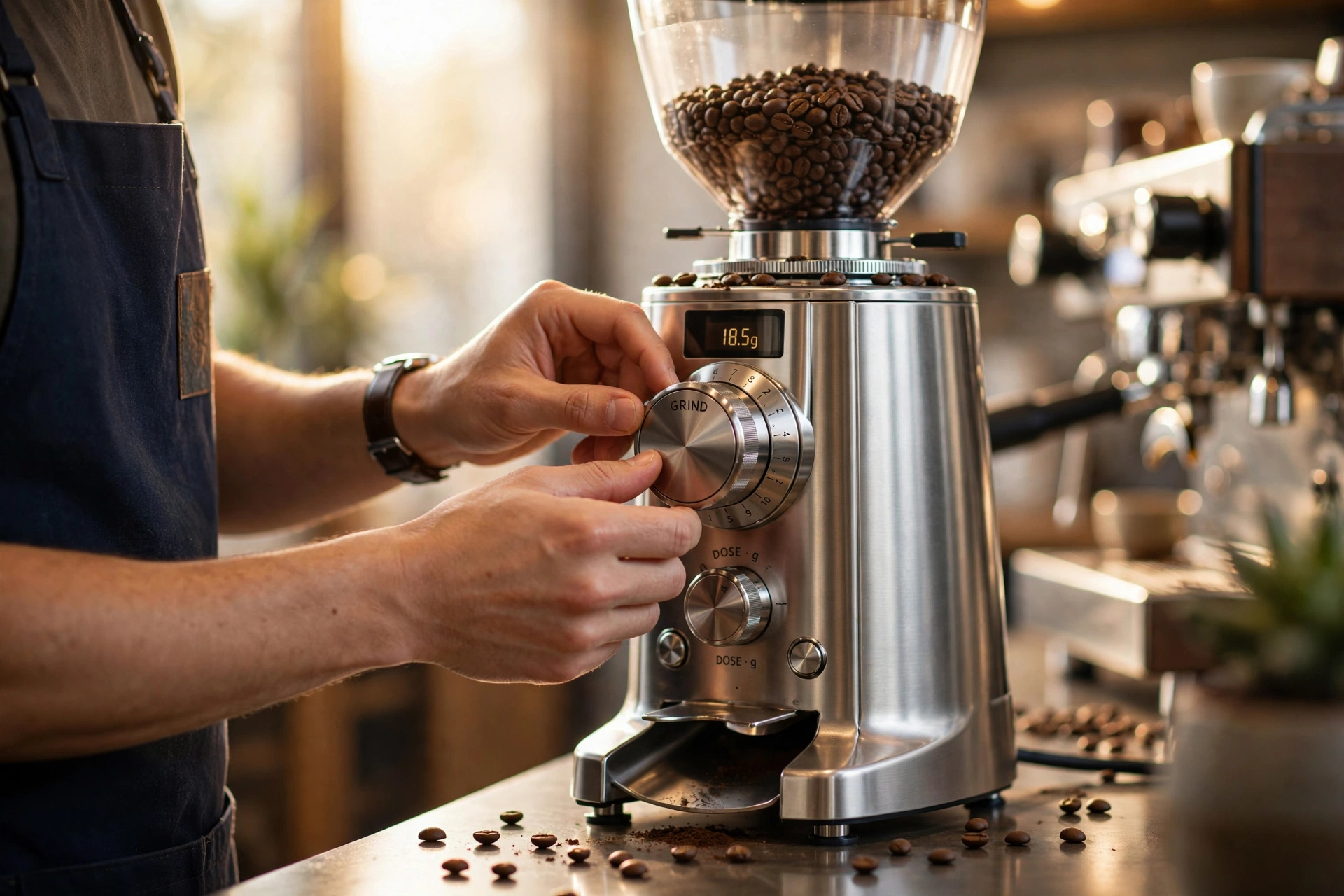
- Optimize Grind Size: Use a professional grinder—see our guide on How to Choose Coffee Grinders for Coffee Shops—to ensure a medium-coarse consistency. If the grind is too fine, the water will stall, leading to over-extraction and bitterness.
- Manage the Brew Cycle: Use thermal carafes instead of glass carafes with heating elements. Heat plates continue to cook the coffee, destroying the volatile aromatics of the beans within 20 minutes.
- Implement a Cleaning Schedule: Fresh brew machines are prone to coffee oil buildup. Use a dedicated coffee equipment cleaner daily to prevent these oils from turning rancid and tainting future brews.
For those managing larger facilities, we often suggest looking into Top Bean-to-Cup Coffee Machines for Businesses to handle the individual cup requests that accompany the bulk fresh brew service.
Fresh Brew Coffee Machines vs. Other Brewing Methods
Choosing between a dedicated fresh brew system and other methods depends entirely on your volume and service model. Many business owners make the mistake of buying an automatic machine when they actually need a batch brewer, or vice versa.
| Feature | Traditional Batch Brew | Generic AI/Auto Machines | Modern Professional Fresh Brew |
|---|---|---|---|
| Consistency | Variable (depends on operator) | Moderate (prone to errors) | High (PID controlled) |
| Volume | High | Low to Medium | Very High |
| Taste Profile | Often over-extracted | Flat/Generic | True to the bean origin |
| Speed | Slow per batch | Fast per cup | Optimized for peak flow |
| Waste | High (pot waste) | Low | Low (precise brewing) |
While a traditional drip machine is cheap, it lacks the thermal stability required for a professional setting. Generic automatic machines often rely on low-pressure systems that fail to extract the full complexity of the coffee bean, resulting in a 'watery' cup. A modern professional fresh brew system, like those integrated into the Busy Bean Coffee membership, utilizes pulse-brewing technology. This process wets the grounds, lets them bloom, and then continues the extraction, mimicking a professional barista's hand-pour on a massive scale.
This distinction is essential for those who want to maintain a 'specialty' image. If you are serving a light-roast Ethiopian coffee, a generic machine will make it taste sour. A professional fresh brew machine will highlight the jasmine and citrus notes that make that specific bean valuable.

Common Mistakes to Avoid When Using Fresh Brew Coffee Machines
One of the most frequent errors I encounter is the 'holding' mistake. Business owners often brew a massive pot at 6:00 AM and expect it to taste fresh at 10:00 AM. Coffee is a volatile chemical compound; as soon as it is brewed, oxidation begins. After 30 to 60 minutes, the quality drops precipitously. The solution is to brew smaller batches more frequently. I've helped several clients move from one 2-gallon pot every two hours to four 0.5-gallon pots every 30 minutes. The result? Higher customer satisfaction and less wasted coffee.
Another critical error is neglecting the NSF standards for sanitation. According to NSF International, equipment used in food preparation must be designed to be easily cleaned to prevent bacterial growth. Many operators ignore the 'dead zones' in their brewers—the areas where coffee grounds accumulate and rot. This not only creates a health risk but also imparts a 'musty' flavor to the coffee. Daily deep-cleaning of the brew head is non-negotiable.
Furthermore, many businesses fail to account for the impact of humidity and temperature on their coffee storage. Storing coffee beans directly next to the fresh brew machine—where heat and steam are constant—accelerates the staling process. Beans should be kept in an airtight container in a cool, dry area, away from the heat of the machine, to ensure the 'fresh brew' actually starts with fresh beans.
If you're managing a full-service beverage program, you might also need to consider Essential Commercial Drip Coffee Brewers to complement your main fresh brew setup for secondary offerings.
Frequently Asked Questions
How long does fresh brew coffee stay fresh in a thermal carafe?
In a high-quality vacuum-insulated thermal carafe, coffee typically maintains its optimal flavor profile for about 60 to 90 minutes. After this window, the volatile aromatic compounds begin to dissipate, and the chemical structure of the coffee changes, often resulting in a flatter or more acidic taste. To ensure maximum quality, we recommend brewing smaller batches more frequently rather than one large batch. This strategy minimizes waste and ensures that your customers are always receiving a cup that tastes as intended by the roaster.
Can I use any coffee bean in a commercial fresh brew machine?
While you can technically use any bean, the results vary wildly. For high-volume fresh brew machines, a medium to medium-dark roast is generally preferred because it maintains its body and sweetness even if the pot sits for a short period. Very light roasts can sometimes taste too acidic in a batch brewer unless the machine has precise temperature control and the grind is perfectly calibrated. Using a high-quality Arabica coffee ensures a smoother, more sophisticated taste that appeals to a broader range of customers in a foodservice environment.
What is the difference between a batch brewer and a bean-to-cup machine?
A batch brewer is designed for volume, producing several gallons of coffee at once into a carafe. It is the ideal solution for breakfast buffets or high-traffic diners. A bean-to-cup machine, on the other hand, grinds and brews a single cup at a time upon request. While bean-to-cup machines offer more variety and less waste for low-volume settings, they cannot compete with the speed and output of a batch fresh brew machine during a morning rush. Many successful businesses use both to cover different customer needs.
How do I prevent my fresh brew coffee from tasting bitter?
Bitterness is usually a sign of over-extraction. This happens if the water is too hot, the grind is too fine, or the coffee is left on a heating element for too long. To fix this, first check your water temperature; it should stay between 195°F and 205°F. Next, coarsen your grind slightly to allow water to flow through the beans more quickly. Finally, move away from glass carafes with hot plates and switch to thermal carafes, which stop the cooking process immediately after brewing is complete.
How often should I descale my fresh brew coffee machine?
Depending on your water hardness, you should descale your machine every 30 to 90 days. Scale buildup—mineral deposits from calcium and magnesium—acts as an insulator on the heating elements, making the machine work harder and brew at inconsistent temperatures. If you use a high-quality water filtration system, you can extend this interval, but you should always monitor the brew time. If a cycle that normally takes four minutes starts taking five, it is a clear signal that mineral buildup is restricting water flow and the machine needs immediate descaling.
Conclusion
Selecting the right fresh brew coffee machines is not merely about picking a brand name; it is about aligning your equipment with your operational volume and your quality standards. Whether you are running a boutique hotel in Mount Pleasant, SC, or a bustling diner in a metropolitan hub, the ability to deliver a consistent, high-quality cup of coffee is a powerful tool for customer retention and revenue growth. By focusing on temperature stability, precise ratios, and rigorous maintenance, you transform a simple beverage into a strategic asset for your business.
At Busy Bean Coffee, we understand that the technical side of coffee can be overwhelming. That is why we don't just provide the machines; we provide an all-inclusive managed membership. We handle the professional installation, the maintenance, and the supply of premium roasts, so you can focus on your guests while we ensure your coffee is always fresh and your equipment is always performing at its peak.
If you are ready to optimize your entire beverage operation, we invite you to read our Ultimate Guide to Outfitting a Coffee Shop with Equipment to ensure no detail is overlooked in your setup. For a tailored solution and a predictable monthly fee, visit us at www.busybeancoffee.com.
Free Coffee Pairing Guide & Specialty Roast Cheat Sheet
Unlock the secrets of perfect brewing ratios, water temperatures, and specialty roast profiles. Download the guide.